5-Cut Method Calculator
The 5-cut method squares a table saw crosscut sled fence to within thousandths of an inch: make 5 cuts on a test board (rotating 90 degrees between each), measure the width difference across the final thin strip, and this calculator turns that difference into an exact fence adjustment distance and direction.
Quick Answer

The 5-cut method squares a table saw crosscut sled fence to within thousandths of an inch: make 5 cuts on a test board (rotating 90 degrees between each), measure the width difference across the final thin strip, and this calculator turns that difference into an exact fence adjustment distance and direction.
5-Cut Method Calculator
Enter your values below for an instant result, then see the formula, worked example, and common mistakes.
Enter your 5-cut measurements and click calculate.
How to Use This Calculator
Start with a rectangular board roughly 12-18 in long and a few inches wide, with one factory-straight reference edge.
Cut one end, then rotate the board 90 degrees counter-clockwise and cut again, keeping the same reference edge against the sled fence each time, for a total of 4 cuts.
After the 4th cut, rotate 90 degrees once more and cut a thin strip (about 1/4 to 1/2 in) off what is now the final side — this strip captures the compounded error from all 4 previous cuts.
Measure the strip’s width at the end nearest the point where cuts 1 and 4 met (the ‘pivot’ end, input A) and at the far end (input B) using calipers for best accuracy.
Enter A, B, the strip’s length (L), and the distance from your fence’s pivot point to where you’ll make the adjustment (D) — the calculator gives you the exact distance and direction to move the fence.
Formula
Adjustment = ((A – B) / 4 / L) x D, where A and B are the two measured widths of the final thin strip (in the same units), L is that strip’s length, and D is the distance from the fence’s pivot screw/point to wherever you’ll make the physical adjustment.
The division by 4 accounts for the fact that the small angular error in the fence is compounded across all 4 rotated cuts before it shows up in the final strip — so the visible difference (A-B) is 4 times larger than the true per-cut error.
Reference Table: Adjustment Size vs. Squareness
| Calculated adjustment | What it means |
|---|---|
| Under 0.001 in | Sled is essentially square; good for most furniture and cabinetry work |
| 0.001 – 0.005 in | Minor error; noticeable on very long or precision cuts, easy to correct |
| 0.005 – 0.02 in | Moderate error; will show as visible gaps on glue-ups over 12+ in wide |
| Over 0.02 in | Significant error; re-check that the sled runners fit the miter slot snugly before adjusting the fence |
Common Mistakes to Avoid
- Mixing up which end is A and which is B — always measure the end nearest the pivot point (where cuts 1 and 4 intersect) as A, and the far end as B, or the direction recommendation will be backward.
- Forgetting to divide by 4 — the raw width difference is NOT the per-cut error; it is 4 times the per-cut error because it compounds across 4 rotated cuts.
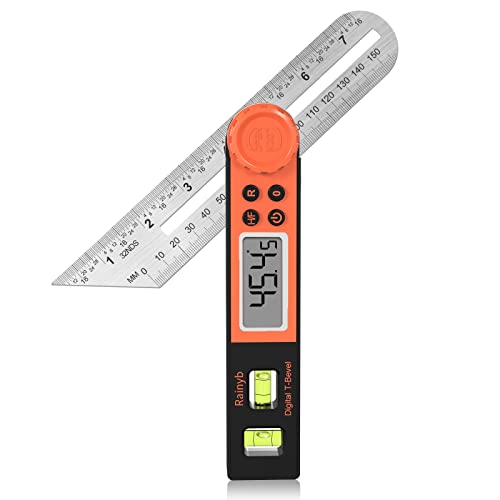
- Using an inaccurate measuring tool — a standard tape measure cannot resolve the small differences this method is designed to catch; use digital calipers accurate to at least 0.001 in.
- Not re-testing after adjusting — always re-run the full 5-cut sequence on a fresh test piece after making an adjustment, since a single correction is rarely perfect on the first try.
- Confusing sled-runner slop with fence-angle error — if the sled rocks or shifts in the miter slot, fix that first, since it will throw off every 5-cut measurement.
When the Estimate May Be Wrong
This calculator implements the standard 5-cut method formula (as popularized by William Ng and widely used across woodworking calculators). It assumes your cuts were made carefully with consistent, firm contact between the board and the sled fence, and that your board did not shift during any cut. If your A and B measurements are wildly inconsistent between repeated test rounds, suspect sled slop, blade runout, or an unstable board rather than the formula itself.
FAQs
What is the 5-cut method?
A technique for squaring a table saw crosscut sled fence by making 4 rotated cuts plus a 5th thin test strip, then measuring the strip’s width at each end to calculate a precise fence adjustment.
How accurate is the 5-cut method?
Because the error compounds across 4 cuts before you measure it, the method can reveal and correct fence misalignment down to about 0.001 inch, far more precise than trying to square a fence with a try square alone.
Why do you divide by 4 in the formula?
Each of the 4 rotated cuts introduces the same small angular error, and each subsequent cut compounds it, so by the 5th cut the measured difference represents roughly 4 times the true per-cut error.
Which direction do I adjust the fence?
It depends on which side of the blade your fence’s pivot point is on: if the pivot is to the right of the blade, a positive result means adjust the fence backward; if the pivot is to the left, a positive result means adjust forward. The calculator states the direction for your setup automatically.
Sources and Methodology
Formula and procedure sourced from William Ng’s widely-referenced “5 Cuts to a Perfect Cross-Cut Sled” method, cross-referenced against the Wind Ridge Wood Crafts 5-cut calculator (((A-B)/4/L) x D, with pivot-side-dependent direction logic) and the Instructables “5-Cut Method Made Easy” guide.
Sponsored / affiliate links. As an Amazon Associate I earn from qualifying purchases. I may earn additional commission from eligible campaigns.