Acacia Wood Vs Bamboo: Proven Essential Guide
Acacia wood vs bamboo: For most beginner projects, bamboo offers superior flatness and stability, while acacia provides a richer, more traditional wood grain and excellent moisture resistance, making the choice dependent on whether you prioritize stability (bamboo) or classic hardwood aesthetics (acacia).
Choosing the right material for your home project can feel overwhelming, especially when comparing two popular options like acacia wood and bamboo. Will your countertop warp? Will your cutting board last? Many new woodworkers scratch their heads wondering which material offers the best bang for their buck and the most forgiveness for a first-time build. Don’t worry; this is a very common sticking point! We are going to clear up the confusion right now. By breaking down the makeup, durability, look, and cost of both materials, you can confidently select the perfect wood for your next project. Let’s dive in and see which material truly deserves a place in your workshop.
Understanding the Materials: What Exactly Are We Comparing?
Before we start comparing strength and shine, it’s important to know what acacia and bamboo actually are. They look a bit similar in price and application, but their origins couldn’t be more different. This difference impacts how they behave when you cut them, glue them, or seal them.
Acacia Wood: The Hardy Hardwood
Acacia is true wood. It comes from any of the many species of trees in the Acacia genus. In the woodworking world, especially for flooring and furniture, this often means Blackwood, Wattle, or Saat wood. It grows slowly, just like oak or maple, giving it tight grain structure and natural hardness. Think of acacia as a traditional, solid wood alternative that resists scratches very well.
- Origin: Comes from hardwood trees grown globally.
- Structure: Natural cell structure, heartwood, and sapwood.
- Feel: Warm, traditional wood feel; often displays rich, varied color patterns.
Bamboo: The Mighty Grass
This is where many beginners get confused. Bamboo is not technically wood; it is a fast-growing grass! To turn it into a usable building material, long strips of the grass stalk are harvested, split, dried, and then laminated (glued together) under extreme pressure. This lamination process is crucial because it dictates bamboo’s unique properties—it’s almost always very flat and extremely dense.
- Origin: Harvested from the Bambuseae tribe of grasses, usually sourced from Asia.
- Structure: Layers of compressed grass fibers glued together in planks or strips.
- Feel: Very hard and smooth, often with distinctive “knuckle” or grain lines from the individual strips.
Head-to-Head Comparison: Acacia Wood Vs Bamboo
Now that we know their origins, let’s put them side-by-side in a direct comparison. For beginners, the most important factors are usually ease of working, how long it lasts, and how much it costs.
Durability and Hardness (Janka Rating)
When woodworkers talk about durability, we often look at the Janka Hardness Test. This measures how much force it takes to embed a steel ball halfway into the material. A higher number means it resists dents better. This is critical for floors, countertops, or cutting boards.
| Material | Average Janka Hardness (lbf) | What This Means for You |
|---|---|---|
| Acacia Wood | 1,700 – 2,300 | Very hard; comparable to hickory or maple. Excellent dent resistance. |
| Strand-Woven Bamboo | 3,000 – 5,000+ | Extremely hard due to lamination. Can be harder than most traditional hardwoods. |
Takeaway for Beginners: Strand-woven bamboo often wins on pure hardness, meaning it resists scratches better in high-traffic areas. However, regular solid acacia is naturally very tough and offers a more traditional wood feel.
Moisture Resistance and Stability
If you are working on a kitchen project, bathroom vanity, or outdoor furniture, moisture is your enemy. How well does the material handle swings in humidity?
Acacia, being a true hardwood, has natural oils and a tighter grain structure, which usually means it handles minor moisture exposure quite well, especially when sealed properly. This excellent natural resistance makes it a favorite for outdoor applications where other woods might swell or check.
Bamboo’s biggest challenge is its manufacturing process. Because it is glued together from many layers, its stability is dependent on the quality of the adhesive used between the grass strips. If exposed to extreme and prolonged moisture, the glue lines can technically fail, causing delamination over many years. However, modern, high-quality bamboo products use incredibly durable adhesives.
For stability against warping or cupping (changing shape due to humidity changes), bamboo often has an edge because the lamination process stabilizes the material significantly. You will often find that composite bamboo panels remain flatter than solid wood planks of the same dimension.
Workability for the New Woodworker
As a beginner, you want materials that cut cleanly without splintering too much. You don’t want to fight your saw blade!
Working with Acacia:
- It cuts relatively well, similar to oak.
- It takes screws and nails firmly but watch out for tear-out on cross-cuts.
- Sanding usually goes smoothly, revealing beautiful grain patterns.
- Requires good dust collection, as hardwood dust can be irritating.
Working with Bamboo:
- Cutting bamboo requires sharp blades because it is so dense. Dull blades can cause chipping, especially on the edges.
- Screwing or drilling pilot holes is usually mandatory to prevent splitting, especially near the edge of a strip.
- Sanding can sometimes reveal the lines between the laminated strips, requiring careful feathering with fine grits.
Author Tip from Md Meraj: If you are using a standard circular saw or table saw made for woodworking, bamboo demands a high tooth-count blade (like a 60- or 80-tooth blade). For a cleaner cut, treat it more like a synthetic material than traditional wood in your setup.
Aesthetics and Appearance
This is purely subjective, but it matters for your home decor!
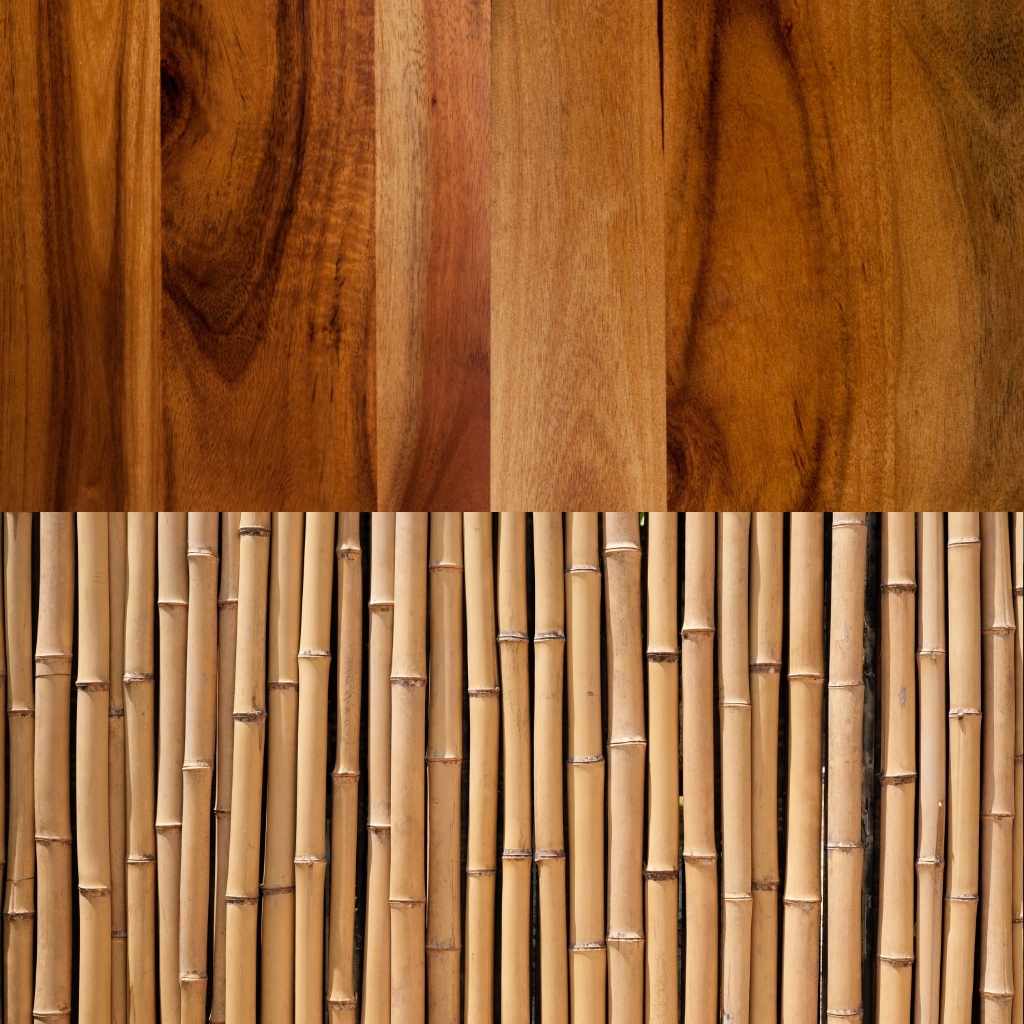
Acacia Look: Acacia is prized for its dramatic color variation. You might see planks that transition from deep chocolate brown to golden blonde right next to each other—this natural “color blocking” is its signature look. It feels rustic and rich.
Bamboo Look: Bamboo tends to look much more uniform. There are two main styles: Natural (lighter tan, showing the individual grass strips) and Carbonized (darker brown, typically achieved by boiling the material before pressing). It offers a clean, modern, often eco-conscious aesthetic. For more information on sustainable material choices in construction, you can check resources from the Environmental Protection Agency regarding green building practices.
Cost and Availability: Where Do They Rank?
For most DIYers, budget is a major factor. Generally speaking, both materials are often positioned as mid-range alternatives to premium woods like Walnut or Cherry, but they can sometimes be cheaper than Oak or Maple, depending on global supply and demand.
Acacia Cost Considerations:
- Solid acacia lumber can vary widely based on whether it is imported or domestically cured.
- Engineered acacia flooring might be slightly more accessible in standard lumber yards.
- It is usually priced slightly higher than standard construction pine but competitively with mid-range hardwoods.
Bamboo Cost Considerations:
- Bamboo is generally very cost-effective because the grass grows incredibly fast, leading to high yields.
- Strand-woven bamboo flooring or paneling often provides excellent value for its extreme hardness.
- Look for good quality sourcing. Cheaper bamboo might use lower-grade adhesives or less environmentally friendly processing methods.
Project Spotlight: Which Material Is Best For Specific Uses?
To help you decide for your next weekend endeavor, here is a quick guide on where each material shines.
Best For Cutting Boards and Butcher Blocks
This requires food safety, high density, and resilience to knife impact.
- Acacia: Excellent choice. Its dense, closed grain structure accepts food-safe mineral oils well, and its natural beauty shines through. It feels fantastic to chop on.
- Bamboo: Also a very popular choice, especially for end-grain boards, because it is so hard. However, some users prefer solid wood because bamboo’s strip lines can sometimes show wear faster if the glue layer at the surface is stressed.
Best For Shelving and Cabinetry
Here, we need stability (non-warping) and good screw retention.
- Bamboo: Extremely stable, meaning your long shelves are less likely to sag or bow over time compared to thinner solid wood planks. Screw retention is good if you pre-drill.
- Acacia: A beautiful, strong choice for cabinetry faces where you want a deep, rich wood color that resists dings from everyday use.
Best For Flooring
Durability, resistance to wear, and longevity are key here.
- Strand-Woven Bamboo: Many experts lean toward this for extreme durability. Its Janka rating often surpasses commercial oak grades, making it nearly bulletproof for high-traffic areas.
- Acacia: A fantastic, quieter alternative to bamboo. It offers a warmer underfoot feel and a more traditional hardwood look, holding up very well to general household wear.
Best For Tabletops and Desks
A balance of appearance, feel, and moderate moisture resistance is needed.
- Acacia: Often the winner here. The aesthetic variety and tactile warmth of true grain make the workspace feel more inviting. It finishes beautifully with lacquer or oil.
- Bamboo: Great if you prefer a very flat, modern, light-colored surface. It’s highly scratch-resistant, which is excellent for desk padding or writing areas.
Essential Finishing Tips for Acacia and Bamboo
You have chosen your material—great job! Now, how do you protect your investment? Finishing is critical for both, but the approach varies slightly due to their structure.
Finishing Acacia Wood
Acacia finishes much like most dense hardwoods, but its natural oils can sometimes resist oily finishes slightly.
- Cleaning: Always sand thoroughly, working up to 220 grit. Wipe down with a tack cloth or mineral spirits depending on your chosen topcoat.
- Sealing: For maximum protection (especially for countertops), use a high-quality, film-building finish like polyurethane or water-based epoxy.
- Oil Finish: If you want that natural, warm look, an oil finish (like Tung oil or Danish oil) penetrates well, but you must reapply it periodically (every 6–12 months) on high-use surfaces. Always refer to the manufacturer’s guidelines for best practice when applying sealants, such as those recommended by the Woodworkers Institute for material compatibility.
Finishing Bamboo
Because bamboo is compressed, its surface is very hard and slightly less porous than typical wood. This means that sealers need to adhere well to that dense fiber structure.
- Preparation is Key: Ensure you use a good sanding schedule (up to 320 grit can be beneficial for smoothness).
- Primer/Sealer: Sometimes, a dedicated wood primer or sealer specifically designed for high-density or engineered materials works wonders to promote better adhesion for the topcoat.
- Topcoat Choice: Polyurethane or lacquer is usually best for bamboo surfaces. It builds a strong shell that prevents moisture ingress between the laminated strips. While oil finishes work, they often need more frequent reapplication to maintain protection on bamboo than on solid acacia.
Safety First: Workshop Considerations for Both Materials
As your mentor, Md Meraj always stresses safety. Woodworking dust is a health hazard, regardless of the source material, but the dust profile for acacia and bamboo differs slightly.
Acacia Dust Safety
- Acacia dust, like many hardwoods, can be an irritant or cause allergic reactions in sensitive individuals.
- Ensure you have high-quality dust collection hooked up to your power tools (table saw, router).
- Always use a good N95 mask or, even better, a powered air-purifying respirator (PAPR) when sanding or routing large amounts.
Bamboo Dust Safety
- While bamboo is a grass, when it is processed under high heat and pressure into strand-woven material, the resulting dust is very fine and abrasive.
- The glues used in lamination can sometimes release volatile organic compounds (VOCs) when cut or sanded, especially if the product is low quality. Work in a well-ventilated area.
- Wear eye protection always! The density difference between the grass fibers and the resin can sometimes cause micro-shrapnel during high-speed cutting.
FAQ: Your Beginner Questions Answered
Q1: Which material is better for a beginner doing their very first project?
A: Generally, acacia is slightly easier to work with if you are using hand tools or basic power tools, as it cuts more like traditional lumber. However, if your project requires extreme flatness (like a simple shelf), pre-cut bamboo panels might offer greater initial success with less fuss over warping.
Q2: Is bamboo truly an eco-friendly choice compared to acacia?
A: Bamboo is often considered more sustainable because it is a fast-growing grass that regenerates quickly without replanting. Acacia contributes to deforestation if not sourced from sustainable forests, though many suppliers now offer FSC-certified acacia, which is a great choice.
Q3: Can I stain acacia and bamboo to look exactly alike?
A: You can stain both, but achieving an identical look is tough. Acacia’s natural grain takes stain unevenly due to its natural color variation. Bamboo often accepts light stains well, but heavy stains might look blotchy because of the compressed layers.
Q4: Which material will last longer outdoors?
A: Properly sealed acacia has a slight advantage in traditional outdoor settings due to its natural insect and moisture resistance as a true hardwood. However, high-density, outdoor-rated laminated bamboo, sealed meticulously, can also perform very well.
Q5: Does bamboo sag or warp more than acacia wood?
A: No. Due to the layered, cross-grain construction used to make bamboo planks, strand-woven bamboo is incredibly stable and resists warping/cupping far better than a plank of solid acacia of the same dimensions.
Q6: Which material is generally quieter when used for flooring?
A: Acacia wood, being a natural hardwood, typically offers a slightly warmer, softer sound underfoot than strand-woven bamboo, which can sometimes sound a bit hollow or hard if not installed over a premium underlayment.
Final Thoughts from Md Meraj: Making Your Confident Choice
Stepping into the world of material selection can feel like decoding an ancient map, but now you have the keys you need! Don’t let analysis paralysis stop you from starting that project. Whether you are drawn to the rich, shifting colors and deep grain of traditional acacia, or you favor the modern, ultra-dense stability offered by laminated bamboo, both materials are fantastic.
If your project demands the most scratch resistance possible—like a heavily used floor or a high-impact work surface—lean towards the ultra-hard strand-woven bamboo. If you value the warmth, the classic look of natural wood grain, and you plan to finish it with beautiful oils, then acacia is your go-to choice.
Remember, woodworking is about the process as much as the final product. Measure twice, cut smart using that high tooth-count blade if you use bamboo, finish with care, and you will create something you are truly proud of. Happy building!