Aluminum Fence vs. Wood Fence: Durability, Cost, and Privacy
Aluminum fencing never rots, warps, or needs repainting, giving it a genuine long-term durability edge over wood – but wood still wins on natural warmth and true privacy screening, and the upfront cost gap between the two is often smaller than people expect.
Choosing between an aluminum and a wood fence usually comes down to three real questions: how much upkeep are you willing to do, how much privacy do you actually need, and does the look matter more than the maintenance. This guide compares both materials on durability, real 2026 cost ranges, appearance, and privacy, using the actual functional tradeoffs rather than marketing claims, so you can pick the right one for your yard instead of just the more popular one.
Durability: Aluminum Wins on Rot, Warping, and Repainting
This is where the two materials genuinely diverge. Aluminum fencing is not organic material, so it cannot rot, cannot be eaten by insects, and cannot swell, crack, or warp from moisture the way wood can. A quality powder-coated aluminum fence commonly lasts 20 to 30 years or more while needing nothing beyond an occasional rinse with a garden hose. It will not need repainting, ever, because the factory-applied powder coat is baked on and resists fading and chipping far longer than surface paint.
Wood fencing can absolutely last decades too, but it takes real, ongoing work to get there. Left unsealed, wood weathers to gray within a year or two and starts losing structural integrity faster, especially at the ground line where fence posts sit in constant soil moisture. Even well-maintained wood eventually needs board replacement as individual pickets split, cup, or rot out. If low-maintenance, hands-off durability is your top priority, this is the clearest advantage aluminum has.
Best Wood Fence Sealer Pick
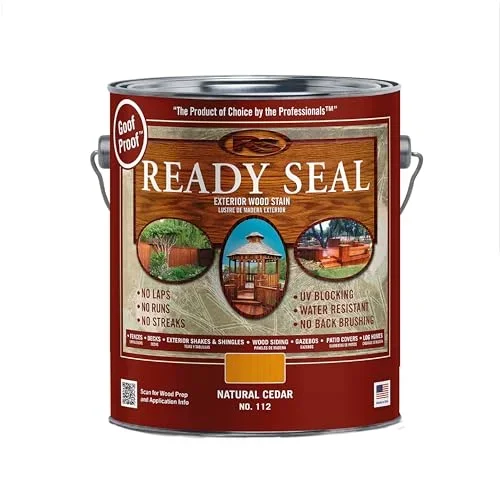 |
Ready Seal 112 Natural Cedar Stain & Sealer – $39.99 If you decide wood’s look is worth the upkeep, this is the easiest way to protect it and slow the maintenance cycle covered below.
|
If you have already weighed the tradeoffs below and wood’s look is worth the maintenance to you, that sealer is the single easiest way to slow the clock on the durability gap covered above.
Cost Comparison: Upfront Price vs. Lifetime Cost
Here is where a lot of homeowners get surprised. Aluminum has a reputation as the pricier option, but a standard ornamental aluminum fence and a standard wood privacy fence often land in similar upfront price ranges. The real cost difference shows up over the life of the fence, not on the initial quote.
| Fence Type | Typical Installed Cost (per linear foot) | Recurring Cost |
|---|---|---|
| Ornamental Aluminum | $25 – $50 | None (occasional rinse only) |
| Wood Privacy (6 ft.) | $25 – $55 | Stain/seal every 1-3 years, board replacement over time |
| Aluminum Privacy-Style | $75 – $130 | None |
| Pressure-Treated Wood Privacy | $20 – $40 | Stain/seal every 1-3 years, board replacement over time |
Run the math over 15 to 20 years and a wood fence’s sealing schedule alone can add up to several hundred dollars in materials, plus the time to apply it or the cost to hire it out. Aluminum’s higher-looking sticker price on a privacy-style panel is the exception where it genuinely costs more upfront, but standard ornamental aluminum is frequently the cheaper option once you account for a wood fence’s lifetime maintenance.
Maintenance: What Owning Each Fence Actually Involves
Aluminum maintenance is close to nonexistent. Hose it off once or twice a year to knock off dirt and pollen, check that fasteners are still tight, and touch up a scratch with matching paint if you ever dent a rail. That is essentially the entire list.
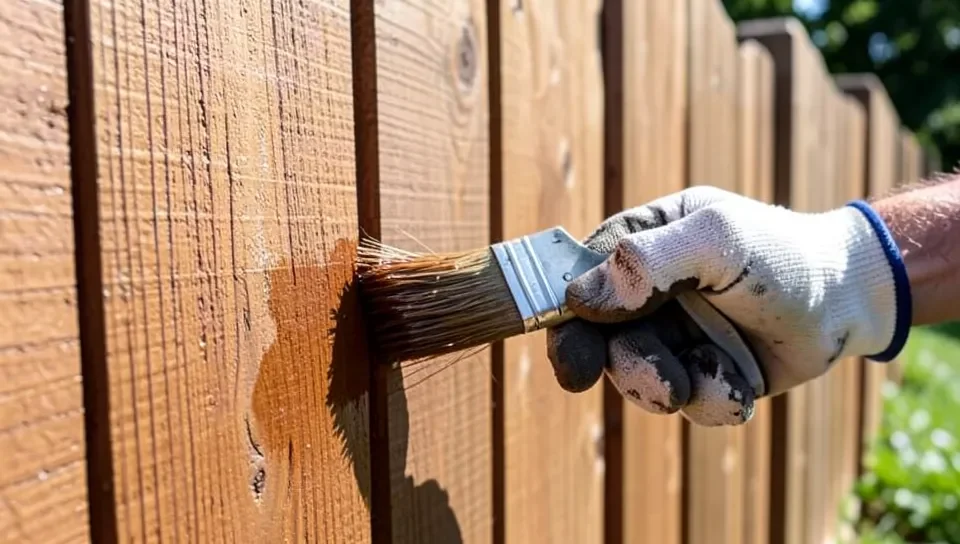
A wood fence needs an actual routine: inspect it each spring for loose boards or shifted posts, plan on stain or sealer roughly every 1 to 3 years depending on your climate and sun exposure, and expect to replace individual boards as they crack, split, or rot over the years. None of that is difficult work, but it is real, recurring work that an aluminum fence simply does not ask of you.
Appearance and Privacy: The Tradeoff Most Comparisons Skip
Most aluminum vs. wood comparisons focus only on durability and cost, but the two materials typically serve different visual purposes, and that matters as much as either factor for most homeowners.
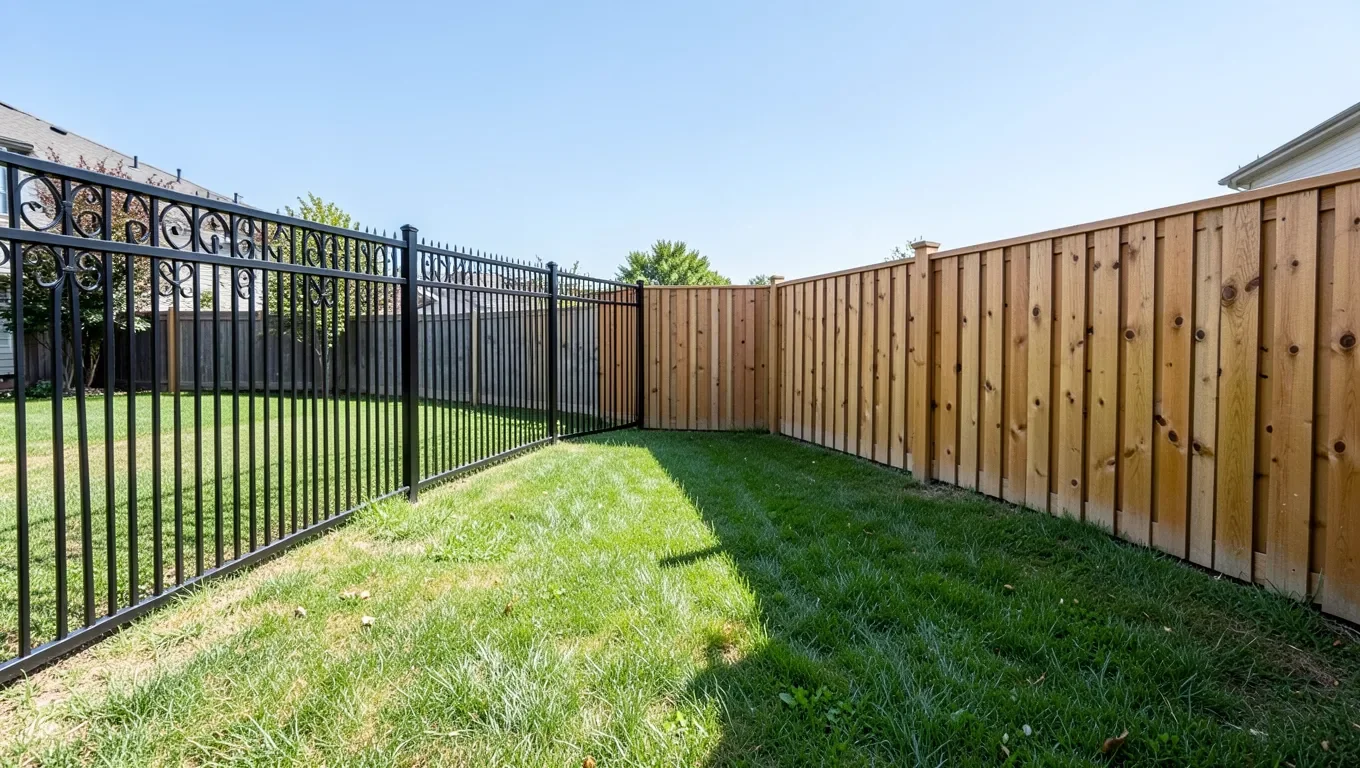
Standard aluminum fencing is ornamental-style: open vertical pickets, similar in spirit to wrought iron, designed to frame a yard rather than hide it. That is genuinely attractive for front yards, pool enclosures, and anywhere you want to keep sightlines open, but it will not block a neighbor’s view into your backyard. Wood, by contrast, is the material most people picture when they say “privacy fence” – tightly fitted boards with no gaps, built specifically to screen a yard from the street or the house next door.
Aluminum privacy-style panels do exist, with closer-spaced or solid sections, but they are less common and run noticeably more per linear foot than standard ornamental aluminum, which narrows aluminum’s cost advantage if true privacy is a requirement. On pure aesthetics, wood offers a natural, warm look that many homeowners still prefer, while aluminum reads as cleaner and more uniform but more “manufactured.” Neither is objectively better here – it depends on whether you are trying to showcase the yard or screen it.
Which One Should You Choose?
Choose aluminum if low maintenance is your top priority, you want an open, ornamental look for a front yard or pool area, and you do not need full privacy. Choose wood if privacy is the actual goal, you prefer a natural, warm appearance, and you are willing to keep up a sealing routine to protect the investment. Many homeowners land on a mixed approach: wood along the back property line for true backyard privacy, and aluminum along the front where an open, decorative look works better and upkeep matters even less.
If you do go with wood, our cedar fence disadvantages guide covers the specific upkeep and cost issues cedar owners run into, and our 4-foot wood fence ideas article is a good next stop if you are leaning toward a shorter, more open wood style instead of full privacy height. For a different material matchup on the same durability-vs-upkeep question, see how aluminum compares to wood in a pergola build.
Frequently Asked Questions
Is an aluminum fence really more durable than a wood fence?
In the ways that cause most fences to fail, yes. Aluminum will not rot, warp, split, or need repainting, while every wood fence eventually faces one of those issues regardless of species. Aluminum can still dent from a serious impact, but it will not decay simply from sitting outside for 20 years the way an unsealed wood fence can.
Is aluminum fencing more expensive than wood?
Upfront costs are often close. A typical ornamental aluminum fence runs roughly $25 to $50 per linear foot installed, and a standard 6-foot wood privacy fence runs roughly $25 to $55 per linear foot installed, so the ranges overlap. The real cost gap shows up over time: wood needs stain or sealer roughly every 1 to 3 years, and aluminum does not, so aluminum is often cheaper across a 15 to 20 year ownership period even when the initial quote is similar or slightly higher.
Does aluminum fencing give you privacy like a wood fence?
Usually not. Most aluminum fencing is ornamental-style, with open vertical pickets meant to show the yard rather than screen it, similar to wrought iron. Solid wood privacy fencing with tight board-to-board panels is the more common choice when blocking sightlines is the goal. Aluminum privacy-style panels do exist, but they are less common and cost noticeably more than standard ornamental aluminum.
Which lasts longer, aluminum or wood fencing?
Aluminum typically lasts longer with less effort. A quality powder-coated aluminum fence commonly lasts 20 to 30+ years with little more than an occasional rinse. A wood fence can also last two decades or more, but only with a real maintenance routine, ground-contact posts rated for that use, and periodic sealing; skip that upkeep and a wood fence’s usable life drops substantially.
Does aluminum fencing rust over time?
No, not in the way steel or iron does. Aluminum does not contain iron, so it cannot rust. It can develop a light surface oxidation over many years, but quality fencing comes with a factory powder coating specifically to prevent that, and it does not compromise the metal’s strength the way rust weakens steel.
Sponsored / affiliate links. As an Amazon Associate I earn from qualifying purchases. I may earn additional commission from eligible campaigns.