How to Stabilize a Metal Bed Frame: Expert Tips and Tricks
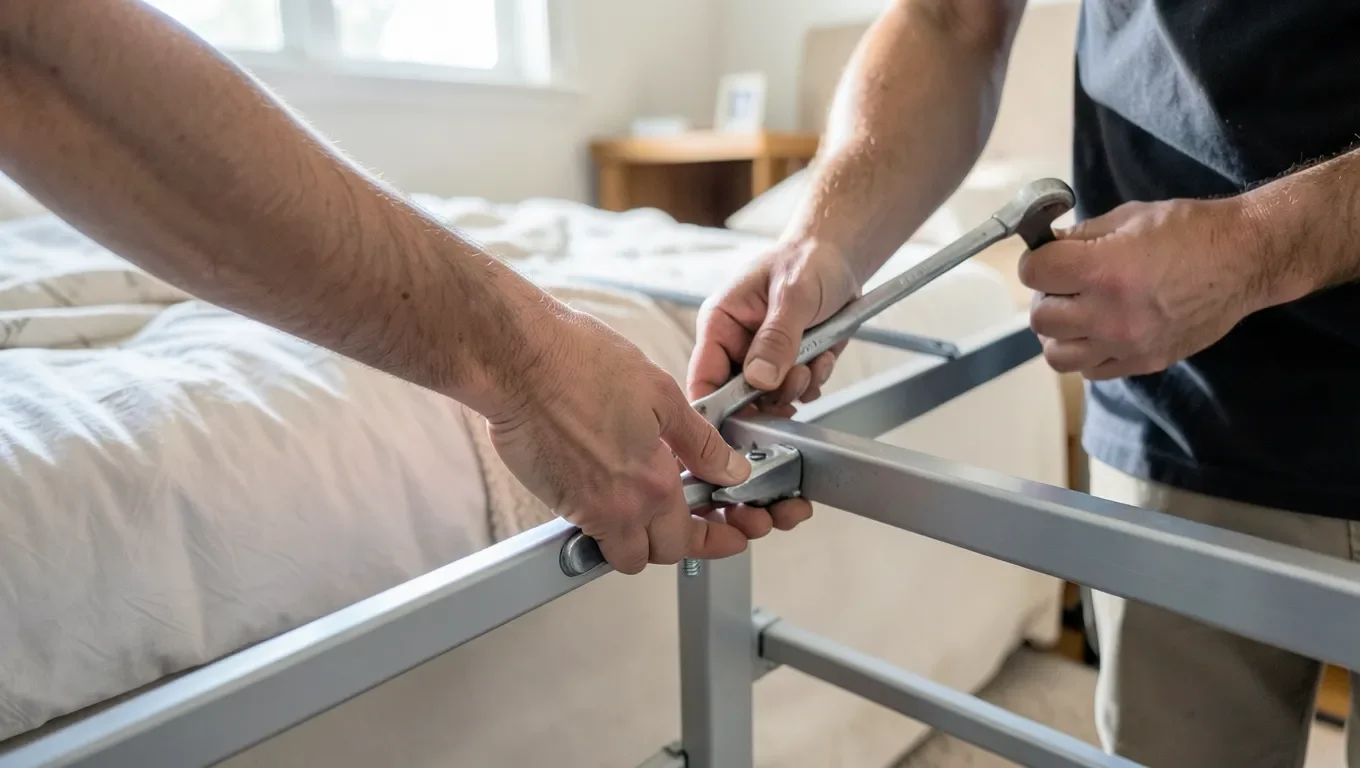
A wobbly metal bed frame is almost always a loose-connection problem, not a broken frame – tightening every bolt with a wrench (not just a screwdriver), adding metal corner braces at the weak joints, and locking the threads with adhesive so they can’t work loose again fixes the vast majority of cases in under an hour.
Identify Where The Movement Is Coming From
Keeps Bolts From Loosening Again
 |
Loctite 243 Blue Threadlocker, 6ml Medium-strength threadlocker made for exactly this – bolts that keep backing out from repeated vibration – while still allowing removal with normal hand tools later.
|
Before tightening anything, find the actual source of the wobble – sit or push on different sections of the frame (head, foot, each side rail, the center) and feel for where the movement originates. Most metal frames wobble at one of three points: the bolted corner joints where rails meet the headboard/footboard brackets, the center support leg where it meets the frame, or the connection between the frame and the headboard itself. Fixing the wrong joint wastes time and doesn’t solve the actual problem.
Have a second person gently rock the bed from different sides while you kneel down and watch each joint – a joint that’s genuinely loose will show a visible gap opening and closing as the frame flexes, while a tight joint won’t move even under noticeable pressure. This takes two minutes and saves you from tightening or bracing joints that were never actually the problem.
Tools You’ll Need
- Wrench or socket set (matched to your frame’s bolt size – most use metric hex bolts)
- Screwdriver, for any Phillips/flathead screws on brackets
- Threadlocker adhesive (keeps bolts from vibrating loose again)
- Metal L-brackets or corner braces, for a joint that’s loose even after tightening
- A level, to check the frame sits evenly
- Furniture pads or shims, for an uneven floor
| Symptom | Likely Cause | Fix |
|---|---|---|
| Wobble at a specific corner | Loose or stripped bolt at that joint | Tighten, threadlock, or replace the bolt |
| Whole frame rocks on the floor | Uneven floor, not the frame itself | Level check + furniture pads under the low leg |
| Corner still moves after tightening | Joint itself has worn/enlarged | Metal corner brace spanning the joint |
| Middle of frame sags under weight | Missing or undersized center support | Add a center support leg/beam |
| Squeaking without visible movement | Metal-on-metal friction at a joint | Silicone spray or a rubber washer at the joint |
Tighten Every Bolt – Not Just The Obvious Ones
Go around the entire frame and tighten every bolt and screw you can find, including ones at the headboard/footboard brackets and under the center support – these hidden fasteners loosen just as often as the visible ones and are the most commonly skipped step. Turn clockwise, snug but not forced; over-tightening a bolt into thin sheet-metal tubing can strip the threads, which makes the joint permanently looser than when you started.
If a bolt spins without tightening, the threads inside the metal tube are stripped. A slightly larger replacement bolt often re-threads its own path and holds fine; if not, a rivnut (threaded insert) or a nut-and-bolt through-connection on the far side of the tube fixes it permanently.
Lock The Threads So They Stay Tight
A bed frame flexes slightly every time someone gets in or out, and that repeated micro-movement is exactly what backs bolts out over months – this is why the same joints keep coming loose no matter how many times you re-tighten them by hand. A medium-strength threadlocker applied to the bolt threads before the final tightening keeps the bolt from vibrating loose while still allowing it to be removed later with normal hand tools, which is the right strength class for furniture (a high-strength/permanent threadlocker is overkill and can make future disassembly difficult).
Reinforce Loose Joints With Metal Brackets
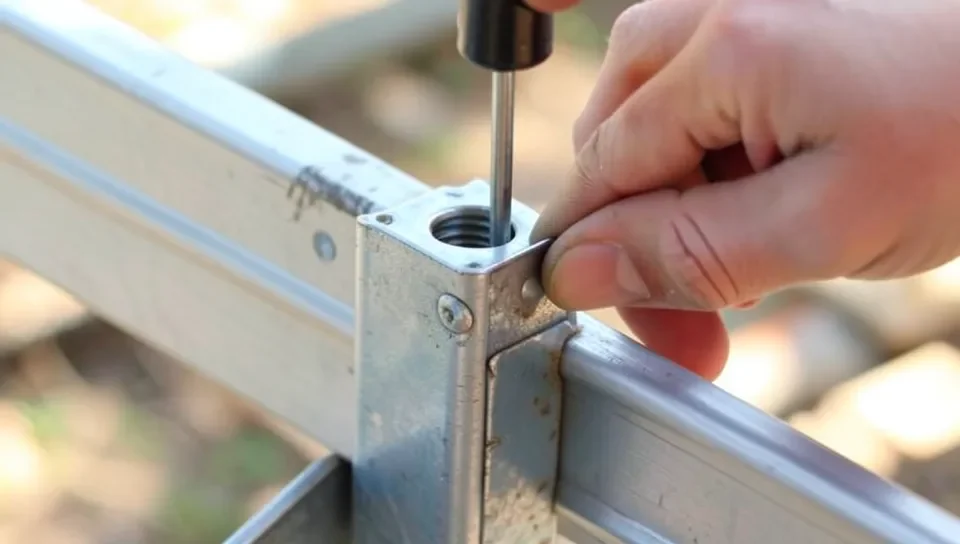
If a joint still moves after tightening and threadlocking, the fix is a metal corner brace or L-bracket screwed across the joint, not glue – wood glue does not bond to metal and has no place in a metal-frame repair despite showing up in some generic bed-frame guides. Position the bracket so it spans the actual joint line, mark and pre-drill pilot holes sized for self-tapping metal screws, and use at least two screws per side of the bracket so it can’t pivot.
Add A Center Support If The Frame Is Sagging
Queen and King frames (54″ or wider) need a center support leg under a beam running the length of the bed – without one, the side rails flex under mattress and body weight even if every bolted joint is perfectly tight, since the sag is a span problem, not a connection problem. Most metal frames have a slot or bracket for a center support bar; if yours doesn’t, a wood center support beam across the middle, resting on its own adjustable leg, works fine paired with a metal frame and is the standard fix even on frames that are otherwise all-metal.
Bed slats spread the mattress weight across the full width of the frame instead of concentrating it on a few contact points – loose or missing slats are a common, overlooked cause of a “wobbly frame” that’s actually a slat problem, not a frame problem.
Check For An Uneven Floor
Place a level across the frame in both directions. If the bed rocks even with every joint tight, the floor itself is uneven, not the frame. Furniture pads or thin shims under the low leg(s) – not under the whole frame – correct this without affecting the joints you just fixed. Re-check with the level after adding pads, since guessing at thickness usually overcorrects.
Common Mistakes That Make A Wobble Worse
Over-tightening a bolt into thin sheet-metal tubing is the single most common mistake – it feels like the fix is working right up until the threads strip, at which point the joint is looser than before you started and now needs a repair rather than just a re-tighten. Using the wrong bolt size after losing original hardware is another frequent problem: a slightly undersized replacement bolt seats but never actually clamps the joint tight, so it looks fixed but isn’t.
Skipping the diagnostic step and bracing every joint “just in case” wastes time and hardware on joints that were never the problem – always confirm which specific connection is moving before reaching for a bracket. And tightening only the visible, easy-to-reach bolts while skipping the ones under the mattress or inside the headboard bracket leaves the actual source of the wobble untouched.
Regular Maintenance
Check bolts every few months, especially in the first year after assembly – new hardware settles and needs a second tightening pass that most people skip. Inspect for cracks, bent rails, or rust at welds during the same check; a bent rail or a cracked weld isn’t a tightening problem and won’t be fixed by any of the steps above.
When To Replace Instead Of Repair
Bent or cracked metal, stripped threads that won’t hold even a larger bolt, sharp edges where paint has chipped and exposed raw metal, or a frame that still wobbles after tightening, threadlocking, and bracing all the joints – these are signs the frame itself is failing, not just loose. At that point, a new frame sized correctly for the mattress and rated for the intended weight is the more reliable and often cheaper fix than continuing to patch a frame that’s structurally compromised. If you’re working with a wood frame instead of metal, see our guide to reinforcing a wood bed frame for joinery-specific fixes.
Frequently Asked Questions
How can I stop my metal bed frame from squeaking?
To stop a metal bed frame from squeaking, tighten all screws and bolts. You can also add rubber washers for extra stability. Lubricate metal joints with a silicone spray to reduce friction and noise.
What tools do I need to stabilize a metal bed frame?
You will need a wrench, screwdriver, and possibly a rubber mallet. These tools help tighten bolts and screws. Additionally, rubber pads can be useful for reducing movement and noise.
Why is my metal bed frame wobbling?
A metal bed frame wobbles due to loose connections or uneven floor. Tighten all joints and use a level to check for balance. Adding extra support legs can also help stabilize the frame.
Can adding slats help stabilize my bed frame?
Yes, adding slats can distribute weight more evenly and increase stability. Ensure they fit snugly and are securely attached. This can prevent sagging and improve overall bed support.
Conclusion
A wobbly metal bed frame is almost always fixable without replacing it: find the actual loose joint, tighten every bolt (including the hidden ones), lock the threads so they stay tight, and brace any joint that still moves. Only a bent rail, cracked weld, or stripped hardware that won’t hold even a larger bolt means it’s time for a new frame instead.
Sponsored / affiliate links. As an Amazon Associate I earn from qualifying purchases. I may earn additional commission from eligible campaigns.