Are Hart and Hyper Tough Batteries Interchangeable? No, Different Systems
No, Hart and Hyper Tough batteries are not interchangeable. Both are 20V Max lithium-ion systems and both are sold exclusively at Walmart, which is exactly why so many people assume one pack should slide into the other brand’s tool. It won’t. The two lines come from different manufacturing arrangements, use a different slide-rail shape on the battery foot, and route different electrical contacts to the tool’s terminals — so even if you could force a Hyper Tough pack onto a Hart drill, the pins wouldn’t line up and the tool wouldn’t power on.
That’s frustrating if you’ve picked up tools from both lines over the years, since Walmart doesn’t make the distinction obvious on the shelf. Below is what actually separates the two systems, what each platform includes, and what to buy instead if you want one battery to cover more of your tools.
Why Hart and Hyper Tough Batteries Don’t Cross Over
Best Genuine Hart 20V Battery Pick
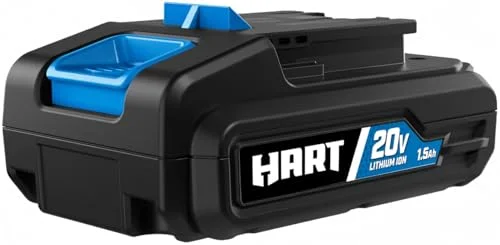 |
HART 20-Volt Lithium-Ion 1.5Ah Battery (HPB01) – $99.99 The genuine Hart-brand replacement battery guaranteed to fit every tool in Hart’s 20V lineup — no cross-brand guesswork.
|
Hart is built by Techtronic Industries (TTI) — the same parent company behind Milwaukee, Ryobi, and AEG — under an exclusive licensing deal with Walmart. Hyper Tough is Walmart’s separate, longer-running budget tool brand, produced through its own supplier agreements rather than TTI’s factories. Two different companies designing two different battery packs almost never land on an identical footprint by accident, and Hart and Hyper Tough didn’t. The battery’s mounting rail, the shape of the locking tab, and the number and spacing of the copper contact pins all differ enough that the packs are keyed against each other on purpose, not just incompatible by coincidence.
Hart’s 20V Battery System
Every tool in Hart’s DIY lineup — drills, impact drivers, circular saws, trim routers — runs on the same 20V Max battery foot, so any Hart 20V pack works in any Hart 20V tool regardless of capacity. Packs are sold in 1.5Ah, 2.0Ah, 4.0Ah, and 5.0Ah sizes; a smaller 1.5Ah battery just means shorter runtime between charges, not reduced compatibility. Hart’s outdoor equipment (mowers, trimmers, blowers) adds a second, separate 40V system, so it’s worth checking the voltage printed on the tool itself before assuming a battery you already own will fit.
Hyper Tough’s 20V Max Battery System
Hyper Tough’s tools run their own 20V Max platform, sold in 2.0Ah and 4.0Ah capacities under model numbers like the HT21-401-003 series. Some newer Hyper Tough packs have gone a step further than a plain battery, building in USB-A and USB-C output ports so the pack doubles as a power bank for charging a phone or work light on a job site — a feature Hart’s lineup doesn’t currently offer. Like Hart, any Hyper Tough 20V Max battery fits any Hyper Tough 20V Max tool; the brand also sells a smaller 12V line for lighter-duty items, which is a separate, non-interchangeable system within Hyper Tough’s own catalog. If you already own one and just need charging basics, see our guide to charging a Hyper Tough drill battery.
The Physical and Electronic Mismatch, Up Close
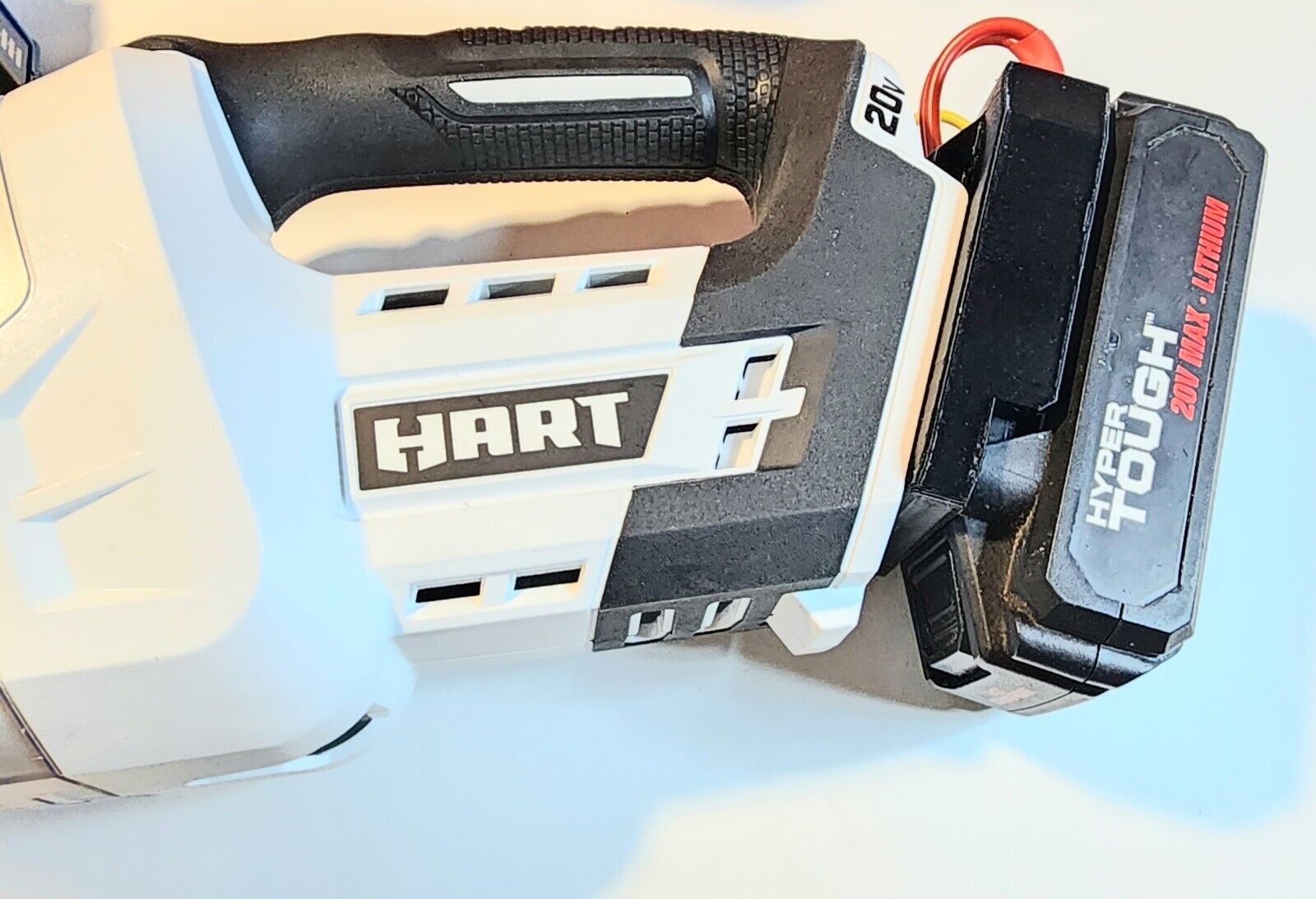
Voltage alone doesn’t guarantee a fit. Two brands can both say “20V Max” and still be mechanically incompatible, because the number describes the cells inside, not the shape of the connector. Picture the battery foot as a small sled: Hart’s sled is wider at the base with the locking tab set toward the front, while Hyper Tough’s sled uses a narrower rail with the tab closer to center. Even if you managed to wedge one onto the other’s rail, the contact pins that carry power and the smaller pins that carry the battery’s temperature/charge-protection signal wouldn’t land on the tool’s matching terminals, so the tool simply won’t complete a circuit.
This is also why swapping batteries between brands isn’t just a performance risk — it’s usually a non-starter mechanically before performance ever enters the picture. A battery that did somehow make partial contact without a matching communication pin could bypass the pack’s built-in overcurrent and overheat protection, which is the real safety reason manufacturers and reviewers alike advise against forcing a fit rather than a marketing reason to sell more batteries.
Correcting A Common Myth: Battery Chemistry
Older write-ups on this topic sometimes claim Hyper Tough still sells Nickel-Cadmium (NiCd) batteries alongside lithium-ion. That’s outdated. Hyper Tough’s current 20V Max and 12V lineups are lithium-ion, same as Hart’s entire 20V and 40V lineup — both brands moved away from NiCd years ago because lithium-ion holds a charge longer in storage and doesn’t suffer the “memory effect” that shortened older NiCd packs’ usable capacity over repeated partial charges. Matching chemistry doesn’t help with interchangeability here, though; it just means neither brand has an older, heavier NiCd pack still floating around that you need to identify separately.
Hart Vs. Hyper Tough: Specs Side By Side
Seeing the two platforms next to each other makes it clearer why “20V” alone was never going to be enough information to guarantee a fit:
| Spec | Hart 20V System | Hyper Tough 20V Max System |
|---|---|---|
| Manufacturer | Techtronic Industries (TTI), exclusive to Walmart | Walmart’s own separate supplier agreements |
| Cell chemistry | Lithium-ion | Lithium-ion |
| Common capacities | 1.5Ah, 2.0Ah, 4.0Ah, 5.0Ah | 2.0Ah, 4.0Ah |
| Other voltage lines | Separate 40V outdoor system | Separate 12V system |
| Notable extra feature | – | Some packs add USB-A/USB-C output ports |
| Fits the other brand’s tools? | No | No |
What About Third-Party Adapters?
Aftermarket adapter plates exist for several cross-brand pairings — small shops sell 3D-printed adapters that let a Hyper Tough battery power a DeWalt 20V Max tool, or let a Ridgid 18V pack run a Hyper Tough tool, for example. Those products only exist because enough people wanted that specific combination to make selling a plastic adapter worthwhile, and they work by physically re-routing the pins from one brand’s layout to the other’s. As of this update, no established, widely-sold adapter exists specifically for running a Hyper Tough battery in a Hart tool or vice versa. If one turns up on a marketplace like Etsy or eBay, treat it the way Pro Tool Reviews treats any third-party battery or adapter: useful in a pinch, but without the manufacturer’s built-in electronic protections, so it carries a higher risk of overheating and will typically void whichever tool’s warranty you’re using it on.
How to Avoid Buying the Wrong Battery
Check the tool’s battery bay, not just the box it came in — Walmart shelves both brands close together, and a Hart-branded box sitting next to a Hyper Tough display makes it easy to grab the wrong pack. Look for the actual logo molded into the tool’s battery port (“HART” or “HYPER TOUGH”), since that’s what has to match the pack. If you own tools from both brands, the simplest fix is keeping one charger and a spare battery for each system rather than hoping a single pack will cover both — there’s no universal Walmart battery that bridges them.
If your real goal is fewer batteries to manage rather than a Hart/Hyper Tough fix specifically, it’s worth comparing full cross-brand compatibility charts before buying your next tool, since some other brand pairs (unlike this one) do share a genuine common platform.
Model numbers are also a faster way to double-check a battery in your hand than trying to eyeball the connector. Hart batteries carry model codes starting with “HPB” (like the HPB01 1.5Ah pack), while Hyper Tough’s current 20V Max packs use the “HT21-401-003” series printed on a label on the battery’s side or bottom. If a listing, a garage-sale battery, or a hand-me-down pack doesn’t show a model code matching one of those two families, don’t assume it’s safe to try — confirm the brand before it ever touches your tool, since forcing an unmarked or mismatched pack risks the tool’s charging circuit as much as the battery’s own protection chip.
Frequently Asked Questions
Are Hart and Hyper Tough Batteries Compatible?
No. Hart and Hyper Tough use differently shaped battery rails and different contact-pin layouts, so a battery from one brand will not physically seat or power a tool from the other, even though both are 20V Max systems.
Can You Use A Hyper Tough Battery In A Hart Tool?
No. The Hyper Tough battery’s mounting foot and pin spacing don’t match Hart’s tool ports, so the battery won’t lock in place or make electrical contact.
Why Are Hart And Hyper Tough Both 20V But Not Interchangeable?
20V Max describes the cell voltage, not the physical connector. Hart is made by Techtronic Industries and Hyper Tough is produced through Walmart’s own separate supplier agreements, so each brand engineered its own battery-foot shape and pin layout independent of the other.
Do Any Adapters Exist For Hart And Hyper Tough Batteries?
Not as an established product as of this writing. Third-party adapters exist for other pairs, such as Hyper Tough to DeWalt or Ridgid, but no widely-sold adapter currently bridges Hart and Hyper Tough specifically.
Bottom Line
Hart and Hyper Tough batteries share a voltage class and a retailer, but that’s where the overlap ends — different manufacturers built different battery feet and different pin layouts, so the packs are not interchangeable in either direction. Buy replacement or spare batteries from whichever brand is printed on your tool’s battery port, and if you’re mixing tools from both lines, plan on keeping two separate chargers rather than looking for a single pack that covers everything.
Sponsored / affiliate links. As an Amazon Associate I earn from qualifying purchases. I may earn additional commission from eligible campaigns.