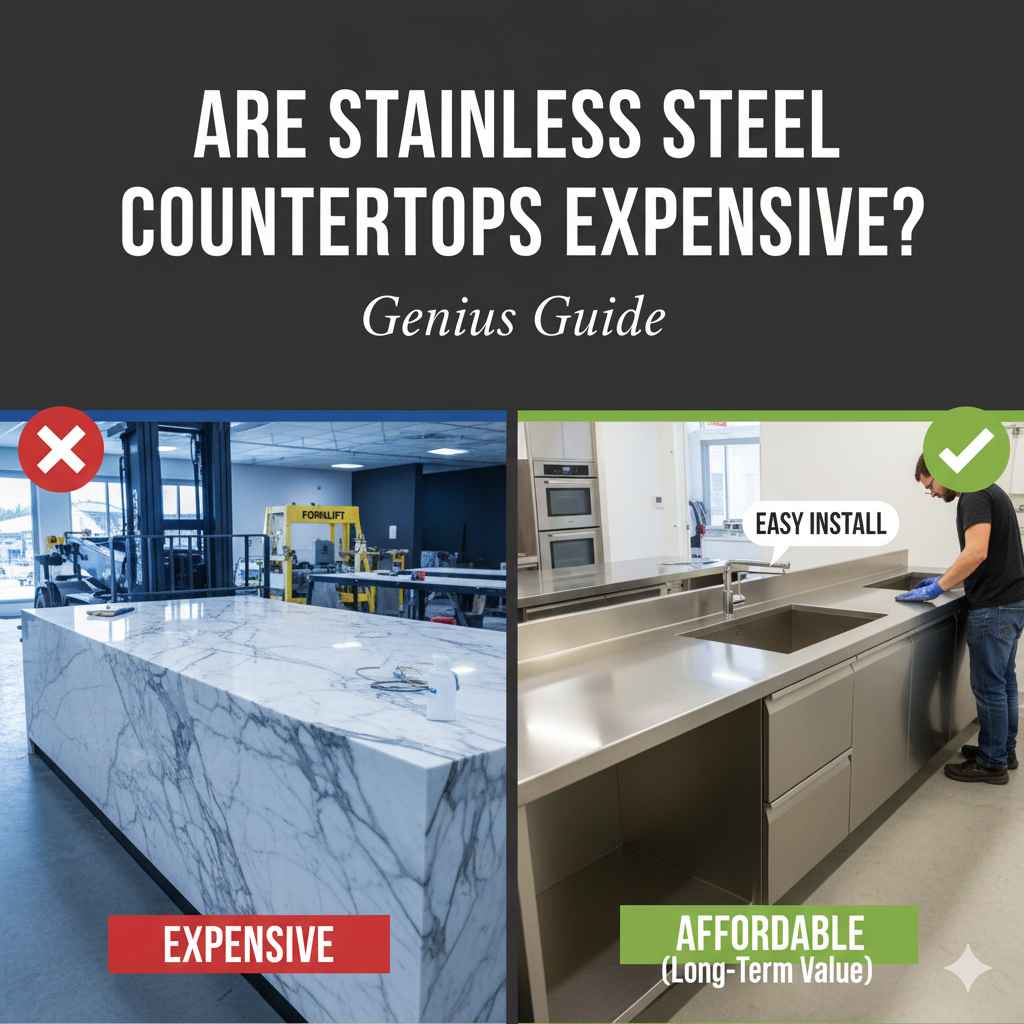
Are Stainless Steel Countertops Expensive? Genius Guide
Stainless steel countertops are not necessarily expensive when you look at their long-term value, durability, and the range of options available. While they can have a higher upfront cost than some materials, their longevity and low maintenance often make them a cost-effective choice for busy kitchens. This guide will break down the costs and help you decide if they’re the right fit for your home.
Hey there, fellow DIY adventurers and home improvers! Md Meraj here. Are you dreaming of a kitchen that looks sleek, stays clean, and lasts for ages? Many of us picture stainless steel countertops for that modern, professional kitchen vibe. But then the big question hits: “Are stainless steel countertops expensive?” It’s a common worry, and rightly so! Seeing that shiny surface can make you think it’s only for high-end renovations. But don’t let that stop you from exploring this fantastic option. We’re going to break down the costs, explore what makes them special, and uncover how you can get that gorgeous stainless steel look without breaking the bank. Get ready to discover the true value of stainless steel for your countertop project!
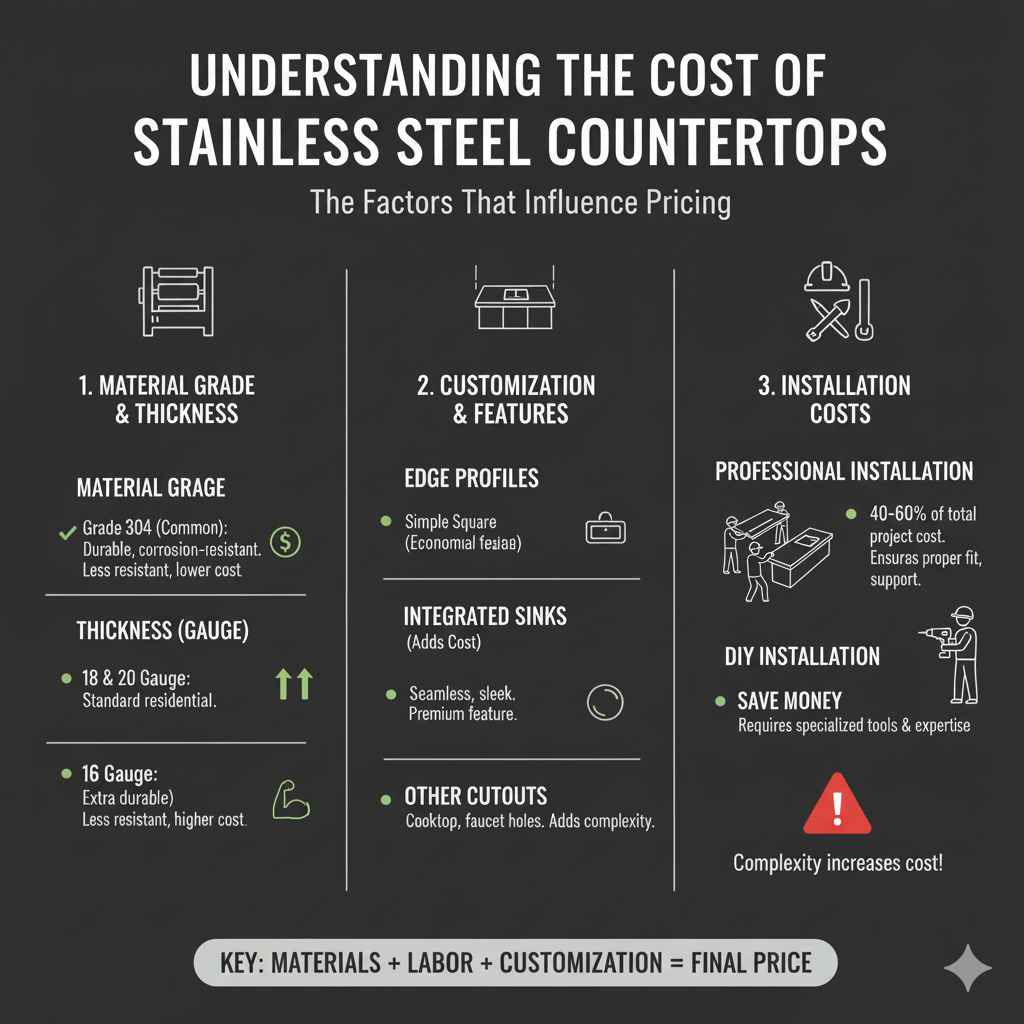
Understanding the Cost of Stainless Steel Countertops
When we talk about the price of stainless steel countertops, it’s more than just a single number. Think of it like buying lumber – a simple pine board is different from a piece of exotic hardwood. Stainless steel countertops have a few factors that influence their final price tag. We’ll look at these so you can get a clear picture.
Material Grade and Thickness
Just like tools have different strengths, the stainless steel used for countertops can vary. The most common grades you’ll find are:
- Grade 304: This is the workhorse of stainless steel. It’s very durable, resistant to rust and corrosion, and easy to clean. It’s a great all-around choice for kitchens and usually the most popular for countertops.
- Grade 430: This grade is a bit less expensive than 304. It’s still good quality and corrosion-resistant, but it’s not quite as resistant to staining or extreme conditions as 304. It’s often used in more budget-friendly applications.
The thickness of the stainless steel sheet also plays a role. Thicker steel is more robust and can withstand heavier use, but it also costs more. Most residential countertops use a gauge of 18 or 20, which is plenty strong for everyday kitchen life. Thicker gauges, like 16, offer extra durability but come at a higher price point.
Customization and Features
This is where you can really tailor your countertops to your kitchen and your budget. Standard, rectilinear countertops are generally less expensive than those with intricate designs, integrated sinks, or unique edge profiles.
- Edge Profiles: A simple square edge is the most economical. More decorative edges, like a bullnose or a custom bevel, will add to the cost.
- Integrated Sinks: Having your sink seamlessly welded into the countertop creates a beautiful, sleek look and eliminates crevices where dirt can hide. However, this customization is also a premium feature that increases the price.
- Backsplashes and Cutouts: Any special shapes, cutouts for cooktops or sinks, or built-in backsplashes will add to the fabrication time and complexity, thus increasing the overall cost.
Installation Costs
This is a big one! While you might be a talented DIYer, installing stainless steel countertops often requires specialized tools and expertise to ensure they are perfectly level, properly supported, and seamlessly joined. Professional installation can add anywhere from 40% to 60% to the total project cost, depending on the complexity and your location.
If you’re feeling confident and have the right tools (like specialized clamps and metalworking tools), tackling the installation yourself can be a great way to save money. Just be sure to do your research and prioritize safety!
Stainless Steel Countertop Pricing: A Comparison
To truly understand if stainless steel countertops are expensive, it’s helpful to compare them to other popular countertop materials. This gives you a better perspective on their value. Prices can vary significantly based on brand, location, and specific features, but here’s a general idea:
| Countertop Material | Average Price Per Square Foot (Installed) | Key Considerations (for beginners) |
|---|---|---|
| Stainless Steel | $75 – $150+ | Durable, hygienic, modern look. Can show scratches and fingerprints. Installation can be tricky for DIY. |
| Granite | $50 – $200+ | Natural stone, unique patterns. Needs sealing regularly to prevent stains. Heavy. |
| Quartz | $60 – $200+ | Engineered stone, very durable, non-porous, many color options. Less heat resistant than granite. |
| Laminate | $20 – $60 | Most affordable, lightweight, many patterns. Not very heat or scratch resistant. Can look less premium. |
| Butcher Block (Wood) | $40 – $100 | Warm, natural feel. Requires regular oiling/sealing. Can scratch and dent. |
| Marble | $75 – $250+ | Luxurious, classic look. Very porous, stains easily, and can etch. Requires expert care. |
As you can see, stainless steel falls somewhere in the middle to upper-middle range. It’s more affordable than high-end marble or certain elaborate quartz designs, but more expensive than laminate or basic butcher block. The key is to look beyond the initial price tag.
The True Value: Why Stainless Steel Can Be a Smart Investment
So, “are stainless steel countertops expensive?” The answer often lies in what you get for your money. Stainless steel offers a unique set of benefits that can make it a surprisingly cost-effective choice over time.
Longevity and Durability
This is arguably stainless steel’s biggest selling point. When properly cared for, stainless steel countertops can last a lifetime. They don’t chip, crack, or stain like many other materials. They are highly resistant to heat, so you can place hot pots and pans directly on the surface without worry – no need for as many trivets!
This kind of durability means you won’t be replacing them anytime soon, which saves you money in the long run compared to materials that might need replacing every 10-15 years.
Hygienic and Easy to Clean
Stainless steel is non-porous. This means bacteria, mold, and viruses have nowhere to hide. It’s incredibly easy to wipe down and sanitize, making it a top choice for kitchens where food safety is paramount. Many professional kitchens opt for stainless steel for exactly this reason.
For busy households, especially those with kids or frequent cooking, the ease of cleaning is a huge time and stress saver. Think about the effort involved in scrubbing away food particles from porous materials versus a quick wipe-down of stainless steel. Easy cleaning also means fewer harsh chemicals needed, which is better for your health and the environment.
Resale Value
A kitchen with durable, attractive, and easy-to-maintain countertops can significantly boost your home’s resale value. Stainless steel countertops project an image of quality and modern functionality that many potential home buyers find desirable. While it’s hard to put an exact price on this, it’s an intangible benefit that adds to the overall value proposition.
Heat Resistance
Tired of using coasters and trivets for everything? Stainless steel offers excellent heat resistance. You can place hot pans directly on the surface without fear of scorching or damage. This convenience can be a game-changer in a busy kitchen and saves you from purchasing and storing as many heat-protective accessories.
Resale Value
A kitchen with durable, attractive, and easy-to-maintain countertops can significantly boost your home’s resale value. Stainless steel countertops project an image of quality and modern functionality that many potential home buyers find desirable. While it’s hard to put an exact price on this, it’s an intangible benefit that adds to the overall value proposition.
Cost-Saving Strategies for Stainless Steel Countertops
Now that we understand the costs and value, let’s talk about how to make stainless steel countertops more affordable. It’s not always about getting the cheapest option; it’s about getting the best value that fits your budget.
Consider Pre-Fabricated or Stock Sizes
Like buying lumber, sometimes you can find standard-sized stainless steel countertops that might fit your kitchen layout perfectly. Going with pre-fabricated pieces or stock sizes can be significantly cheaper than fully custom fabrication. You’ll need to measure your space carefully to see if this is a viable option.
Look for Scratch-Resistant Finishes
One of the main concerns some people have is scratching. While stainless steel can scratch, some finishes disguise them better than others. Textured or brushed finishes are often more forgiving than highly polished, mirror-like surfaces. A brushed finish can make everyday wear and tear less noticeable.
Explore Different Gauges and Grades (Wisely)
As mentioned, Grade 430 is typically a bit less expensive than Grade 304. For many residential kitchens that don’t involve extreme industrial use, Grade 430 might be perfectly adequate. Similarly, an 18-gauge stainless steel offers excellent durability for most home kitchens and might be more budget-friendly than a thicker 16-gauge. Just make sure you’re not sacrificing essential durability for your specific needs.
DIY Installation (with caution)
If you’re comfortable working with metal and have the right tools, installing your own stainless steel countertops can lead to substantial savings. This might involve cutting pieces to size, fabricating edges, and securing them in place. Proper support underneath the counters is crucial for stability and preventing warping.
If you’re not experienced, consider hiring a professional for just the installation, or at least for the most critical parts like welding or complex edge finishing. You can sometimes order custom-cut pieces from a fabricator and then install them yourself to save on labor costs.
Repurposing or Upcycling
This is a more advanced DIY approach, but sometimes you can find used stainless steel countertops from restaurant closures, remodeling projects, or architectural salvage yards. These can be a fraction of the cost of new materials. However, they may require extensive cleaning, polishing, or even resurfacing, and you’ll need to be flexible with dimensions and features.
Consider Stainless Steel “Wraps” or Overlays
For a much lower cost, you can sometimes find thin stainless steel sheets or ‘wraps’ that can be adhered over existing, solid countertops (like laminate or plywood). This offers the look of stainless steel without the full fabrication and installation cost. However, these are generally less durable, more prone to dents, and might not offer the seamless, professional finish of solid stainless steel. They are more of a cosmetic upgrade than a long-term material solution.
Checking out resources like EPA’s information on stainless steel sustainability can also highlight the long-term benefits and material lifecycle, reinforcing its value.
Pros and Cons of Stainless Steel Countertops Summarized
To help you weigh your options, here’s a quick rundown of the advantages and disadvantages. This should make your decision-making process much easier!
Pros:
- Extreme Durability: Withstands heat, stains, and most impacts without damage.
- Hygienic: Non-porous surface resists bacteria and is easy to sanitize.
- Heat Resistant: Can handle hot pots and pans directly on the surface.
- Seamless Look: Can be fabricated with integrated sinks for a sleek appearance.
- Modern Aesthetic: Offers a professional, contemporary look that is timeless.
- Recyclable: Stainless steel is an environmentally friendly material.
- Low Maintenance: Easy to clean with simple soap and water.
- Resale Value: Can increase the appeal and value of your home.
Cons:
- Can Show Fingerprints: Highly polished surfaces can require frequent wiping.
- Can Scratch: While tough, abrasive objects can scratch the surface.
- Can Dent: Heavy impacts can cause dents, especially on thinner gauges.
- Noise: Pots and pans can be noisier on stainless steel compared to other materials.
- Cost: Higher upfront cost compared to laminate or basic wood.
- DIY Installation Difficulty: Requires precision and specialized tools for a professional finish.
- Cold Appearance: Some find the metallic look less warm than wood or stone.
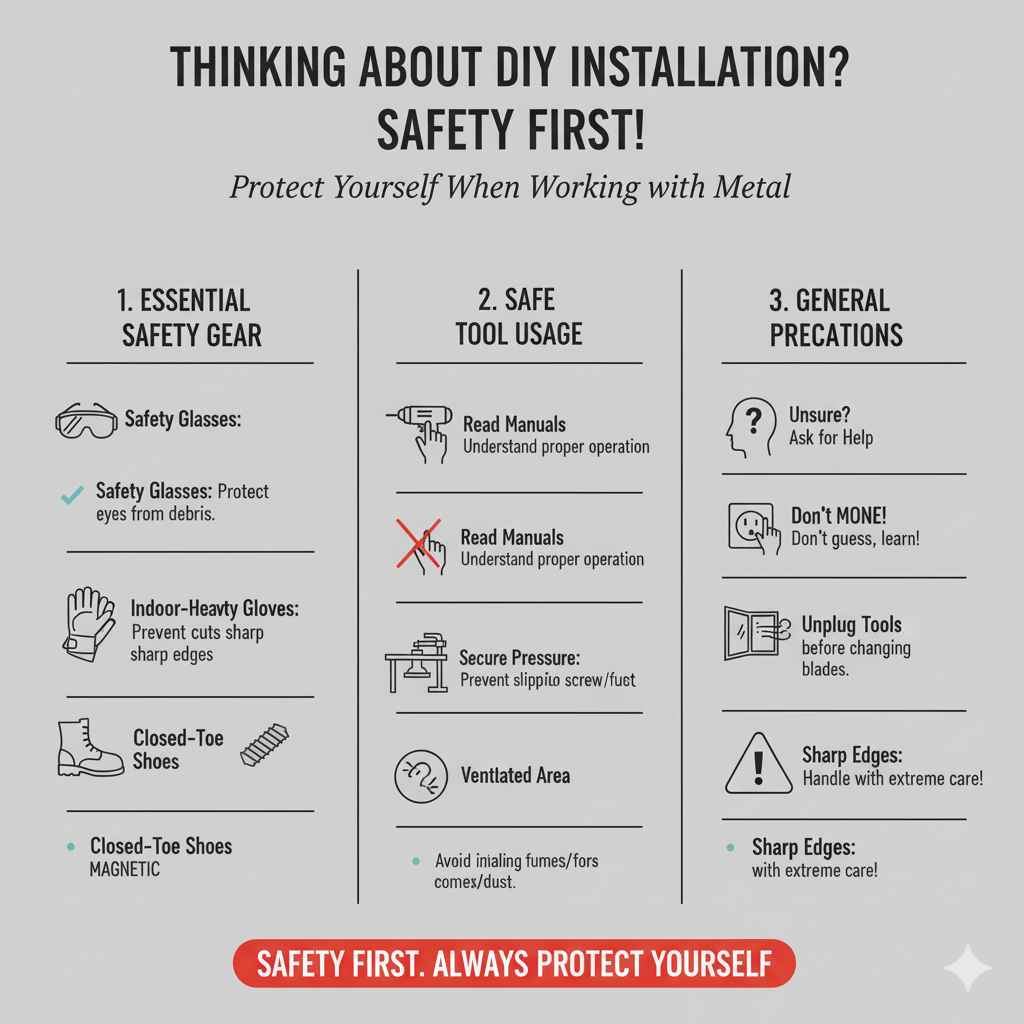
Thinking About DIY Installation? Safety First!
If you decide that tackling the installation yourself is the way to go to save money, it’s super important to prioritize safety. Remember, cutting and handling sheet metal can be tricky. Always wear:
- Safety Glasses: To protect your eyes from flying debris or sharp edges.
- Heavy-Duty Gloves: Thick work gloves are essential to prevent cuts from sharp metal edges.
- Closed-Toe Shoes: Protect your feet from dropped tools or materials.
When working with tools like an angle grinder or jigsaw for cutting metal, make sure you understand how to use them safely. Read the tool’s manual, secure your workpiece properly, and work in a well-ventilated area. If you’re unsure about any step, it’s always better to ask for advice from an experienced friend or professional, or to leave that part to the experts.
Frequently Asked Questions (FAQ)
Q1: Are stainless steel countertops truly “expensive” compared to other options?
A: “Expensive” is relative. Stainless steel countertops typically fall in the mid-to-high price range, often comparable to mid-grade granite or quartz. However, their exceptional durability and longevity mean the long-term cost per year of use can be very competitive, making them a smart investment rather than just an expense.
Q2: Will stainless steel countertops scratch easily?
A: Yes, stainless steel can scratch, especially highly polished finishes. However, matte or brushed finishes are much more forgiving, and minor scratches often blend in over time. For most home kitchens, scratches are a sign of use, not a major flaw, given the material’s other benefits.
Q3: How do I get rid of fingerprints on stainless steel?
A: Fingerprints are most visible on shiny, polished surfaces. To clean them, use a soft cloth (like microfiber) dampened with mild soap and water or a specialized stainless steel cleaner. Always wipe in the direction of the grain. A final polish with a dry cloth can help reduce smudges.
Q4: Can I put hot pots directly on stainless steel countertops?
A: Yes! One of the biggest advantages of stainless steel is its excellent heat resistance. You can place hot pots and pans directly from the stove or oven onto the countertop without worrying about scorching or heat damage, although using trivets is still a good habit to protect the surface from extreme, prolonged heat or potential discoloration.
Q5: What is the most affordable way to get stainless steel countertops?
A: The most affordable ways include considering less premium finishes (like brushed over mirror polish), opting for standard sizes over fully custom designs, and, if you’re skilled and equipped, performing a DIY installation. Exploring stock sizes or even carefully sourced used materials can also cut costs significantly.
Q6: Is a thinner gauge stainless steel countertop worth the savings?
A: A thinner gauge (e.g., 20-gauge) will be less expensive upfront. For light to moderate use in a residential kitchen, it might be sufficient. However, it will be more prone to denting and can feel less substantial than a thicker gauge (e.g., 18 or 16). If budget is extremely tight, it’s an option, but weigh the potential for damage against the savings.
Q7: Are stainless steel countertops noisy?
A: They can be noisier than materials like wood or quartz when you’re dropping utensils or setting down plates. This is because stainless steel is a hard, resonant material. Some people mitigate this by opting for a thicker gauge stainless steel, which can be less prone to vibration, or by ensuring good sound-dampening material is installed underneath the countertop.
Conclusion
So, back to our main question: are stainless steel countertops expensive? When you examine the full picture – from their incredible durability that can last a lifetime, to their hygienic properties that simplify kitchen cleanup, their heat resistance, and even their contribution to your home’s resale value – the investment begins to make a lot of sense.