
Are Stihl Pole Saws Gas and Oil Mix: Essential Guide
Yes, Stihl pole saws that are gas-powered require a specific gasoline and oil mixture. Using the wrong mixture can damage your engine.
Working with a gas-powered pole saw can feel a bit tricky at first, especially when it comes to fueling it. Many homeowners wonder, “Do Stihl pole saws need a gas and oil mix?” The short answer is a definite yes, if it’s a gas model! It’s one of those common questions that can lead to confusion, but it’s actually quite simple once you know the right way. Getting this fuel mix just right is super important for your pole saw to run smoothly, last longer, and perform at its best. Don’t worry, I’m here to guide you through it step-by-step, making sure you get it perfect every time. Let’s break down exactly what you need to know to keep your Stihl pole saw happy and ready for action.
Understanding Your Stihl Pole Saw Fuel Needs
Stihl is known for its reliable outdoor power equipment, and their pole saws are no exception. For their gasoline-powered models, proper fuel is the lifeblood of the engine. Unlike your car, which uses pure gasoline, most high-performance 2-stroke engines, like those in many Stihl pole saws, need a blend of gasoline and special 2-stroke engine oil. This might sound a little unusual if you’re new to gas-powered tools, but this oil is mixed directly into the gas. It lubricates the critical moving parts inside the small, powerful engine as the fuel burns. Without this oil mixed in, the engine would quickly overheat and seize up, causing expensive damage.
Why the Mix? The Science Behind 2-Stroke Engines
Before we get to mixing, let’s quickly touch on why this is necessary. Most Stihl pole saws use what’s called a 2-stroke engine. These engines are simpler than 4-stroke engines (found in most cars) because they perform their power cycle in just two strokes of the piston. The big difference is that they don’t have a separate oil reservoir for lubrication. Instead, the oil is mixed with the gasoline. As the fuel mixture enters the engine, the oil coats the cylinder walls, piston, connecting rod, and crankshaft bearings, providing essential lubrication. Then, it’s burned along with the gasoline. This design makes the engine lighter and more powerful for its size, which is why it’s perfect for tools like pole saws where weight and portability are key.

The Golden Ratio: What Gas and Oil Mixture Does Stihl Recommend?
This is the most crucial part of fueling your Stihl pole saw correctly. Stihl recommends a specific ratio of gasoline to 2-stroke engine oil for their equipment. For most of their gasoline-powered tools, including pole saws, the standard recommendation is a 50:1 mixture.
What does 50:1 mean?
It means you mix 50 parts of gasoline with 1 part of high-quality Stihl 2-stroke engine oil.
This ratio is carefully engineered to provide the right amount of lubrication for optimal performance and engine longevity. Using too much oil can lead to carbon buildup, smoky exhaust, and reduced engine power. Using too little oil will starve the engine of lubrication, leading to overheating and potentially catastrophic engine failure. Always stick to the manufacturer’s recommended ratio.
Choosing the Right Gasoline
For your Stihl pole saw, you should use fresh, unleaded gasoline with an octane rating of 89 or higher. It’s generally best to use gasoline from a reputable gas station. Avoid using gas that has been stored for a long time, as it can degrade and cause issues.
Octane Rating: Stihl recommends a minimum of 89 octane. Higher octane fuel can be used but isn’t necessary.
Ethanol Content: According to the Stihl USA website, it’s best to use gasoline containing no more than 10% ethanol (often labeled as E10). While some engines can tolerate higher ethanol blends, it’s a good practice to stick to E10 or less to avoid potential issues with fuel system components and performance.
Choosing the Right 2-Stroke Oil
Using the correct 2-stroke oil is just as important as the correct ratio. Stihl engines are designed to work best with high-quality synthetic 2-stroke engine oil, formulated for air-cooled 2-stroke engines.
Stihl 2-Stroke Oil: Stihl has its own line of excellent 2-stroke oils (like Stihl HP Ultra and Stihl HP Super). These are specifically designed and tested for their engines.
Other Premium Oils: If you can’t find Stihl brand oil, look for a high-quality, air-cooled 2-stroke engine oil that meets JASO FD or ISO-L-EGD specifications. These are industry standards for high-performance 2-stroke oils that ensure good lubrication, low smoke, and minimal deposits.
Avoid: Never use 4-stroke oil or older conventional 2-stroke oils not designed for modern high-performance engines.
Step-by-Step: How to Mix Gas and Oil for Your Stihl Pole Saw
Now that you understand the “why” and the “what,” let’s get to the hands-on part. Mixing fuel is a straightforward process, but it requires careful measurement.
What You’ll Need:
Approved Fuel Container: Use a clean, specifically designed fuel container for gasoline. They usually have a spout and a built-in venting system.
Fresh Unleaded Gasoline: 89 octane or higher, with no more than 10% ethanol.
High-Quality 2-Stroke Engine Oil: Stihl brand or equivalent meeting JASO FD/ISO-L-EGD standards.
Measuring Cup or Tool: Many oil bottles have built-in measurers, or you can use a dedicated, clean measuring cup.
Funnel: To help pour the mixture into your pole saw’s fuel tank.
The Mixing Process:
1. Start with Gasoline: Pour the required amount of gasoline into your approved fuel container first. It’s easier to add the oil to the gas than the other way around, and it helps ensure proper mixing. For a 50:1 ratio, if you plan to mix 1 gallon of fuel, you’ll start with just under 1 gallon of gas to leave room for the oil.
2. Add the Exact Amount of Oil: This is where precise measurement is key. For a 50:1 ratio:
If you are mixing 1 gallon (128 fluid ounces) of gasoline, you need 2.6 fluid ounces of oil.
If you are mixing 5 liters (approximately 169 fluid ounces) of gasoline, you need approximately 34 ml of oil.
Many oil bottles have convenient measurement guides. For example, if you’re mixing a 1-gallon batch, you’d look for the line corresponding to 2.6 oz. on your oil bottle’s measuring spout.
It’s often easier to remember the amount of oil for smaller batches. For example, for a 1-liter (approx. 33.8 oz) mix, you’d need about 0.67 oz (or 20 ml) of oil.
3. Secure the Container: Tightly close the lid of the fuel container.
4. Shake Thoroughly: This step is vital! Shake the container vigorously for at least 30 seconds. You want to ensure the oil and gasoline are completely blended. An improperly mixed fuel can still lead to engine problems.
5. Label the Container: It’s a good practice to label the fuel container with “50:1 Fuel Mix” and the date it was mixed. This helps prevent accidental use of old or incorrectly mixed fuel.
Table: Common Fuel Mix Ratios (for demonstration purposes, always verify your specific model needs)
| Ratio | Gasoline Amount (Gallons) | Oil Amount (Fluid Ounces) | Gasoline Amount (Liters) | Oil Amount (Milliliters) |
|---|---|---|---|---|
| 50:1 | 1 | 2.6 | 5 | 100 |
| 2.5 | 6.4 | 10 | 200 | |
| 5 | 12.8 | 25 | 500 |
Note: Always use the most precise measurement tools available. These figures provide a general idea. Refer to your Stihl pole saw manual for the exact recommended quantities.
Adding Fuel to Your Pole Saw
1. Locate the Fuel Cap: Your Stihl pole saw will have a fuel tank with a cap. Make sure the engine is off and cool.
2. Wipe Around the Cap: Before opening the fuel cap, wipe the area around it with a clean rag. This prevents dirt and debris from falling into the fuel tank, which can clog the fuel filter or carburetor.
3. Open the Fuel Cap: Slowly unscrew the fuel cap. There may be a slight pressure release.
4. Use a Funnel: Insert a clean funnel into the fuel tank opening.
5. Pour Carefully: Slowly pour the mixed fuel from your container into the funnel. Avoid overfilling. Leave a little room at the top.
6. Replace the Fuel Cap: Tightly secure the fuel cap.
7. Clean Up: Wipe any spilled fuel from the pole saw with a clean rag.
Maintaining Your Stihl Pole Saw and Fuel
Proper fuel mixing is a cornerstone of pole saw maintenance, but there are other aspects to consider to keep your tool in top shape.
Fresh Fuel is Best
Gasoline, especially with ethanol, degrades over time. When gasoline sits for 30 days or more, it can start to lose its volatility and lead to gumming and deposits in the fuel system.
Mix Only What You Need: Try to mix only the amount of fuel you expect to use within a few weeks.
Use a Fuel Stabilizer: If you anticipate storing fuel for longer periods (up to 6 months), use a fuel stabilizer. This helps prevent degradation and keeps the fuel fresh. Add it to the gasoline before mixing with oil.
Proper Storage: Store your mixed fuel in an approved container in a cool, dry, well-ventilated area, away from direct sunlight and heat sources.
Stihl’s Recommended Fuel and Oil Products
Stihl offers pre-mixed fuel solutions that take the guesswork out of mixing. For consumers, they offer MotoMix.
Stihl MotoMix: This is a high-performance fuel mixture specifically designed for Stihl 2-stroke engines. It’s a portion-controlled fuel that does not contain ethanol and has a longer shelf life. It’s more expensive than mixing your own, but it offers convenience and guaranteed quality.
Stihl 2-Stroke Engine Oil: As mentioned, using Stihl branded oils is often the best choice. Their HP Ultra 2-stroke oil is a fully synthetic formulation that provides excellent lubrication, reduces wear, and burns cleaner for less exhaust. Stihl HP Super is another excellent option designed for a broad range of Stihl engines. You can learn more about their oil performance on the Stihl global resources.
When to Use Different Mix Ratios
While 50:1 is the most common ratio for modern Stihl 2-stroke engines, it’s essential to consult your specific pole saw’s owner’s manual. In rare cases or for older equipment, Stihl might have recommended different ratios (like 40:1). Always, always check your manual.
Troubleshooting Fuel Issues
Engine won’t start / runs rough: This could be due to stale fuel, incorrect fuel mix, or a clogged fuel filter. Try fresh, correctly mixed fuel.
Excessive smoke: Too much oil in the mix or using the wrong type of oil.
Loss of power: Could be stale fuel, incorrect mix, or a clogged air filter.
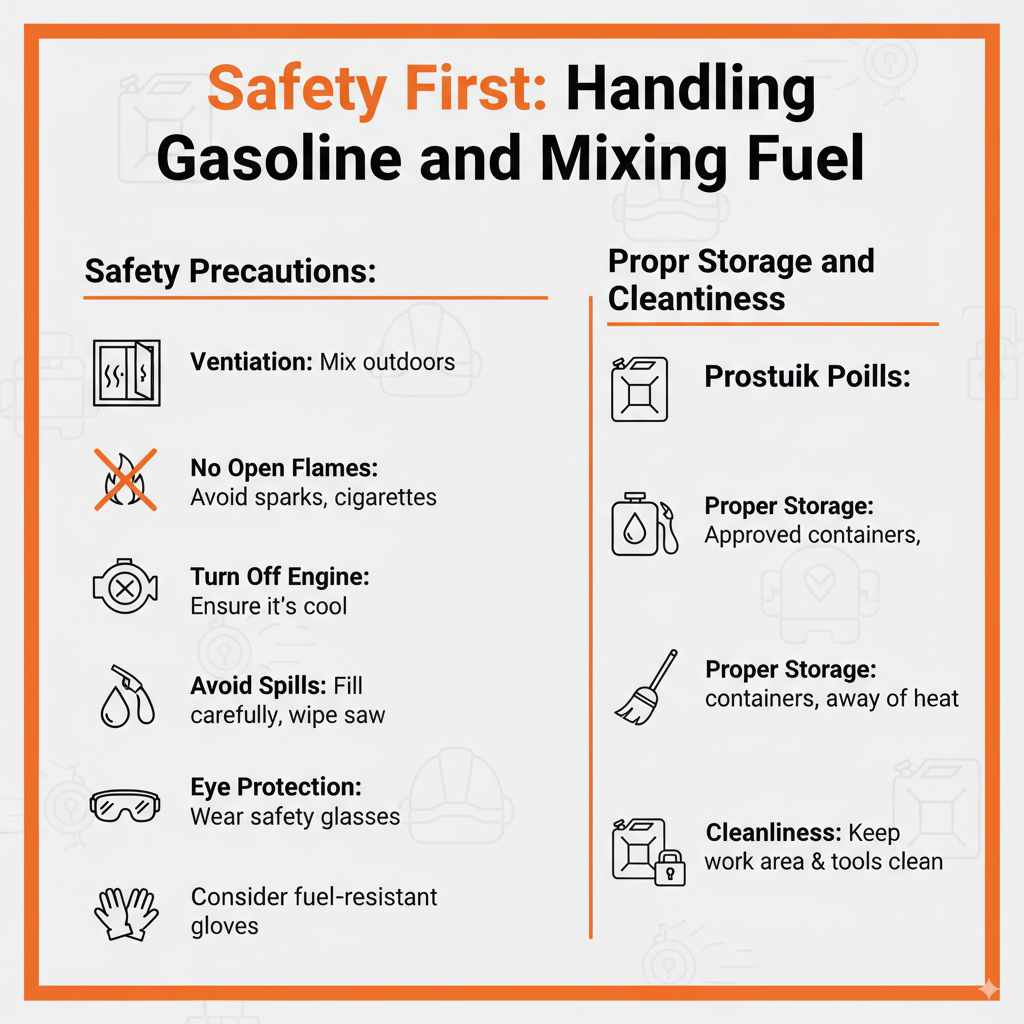
Safety First: Handling Gasoline and Mixing Fuel
Working with gasoline requires attention to safety. It’s flammable and its fumes can be harmful.
Safety Precautions:
Ventilation: Always mix fuel in a well-ventilated outdoor area. Never mix indoors or in an enclosed space.
No Open Flames: Keep away from sparks, open flames, pilot lights, stoves, heaters, cigarettes, or anything that could ignite the fumes.
Turn Off Engine: Ensure the pole saw’s engine is off and cool before refueling.
Avoid Spills: Fill the fuel tank slowly and carefully. If you spill fuel on the saw, wipe it off before starting the engine.
Eye Protection: Wear safety glasses to protect your eyes from splashes.
Gloves: Consider wearing fuel-resistant gloves.
Proper Storage: Store gasoline and mixed fuel in approved containers away from living areas and heat sources.
Cleanliness: Keep your work area, tools, and fuel containers clean to prevent contamination.
Frequently Asked Questions About Stihl Pole Saw Fuel Mix
Q1: Do all Stihl pole saws use a gas and oil mix?
No, only Stihl pole saws that are powered by gasoline engines require a gas and oil mix. Battery-powered and electric pole saws do not use fuel and therefore do not require any fuel mixture. Always confirm your specific model’s power source.
Q2: What is the most common gas and oil mix ratio for Stihl pole saws?
For most modern Stihl gas-powered pole saws, the recommended fuel mix ratio is 50:1 (50 parts gasoline to 1 part high-quality 2-stroke oil). However, always check your owner’s manual for the exact ratio specified for your model.
Q3: Can I use regular 4-stroke motor oil in my Stihl pole saw?
Absolutely not. Regular 4-stroke motor oil is not designed for 2-stroke engines and will not provide the correct lubrication. Using it will cause severe engine damage. You must use a specifically formulated 2-stroke engine oil for air-cooled engines.
Q4: What happens if I use the wrong gas and oil mix ratio?
If you use too little oil, the engine’s internal parts will not be adequately lubricated, leading to overheating, increased wear, and premature engine failure. If you use too much oil, it can cause excessive smoke, carbon buildup on the piston and exhaust port, fouled spark plugs, and reduced engine performance and power.
Q5: How long is mixed fuel good for?
Freshly mixed fuel is best used within 30 days. After that, gasoline can start to degrade, and the oil and gas can separate, leading to performance issues and potential engine damage. Using a fuel stabilizer can extend the shelf life for up to 6 months. Always store mixed fuel properly.
Q6: Can I use regular gasoline from my car if I mix the oil in?
Yes, you can use unleaded gasoline with an octane rating of 89 or higher (ideally with no more than 10% ethanol – E10) from a reputable gas station. The crucial part is ensuring you mix it with the correct type and amount of 2-stroke oil at the recommended ratio.
Q7: Where can I find my Stihl pole saw’s owner’s manual if I lost it?
You can usually find an electronic version of your Stihl owner’s manual on the official Stihl website for your region (e.g., Stihl USA, Stihl Canada, Stihl UK). You’ll typically need to enter your pole saw’s model number or serial number to download the correct manual.
Conclusion
You’ve now got a clear understanding of the fuel your Stihl gas-powered pole saw needs. Remember, it’s all about that precise 50:1 mix of fresh, unleaded gasoline (89+ octane, max 10% ethanol) and high-quality 2-stroke engine oil. By following these simple steps and safety guidelines, you’re not just fueling your tool; you’re investing in its performance, longevity, and your own safety. Mixing your own fuel is an economical and rewarding part of owning a gas-powered pole saw, making you more self-sufficient and ensuring your tool is always ready for those trimming jobs. Keep your fuel container clean, always shake it well, and never hesitate to consult your owner’s manual if you’re ever in doubt. Happy cutting, and enjoy the satisfaction of a well-maintained tool at work!