Hand Saw Vs Hacksaw: Which Tool is Right for Your Project?
A hand saw and a hacksaw look similar at a glance – both are single-blade saws worked by hand – but their tooth geometry is built for completely different materials. A hand saw has large, widely-spaced teeth designed to clear wood chips on the push stroke; a hacksaw has a thin, replaceable blade with small, tightly-packed teeth designed to shear through metal without the blade snapping. Use the wrong one and you’ll either wreck the blade or take ten times longer than necessary. Here’s how to tell them apart and when to reach for each.
Hand Saw Basics
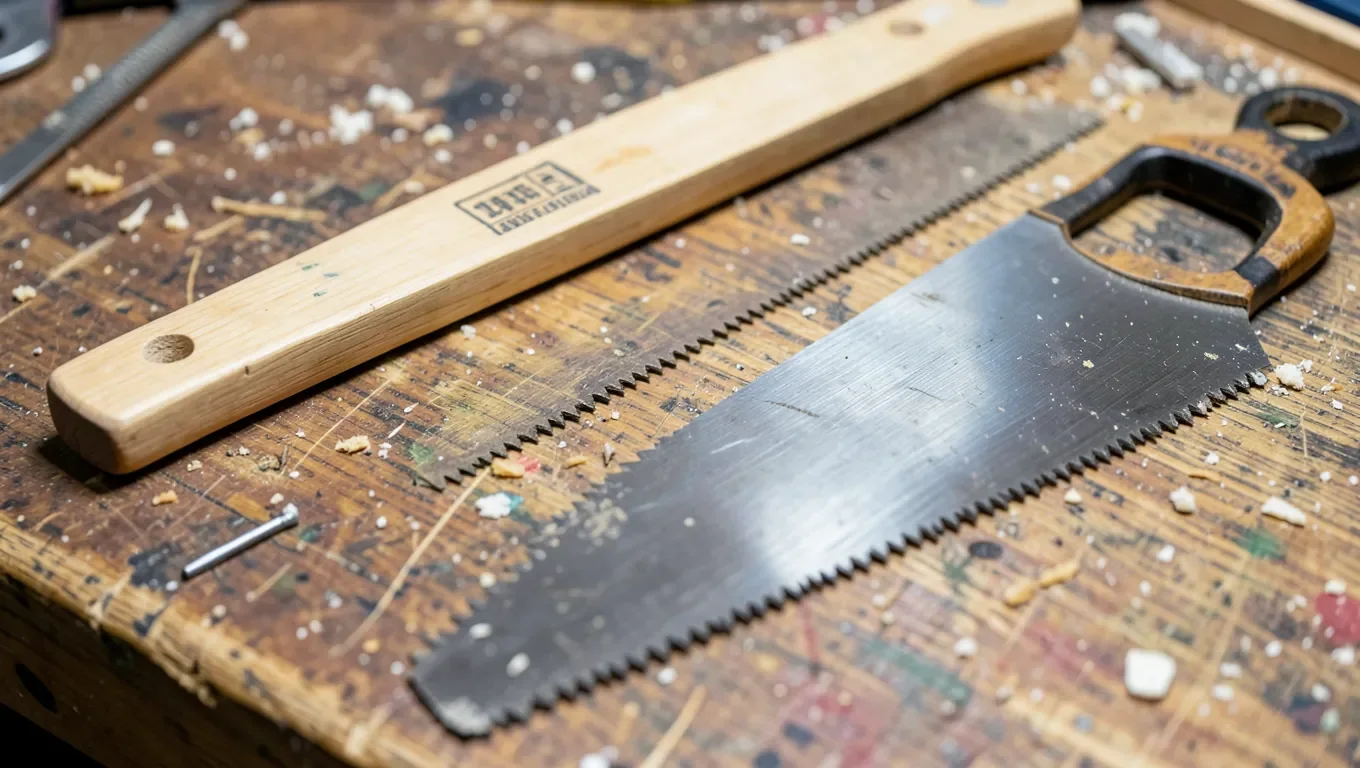
A hand saw is a fixed, wide-bladed saw built primarily for wood. The blade tapers from a wide, rigid spine to a narrow tip, and the teeth are large enough to see individually – typically 6 to 12 teeth per inch (TPI), spaced wide to clear sawdust as the blade cuts. Common hand saw types each target a specific cut:
- Rip saw: teeth filed to cut along the wood grain, for ripping boards to width.
- Crosscut saw: teeth filed to cut across the grain, for cutting boards to length.
- Back saw: a reinforced spine along the top of the blade for precise, controlled joinery cuts.
- Coping saw: a thin blade in a frame, for cutting curves and intricate shapes.
- Pruning saw: aggressive, curved teeth for cutting green wood and tree branches.
Best Hacksaw For Metal, Plastic, And PVC
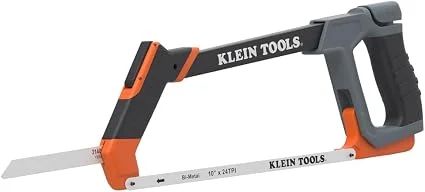 |
Klein Tools 31430 High Tension Hacksaw – $29.98 A heavy-duty frame that converts to a jab saw, with both a 12″ and 6″ bi-metal blade included and stored right in the frame for quick swaps.
|
Hacksaw Basics
A hacksaw is a frame saw – a rigid, usually adjustable frame that holds a thin, replaceable blade under tension. That tension is what keeps a thin, fine-toothed blade from buckling or snapping as it shears through hard material. Hacksaw blades run 18 to 32 TPI depending on the material: coarser teeth for thicker metal, finer teeth for thin-wall tubing or sheet, since a blade with teeth too coarse for the material will catch and skip rather than cut cleanly.
Frame types vary by job: a standard adjustable frame handles most 10–12″ blades, a junior hacksaw is a compact version for light jobs and tight spaces, and a power hacksaw (a stationary, motor-driven version) is used in shops for repetitive metal-cutting production work. Plumbers and electricians keep a hacksaw in every kit specifically for cutting pipe and conduit to length – a hand saw’s teeth would strip or bend instantly against metal.
Key Differences
| Feature | Hand Saw | Hacksaw |
|---|---|---|
| Primary material | Wood, some plastic | Metal, PVC, hard plastic |
| Blade | Fixed, wide, tapered | Thin, replaceable, tensioned in a frame |
| Teeth per inch | 6–12 TPI | 18–32 TPI |
| Stroke | Long, steady strokes | Short, controlled strokes |
| Blade replaceable? | No (sharpen or replace the whole saw) | Yes, in seconds |
| Best for | Furniture, framing, joinery | Pipe, conduit, bolts, rod stock |
The tooth spacing is the mechanical reason these tools don’t cross over well. Wide-set hand saw teeth need room to clear wood shavings as they cut – against metal, that same wide spacing just skates across the surface without biting in. Hacksaw teeth are packed tightly enough to shear thin material cleanly, but they’re too fine and too fragile to clear wood chips efficiently, so a hacksaw on wood is slow and quickly dulls the blade.
Choosing the Right Tool
Match the tool to the material, not personal preference:
- Cutting lumber, plywood, or trim: a hand saw (crosscut for cutting to length, rip for cutting to width).
- Cutting pipe, conduit, bolts, or metal rod: a hacksaw, matched to a blade TPI appropriate for the material thickness.
- Cutting PVC pipe: either tool can technically do it, but a hacksaw’s fine teeth leave a cleaner, less splintered edge than a wood-toothed hand saw.
- New to hand tools: a hand saw is the more forgiving starting point – it needs less technique and tolerates more force than a hacksaw’s thin blade.
Maintenance
Wipe both tools dry after use and keep them out of humid storage – a hand saw’s fixed blade rusts just as easily as a hacksaw’s. A light coat of oil on a hand saw blade prevents surface rust between uses. Hacksaw blades are cheap and meant to be replaced, not sharpened – once a blade dulls, catches, or bends, swap it rather than trying to restore it. Store hand saws hung on a hook rather than flat in a drawer, where the teeth can catch on other tools and chip.
Conclusion
A hand saw and a hacksaw solve different problems: wide, widely-spaced teeth for wood versus a thin, tensioned, fine-toothed blade for metal and hard plastic. Keep one of each in your kit rather than trying to make one tool do both jobs – forcing a hand saw through metal ruins the teeth, and forcing a hacksaw through wood wastes a good blade for a slow, rough cut.
Frequently Asked Questions
Can I use a hacksaw to cut wood?
You can, but it’s not ideal. A hacksaw’s fine teeth are built for metal and cut wood slowly while dulling faster than they would on their intended material. Use a dedicated wood saw for anything beyond a quick, small cut.
What can’t a hacksaw cut?
A hacksaw can’t effectively cut hardened steel, tempered glass, or ceramic – these materials are harder than the blade itself. It’s best suited to softer metals, standard steel pipe and rod, and plastics.
When should you use a hand saw instead of a hacksaw?
Use a hand saw for wood, plywood, and most plastics where you need long cutting strokes and higher material removal per pass. It’s also the easier tool to start with if you’re new to hand-powered cutting.
What type of hand saw is best for cutting wood to length?
A crosscut saw is built specifically for cutting across the wood grain, which is what cutting a board to length requires. For cutting along the grain (ripping a board to width), use a rip saw instead – its teeth are filed at a different angle for that cut.
Sponsored / affiliate links. As an Amazon Associate I earn from qualifying purchases. I may earn additional commission from eligible campaigns.