Portable Saw Horses: Weight Capacity Compared (275-2,700 lbs)
Portable saw horses hold anywhere from 275 to 2,700 pounds per pair — but weight capacity alone doesn’t predict stability. A sawhorse with a narrow leg spread can tip under half its rated load if the stance is too tight. This guide compares real weight capacities across current models, walks through safe assembly, and covers the one buying mistake most shoppers make: judging capacity number over footprint.
This post contains affiliate links. As an Amazon Associate, we earn from qualifying purchases.
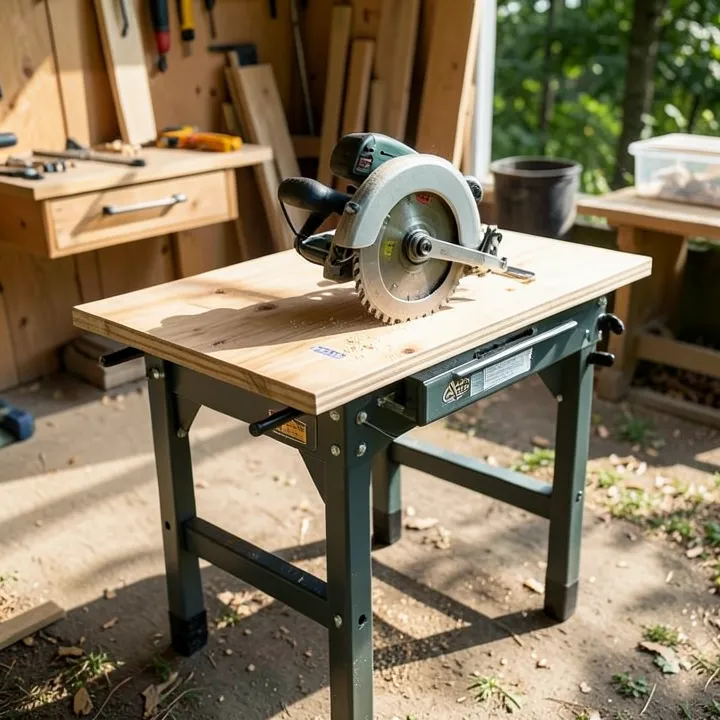
The Rise Of Portable Saw Horses
Best Heavy-Duty Sawhorse Pick
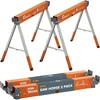
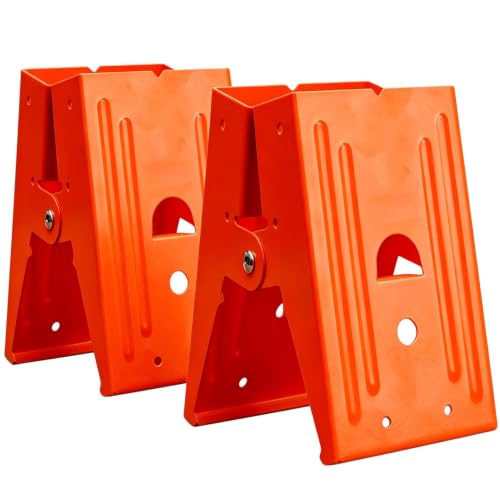
BORA Workhorse XT Saw Horses (2-Pack) – $109.99
Adjustable from 30 to 34 inches in 1-inch steps — matches the height-flexibility this guide recommends for switching between rough cutting and finish work.
- Best for: Jobsite use and heavy sheet goods
- Why we picked it: 2,700-lb rated capacity with a wide adjustable stance that resists tipping
- Main drawback: No carry handle when folded
Compare more portable saw horse options
 Option 1 Amazon Basics Folding Sawhorse – $54.98
|
 Option 2 WORX Pegasus 2-in-1 – $139.92
|
 Option 3 WORKPRO Folding Saw Horses – $69.99
|
As an Amazon Associate we earn from qualifying purchases.
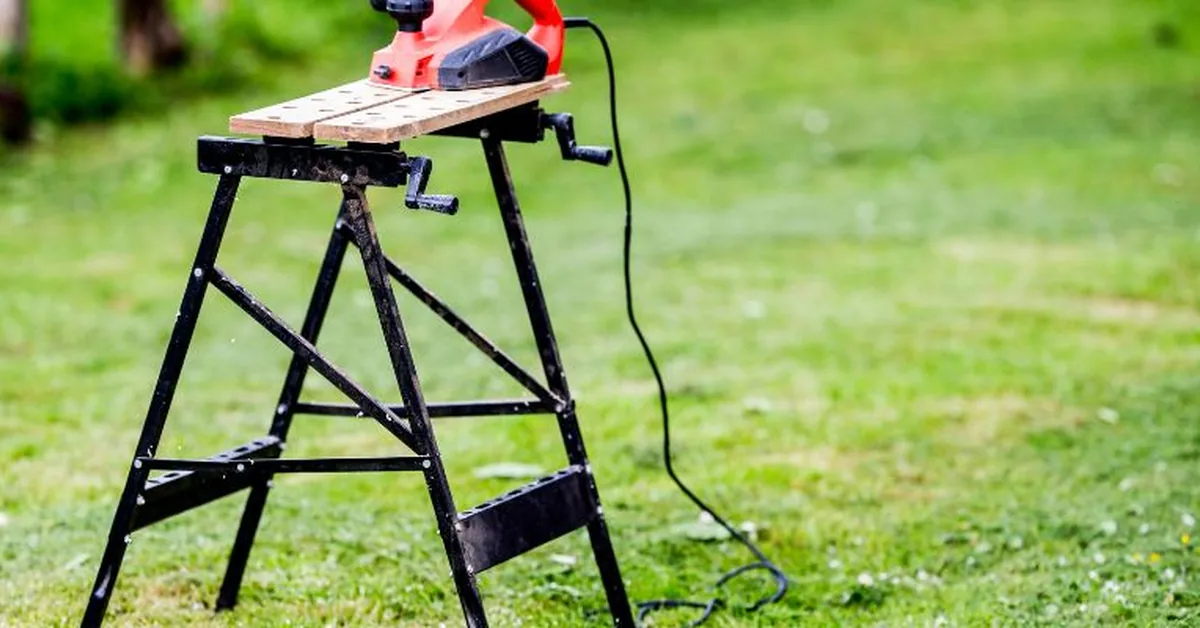
Portable saw horses have transformed woodworking by trading a fixed, permanent stand for a pair of legs you can fold flat and carry in one hand. Woodworkers moving between a garage, a driveway, and a jobsite no longer need to build or store a bulky bench.
Why Mobility Matters In Woodworking
A cutting station that moves with the project saves real setup time. Instead of hauling long boards to a fixed bench, you bring two lightweight sawhorses to the material — useful on a deck build, a fence repair, or any job where the work is too big or too awkward to move twice.
The Evolution From Stationary To Portable
Traditional joinery-based stands like Japanese saw horses predate folding models by centuries and are still favored for fine joinery, where a rock-solid, non-folding base matters more than portability. Modern folding designs trade some of that rigidity for the ability to collapse flat and fit in a truck bed or closet.
Key Features To Look For
Choosing the right portable saw horse comes down to three things: what it’s made of, how it adjusts, and how much weight it actually needs to hold for your projects — not the highest number on the shelf.
Material And Durability
Steel-legged models hold up better under repeated jobsite use and higher loads, while molded plastic or ABS models stay lighter for occasional home use. If you’d rather build a fixed-height pair yourself from 2x4s, see our step-by-step guide to making wooden saw horses — a solid option if portability matters less than cost.
Adjustability And Versatility
Adjustable-leg models typically move in 1-inch increments across a 4-inch range, letting you match the working height to the task — lower for rough cutting, higher for assembly or finishing work at a comfortable back angle.
Load Capacity
Rated capacity is measured as straight-down, evenly distributed weight — it does not measure how well a model resists tipping sideways. Match the capacity to your heaviest realistic load (a sheet of 3/4-inch plywood is roughly 60 to 70 pounds) plus a safety margin, rather than buying the highest number available.
Real Weight Capacities Compared
Here’s how four current models actually compare on weight capacity and price, based on their live manufacturer specifications:
| Model | Weight Capacity (Pair) | Price | Best For |
|---|---|---|---|
| BORA Workhorse XT | 2,700 lbs | $109.99 | Heavy-duty, height-adjustable jobsite use |
| WORKPRO Folding Saw Horses | 1,800 lbs | $69.99 | Mid-range garage and workshop use |
| WORX Pegasus 2-in-1 | 1,000 lbs as sawhorse / 300 lbs as table | $139.92 | Combined workbench and sawhorse |
| Amazon Basics Folding Sawhorse | 900 lbs | $54.98 | Budget-friendly light-duty DIY use |
Why A Higher Weight Rating Doesn’t Always Mean More Stable
A 2,700-lb rating sounds like the safest choice, but that number measures vertical load, not resistance to tipping. A tall, narrow-stance sawhorse can rock or tip sideways under 50 to 100 pounds of side force — roughly what a circular saw’s kickback produces — even nowhere near its rated capacity. A wider leg spread and a lower working height resist tipping far better than a high number on the box, which is why jobsite-rated models widen their stance instead of just adding steel.
In the shop, a sawhorse that rocks under lateral pressure is more dangerous than one with a lower weight rating. A folding pair rated well over 1,000 lbs can still tip sideways if the legs are splayed too close together — check the leg footprint on the floor before you check the number on the box.
— Woodworking Advisor team
📊 Folding sawhorse pairs on the market today range from 275 lbs to 2,700 lbs of rated capacity — nearly a 10x spread between light-duty and heavy-duty models. Source: Manufacturer product specifications, 2026.
What Real Buyers Say
Current buyer feedback is fairly consistent across these four models. The BORA Workhorse XT (4.6 stars, 800+ ratings) earns praise for staying rock-solid even loaded down, thanks to its wide adjustable stance. The WORX Pegasus (4.8 stars, 14,000+ ratings) is the top seller among woodworkers who want a sawhorse and a workbench in one tool. Budget buyers gravitate toward the Amazon Basics pair (4.6 stars, 8,000+ ratings) for light cutting and painting tasks, while the WORKPRO pair (4.6 stars) is a common middle-ground pick for garage use.
Setting Up Your Portable Saw Horse
Setting up your portable saw horse is quick, but a rushed assembly is the most common cause of a wobble that shows up later. Follow these steps and check stability before loading any weight on it.
Step-by-step Assembly Guide
- Gather Your Tools: You need a screwdriver and a wrench to attach the legs.
- Unpack the Saw Horse: Carefully remove all parts from the box and check for shipping damage.
- Identify Parts: Lay out the legs, top bar, and any brackets before starting.
- Attach the Legs: Align each leg with the top bar and secure it with the included screws or bolts.
- Check Stability: Set the sawhorse upright and confirm both legs are firmly attached with no play.
- Adjust the Height: If your model has adjustable legs, set both sides to the same height setting.
- Final Check: Confirm every screw and bolt is tight before loading any weight on it.
Safety Checks Before Use
- Inspect for Damage: Look for cracks or bends in the frame.
- Check Stability: Ensure the saw horse stands firm on the actual surface you’ll be using, not just a flat showroom floor.
- Weight Capacity: Confirm it can hold your materials plus a safety margin.
- Clear Workspace: Remove any obstacles around the saw horse.
- Use Protective Gear: Wear gloves and eye protection.
Maximizing Workspace Efficiency
Smart placement of your saw horses makes a real difference in how fast and safely you work.
Strategic Placement Tips
- Accessibility: Place saw horses where you need them most, not where they’re easiest to unfold.
- Lighting: Ensure adequate light for detailed tasks like marking cut lines.
- Space: Keep enough room to walk fully around the setup.
- Surface: Use a flat, stable surface — loose gravel or soft ground undermines even a heavy-duty rated pair.
Maintaining A Clutter-free Area
- Designate a specific area for tools and materials.
- Regularly remove unused items from the workspace.
- Store tools in labeled containers for easy access.
- Wipe down surfaces after each use to prevent buildup.
Creative Uses Beyond Sawing
Portable saw horses earn their keep well beyond cutting wood.
Support For Painting And Finishing
A pair of saw horses holds large flat items — doors, tabletops, cabinet panels — steady while you paint or stain, which helps you get an even finish instead of drips from an item leaned against a wall.
- Set your saw horse at a comfortable working height.
- Use a drop cloth underneath to catch drips.
- Secure items with clamps so they can’t shift mid-coat.
As A Base For DIY Projects
Beyond cutting and finishing, saw horses adapt to table building, crafting stations, and even garden potting tasks — anywhere you need a stable, knee-to-waist-height surface on short notice.
Maintenance And Upkeep
A little regular maintenance keeps a portable saw horse safe and functional for years instead of one season.
Cleaning And Storage
- Wipe down surfaces: Dust and debris trapped in joints and hinges cause premature wear.
- Dry thoroughly: Prevent rust on steel-legged models, especially after outdoor use.
- Store indoors: Keep them in a dry place with a protective cover if left in a garage.
Regular Inspection And Parts Replacement
- Inspect legs: Ensure they are stable and secure with no bending.
- Check bolts: Tighten any loose connections before each use.
- Replace worn hardware: A stripped bolt or cracked latch is cheap to replace and dangerous to ignore.
Frequently Asked Questions
What Are Portable Saw Horses Used For?
Portable saw horses are versatile tools for various tasks. They provide a stable platform for cutting, sanding, or assembling materials. Ideal for woodworking projects, they enhance safety and efficiency. Their lightweight design makes them easy to transport, making them perfect for both home and job site use.
How Much Weight Can A Saw Horse Hold?
The weight capacity of a saw horse varies by model. Current folding pairs range from about 275 lbs on light-duty plastic models up to 2,700 lbs on heavy-duty steel models like the BORA Workhorse XT. Always check the manufacturer’s specifications before use to ensure safety and stability during your projects.
Are Saw Horses Adjustable In Height?
Many portable saw horses come with adjustable height features, typically in 1-inch increments across a 4-inch range. This allows users to customize the working height for comfort and efficiency. Look for models with multiple height settings for maximum versatility.
How Do I Choose The Right Saw Horse?
When selecting a saw horse, consider weight capacity, leg spread, and adjustability together, not weight capacity alone. Lightweight models are ideal for portability, while heavy-duty ones with a wide stance offer better resistance to tipping. Match the model to your actual project needs rather than the highest number on the shelf.
Can I Use Portable Saw Horses As A Workbench?
Yes. Dedicated 2-in-1 models like the WORX Pegasus fold flat into a full clamping workbench rather than just a support pair. A standard sawhorse pair also works as a temporary bench when topped with a sheet of plywood or two 2x4s clamped across the tops, though dedicated 2-in-1 models hold more weight in table mode.
Are Folding Sawhorses As Sturdy As Fixed Wooden Sawhorses?
A quality folding metal sawhorse rated 1,800+ lbs per pair is typically sturdier than a shop-built wooden pair for straight vertical loads. A wooden sawhorse with a wide, glued mortise-and-tenon leg joint often resists side-to-side racking better, though. For heavy sheet goods on a jobsite, folding metal wins on portability; for a stationary shop bench, a solid wooden pair is hard to beat.
Conclusion
Portable saw horses that hold 275 to 2,700 pounds per pair all look similar on a spec sheet — the real difference is leg spread, adjustability, and whether you need a stand-alone workbench like the WORX Pegasus or a simple heavy-duty pair like the BORA Workhorse XT. Match the model to your actual jobsite, not just the highest weight number, and check the stance before you check the price tag.
Sponsored / affiliate links. As an Amazon Associate I earn from qualifying purchases. I may earn additional commission from eligible campaigns.