Woodworking Tools & Saws: 8 Types, Uses & Blade/TPI Chart
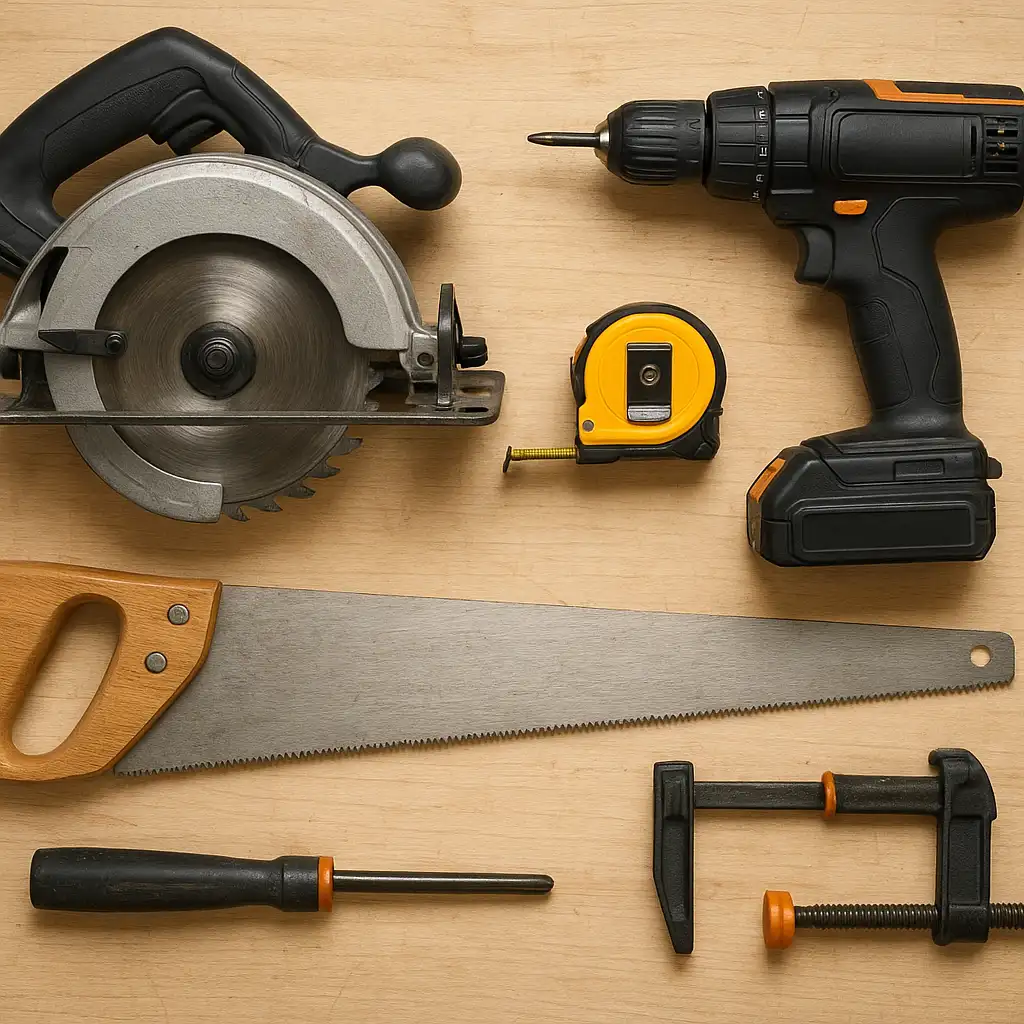
A circular saw and cordless drill/driver handle most beginner woodworking cuts and joinery — add a table saw only once you’re ripping stock regularly. The wrong blade TPI or a missing riving knife is the leading cause of kickback and wasted material. This guide covers all 8 saw types, a blade-size/TPI comparison chart, dust collector CFM sizing, and the order to buy tools in.
Quick Answer
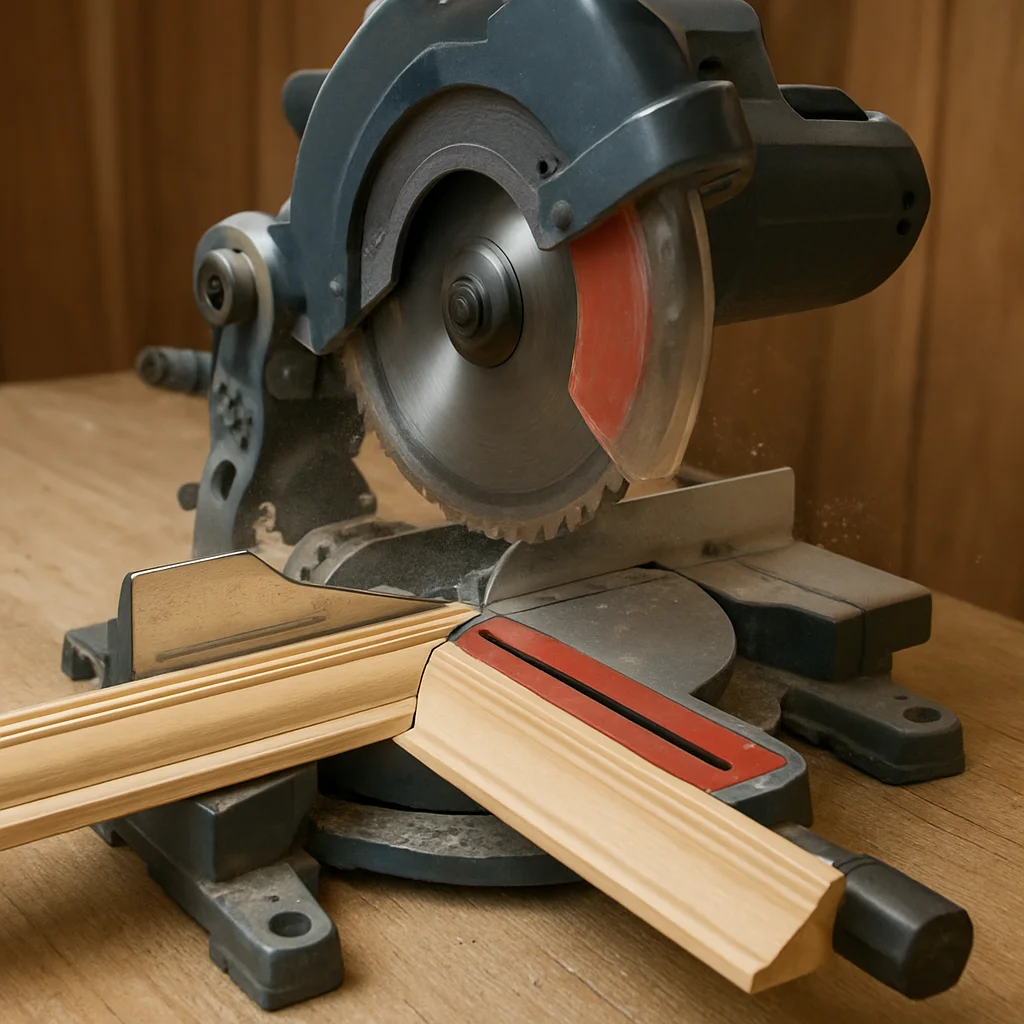
Use a miter saw for angled crosscuts, a table saw for ripping and straight cuts, a circular saw for portable cuts, a jigsaw or scroll saw for curves, and a band saw for resawing. Add a drill/driver and basic hand tools, and match blade and technique to the cut.
Types of saws and what each is for
Best First-Saw Pick
DEWALT 20V MAX Cordless Circular Saw, 6-1/2-Inch (DCS391B)
A 6-1/2″ cordless sidewinder that handles framing, sheet goods, and general cuts — the single saw this guide recommends buying first.
- Best for: A woodworker’s first power saw — portable straight cuts in plywood and dimensional lumber
- Why we picked it: 20V MAX battery platform shares packs with DEWALT drills and sanders, so one battery system covers your first three tools
- Main drawback: Battery and charger sold separately on this tool-only listing
Compare more tools in the buy-in-this-order kit
 Buy Alongside the Saw CRAFTSMAN V20 Drill/Driver & Impact Driver Set
|
 Add Next Metabo HPT 10″ Compound Miter Saw
|
 Then Add SKIL 5″ Random Orbital Sander
|
As an Amazon Associate we earn from qualifying purchases.
- Miter saw — angled crosscuts for trim and framing. See the miter saw angle chart. Don’t confuse it with a metal-cutting cut-off saw — see cut-off saw vs miter saw for the difference. Most miter saws sold today are actually compound miter saws — see what does compound miter saw mean for what that extra bevel function actually adds. Shopping DeWalt specifically? See our DeWalt compound miter saw models compared (including a real 2019-2022 recall you should check before buying used).
- Table saw — the workshop workhorse for ripping and straight cuts. Not sure which to buy first? See our table saw vs. miter saw comparison.
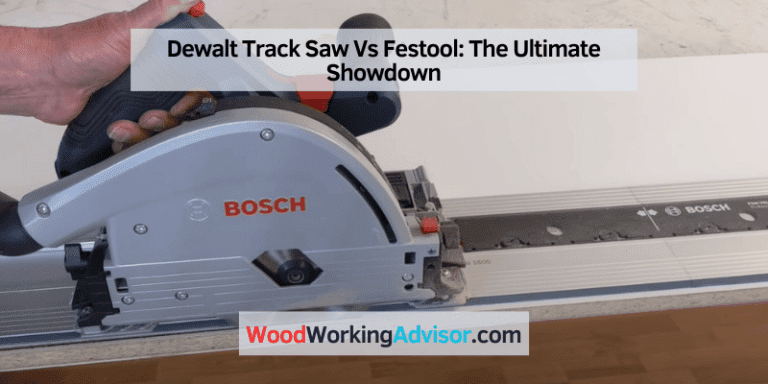
- Circular saw — portable straight cuts in sheet goods and lumber. See our best circular saw picks for buying advice, or check our circular saw size guide to match blade diameter to the job. For keeping those cuts on the line, see our guide on cutting wood to size accurately. Wondering if it can handle metal too? Our cut-off tool vs circular saw comparison covers where a circular saw stops being the right choice. For breaking down full plywood sheets or starting a cut in the middle of a panel, see what a plunge saw is and how it differs.
- Scroll saw & jigsaw — intricate curves and patterns. Grab free scroll saw patterns.
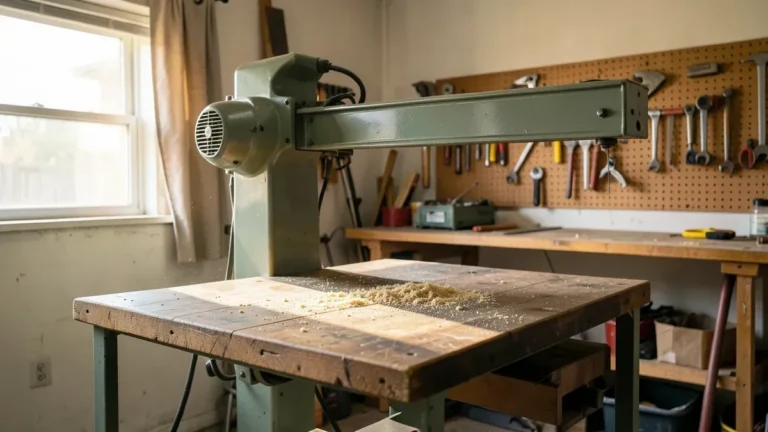
- Band saw — resawing and thick curved cuts.
- Reciprocating saw — demolition and rough cuts; handles nail-embedded wood and tight spaces the other saws on this list can’t reach. See our DEWALT DCS367 compact recip saw review for verified specs.
- Chainsaw — felling and rough milling; keep it sharp with the right file size.
Saw blade sizes, TPI & what they’re best for
Blade size and tooth count (TPI, teeth per inch) matter as much as the saw itself — the right saw with the wrong blade still tears out or bogs down. Here’s what each saw type typically runs, based on standard manufacturer blade specs.
| Saw type | Common blade size | TPI / tooth count | Best for |
|---|---|---|---|
| Circular saw | 6-1/2″ to 7-1/4″ | 18-24T rip, 40-60T fine finish | Framing, sheet goods, portable cuts |
| Table saw | 10″ (8-1/4″ benchtop) | 24T rip, 40-50T combo, 60-80T crosscut | Ripping, general shop work |
| Miter saw | 10″ or 12″ | 60-80T fine crosscut | Trim, framing, angled cuts |
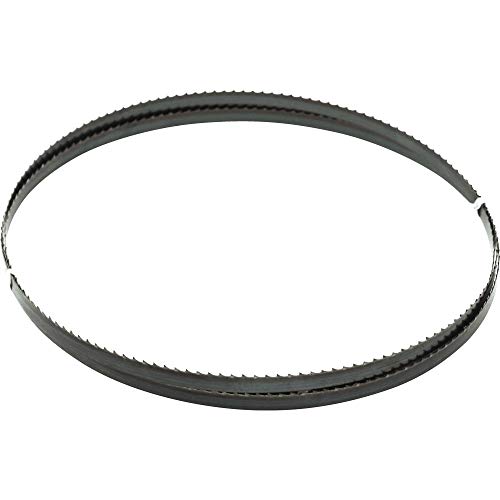
| Band saw | 1/8″ to 1″ blade width | 3-6 TPI resaw, 10-14 TPI curves | Resawing, thick curved cuts |
| Jigsaw | T-shank blade | 6-10 TPI wood, 20+ TPI fine/plastic | Curves, plunge cuts |
| Scroll saw | Pinless/plain-end blade | 12-20+ TPI | Intricate patterns, fine detail |
| Chainsaw | 14″-20″ bar length | 3/8″ chain pitch (not TPI) | Felling, rough milling |
Band saw blade choice affects resaw speed and curve tightness more than any other setting — see our band saw blade guide for picks by material and cut type.
For a full breakdown of a specific 17-inch resaw-class machine, see our Grizzly G0513X2BF bandsaw review.
Drills, drivers & fasteners
A drill/driver is the most-used power tool. Match the bit and screw to the job — see the screwdriver size chart, what screws to use for cabinets, and how to get out a stuck screw. You can even anchor furniture to a wall without drilling.
Key cutting techniques
Clean cuts come from technique as much as the tool. Learn to cut molding corners, make a bevel cut, cut quarter round, and recognize what a 45-degree angle looks like. No shop for big cuts? Use a wood cutting service at Home Depot.
Choosing & maintaining tools
Buy for the cuts you make most, and keep tools serviced — for example, know your brand’s authorized repair centers. A dedicated miter saw workbench improves accuracy and safety, and if you are choosing between a budget and premium miter saw, see our Chicago Electric vs. DeWalt comparison. For broader project planning once your tool kit is set, see our woodworking projects and tips guide.
Hand tools vs power tools
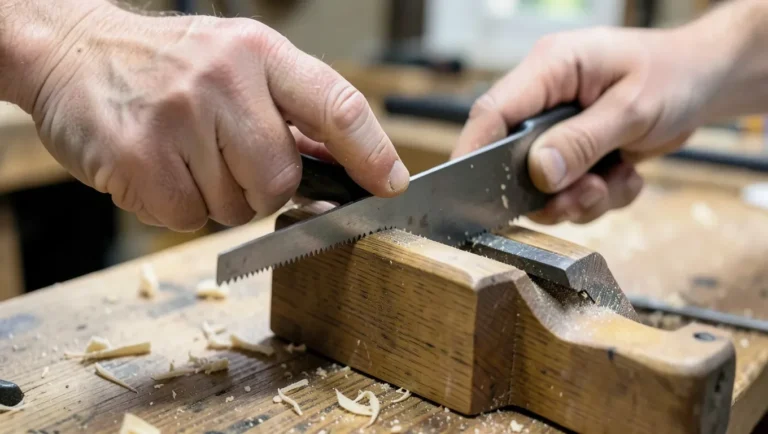
Most shops use both. Power tools (table saw, drill, router, sander) do heavy work fast and repeatably. Hand tools — chisels, hand planes, hand saws, and marking tools — give control, quiet, and fine finishing, and are cheaper to start with. Beginners can build almost anything with a circular saw, drill, and a few hand tools before investing in a full power-tool shop. For fine trim work like cutting a dowel or plug flush to a surface, a dedicated flush-cut saw gives far more control than sanding it down by hand. No saw at all? See our guide on cutting a wooden dowel without a saw.
Choosing the right blade or bit
The blade or bit matters as much as the tool. For saw blades, more teeth (higher TPI) give a smoother but slower cut; fewer teeth cut fast and rough. Use a crosscut blade across the grain, a rip blade with it, and a combination blade for general work — see our wood saw blades guide for tooth-count and material breakdowns by job. Ready to upgrade a cabinet-grade table saw past a stock blade, see our Forrest saw blades breakdown on whether the hand-tensioned premium blades are worth the price. For drilling, use brad-point bits for clean holes in wood, spade or Forstner bits for large holes, and twist bits for general use.
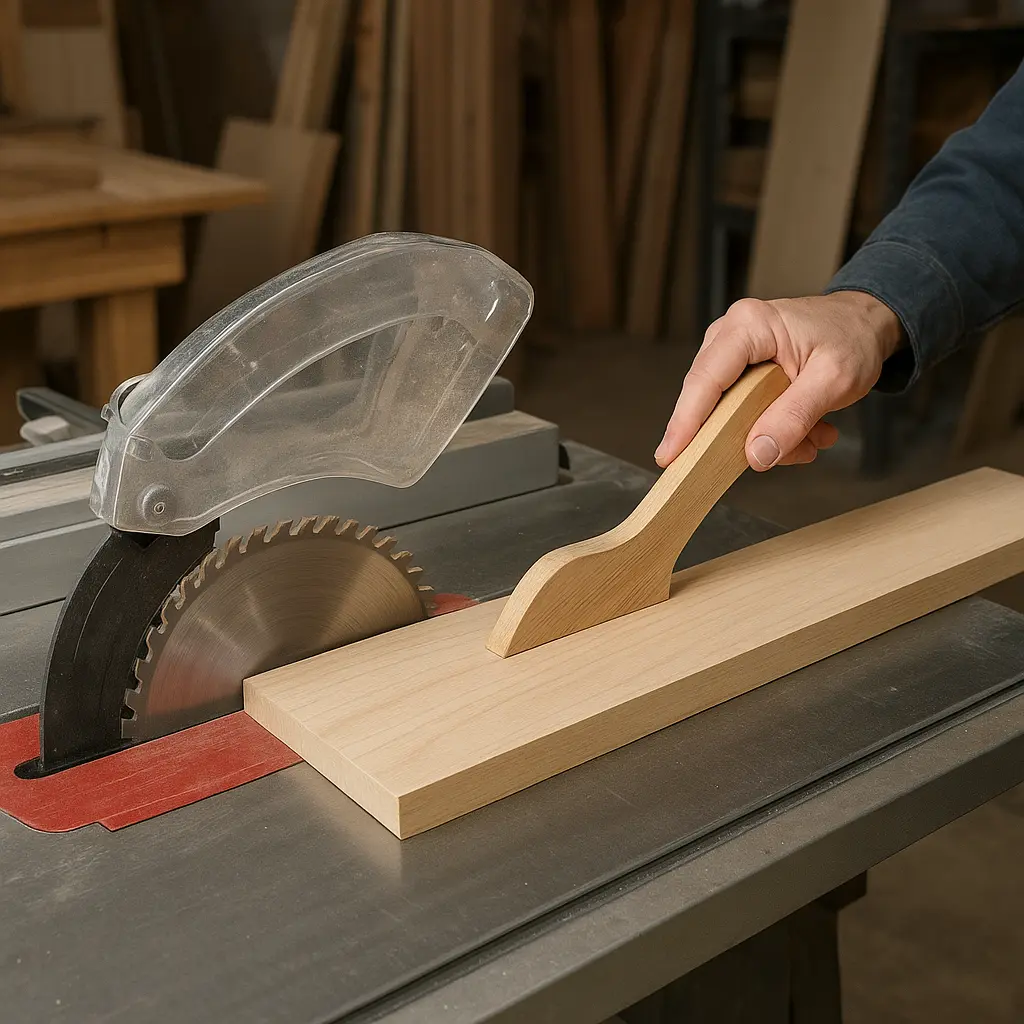
Tool safety essentials
- Keep the riving knife/splitter and blade guard on your table saw to prevent kickback — see our table saw accident prevention guide for the full CPSC-backed rule set.
- Use push sticks for narrow rips — never your fingers near the blade.
- Wear eye and ear protection, and a dust mask for fine dust.
- Unplug tools before changing blades or bits, and let blades stop fully before reaching in. Never wear gloves once a blade is moving — see our portable band saw safety guide for the full PPE rules and the “no hands zone” most saws mark right on the table.
Keeping tools sharp & maintained
Sharp tools are safer and cut cleaner. Hone chisels and plane irons regularly, keep saw blades clean of pitch and sharpen them before they dull too far, oil metal surfaces to prevent rust, and service power tools per the maker’s schedule. A dull blade forces you to push harder — the leading cause of slips.
Key tool terms
TPI is teeth per inch on a saw blade — more TPI means a smoother, slower cut; fewer means faster and rougher.
Kerf is the width of material a blade removes; thin-kerf blades waste less wood and need less power.
Arbor is the shaft a circular or table-saw blade mounts on; blade bore must match the arbor size. If you lose the factory wrench, see how to change a table saw blade without an arbor wrench for a safe wood-block substitute.
Riving knife is a curved plate behind a table-saw blade that stops the cut from pinching and kicking back.
Chuck is the adjustable jaws on a drill that grip the bit.
Brad-point bit is a drill bit with a center spur that stops it wandering, giving clean, precise holes in wood.
Auger bit is a long, self-feeding spiral drill bit used for deep holes in framing, joinery, and running wire or pipe through studs.
Building a tool kit on a budget
You do not need every tool at once — buy in the order your projects demand:
- Start: a circular saw and a cordless drill/driver handle most straight cuts and joinery.
- Add next: a miter saw for accurate angled crosscuts and trim.
- Then: a random-orbital sander and a jigsaw for smoothing and curves.
- Grow into: a table saw once you rip a lot of stock, plus a router for edges and joinery.
Corded tools cost less and never run out of charge; cordless tools win on convenience. For occasional use, buy quality used tools — well-made saws and planes last generations. See our affordable table saw picks if you would rather buy new, or what to check before buying a used table saw if you are eyeing a secondhand one, or see which circular saws Lowe’s carries if that is your nearest hardware store.
Cordless tool battery platforms
With cordless tools, the battery platform matters more than the tool. Each brand (DeWalt 20V MAX, Milwaukee M18, Makita 18V LXT, Ryobi ONE+) uses its own battery that fits only that brand’s tools. Pick one platform and stay in it so batteries and chargers are shared across your drill, saw, sander, and more — a drill and reciprocating saw combo kit is the easiest way to start one. Higher amp-hour (Ah) batteries run longer but weigh more; brushless motors run cooler and last longer than brushed.
Dust collection & shop air
Fine wood dust is both a fire and a serious health hazard, so control it from day one. A shop vacuum connected to your sander and saws catches most chips; a dedicated dust collector sized for your shop handles bigger machines. Size the collector to your single most demanding tool, not the sum of everything you own — a one-person shop only runs one machine at a time. Most home shops land around 800-1,200 CFM total, and a 3/4-to-1-HP unit rated near 650-700 CFM covers a small shop where a table saw or planer is the biggest single draw. Add an air filter or at least a good dust mask/respirator, and work with ventilation. Upgrading a stock collector’s filter bag to 1 micron is a cheap, high-impact air-quality fix. Clean dust off tools too — buildup jams blades and bearings.
Frequently asked questions
What saw should a beginner buy first?
A circular saw is the best first saw — it is affordable, portable, and makes most straight cuts. Add a miter saw next for accurate angled crosscuts, then a table saw as your skills grow. For a cut-by-cut buying order with budgets, see our beginner woodworking saws guide.
What’s the difference between a miter saw and a table saw?
A miter saw makes angled crosscuts across a board’s width and is ideal for trim and framing. A table saw rips boards lengthwise and makes long straight cuts; it is the more versatile workshop tool.
What saw cuts curves in wood?
A jigsaw cuts curves in most materials and is portable; a scroll saw makes finer, tighter curves for detailed and pattern work. A band saw handles thicker curved cuts.
How do I cut a 45-degree angle accurately?
Use a miter saw set to 45 degrees, or a miter box with a hand saw. Mark the cut, hold the stock firmly against the fence, and make a slow, steady cut for a clean joint.
How do I get a stripped or stuck screw out?
Try a rubber band over the screw head for grip, a screw-extractor bit, or gripping pliers on a raised head. For stripped heads, cut a new slot with a rotary tool and use a flat driver.
How many teeth should a saw blade have?
More teeth (higher TPI) give a smoother cut; fewer teeth cut faster and rougher. Use a 60-80 tooth blade for fine crosscuts, a 24-tooth for fast rips, and a 40-50 tooth combination blade for general work. If you’re thinking about running a smaller-diameter blade on a miter saw specifically, check bore-to-arbor compatibility first — see our guide on putting a smaller blade on a miter saw.
What safety gear do I need for woodworking?
At minimum: safety glasses, hearing protection for power tools, and a dust mask or respirator for fine dust. Add push sticks for the table saw and keep the blade guard and riving knife installed. A heavy-duty leather work apron rounds out the basics — it keeps sawdust and sharp debris off your clothes.
Are cordless or corded tools better for woodworking?
Corded tools are cheaper, lighter, and never lose power, ideal for stationary or heavy use. Cordless tools win on portability and convenience. Most shops mix both — corded for the table saw, cordless for the drill and sander.
Do different brands’ cordless batteries fit each other?
No. Each brand’s battery platform (DeWalt 20V MAX, Milwaukee M18, Makita LXT, Ryobi ONE+) fits only that brand’s tools. Choose one platform and buy tools within it so batteries are interchangeable.
How much dust collector CFM do I need for a home shop?
Most one-person home shops need 800-1,200 CFM in total capacity, but size the collector to your single most demanding tool, not the sum of every machine you own. A 3/4-to-1-HP collector rated around 650-700 CFM covers a small shop, since a table saw or planer is usually the highest single draw at 400-500 CFM.
If you’re trying to decide between two of the most common shop saws, see our bandsaw vs. table saw comparison for which one actually fits the cuts you’re making first.
Whatever saw you land on needs a stable place to cut — see our breakdown of the Stanley Adjustable Saw Horse’s real weight capacity for a portable support option that folds flat when you’re done.
Sponsored / affiliate links. As an Amazon Associate I earn from qualifying purchases. I may earn additional commission from eligible campaigns.