Ash Timber For Sale Near Me: Essential Wood
Looking for “ash timber for sale near me”? Ash wood is a fantastic, versatile choice for DIY projects and furniture. It’s strong, shock-resistant, and has beautiful grain. Finding it locally is definitely achievable with a little guidance!
Finding the right lumber can sometimes feel like a treasure hunt, especially when you’re just starting out in woodworking. You hear about amazing woods like ash, known for its incredible strength and beautiful appearance, but then the big question arises: where can you actually get it, and how do you know if it’s the right choice for your project? Don’t worry, it’s not as complicated as it seems! We’ll walk through finding ash timber near you and understanding why it’s such a popular and essential wood for so many creations.
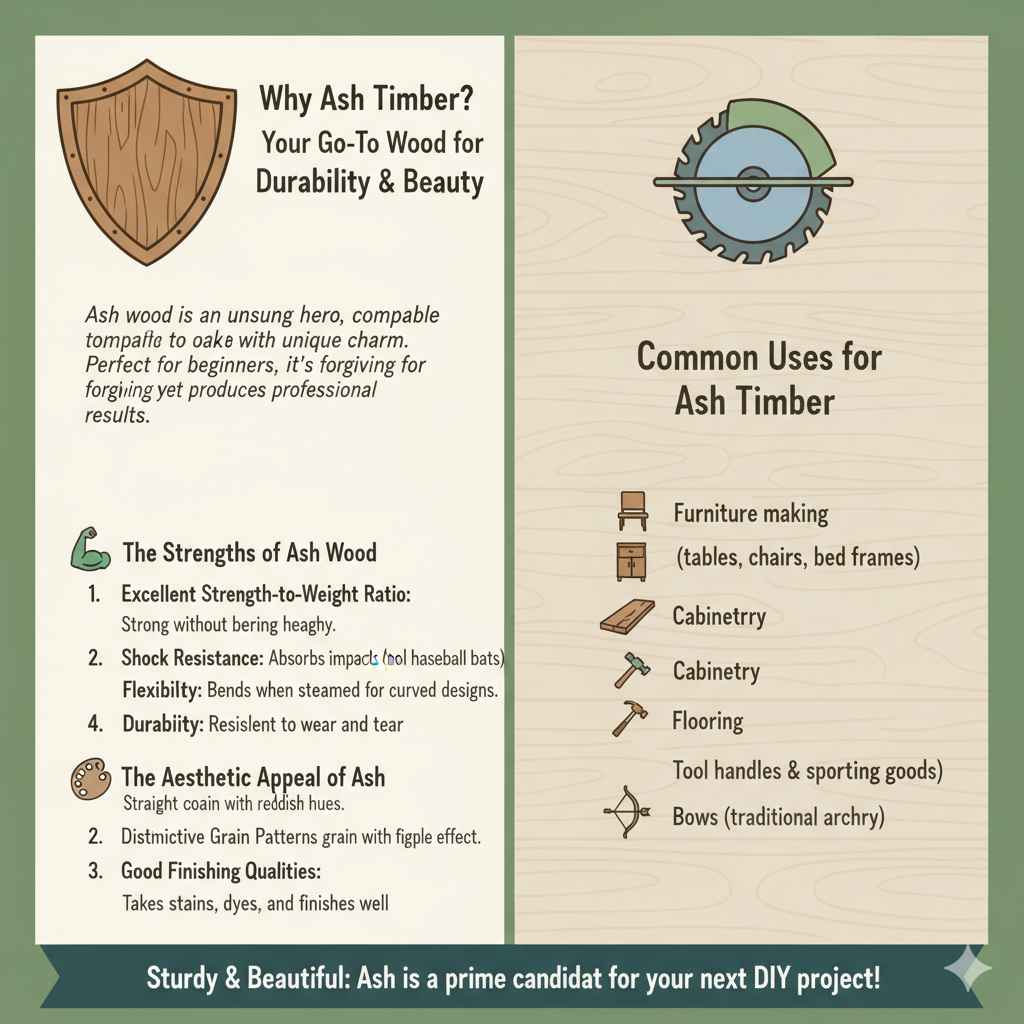
Why Ash Timber? Your Go-To Wood for Durability & Beauty
Ash wood is one of those unsung heroes in the woodworking world. It’s often compared to oak but has its own unique charm and advantages. If you’re a beginner looking for a wood that’s forgiving yet produces professional-looking results, ash might just be your new best friend. Let’s explore why this wood is so sought after.
The Strengths of Ash Wood
When we talk about wood properties, strength is a major factor. Ash really shines here. It’s known for its:
- Excellent Strength-to-Weight Ratio: It’s strong without being overly heavy, making it easier to handle than some other hardwoods.
- Shock Resistance: This is a big one! Ash can absorb impacts well, which is why it’s traditionally used for things like tool handles and baseball bats.
- Flexibility: It can be bent when steamed, making it suitable for curved designs.
- Durability: Properly finished, ash timber is very resilient and stands up well to wear and tear.
The Aesthetic Appeal of Ash
Beyond its strength, ash wood is beautiful to look at. It typically features:
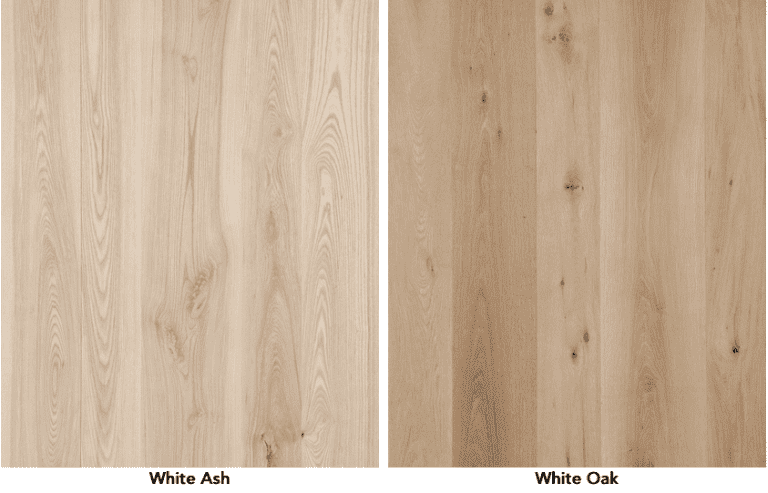
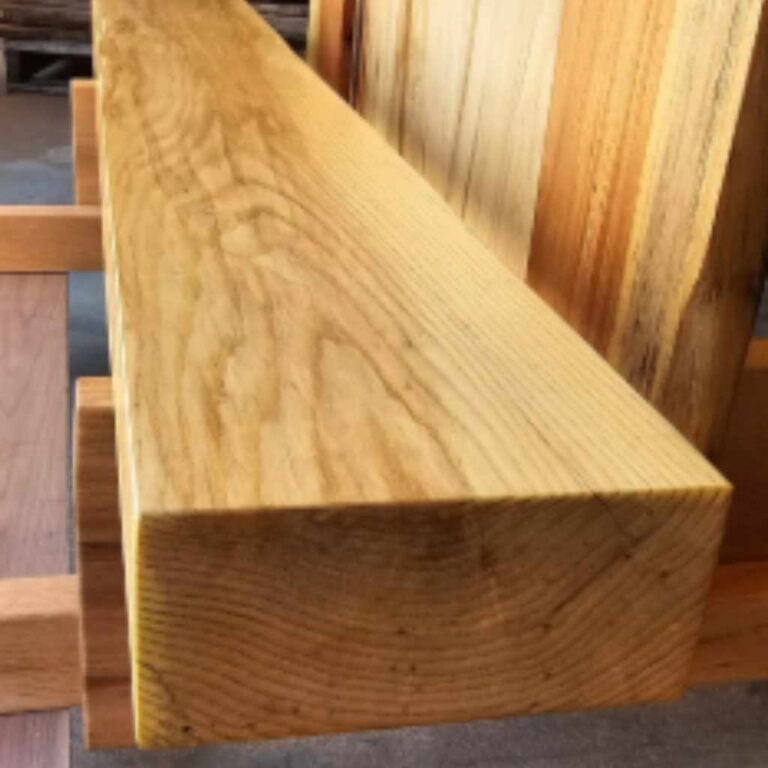
- Light Color: The heartwood is usually a light brown, sometimes with a reddish hue, while the sapwood is lighter, almost creamy white.
- Distinctive Grain Patterns: Ash has a straight, coarse grain that can create striking patterns. This grain can be pronounced, showcasing lovely figuring as well as a ripple or curl effect in some species.
- Good Finishing Qualities: Ash takes stains, dyes, and finishes very well, allowing you to customize its look to match your project and decor.
Common Uses for Ash Timber
Because of its wonderful combination of strength, workability, and appearance, ash is used for a wide variety of projects. As a DIYer, you’ll find it perfect for:
- Furniture making (tables, chairs, bed frames)
- Cabinetry
- Flooring
- Tool handles and sporting goods
- Bows (traditional archery)
- If you’re thinking of building anything that needs to be sturdy and look good, ash is a prime candidate.
Where to Find “Ash Timber For Sale Near Me”
This is where the “hunt” comes in, but it’s a fun one! Finding lumber locally is often more sustainable and can save you shipping costs. Here’s how to approach your search:
Local Sawmills and Lumberyards
Your best bet for finding quality ash timber is often at a local sawmill or a dedicated lumberyard that caters to woodworkers. These places are treasure troves of different wood species.
- How to Find Them:
- Online Search: Use search terms like “lumber yard near me,” “sawmill [your city/state],” or “hardwood dealer [your city/state].”
- Woodworking Communities: Ask at local woodworking clubs or forums. Fellow enthusiasts are usually happy to share their go-to suppliers.
- Call Ahead: It’s always a good idea to call before you visit. Ask if they carry ash lumber and what dimensions or forms (e.g., rough sawn, planed) they have available.
Visiting a lumberyard allows you to see and feel the wood, check its quality, and get expert advice. Many lumberyards also offer services like rough milling or planing, which can save you a lot of work.
Online Retailers Specializing in Wood
If local options are limited, several online retailers specialize in shipping lumber. While shipping can be a factor, for specific types or quantities, it might be worth considering. Always check their shipping policies and costs carefully.
Reclaimed and Architectural Salvage Yards
Sometimes, you can find beautiful, aged ash timber at architectural salvage yards or places that deal with reclaimed building materials. This wood often has a unique character and history, though it might require more preparation before use.
Directly from Tree Services or Farmers
Occasionally, local tree removal services will mill usable wood from trees they’ve taken down. Similarly, some farms might have woodlots where they sell lumber. This is less common but can yield great finds. This often requires more networking.
What to Look For When Buying Ash Timber
Once you’ve found a place that has ash timber for sale, how do you pick the best pieces for your project? Here are some tips to ensure you’re getting good quality wood.
Understanding Ash Grades and Quality
Lumber is often graded based on the number and size of defects (like knots, splits, or insect damage). While you don’t need to be an expert, understanding the basics helps.
- Clear Grade: This is lumber with very few, if any, knots or defects. It’s ideal for fine furniture where appearance is paramount.
- Standard Grades: These grades will have more character with knots and other natural features. For many DIY projects, these are perfectly acceptable and can even add rustic charm.
Don’t be afraid to ask the lumberyard staff about the grade of the wood you’re looking at. For beginner projects, a slightly less perfect piece might be more affordable and easier to work with, as you won’t be as worried about damaging a perfect, expensive board.
Moisture Content Matters
Wood needs to be properly dried, or “seasoned,” before you use it. If the wood is too wet (green lumber), it will shrink, warp, and twist as it dries, potentially ruining your project. Look for either:
- Kiln-Dried (KD): This lumber has been dried in a controlled oven (kiln), which is faster and results in a stable, uniformly dry product. This is usually preferred.
- Air-Dried (AD): This lumber is dried naturally outdoors. It can take a long time and may have more variation in moisture content, but it can be a more economical option if done correctly.
Most reputable lumber dealers will sell kiln-dried lumber, which is generally the easiest for beginners to work with. If you buy air-dried or rough-sawn lumber, you might need to let it acclimate in your workshop for a while to reach equilibrium moisture content with your environment. Understanding wood movement is crucial for long-lasting projects. For guidance on moisture content, you can refer to resources from the Forest Products Laboratory (FPL), a part of the U.S. Forest Service, which provides excellent technical information on wood drying.
Checking for Defects
Look closely at the lumber.
- Warping: Lay a long piece of the wood flat on a straight edge or the floor. Does it cup, twist, or bow significantly? Minor bows can sometimes be worked out, but severe warping is problematic.
- Checks and Splits: These are cracks, usually at the ends of the boards. Small checks might be acceptable if you can cut them out, but deep or long splits can render a board unusable.
- Insect Damage: Look for small holes (pinworm) or larger tunnels, which can indicate the presence of wood-boring insects.
Ash Timber vs. Other Woods: Making the Right Comparison
It’s helpful to know how ash stacks up against other popular hardwoods. This helps you decide if ash is truly the “essential wood” for your specific need.
Ash vs. Oak
Oak is another incredibly popular hardwood, especially for furniture and flooring. Here’s a quick comparison:
| Feature | Ash Wood | Oak Wood |
|---|---|---|
| Strength | Strong, excellent shock resistance. Often considered slightly tougher and more flexible than oak. | Very strong and durable, but can be more brittle than ash. |
| Grain Pattern | Straight, coarse grain; can be bold and attractive. Often lighter in color with less pronounced pore structure. | Often has a more open and prominent grain pattern, especially red oak. White oak has a more closed pore structure. |
| Workability | Generally easy to work with hand and power tools. Sands and finishes well. | Can be slightly harder to work due to its density and open pores. Requires sharp tools. |
| Color | Creamy white to light brown, sometimes with reddish streaks. | Ranges from light brown (white oak) to reddish-brown (red oak). |
| Cost | Often comparable to or slightly less expensive than oak, depending on availability. | Widely available, prices can vary but are generally competitive. |
| Common Uses | Furniture, cabinetry, tool handles, flooring, sports equipment. | Furniture, flooring, cabinetry, millwork, barrels (white oak). |
Ash vs. Maple
Maple is another popular hardwood, known for its smooth finish and light color.
| Feature | Ash Wood | Maple Wood |
|---|---|---|
| Strength | Strong, good shock resistance. | Very hard and strong, excellent wear resistance but less shock resistant than ash. |
| Grain Pattern | Coarse, straight grain. | Fine texture, can be straight-grained or have beautiful wavy, curly, or bird’s-eye figures (especially highly prized in certain grades). |
| Workability | Easy to work. | Can be challenging to work due to its hardness; tear-out can occur on figured maple. Requires sharp tools. |
| Color | Creamy white/light brown to brown. | Creamy white to light brown, often lighter and more uniform than ash. |
| Cost | Generally comparable. | Can be more expensive than ash, especially for figured or specialty grades like curly maple. |
| Common Uses | Furniture, cabinetry, tool handles, flooring. | Furniture, cabinetry, flooring, butcher blocks, musical instruments, workbenches. |
Ash vs. Pine (Softwood)
It’s important to distinguish hardwoods like ash from softwoods like pine. They have very different properties.
| Feature | Ash Wood (Hardwood) | Pine Wood (Softwood) |
|---|---|---|
| Hardness/Durability | Much harder, denser, and more durable. Resists dents and scratches better. | Softer, dents and scratches more easily. Good for rustic looks. |
| Grain | More pronounced, often coarser grain. | Can be knotty, straight-grained, or sometimes with a more varied appearance. |
| Weight | Generally heavier. | Lighter. |
| Cost | Typically more expensive than pine. | Very affordable and widely available. |
| Workability | Requires sharp tools; can be harder to cut but holds fasteners well. | Very easy to cut and shape with basic tools. |
| Common Uses | Furniture, flooring, cabinetry, applications requiring strength and durability. | Construction framing, basic furniture, shelving, DIY projects where extreme durability isn’t a priority. |
As you can see, ash offers a fantastic balance of hardness, toughness, workability, and beauty, often at a competitive price point compared to other hardwoods.
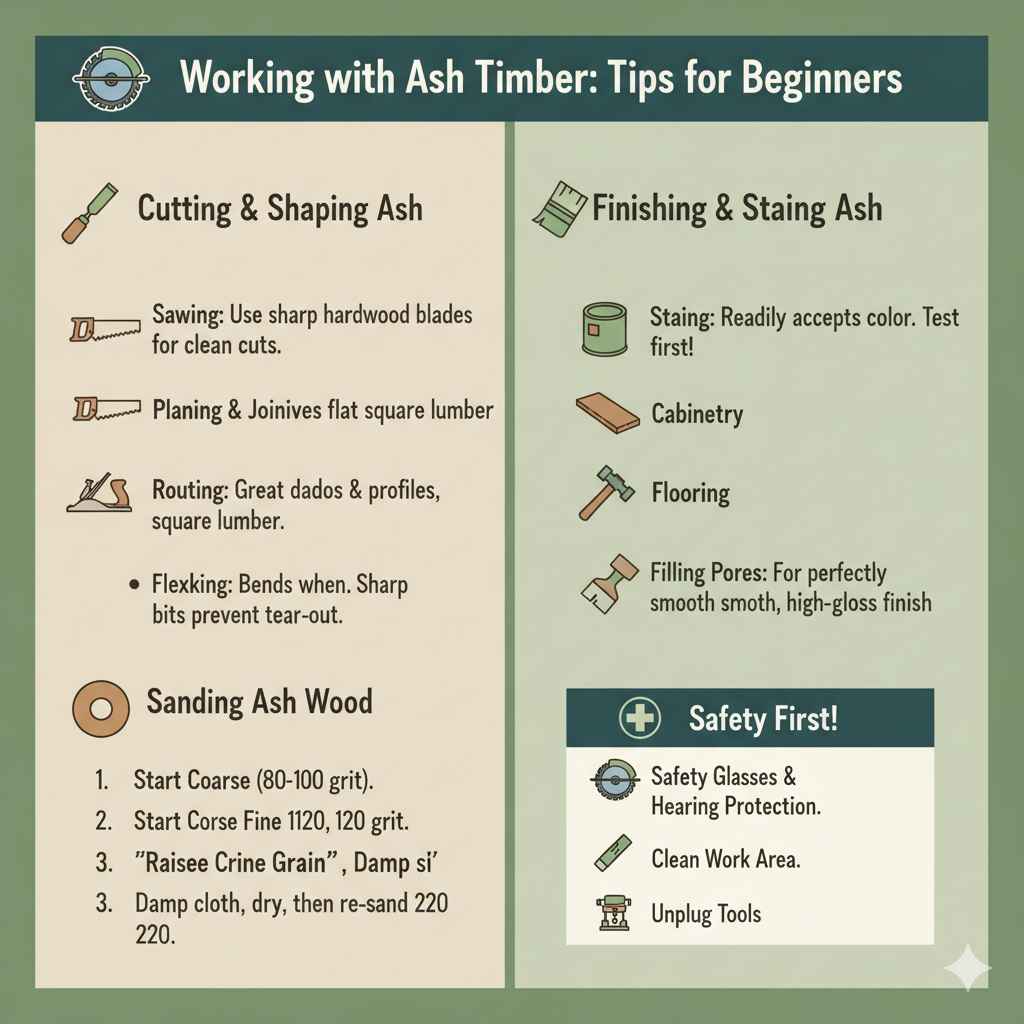
Working with Ash Timber: Tips for Beginners
Once you’ve got your ash timber, you’ll be eager to start creating! Ash is generally forgiving for beginners, but a few tips will make your experience even smoother.
Cutting and Shaping Ash
Ash cuts well with most standard woodworking tools. Always use sharp blades for both hand saws and power saws like a table saw or miter saw.
- Sawing: Use blades designed for hardwoods. You might find it cuts a little more effort than pine, but it will be cleaner cuts if the saw is sharp.
- Planing and Jointing: Ash planes quite smoothly. If you have a jointer and planer, you can achieve very flat and square lumber.
- Routing: Ash is great for routing dados, rabbets, or decorative profiles. Again, sharp bits are key to avoid tear-out.
Sanding Ash Wood
Sanding is crucial for a good finish. Ash’s coarse grain can sometimes require a bit more attention.
- Start with a coarser grit sandpaper (e.g., 80 or 100 grit) if the lumber has saw marks or is rough.
- Progress through finer grits (120, 180, 220 grit).
- After sanding with 180 grit, you might want to “raise the grain.” This involves wiping the wood with a damp cloth and letting it dry completely. This makes the grain stand up, and then you re-sand with 220 grit. This prevents the wood from becoming fuzzy after you apply your first coat of finish.
Finishing and Staining Ash
Ash is a fantastic wood to finish because it takes stains and finishes so well.
- Staining: Ash readily accepts stains, allowing you to achieve a wide range of colors. You can mimic dark woods like walnut or mahogany, or keep it light. Test your stain on a scrap piece first!
- Clear Coats: A simple clear coat (like polyurethane, varnish, or lacquer) will bring out the natural beauty of the ash grain.
- Filling Pores: Because ash has an open, coarse grain, some people like to fill the pores with a grain filler before applying a finish. This creates a perfectly smooth, level surface, especially for high-gloss finishes. For many projects, a smooth sanding job without filler is sufficient. A good resource for finishing techniques can be found on sites like Woodworking Tooling Guides, which often cover beginner-friendly finishing steps.
Safety First!
Always remember safety, especially when using power tools.
- Wear safety glasses to protect your eyes.
- Use hearing protection with loud machinery.
- Keep your work area clean and free of obstructions.
- Understand how to use your tools properly, and always unplug them when changing blades or bits.
Frequently Asked Questions About Ash Timber
Q1: Is ash wood good for beginners?
Yes, ash is excellent for beginners! It’s moderately easy to work with hand and power tools, it’s durable, and it finishes beautifully, which helps beginner projects look great.
Q2: How much does ash timber typically cost?
The cost of ash timber varies depending on your location, the grade of the wood, and whether it’s kiln-dried or rough-sawn. Generally, it’s priced competitively with other common hardwoods like oak and widely available maple, making it an accessible choice.
Q3: Can I use ash for outdoor projects?
Ash has good durability, but it’s not naturally rot-resistant like cedar or redwood. For outdoor use, you’ll want to ensure it’s thoroughly treated with a high-quality exterior finish to protect it from moisture, UV rays, and insects.