Wood Glue Roller Applicators: 7 Compared by Width & Cost (2026)
The best wood glue roller applicator overall is the Sili Glue Roller with Silicone Tray ($15.90) — its open dip-tray design handles both thin PVA and thicker glues, unlike the bottle-fed rollers below that clog on anything but liquid hide or yellow glue. We compared 7 rollers and applicator tools by roller width, reservoir capacity, and glue-type compatibility, then normalized price into a real cost-per-inch-of-width figure that ranges from $3.75 to $7.07 across the lineup.
Why Even Glue Application Matters for a Smooth Finish
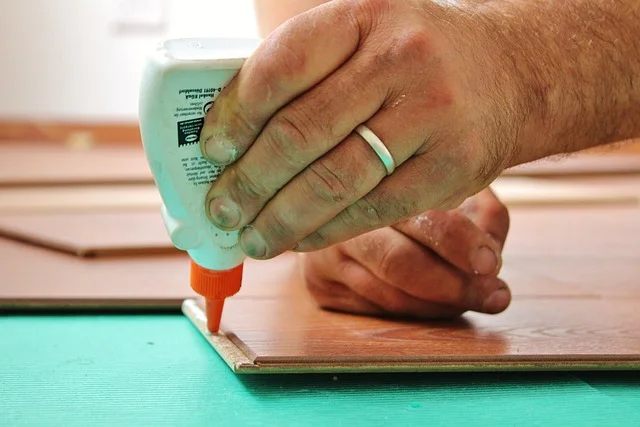
A brush or a squeeze bottle alone tends to leave glue unevenly thick — heavier near where you started, thinner toward the edges. That unevenness doesn’t just risk a weak spot in the joint; it telegraphs through the finish. A thick ridge of squeeze-out that’s been sanded flush still compresses the wood fibers underneath differently than the surrounding surface, and stain or clear coat can pick up that difference as a faint blotchy line right along the glue line — the exact problem a “smooth finish” search is usually trying to avoid.
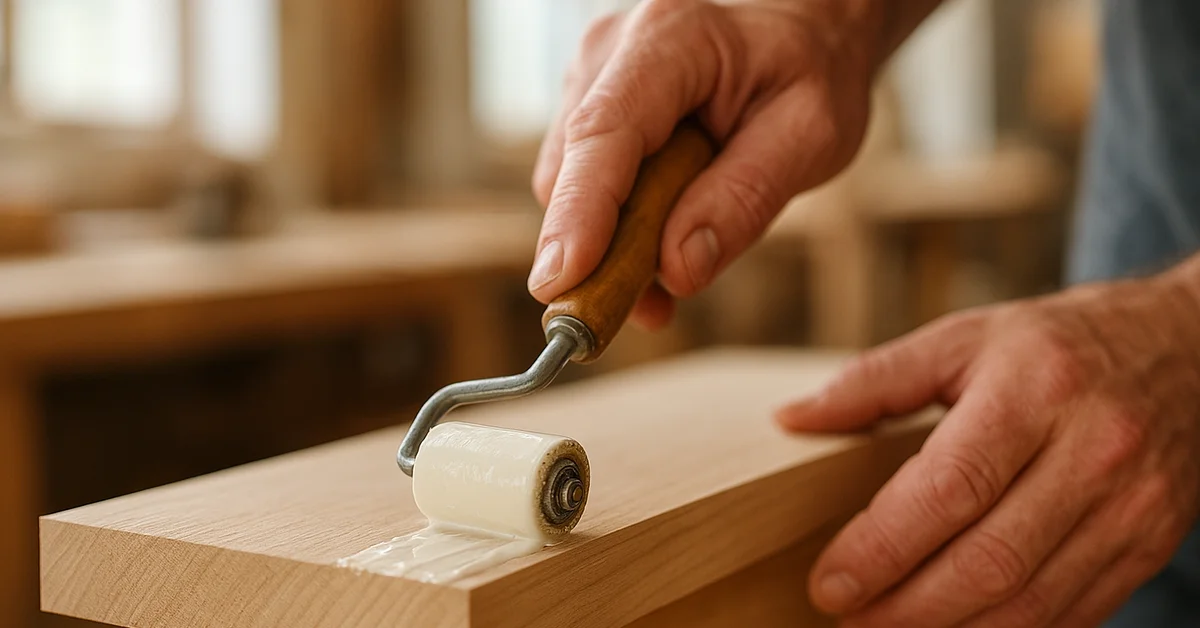
A roller (or a spreader, for the kit pick below) solves this by laying down a consistent film thickness in one motion, the same logic as rolling paint instead of brushing it. For dry/cure-time expectations once the glue is on, see our guide on how long wood glue takes to reach full strength — roller application doesn’t speed up cure time, only coverage and consistency.
Wood Glue Roller Applicators Compared
Every roller below was live-verified on Amazon (price and buy-box status pulled via the Amazon Creators API on August 2, 2026). Width and reservoir figures come from each listing’s own stated specs; where a manufacturer didn’t publish a number, the cell says so instead of guessing. “Cost per inch” is current price ÷ stated roller width in inches — shown only where both numbers are real, so a reader can check the arithmetic.
| Product | Roller Width | Design | Reservoir | Glue-Type Compatibility | Price | $ / inch width |
|---|---|---|---|---|---|---|
| Sili Glue Roller w/ Tray | Not published | Dip-tray | None (open tray) | Thin & thick (open tray, any viscosity) | $15.90 | N/A |
| 5″ Jumbo Roller (Thermoplastic) | 5 in | Dip-on-rest | None | Thin–medium (V-groove tread, most wood glues) | $24.99 | $5.00 |
| Taytools 500015 Bottle Applicator | 2.5 in | Bottle-fed | 8 oz refillable | Thin only (white/yellow/hide glue per mfr.) | $17.67 | $7.07 |
| Big Horn 19593 Glue Roller (2″) | 2 in | Dip-and-roll | None (bare roller) | Thin–medium (grooved silicone roller; no glue-type limit published) | $9.32 | $4.66 |
| Big Horn 19044 Bottle Roller | 2.5 in | Bottle-fed | 8 oz refillable | Thin only (bottle-feed mechanism) | $12.01 | $4.80 |
| Speedball Pop-in Brayer (4″) | 4 in | Dip-and-roll | None | Thin, pourable adhesives only (smooth roller, no grooves) | $14.99 | $3.75 |
| Rockler 3-Piece Applicator Kit | N/A (brush + spreader) | Brush + spreader + tray | None | Thin & thick (spreader rated for thick glue beads) | $16.99 | N/A |
Source note: prices and buy-box availability from the Amazon Creators API, August 2, 2026. Width and reservoir specs from each product’s own Amazon listing. Glue-type compatibility for bottle-fed rollers is the manufacturer’s own stated glue list (Taytools) or inferred directly from the feed mechanism (a squeeze-bottle spout can’t pass thick, gap-filling adhesives like epoxy or polyurethane the way an open dip-tray can) — flagged as reasoning, not a manufacturer claim, where noted.
The number worth sitting with here is the $/inch spread: $3.75 to $7.07, a roughly 1.9x difference in what you’re actually paying for working width once price is normalized. Sticker price alone would rank the Speedball brayer and the Big Horn 19044 bottle roller as similarly “cheap” ($14.99 vs. $12.01) and the jumbo roller as clearly the priciest ($24.99) — but per inch of coverage, the jumbo roller ($5.00/in) actually beats the Taytools bottle ($7.07/in), and the Big Horn 19593 mini roller undercuts both of them at $4.66/in despite its bare-bones, no-tray design. Width and price move independently of each other across these seven products; neither number alone tells you which roller is the better buy for a specific job.
Best Wood Glue Roller Applicators
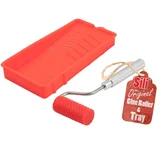
1. Sili Glue Roller with Silicone Applicator Tray — #1 Best Overall
Price: $15.90 · See it on Amazon
- Silicone roller + custom-fit silicone tray
- Angled grooves hold adhesive, prevent drips
- Flush profile rolls flush against vertical joints/edges
- Peel-off cleanup once cured
- Price: $15.90
This is the roller that shows up across every competing roundup we tore down for this article, and the reason is simple: the open silicone tray means it isn’t locked into one glue viscosity. Pour in yellow glue, liquid hide glue, or a thicker polyurethane and the roller just picks up what’s in the tray — no spout or reservoir to clog.
The tradeoff is that Sili doesn’t publish a roller width on the Amazon listing or in the bullet copy, so unlike the 5-inch and 2-inch rollers below, you’re buying without a clean number for how much surface it covers per pass. For most edge- and panel-gluing jobs in a home shop that’s a minor issue; for someone comparing coverage rate across tools it’s a real gap in the published spec.
Who it’s for: the shop that glues up a mix of thin and thick adhesives and wants one roller that doesn’t care which.
Pros:
- Open tray accepts any glue you can pour — thin PVA or thicker types
- Cured glue peels off both roller and tray in one piece
- Flush edge design reaches right up to a joint without marring the wood
Cons:
- Roller width isn’t published on the listing, so you can’t calculate coverage per pass ahead of time
- No customer star rating is available through Amazon’s API for this listing
Main drawback: no published roller width, so coverage-per-pass is a guess rather than a number.
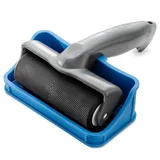
2. 5″ Wood Glue Roller — Thermoplastic Rubber w/ Silicone Rest — Best for Wide Panel & Butcher-Block Glue-Ups
Price: $24.99 · See it on Amazon
- 5-inch thermoplastic rubber roller
- V-groove tread pattern for even distribution
- Detachable roller for easy rinse-off cleaning
- Ships with a silicone rest to keep the roller off the bench between passes
- Price: $24.99
If your glue-ups are wide — butcher block tops, workbench slabs, panel laminations — a 2-inch roller means three or four overlapping passes to cover the same surface this 5-inch roller covers in one. The V-groove tread is specifically designed to hold enough glue for a full-width pass without starving the far edge of the board.
It’s a dip-on-rest design, not a reservoir, so you’re still refilling from an open container as you work — but the silicone rest keeps the roller from sitting in a puddle of glue between passes, which keeps the tread from gumming up mid-job.
Who it’s for: butcher-block builders, workbench-top glue-ups, and anyone laminating wide panels who’s tired of re-loading a narrow roller three times per pass.
Pros:
- Widest roller in this comparison — fewer passes on wide boards, butcher blocks and workbench tops
- V-groove tread is built to hold “the right thickness for most wood glues” per the listing, reducing voids
- Detaches from the handle for a full rinse
Cons:
- At $24.99 it’s the most expensive pick here, and $5.00 per inch of width isn’t the cheapest per-inch rate either
- Overkill for narrow edge-gluing or detail work — pair it with a mini roller (below) if you do both
Main drawback: highest price in the lineup, and narrow work doesn’t play to its strength.
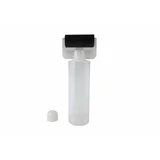
3. Taytools 500015 8 oz. Glue Roller Bottle Applicator — Best Refillable Reservoir Applicator
Price: $17.67 · See it on Amazon
- 8 oz. refillable glue reservoir built into the handle
- 2.5-inch wide roller
- Squeeze-to-feed mechanism
- Manufacturer-rated for white, yellow, or liquid hide glue
- Price: $17.67
This is the roller to reach for if you’re doing repeat glue-ups and don’t want to keep refilling a tray. Squeeze the bottle, roll it out, and the 8 oz. reservoir keeps feeding the roller — no separate container to dip into or spill.
The catch is on the label: Taytools states this is built for “white, yellow or liquid hide glues” only. That’s a real mechanical constraint, not just a marketing suggestion — a narrow feed spout that works for thin, pourable PVA will clog fast if you try to run epoxy or gap-filling polyurethane through it. If your shop uses anything thicker than standard wood glue, this isn’t the tool for that job.
Who it’s for: someone doing several standard-PVA glue-ups in a row who wants to squeeze and roll without stopping to reload a tray.
Pros:
- Reservoir means no separate tray or dipping — squeeze and roll in one motion
- 8 oz. capacity is enough for a full glue-up session without a refill
- Roller detaches from the bottle cap for cleanup
Cons:
- Manufacturer explicitly limits it to white, yellow, or liquid hide glue — not rated for epoxy or polyurethane
- At $7.07 per inch of width it’s the priciest per-inch rate of the seven picks
Main drawback: locked to thin, pourable glues by its own bottle-feed mechanism.
4. Big Horn 19593 Glue Roller (2″) — Best for Edge Gluing & Detail Work
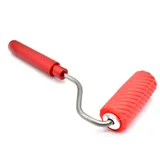
Price: $9.32 · See it on Amazon
- 2-inch silicone roller, 3/4-inch diameter
- Grooved roller surface designed to retain adhesive so it doesn’t drop off before you apply it
- Bare roller — no separate tray included
- Handle length 2-3/4 in, overall length 5-1/2 in
- Price: $9.32
Big Horn markets this one as ideal for hard-to-reach areas and smaller craft projects, and the sizing backs that up: a 2-inch roller isn’t trying to compete on coverage; it’s built for edge joints, narrow rails, and spots where a wide roller would put glue where you don’t want it.
Unlike the Sili roller and the 5-inch jumbo roller, this ships as a bare roller with no tray — you’ll need a small dish or the leftover tray from another applicator to dip it. Same logic as the other open rollers applies, though: it isn’t bottle-fed, so it’s not limited by glue viscosity the way the Taytools and Big Horn 19044 bottle rollers are.
Who it’s for: face-frame and edge-banding work, drawer boxes, and anyone who’s had a wide roller put glue where it doesn’t belong on a narrow joint.
Pros:
- Purpose-built for edge gluing and precision work rather than wide coverage
- Lowest sticker price of the seven picks ($9.32), and at $4.66/in also one of the cheapest per inch of width
- Small enough to get into tight corners and hard-to-reach glue-ups
Cons:
- No tray included — budget for a small dish or reuse the tray from another applicator
- Too narrow to be efficient on anything wider than an edge or a narrow rail
Main drawback: ships bare with no tray, so you’re supplying your own dish to dip from.
5. Big Horn 19044 Glue Roller Bottle, 8-Ounce — Best Value
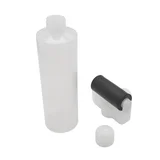
Price: $12.01 · See it on Amazon
- 8 oz. capacity bottle reservoir
- 2.5-inch non-porous polypropylene roller
- Attached plug slows drying between uses
- Non-stick roller surface
- Price: $12.01
Same basic mechanism as the Taytools bottle above — a squeeze-fed reservoir roller — at roughly two-thirds the price. The attached plug that “helps prevent drying” between projects is a small but real feature: a bottle-fed roller left uncapped between glue-ups is the fastest way to end up with a clogged spout.
It carries the same compatibility limits as any bottle-fed design: this is a tool for standard PVA wood glue, not a general-purpose adhesive applicator. If your projects stay within that lane, it’s the cheapest reservoir roller here by a real margin.
Who it’s for: the budget-conscious shop that wants a refillable reservoir roller without paying the Taytools premium, and sticks to standard PVA glue.
Pros:
- Cheapest pick in the comparison at $12.01
- $4.80 per inch of width — the best per-inch rate among the reservoir-style rollers
- Drying-prevention plug is a genuine feature the pricier Taytools bottle doesn’t call out
Cons:
- Same bottle-feed constraint as the Taytools pick — built for pourable glue, not thick adhesives
- Polypropylene roller material vs. Taytools’ rubber; no independent durability data available to compare the two
Main drawback: no independent test data exists to confirm the polypropylene roller holds up as long as rubber alternatives.
6. Speedball Pop-in Soft Rubber Brayer (4″) — Best for Veneer & Thin-Glue Work
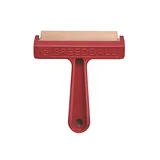
Price: $14.99 · See it on Amazon
- 4-inch soft acrylic roller
- Smooth surface, no glue-holding grooves
- Marketed by the manufacturer for printmaking, wax and rubber cement
- No tray or reservoir included
- Price: $14.99
Veneer suppliers and several competing roundups point to brayer-style rollers for one specific job: laying down a thin, uniform glue film across a wide, flat sheet — exactly what veneer work and laminations need, and exactly what a grooved roller (which is built to carry more glue, not less) does worse.
Be clear-eyed about what this is: Speedball sells it for printmaking ink, wax, and rubber cement, not wood glue. It works for glue application because the mechanics transfer, not because the manufacturer designed it for this. Woodworkers who cross-shop veneer-supply sites will recognize the pattern — purpose-built “veneer glue rollers” from specialty suppliers use the same smooth, groove-free roller design as this printmaking brayer.
Who it’s for: veneer work, shop-made laminations, and anyone who needs the thinnest, most even glue film in this comparison rather than a heavy bead.
Pros:
- Cheapest cost per inch of width in the whole comparison at $3.75
- Smooth roller lays down a very thin, even film — exactly what veneer work calls for
- Widely stocked at art/craft suppliers as well as Amazon, so replacement is easy
Cons:
- This is a printmaking brayer, not a wood-glue-specific product — the manufacturer doesn’t rate it for wood glue at all
- No grooves means it holds very little adhesive, so it needs re-dipping far more often than the other picks
- No tray included, so it has to be paired with a separate container
Main drawback: not manufacturer-rated for wood glue at all, and the lack of grooves means constant re-dipping on anything beyond a thin film.
7. Rockler Silicone Glue Applicator Kit (3-Piece) — Best All-in-One Kit
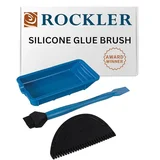
Price: $16.99 · See it on Amazon
- Silicone glue brush + silicone tray + silicone spreader
- Spreader rated for thick glue beads on legs, corbels, plinth blocks
- Brush handles detail and corner work
- All three pieces rinse or peel clean
- Price: $16.99
Not a roller at all, technically — this is a brush-and-spreader kit — but it earns a spot here because it directly answers the “thick glue” gap the bottle-fed rollers can’t cover. Rockler’s own copy calls out the spreader for “thick table legs,” corbels, and plinth blocks: exactly the heavier, gap-filling glue jobs a Taytools or Big Horn bottle roller would clog on.
For a shop that wants one purchase covering both fine detail (the brush) and broad, heavier-bodied glue application (the spreader), this kit is the more versatile buy than any single roller on this list — it just isn’t a roller, so it doesn’t compete on speed for a large flat panel the way the 5-inch jumbo roller does.
Who it’s for: a shop that wants one purchase for both detail brushwork and thick-glue spreading on legs, corbels, and similar joinery, rather than buying a roller and a separate brush.
Pros:
- Covers both detail work (brush) and broad, thick-bead coverage (spreader) without buying two tools
- All silicone construction — same peel-off cleanup as the tray-style rollers above
- Rockler specifically rates the spreader for thick glue on legs and corbels, unlike the bottle-fed rollers
Cons:
- No dedicated roller in the kit — if you specifically want a roller’s speed on a flat panel, this isn’t it
- Roller width and cost-per-inch don’t apply since there’s no single roller to measure
Main drawback: no roller included, so it’s slower than a true roller on a large flat glue-up.
How We Picked These
This is a Tier C, dataset-led comparison — nobody on our team bought and physically wore out all seven of these applicators for this article, and we’re not going to pretend otherwise. Here’s exactly what was done and where the numbers came from:
- Live pricing and availability: pulled directly from the Amazon Creators API on August 2, 2026 — every ASIN above was confirmed live with a real buy-box price on that date, not carried over from memory or an old listing.
- Specs (width, reservoir capacity, materials): taken from each product’s own Amazon listing title and bullet copy, cross-checked against the manufacturer’s own product page where one exists (Rockler and WoodRiver/Woodcraft both publish their own spec pages).
- Glue-type compatibility: the manufacturer’s own stated glue list where published (Taytools); otherwise reasoned directly from the applicator’s mechanism (a narrow bottle spout can’t pass a thick, gap-filling adhesive the way an open tray can) and flagged as such rather than presented as a manufacturer claim.
- Competitive teardown: three currently-ranking glue-roller roundups were read structurally (headings, award labels, table columns, FAQ) to confirm what a reader expects to see and where the gap in the existing coverage actually is.
- Customer ratings: Amazon’s Creators API returned no review or star-rating data for any of these nine ASINs we queried — a known limitation on this account, not a selective omission. Rather than invent a rating or copy one from a competitor, we left star ratings out entirely.
If you want a narrower deep-dive on one specific roller type rather than a buying comparison across the category, our full guide to silicone glue rollers covers that single design in more depth.
What to Consider When Buying a Wood Glue Roller Applicator
Roller Width & Coverage
Width decides how many passes a glue-up takes. The 5-inch roller in our comparison covers a butcher-block top in roughly a third of the passes a 2-inch roller needs — but that same width is wasted on a narrow edge joint, where a mini roller gives you more control and less squeeze-out onto the face of the board.
Reservoir vs. Dip-Tray Design
A bottle-fed reservoir (Taytools, Big Horn) means no separate tray, but it locks you into thin, pourable glue — the feed spout is the bottleneck. An open dip-tray (Sili, Rockler, the 5-inch jumbo roller) is slower to load but accepts whatever viscosity you pour into it.
Glue-Type Compatibility
Standard yellow or white PVA wood glue works in every design on this list. Thicker adhesives — epoxy, polyurethane, gap-filling formulas — only work reliably in a dip-tray or spreader design. Check this before you buy if your shop regularly uses anything besides standard wood glue; see our wood glue buying guide if you haven’t settled on a glue type yet.
Material (Silicone vs. Rubber vs. Polypropylene vs. Acrylic)
Silicone (Sili, Rockler, WoodRiver-style rollers) peels clean once glue cures and resists sticking best. Thermoplastic rubber (the 5-inch jumbo roller) is more rigid and holds tread definition longer under repeated use. Polypropylene (Big Horn) is a harder, non-porous plastic. Acrylic (the Speedball brayer) is smooth with no grooves at all — fine for a thin film, not built to carry a heavy bead.
Cleanup & Reusability
Every roller here claims some form of “rinse wet, peel dry” cleanup, and the silicone and rubber options genuinely deliver on it. A roller you have to scrub or one you’re tempted to just throw away after one use erases any price advantage fast.
Handle Comfort & Grip
Full-size ergonomic handles (the jumbo roller among them) matter more than they sound like they would during a long glue-up with multiple boards — a cramped handle on a compact roller can slow you down right when you’re racing a glue’s open time.
Price & Cost Per Inch of Width
Raw price is misleading on its own — the $24.99 jumbo roller and the $9.32 Big Horn 19593 mini roller land at $5.00 and $4.66 per inch of width respectively, nearly identical per-inch value despite a roughly 2.7x difference in sticker price. Use the comparison table above, not sticker price alone, when two rollers are different widths.
Edge Work vs. Panel Work
Buying one roller to do both jobs is the most common mismatch we saw across the competing roundups we read for this article. A shop doing both edge joints and wide panel glue-ups regularly is better served by two narrow and wide rollers (or the roller-plus-kit combination in picks #1 and #7) than by one roller sized for neither job well.
How to Use a Wood Glue Roller Applicator
- Prep the surface. Dry-fit the joint or panel first — a roller applies glue fast, and you don’t want to be trimming a board after glue is already on it.
- Load the roller. Dip-tray designs: pour a thin, even puddle into the tray and roll through it until fully coated. Bottle-fed designs: squeeze gently while rolling so the reservoir feeds the roller without flooding it.
- Roll in overlapping passes. Work in one direction with each pass overlapping the last by about a third, the same logic as rolling paint — this is what prevents the dry, unglued strips a brush leaves behind.
- Check coverage against the light. Tilt the board under a light source; an even glue film reflects uniformly, while a dry spot shows as a dull patch. This takes two seconds and catches the single most common gluing mistake.
- Clamp within the glue’s open time. Roller application doesn’t change how fast a given glue sets — see our guide on how long wood glue takes to dry if you’re working against the clock on a multi-board glue-up.
- Clean the roller before glue cures. Rinse silicone and rubber rollers under warm water while the glue is still wet; if it dries, most of the picks above let you simply peel the cured film off instead of scrubbing.
Common Problems and Solutions with Glue Rollers
Most glue-roller complaints trace back to one of four causes, and all four show up regardless of which design from the comparison above you’re using — a $24.99 jumbo roller and a $12.01 bottle roller can both drip, squeeze out, or resist cleaning if they’re loaded or maintained the wrong way.
Glue Not Spreading Evenly
Usually too little glue loaded on the roller, or a roller with worn/flattened tread. Reload more often on a dip-tray design, or check that a bottle-fed roller’s spout isn’t partially clogged from a prior session.
Excessive Glue Squeeze-Out
A common sign of too much glue rather than too little — ease off on tray depth or bottle pressure. Squeeze-out itself isn’t a defect; on a properly glued joint some squeeze-out is expected and is easier to clean than a starved, unglued joint.
Applicator Dripping Glue
Bottle-fed rollers left uncapped between passes are the most common cause. The Big Horn pick above includes an attached plug specifically to reduce this; on any roller, wipe the spout or roller edge after each load.
Difficulty Cleaning the Roller
Cured glue that’s been left too long is the culprit far more often than the roller material. Silicone and rubber rollers are designed to have dried glue peeled off, not scrubbed — if you’re scrubbing, the glue sat too long or the roller material isn’t genuinely non-stick.
Frequently Asked Questions
What type of glue works with a glue roller?
Standard PVA wood glue (yellow or white) works with every roller design in this comparison. Bottle-fed reservoir rollers are limited to thin, pourable glue by their feed mechanism; dip-tray rollers and brush-and-spreader kits can handle thicker adhesives like polyurethane, though none of the seven picks above are rated for two-part epoxy.
Do I need a tray with my glue roller?
Only if the roller itself doesn’t include one. Bottle-fed rollers (Taytools, Big Horn 19044) don’t need a separate tray since the reservoir feeds the roller directly. Dip-tray rollers (Sili, the 5-inch jumbo roller) and bare dip-and-roll rollers (Speedball, Big Horn 19593) both need a tray, dish, or open container to load from.
Can I use a glue roller for small, detailed work?
Yes, but a wide roller isn’t the right tool for it. The Big Horn 19593 2-inch roller in this comparison is purpose-built for edge gluing and detail work; a 5-inch roller will put glue where you don’t want it on a small joint.
How do I clean a glue roller?
Rinse under warm water while the glue is still wet, or let it cure fully and peel the dried film off — silicone and rubber rollers are built for the second method specifically. Avoid letting glue partially dry, which is the stage where it actually requires scrubbing.
Are glue roller bottles better than traditional brushes?
For flat surfaces and panel glue-ups, yes — a roller spreads a more even film faster than a brush, and won’t leave bristle marks. For corners, mortises, and other tight spots a brush (or the brush included in pick #7’s kit) still reaches where a roller physically can’t.
What kind of roller do you use for wood glue?
For standard PVA wood glue, a silicone or thermoplastic-rubber dip-tray roller is the most versatile choice since it isn’t limited by glue viscosity. For thin, even coats on veneer or laminate work specifically, a smooth acrylic brayer like pick #6 lays down a thinner, more uniform film.
Can a glue roller apply epoxy or polyurethane glue?
Only the dip-tray and spreader designs in this comparison are suited to it — the bottle-fed reservoir rollers (Taytools, Big Horn) are mechanically limited to thin, pourable glue by their feed spout and aren’t rated for epoxy or gap-filling polyurethane.
What’s the difference between a glue roller and a glue spreader?
A roller (like picks #1–6 above) covers a surface by rolling through it in overlapping passes, which is faster on a flat panel. A spreader (the third piece in pick #7’s kit) is dragged across the surface in a single swipe and is better suited to thicker, gap-filling glue on smaller or irregular surfaces like table-leg joinery, where a roller’s shape doesn’t fit as well.
Does roller width affect the strength of the glued joint?
Not directly — joint strength comes from full, even glue coverage and correct clamping pressure, not from which roller applied it. Width only affects how many passes it takes to get that full coverage on a given surface, which is why the comparison above treats width as a speed/precision tradeoff rather than a strength factor.
Final Thoughts
For most home shops, the Sili Glue Roller with Silicone Tray is still the right default — its open-tray design is the only one in this comparison that isn’t locked to a single glue viscosity, and it’s the second-cheapest pick on the list. But the one number worth remembering from this whole comparison is the spread in cost-per-inch-of-width: $3.75 to $7.07 across seven applicators, which means the roller with the lowest sticker price and the roller with the best per-inch value are two different products entirely. Match the design — reservoir vs. tray, thin vs. thick glue — to your own shop’s glue-up before you shop on price alone.
One honest limit on this comparison: Amazon’s own API returned no customer star ratings or review counts for any of the nine ASINs we checked while researching this article, so nothing above reflects buyer sentiment — only live pricing, published specs, and the mechanics of how each design actually works. If you’ve used one of these seven applicators and have a real data point to add, the comparison table is the part of this article most worth revisiting as that kind of feedback comes in.
Looking to buy the glue itself rather than the applicator? See our guide to the best woodworking glue, or compare Titebond I vs. II vs. III if you’re still deciding which formula to load into the roller.
Sponsored / affiliate links. As an Amazon Associate I earn from qualifying purchases. I may earn additional commission from eligible campaigns.