Is Ash Wood Harder Than Hickory? A Hardness Comparison
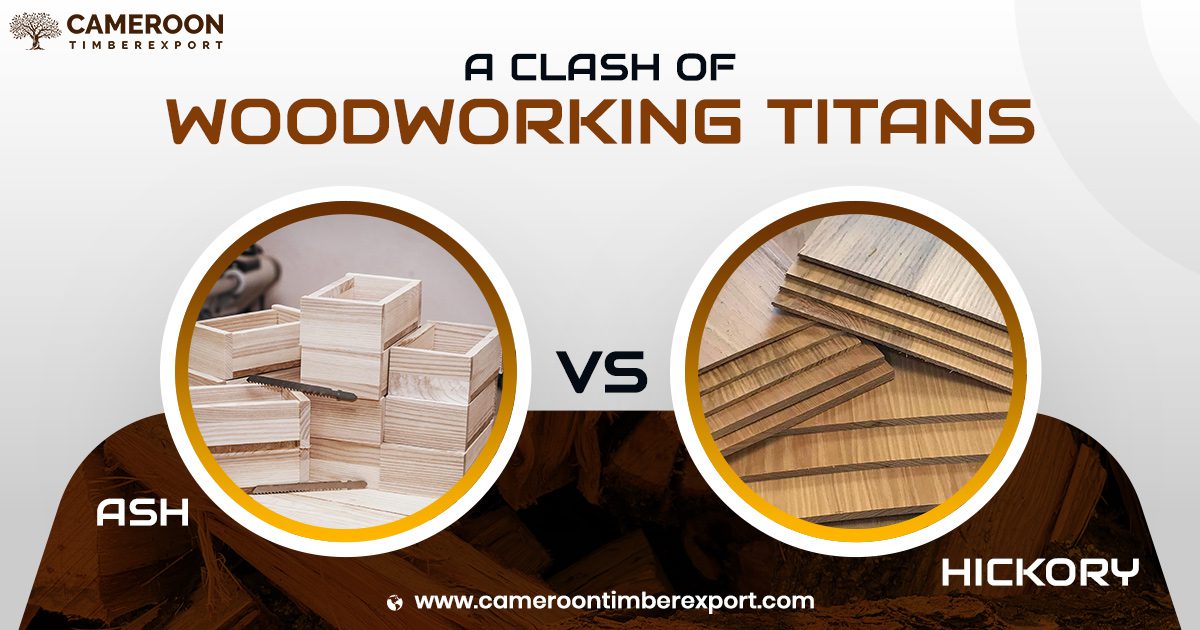
Yes — hickory is harder than ash. Shagbark hickory scores 1,820 lbf on the Janka hardness scale versus white ash’s 1,320 lbf, making hickory roughly 38% harder and noticeably more resistant to dents and wear. That extra hardness makes hickory the better pick for tool handles and flooring in high-traffic areas, while ash’s lighter weight and easier workability keep it the traditional choice for baseball bats and furniture. Below: the real numbers, where each wood actually wins, and which one fits your specific project.
Quick Answer: Hickory (1,820 lbf Janka) is harder than ash (1,320 lbf Janka) — about 38% harder. Choose hickory for tool handles, striking tools, and heavy-traffic flooring. Choose ash for baseball bats, furniture, and projects where lighter weight and easier machining matter more than maximum hardness.
Janka Hardness: The Real Numbers
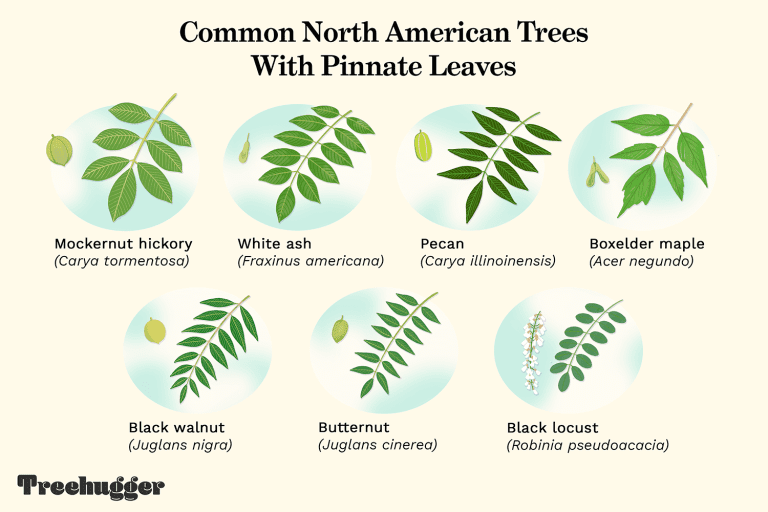
The Janka scale measures the force (in pounds-force, lbf) needed to embed a small steel ball halfway into a wood sample — higher numbers mean a harder, more dent-resistant wood. White ash (Fraxinus americana), the most common ash species used in the US, rates 1,320 lbf. Shagbark hickory, the most common hickory species for lumber, rates 1,820 lbf. For reference, that puts hickory ahead of hard maple (1,450 lbf) and closer to the range of some tropical hardwoods, while ash sits closer to black walnut (1,010 lbf) territory.
Both figures vary somewhat by species within each family — black ash is notably softer at around 850 lbf, while blue ash can reach 2,030 lbf — so if you’re buying lumber, confirm which specific species you’re getting rather than assuming “ash” or “hickory” always means the same number.

Characteristics of Ash Wood
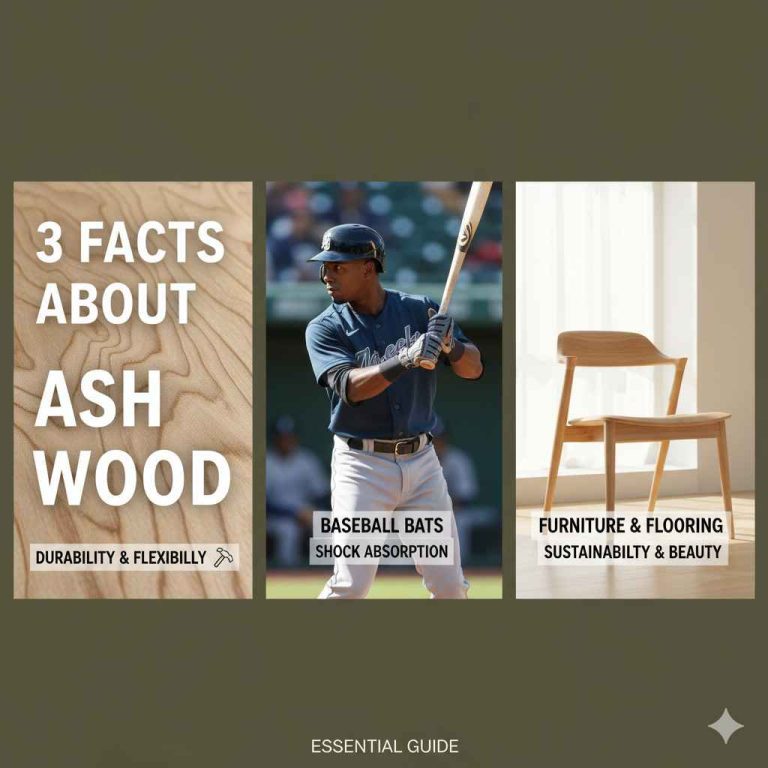
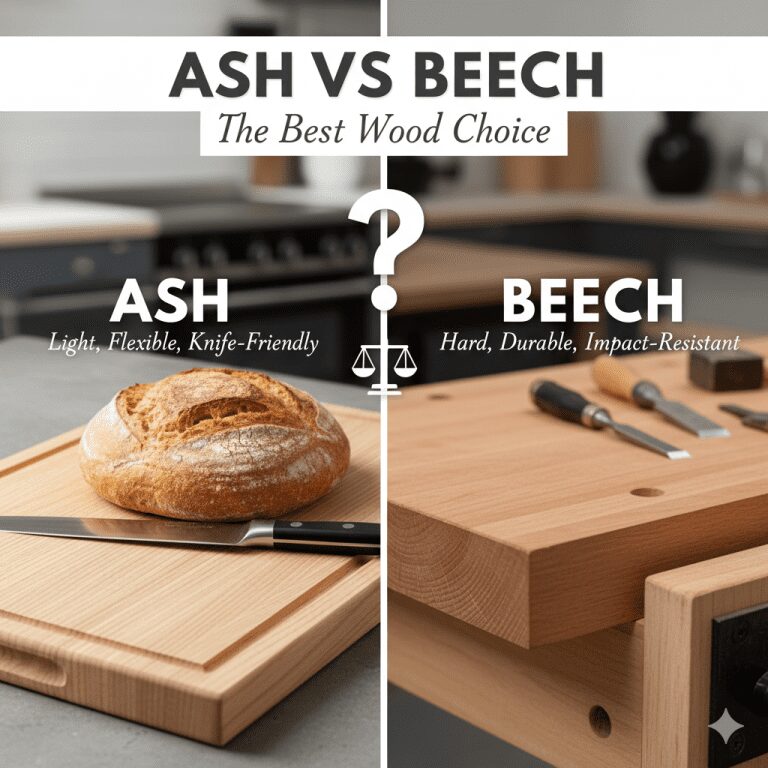
Ash is prized for its combination of strength and flexibility — it can absorb shock and flex without snapping, which is exactly why it’s been the traditional choice for baseball bats and tool handles that take repeated impact. It has a light, straight, open grain that takes stain evenly, machines easily with hand and power tools, and finishes to a smooth surface. On the downside, ash is vulnerable to the emerald ash borer (which has devastated ash populations across much of North America) and can be prone to insect damage in unfinished/outdoor applications, and it isn’t naturally rot- or weather-resistant.
Characteristics of Hickory Wood
Hickory is one of the hardest and toughest domestic hardwoods available, with excellent shock resistance alongside its high Janka rating — a combination that makes it the standard choice for hammer and axe handles, where both hardness and the ability to absorb repeated impact matter. It’s also popular for flooring in high-traffic homes since it resists dents and scratches better than most other domestic species, and for smoking wood thanks to its distinct, strong flavor. The tradeoff: hickory’s hardness makes it noticeably harder to work with hand tools, it’s heavier than ash, and it typically costs more.
Ash vs Hickory: Side-by-Side Comparison
| Property | Ash | Hickory |
|---|---|---|
| Janka hardness | 1,320 lbf | 1,820 lbf |
| Weight | Lighter | Heavier |
| Workability | Easier to machine and hand-tool | Harder to work, dulls tools faster |
| Shock resistance | Excellent (flexes under impact) | Excellent (absorbs impact without cracking) |
| Typical uses | Baseball bats, furniture, tool handles | Axe/hammer handles, flooring, smoking wood |
| Cost | Generally less expensive | Generally more expensive |
Which Wood Should You Choose?
For striking tools (axes, hammers, mallets) and high-traffic flooring, hickory’s extra hardness and shock resistance make it the better long-term choice despite the higher cost and harder workability — see a full toughness-vs-hardness comparison of mallet woods for how that plays out across 7 species. For furniture, baseball bats, and projects where lighter weight and easier machining matter more than maximum dent resistance, ash remains the traditional and more budget-friendly pick. Both woods burn well and make good firewood if that’s the end use.
Best Hickory Handle Pick
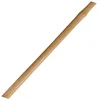
True Temper Hickory Sledge Hammer Handle, 24″
A direct example of hickory’s shock resistance and toughness in a striking-tool handle.
- Best for: Replacing a cracked or worn sledge hammer handle
- Why we picked it: Hickory’s 1,820 lbf Janka hardness absorbs striking impact without cracking
- Main drawback: Harder to shape or fit than a softer handle wood
Compare more ash & hickory tool products
 Option 1 Hickory Axe Handle, 14″ (2-pack) – $23.99
|
 Option 2 Woodcraft Ash Baseball Bat Billet
|
 Option 3 Narex Beech Wood Carving Mallet – $25.67
|
As an Amazon Associate we earn from qualifying purchases.
Frequently Asked Questions
Is hickory harder than ash wood?
Yes. Shagbark hickory rates 1,820 lbf on the Janka hardness scale, compared to white ash’s 1,320 lbf — hickory is about 38% harder, making it more resistant to dents and wear.
Which is stronger, ash or hickory?
Hickory is harder and more dent-resistant, but both woods have excellent shock resistance — ash flexes under impact while hickory absorbs it, which is why both are used for handles and sporting equipment despite the hardness difference.
What is the disadvantage of ash wood?
Ash is more vulnerable to insect damage (notably the emerald ash borer, which has killed large numbers of ash trees across North America), isn’t naturally weather- or rot-resistant, and is softer than hickory, making it less ideal for high-wear applications like striking-tool handles.
What is the difference between hickory and ash?
Hickory is denser, harder (1,820 vs 1,320 lbf), and heavier, making it the standard for axe and hammer handles and hard-wearing flooring. Ash is lighter and easier to machine, which has made it the traditional choice for baseball bats and furniture — though both have good shock resistance.
Conclusion
Hickory beats ash on raw hardness (1,820 vs 1,320 lbf) and is the better choice for striking tools and heavy-traffic flooring. Ash’s lighter weight, easier machining, and lower cost keep it the traditional pick for bats and furniture. Match the wood to what the project actually demands rather than picking the “harder” one by default.