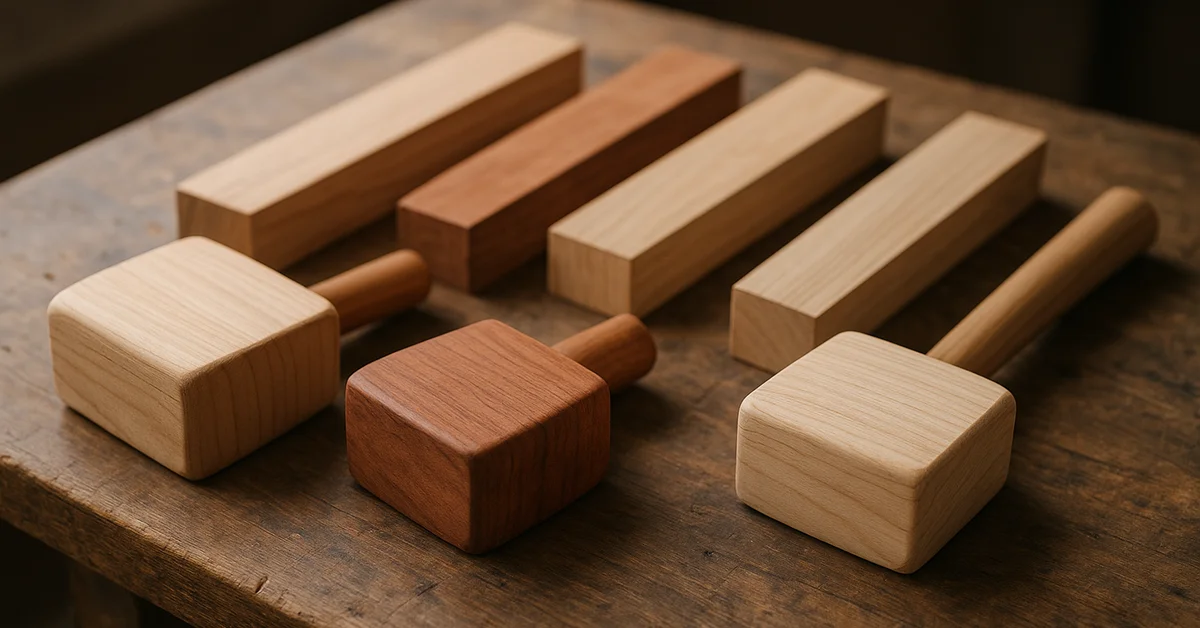
Best Wood for a Mallet: 7 Species by Toughness & Price (2026)
Shagbark hickory is the best all-around wood for a mallet head. At 25.8 in-lbf/in³ work-to-maximum-load, it absorbs more impact energy than any other mainstream mallet wood in this comparison — 74% more than white oak — despite a Janka hardness barely half that of lignum vitae. For a tool that takes repeated impact, that toughness number matters more than raw surface hardness.
A mallet head does not fail by denting. It fails by splitting, checking, or mushrooming under thousands of repeated hits — not the same failure mode a hammer has, which is part of why a mallet and a hammer aren’t interchangeable — which is a toughness problem (how much energy the wood absorbs before it breaks), not a hardness problem (how much the surface resists being dented by a static load). Most “best wood for mallet” articles rank species by Janka hardness alone, which is why lignum vitae keeps showing up as the “best” choice even though woodworkers who have actually owned one report it checking and cracking. Below is a table built from the two figures that actually predict shock resistance — work to maximum load and impact bending — sourced from the USDA Forest Products Laboratory’s own mechanical-properties data, next to live blank pricing and computed head weight for all 7 species.
The Mallet Wood Comparison Table
| Species | Janka Hardness | Toughness (Work to Max Load, in-lbf/in³) | Impact Bending (in.) | Density | 3″×3″×6″ Head Weight | Cost / 3″×3″×6″ Blank | Verdict |
|---|---|---|---|---|---|---|---|
| Shagbark Hickory | 1,880 lbf | 25.8 | 67 in. | 50 lb/ft³ | 1.56 lb | $14.38 | #1 Best Overall |
| White Ash | 1,320 lbf | 16.6 | 43 in. | 42 lb/ft³ | 1.31 lb | $6.38 | Best Value |
| Hard Maple | 1,450 lbf | 16.5 | 39 in. | 44.0 lb/ft³ | 1.38 lb | $8.24 | Best for a Joiner’s Mallet |
| American Beech | 1,300 lbf | 15.1 | 41 in. | 45.0 lb/ft³ | 1.41 lb | $9.33 | Best for a Carver’s Mallet |
| White Oak | 1,360 lbf | 14.8 | 37 in. | 47.0 lb/ft³ | 1.47 lb | $13.48 | Best for a Carpenter’s Mallet |
| Osage Orange | 2,620 lbf | not published | not published | 54 lb/ft³ | 1.69 lb | $11.20 | Best Heavy-Duty Head |
| Lignum Vitae | 4,390 lbf | not published | not published | 78.5 lb/ft³ | 2.45 lb | $70.82 | Best Premium Splurge |
The one-line takeaway: hickory beats white oak by 74% on work-to-maximum-load (25.8 vs. 14.8 in-lbf/in³) and by 81% on impact bending (67 in. vs. 37 in.) — the two figures that actually measure how much repeated-impact energy a mallet head can absorb before it fails — while sitting in the middle of the pack on Janka hardness. Lignum vitae has 2.3x hickory’s hardness but no published toughness figure at all, and the woodworking record on it (checking, cracking, cost) explains why.
Best Mallet Woods, Ranked
Each pick below lists the exact blank priced and live-verified this session, with the math behind its cost-per-cubic-inch and cost-per-mallet-head figures shown so you can check it yourself.
1. Shagbark Hickory — #1 Best Overall
Four (4) Hickory Turning Blanks, 3″ x 3″ x 12″ — $115.00 (4 blanks, 432 cubic inches total, enough for roughly 8 mallet heads at 3″x3″x6″) — works out to $0.2662/cu-in, or $14.38 for one 3″×3″×6″ head-sized blank. Check current price on Amazon →
- Janka hardness: 1,880 lbf (The Wood Database)
- Toughness (work to maximum load): 25.8 in-lbf/in³ — the highest of any species in this comparison
- Impact bending: 67 in. — also the highest; both figures from the USDA FPL Wood Handbook
- Density: 50 lb/ft³ — a 3″x3″x6″ head weighs 1.56 lb
Hickory is what the USDA Forest Products Laboratory itself calls out as the North American species “commonly used where strength or shock-resistance is important” — it is the default wood for axe, hammer and chisel handles for the same reason it belongs on this list: nothing else in the FPL’s own mechanical-property tables absorbs more energy before failing. At 25.8 in-lbf/in³ work-to-maximum-load, it beats white oak by 74% and beats hard maple by 56%, despite a Janka hardness (1,880 lbf) that is nowhere near the top of this table.
That combination — moderate hardness, exceptional toughness — is exactly the profile a mallet head wants (see the fuller hickory-vs-white-oak breakdown for how the two compare outside of mallet use, too). A head that is too hard (lignum vitae, osage orange) risks splitting under a hard strike; hickory flexes and absorbs the blow instead of transmitting all of it back into your wrist, and it does so without denting easily enough to mushroom the way a softer wood would.
Pros:
- Absorbs more impact energy than any other species tested here — the real “shock resistance” number, not a guess
- Same reputation and grain structure the tool-handle industry has relied on for a century
- Moderate Janka hardness (1,880 lbf) means it won’t check or crack the way much harder woods can under repeated impact
Cons:
- Difficult to shape by hand — dulls edge tools quickly and tears out if your gouge or plane iron isn’t sharp
- Priciest of the mainstream mallet woods in this comparison at $14.38 per head-sized blank
- Less commonly stocked at big-box lumber yards than maple or oak; usually a specialty-supplier order
Main drawback: it fights back under hand tools. Plan on a bandsaw or power sander to rough out the head shape, and expect to resharpen more often than you would working maple or ash — keeping your edge tools properly sharpened makes a bigger difference on hickory than on any other wood in this comparison.
2. White Ash — Best Value
Barrington Hardwoods White Ash Lumber Turning Blanks, 4 Pieces, 2″ x 2″ x 12″ — $22.69 (4 blanks, 192 cubic inches total) — works out to $0.1182/cu-in, or $6.38 for a 3″×3″×6″ head-sized volume — the cheapest of all 7 species here. Check current price on Amazon →
- Janka hardness: 1,320 lbf (USDA FPL Wood Handbook, 12% moisture content)
- Toughness (work to maximum load): 16.6 in-lbf/in³ — second only to hickory
- Impact bending: 43 in. — also second only to hickory, ahead of beech, maple and oak
- Density: 42 lb/ft³, the lightest of the 5 FPL-documented species — a head weighs 1.31 lb
Ash is the other traditional North American tool-handle wood, and the FPL numbers explain why: it posts the second-highest work-to-maximum-load and impact-bending figures of any species in this table, trailing only hickory, while costing 56% less per blank. If your budget rules out hickory, ash is the wood that gives up the least toughness for the money — it beats hard maple, beech and white oak on both toughness metrics despite being the lightest and cheapest of the five domestic species compared here.
The one real caveat is supply, not the wood itself: the emerald ash borer has killed hundreds of millions of ash trees across North America since the early 2000s, and while ash lumber is still commercially available, it is worth confirming with your supplier that what you are buying is domestically sourced and not from a compromised stand. See how ash actually compares to hickory on hardness if you are choosing between the two.
Pros:
- Best toughness-per-dollar in this whole comparison — 16.6 in-lbf/in³ for $6.38 a head
- Lightest of the 5 domestic species, which some woodworkers prefer for a joiner’s mallet used all day
- Straight grain that is easier to work by hand than hickory, with less edge-dulling
Cons:
- Lower Janka hardness (1,320 lbf) than maple or hickory, so the striking face will show wear sooner under very heavy daily use
- Emerald ash borer has made healthy ash timber a genuine, documented long-term supply concern in parts of North America
- Lighter head (1.31 lb at this size) means less momentum per swing than a hickory or osage orange head of the same dimensions
Main drawback: it is tougher than its price suggests, but not as tough as hickory long-term (43 in. impact bending vs. 67 in.) — a good working mallet, not a lifetime heirloom for daily framing use.
3. Hard Maple — Best for a Joiner’s Mallet
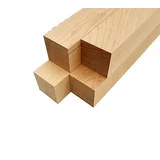
Barrington Hardwoods Hard Maple Lumber Turning Squares, 4 Pieces, 3″ x 3″ x 6″ — $32.95 (4 blanks, 216 cubic inches total — sold pre-cut to exactly the head size used throughout this comparison) — works out to $0.1525/cu-in, or $8.24 per head. Check current price on Amazon →
- Janka hardness: 1,450 lbf — the hardest of the 5 domestic species (USDA FPL Wood Handbook)
- Toughness (work to maximum load): 16.5 in-lbf/in³
- Impact bending: 39 in.
- Density: 44.0 lb/ft³ — a 3″x3″x6″ head weighs 1.38 lb
Hard maple is the classic joiner’s and bench-mallet wood, and it is the one species in this comparison you can buy pre-cut to an actual mallet-head size (3″x3″x6″) rather than as a general turning square you have to resize. Its fine, tight, even grain machines cleanly and holds an edge on the striking face, and it is stocked at almost every hardwood dealer and most big-box lumber counters in North America.
The number worth knowing before you commit to maple, though: despite having the highest Janka hardness of the 5 domestic species (1,450 lbf), its toughness numbers are only middle-of-the-pack — 16.5 in-lbf/in³ work-to-maximum-load, behind both ash (16.6) and hickory (25.8). Maple converts less of its hardness into shock absorption than ash does; you are paying for surface hardness more than for impact resistance.
Pros:
- Sold pre-cut to real mallet-head dimensions — no resizing a turning square yourself
- Widely available at nearly any hardwood supplier or big-box lumber counter
- Fine, even grain that machines and finishes cleanly
Cons:
- Hardest Janka number of the 5 domestic species, but not the toughest — ash beats it on both work-to-maximum-load and impact bending
- Can scorch or burn under fast power-tool cuts if the bit or blade runs hot
- At $8.24 per head it is not the cheapest choice for a wood that isn’t the toughness leader
Main drawback: it is priced and stocked well, but its toughness-to-hardness ratio is the weakest of the 5 domestic species here. It is a fine, easy-to-source everyday mallet wood — just don’t assume “hardest” means “most shock-resistant.”
4. American Beech — Best for a Carver’s Mallet
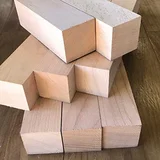
Beech Wood Turning Blanks, 6 pcs, 2″ x 2″ x 12″ — $49.75 (6 blanks, 288 cubic inches total) — works out to $0.1727/cu-in, or $9.33 per 3″×3″×6″ head. Check current price on Amazon →
- Janka hardness: 1,300 lbf — the softest of the 5 domestic species
- Toughness (work to maximum load): 15.1 in-lbf/in³
- Impact bending: 41 in.
- Density: 45.0 lb/ft³ — a 3″x3″x6″ head weighs 1.41 lb
Beech is the traditional European wood-carving mallet material — the classic round or barrel-shaped “melon” carving mallet is almost always beech, and Woodworking Magazine’s own reference build specs a 5-inch beech head for exactly this reason. The appeal for carving specifically (as opposed to framing or joinery) is that beech’s moderate weight and density strike a balance: heavy enough to drive a carving gouge cleanly, light enough that your wrist doesn’t fatigue over a multi-hour carving session the way a hickory or osage orange head would.
It is worth being honest about where beech sits on the toughness table, though: at 15.1 in-lbf/in³ work-to-maximum-load, it is the lowest of the 5 domestic species compared here, just behind white oak. For the light, frequent taps of gouge-and-mallet carving that is rarely a problem — but it is not the wood to reach for if you are doing heavy chisel-and-mortise framing work all day.
Pros:
- The standard, purpose-built wood for round carving mallets in traditional woodcarving
- Moderate weight reduces wrist fatigue over long carving sessions compared with denser heads
- Fine, closed grain that turns cleanly on a lathe for the classic barrel/melon shape
Cons:
- Lowest work-to-maximum-load figure of the 5 domestic species (15.1 in-lbf/in³)
- Softest Janka hardness here (1,300 lbf) — will show wear on the striking face faster under heavy use
- Not the pick for heavy joinery/framing mallet work — ash or hickory will outlast it there
Main drawback: the least shock-resistant of the 5 domestic species by the primary toughness data — the right tradeoff for a light carving mallet used all day, the wrong one for heavy chisel-and-mortise framing work.
5. White Oak — Best for a Carpenter’s Mallet
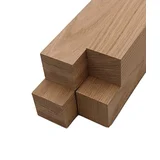
Barrington Hardwoods White Oak Lumber Turning Blanks, 4 Pieces, 2″ x 2″ x 8″ — $31.95 (4 blanks, 128 cubic inches total) — works out to $0.2496/cu-in, or $13.48 per 3″×3″×6″ head. Check current price on Amazon →
- Janka hardness: 1,360 lbf (USDA FPL Wood Handbook, 12% MC)
- Toughness (work to maximum load): 14.8 in-lbf/in³ — the lowest of the 5 domestic species tested
- Impact bending: 37 in. — also the lowest of the 5
- Density: 47 lb/ft³ — a 3″x3″x6″ head weighs 1.47 lb
White oak is the traditional big carpenter’s mallet wood, prized for its coarse, open end-grain striking surface and its reputation for durability. That reputation is real for what it actually measures — oak’s open end grain resists mushrooming from repeated chisel-butt contact reasonably well, and it is widely available, easy to source, and priced in the middle of this comparison.
What the FPL data shows, and what none of the “just use oak, it’s durable” articles mention, is that on the two figures that most directly measure whole-head shock resistance — work-to-maximum-load and impact bending — white oak is actually the lowest of the 5 domestic species in this comparison, behind beech, maple, ash and hickory. It is not a bad mallet wood; it is simply not the toughness leader its folklore reputation implies, and the honest number is worth knowing before you build around it.
Pros:
- Coarse, open end grain gives a distinctive, durable striking surface for chisel-butt work
- Widely available and easy to source at almost any hardwood dealer
- Traditional, well-proven choice for a large carpenter’s or framing mallet
Cons:
- Lowest work-to-maximum-load (14.8 in-lbf/in³) and impact bending (37 in.) of the 5 domestic species tested here
- Coarse open pores can leave visible tool marks and take finish unevenly
- At $13.48 per head it costs nearly twice as much as ash for lower measured toughness
Main drawback: the reputation is about the striking-face grain pattern, not whole-head shock resistance — by the FPL’s own toughness numbers it is the least impact-resistant of the 5 domestic species here, despite being harder than beech on the Janka scale.
6. Osage Orange — Best Heavy-Duty Head
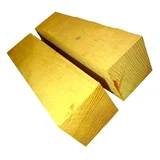
8 Pieces B-Grade Osage Orange Blanks, 2″ x 2″ x 11″ — $73.00 (8 blanks, 352 cubic inches total; sold as cosmetic “B-grade” — structurally sound but with visible color/figure variation, which is exactly what keeps the price down) — works out to $0.2074/cu-in, or $11.20 per 3″×3″×6″ head. Check current price on Amazon →
- Janka hardness: 2,620 lbf (The Wood Database) — second-hardest in this comparison
- Toughness (work to maximum load / impact bending): not published — osage orange is not in the FPL Wood Handbook’s commercial species table
- Density: 54 lb/ft³ — a 3″x3″x6″ head weighs 1.69 lb, the heaviest of the 5 non-lignum-vitae picks
- One of the most rot- and insect-resistant native North American woods, per The Wood Database
Osage orange doesn’t have a published FPL toughness figure — it isn’t one of the species the Wood Handbook’s mechanical-property tables cover — but the real-world case for it as a shock-resistant wood is unusually strong anyway. It is the wood traditional and modern bowyers reach for to build wooden archery bows, an application that demands a wood flex thousands of times under load without fracturing; a wood that couldn’t take repeated impact simply wouldn’t survive that use. Woodworker Matthias Wandel’s own physical breaking-force tests (woodgears.ca, not the FPL) put osage orange at the top of roughly 50 species tested for maximum breaking force — ahead of hickory in his test rig, though the two are close.
The tradeoff is weight and sourcing. At 54 lb/ft³ and 1.69 lb for a 3″x3″x6″ head, it is noticeably heavier than any of the 5 domestic species above, which some woodworkers want for maximum force per swing on heavy framing work and others find tiring for all-day joinery. It is also a specialty order — you won’t find it at a typical big-box lumber counter, and most of what is sold online (like the blanks priced here) is cosmetic “B-grade” stock, which is fine structurally but worth knowing before you order.
Pros:
- Bow-wood pedigree is a genuine, checkable real-world toughness credential FPL doesn’t publish a lab number for
- One of the most rot- and insect-resistant native North American species
- Heaviest practical (non-lignum-vitae) head in this comparison — more force transferred per swing
Cons:
- No published FPL work-to-maximum-load or impact-bending figure — the toughness case rests on real-world use, not a lab table
- Heaviest of the 6 non-lignum-vitae picks, which can tire the wrist on long joinery sessions
- Specialty-supplier sourcing only; commonly sold as lower cosmetic grade even when structurally sound
Main drawback: there is no FPL lab number to point to, so the toughness case here leans on bow-wood use and an independent physical test rather than the same primary source used for the 5 domestic species above — still a strong case, just a different kind of evidence.
7. Lignum Vitae — Best Premium Splurge
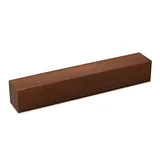
Woodcraft Lignum Vitae, 1 Piece, 2″ x 2″ x 12″ — $62.95 (1 blank, 48 cubic inches) — works out to $1.3115/cu-in, or $70.82 for a 3″×3″×6″ head — roughly 11x hickory’s price for the identical volume. Check current price on Amazon →
- Janka hardness: 4,390 lbf — by far the hardest wood in this comparison (The Wood Database)
- Toughness (work to maximum load / impact bending): not published in the FPL Wood Handbook
- Density: 78.5 lb/ft³ — a 3″x3″x6″ head weighs 2.45 lb, nearly 67% heavier than white oak at the same size
- Self-lubricating natural oils historically used for ship propeller-shaft bearings
Lignum vitae is, by a wide margin, the hardest and heaviest wood in this comparison — 4,390 lbf on the Janka scale is nearly 2.3x hickory’s hardness, and a 3″x3″x6″ head weighs 2.45 lb, enough extra mass per swing that it is the traditional choice for shipwright’s mallets used to drive oakum into hull seams. If sheer density and self-lubricating wear resistance is what you want, nothing else here comes close.
But this is exactly the species that exposes the hardest-is-best assumption: the FPL Wood Handbook does not publish a work-to-maximum-load or impact-bending figure for it at all, and The Wood Database’s own entry describes its shrinkage as “very high” with a real tendency to check and crack under stress — not a rumor, a documented property. That real-world reputation shows up in the marketplace, too: a search for lignum vitae blanks during the research for this article turned up a separate listing sold explicitly as a “Cracked Piece” — distinct enough of a known issue that at least one seller lists it as its own product. It is also worth knowing that all Guaiacum species (the lignum vitae genus) are listed under CITES Appendix II due to overharvesting, which is part of why genuine lignum vitae costs roughly 11x hickory for the same volume.
Pros:
- Hardest and heaviest wood in this comparison by a wide margin — maximum force per swing
- Self-lubricating oils give genuinely unique wear resistance, proven in demanding marine bearing applications
- A real piece of woodworking history for a shipwright-style mallet
Cons:
- No published FPL toughness figure, and a documented real-world tendency to check and crack under stress
- By far the most expensive pick here — about 11x hickory’s price for the same head-sized volume
- CITES Appendix II trade restriction on all Guaiacum species affects both cost and long-term sourcing
Main drawback: the hardest, heaviest wood in this comparison has no published toughness data and a documented checking/cracking problem under repeated stress — for a working shop mallet used daily, that combination makes it a specialty/collector choice, not a practical first mallet.
How We Picked These
No mallets were physically built and hand-tested for this article — this is a research-and-data comparison (what we call Tier C: compared, not tested), and the goal here is to be upfront about exactly what that means rather than imply lab testing that didn’t happen.
- Toughness figures (work to maximum load, impact bending) and hardness for hickory, ash, maple, beech and oak come directly from the USDA Forest Products Laboratory’s Wood Handbook (FPL–GTR–282), Table 4–3b, at 12% moisture content — a primary government source, not a secondhand summary.
- Osage orange and lignum vitae are not in that FPL table (it only covers a fixed list of commercially important U.S. species), so their Janka hardness and density figures come from The Wood Database instead, cross-checked against the FPL numbers for the 5 overlapping species and found consistent within a few percent.
- Where FPL publishes no toughness number at all (osage orange, lignum vitae), we say so explicitly in the table rather than estimating one, and we cite the strongest real-world evidence available instead — bow-wood use and an independent physical breaking-force test by Matthias Wandel (woodgears.ca) for osage orange, and The Wood Database’s documented checking/shrinkage data for lignum vitae.
- All 7 prices were live-verified through the Amazon Creators API the same day this article was last updated — not carried over from a previous version or estimated from memory.
- Buyer-sentiment and star-rating data was not available for these ASINs through Amazon’s API at the time of writing, so none is shown rather than invented.
The limit worth stating plainly: none of these 7 blanks were bought and struck with a chisel by us to confirm the lab numbers translate to a finished mallet head. The toughness figures are real, primary-sourced engineering data — the same data mallet-handle manufacturers use — but they describe the wood, not a finished tool.
What to Consider When Buying Mallet Wood
Toughness vs. Hardness — the Difference That Actually Matters
Janka hardness measures how much force it takes to push a steel ball halfway into a wood sample — the standard way wood hardness is actually measured — it predicts how easily a surface dents, which matters for flooring and furniture. It does not measure how much energy a piece of wood can absorb before it splits or cracks under a swung, repeated blow — that is toughness, and the closest published proxies are work-to-maximum-load and impact bending. A mallet head takes thousands of repeated impacts over its life, which is a toughness problem first. That is why hickory (moderate hardness, top toughness) makes a better mallet than lignum vitae (extreme hardness, undocumented and reportedly poor toughness) despite losing badly on the Janka scale.
Head Weight and Swing Force
Force delivered on impact scales with both the mass of the head and the speed of the swing. A heavier head (osage orange at 1.69 lb, lignum vitae at 2.45 lb for the same 3″x3″x6″ volume) delivers more force per swing at the same swing speed than a lighter one (ash at 1.31 lb) — useful for heavy chisel or timber-framing work, tiring for fine paring cuts held all day. Match head weight to the work, not just to whatever wood looks toughest on paper.
End Grain vs. Face Grain Orientation
Most bench and joiner’s mallets strike with the end grain facing the chisel, because end grain resists crushing and mushrooming from repeated compression better than face grain does — this is a big part of white oak’s traditional reputation, even though its whole-head bending toughness trails the other domestic species in this comparison. If you are turning a round carving mallet instead, the striking face is usually the side grain of a barrel shape, which is one reason beech (moderate density, easy to turn cleanly) is the traditional choice there rather than oak.
Blank Size: How Much Wood You Actually Need
A joiner’s or carpenter’s mallet head is typically 2.5″–3.5″ on a side and 5″–6″ long — the 3″x3″x6″ (54 cubic inch) volume used to normalize every price in this article. A carving mallet head is usually smaller in diameter but can be similar in length once turned round. Buy a blank at least 1/2″ oversized in every dimension for squaring and truing waste, and check whether a listing is sold as one solid blank or multiple smaller pieces — several of the picks above are 4–8-packs, which is exactly why cost-per-cubic-inch, not sticker price, is the number that actually compares them.
Moisture Content and Checking
Every mechanical figure in the comparison table above is measured at 12% moisture content — roughly air-dried, interior-stable wood. A blank that is not fully dry will check (crack along the grain) as it loses moisture after you have already shaped it, and dense woods are the most prone to this because the outside dries and shrinks faster than the core. Lignum vitae’s well-documented checking problem is partly a density issue for exactly this reason. Buy kiln-dried stock where the listing states it, and let any blank acclimate in your shop for at least a few weeks before final shaping.
Cost Per Head vs. Cost Per Board Foot
Raw lumber is usually quoted per board foot, but a mallet head is a small, fixed-size chunk — comparing board-foot prices across species you are buying in completely different pack sizes and dimensions is misleading. Every price in this article is normalized to cost-per-cubic-inch first, then to the cost of one 3″x3″x6″ head, specifically so a $115 four-pack of hickory and a $63 single lignum vitae blank can be compared on equal footing.
Domestic vs. Exotic Sourcing
Hickory, ash, maple, beech and white oak are all domestic North American species — ash specifically also shows up often in ash joinery work beyond mallets you can typically special-order from a local hardwood dealer even if a big-box store does not stock the exact size you need. Osage orange is domestic but far less commonly stocked, usually a specialty-supplier order. Lignum vitae is imported, CITES Appendix II–restricted, and priced accordingly — expect a specialty exotic-wood retailer, not a local lumberyard.
Finish: Oil vs. Nothing at All
Many working mallets are left completely unfinished on the striking face — a film finish there just gets chipped away by the first few strikes anyway. A light coat of boiled linseed oil or paste wax on the handle and the non-striking faces of the head helps control moisture movement and looks good without interfering with function. Skip anything that builds a hard film (polyurethane, lacquer) on a surface that is going to take repeated impact.
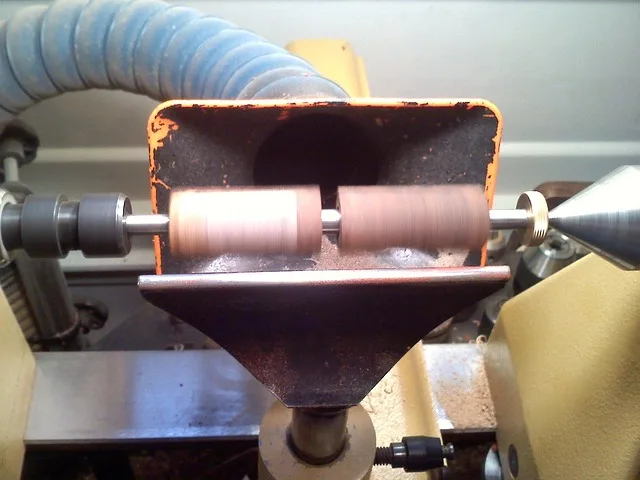
How to Make a Mallet Head from a Blank
- Rough-cut the blank to size. Cut your chosen species’ blank about 1/2″ oversized in every dimension — you will true up the faces after shaping.
- Lay out and cut the handle mortise. Most joiner’s mallets use a tapered through-mortise so the handle wedges tighter with every strike; drill a series of holes and clean up with a chisel, or see which mortising tools actually make this easier if you are cutting more than one.
- Shape the head. Bandsaw the outer profile close to final shape, then true the faces on a jointer, with hand planes, or on a lathe if you are turning a round carving mallet.
- Fit and wedge the handle. Taper the handle end to match the mortise, drive it through from the striking-face side, and add a wooden wedge across the exposed handle end to lock it permanently.
- Sand and finish. Ease every sharp edge, sand to 220–320 grit, and apply boiled linseed oil or paste wax to the handle and non-striking faces only — leave the striking face bare.
- Test-strike and true up. Strike a scrap chisel a few dozen times, then check the face for uneven wear and true it up with a plane or sander before it sees real use.
Frequently Asked Questions
What is the best wood for a mallet?
Shagbark hickory is the best all-around choice for a mallet head: it posts the highest work-to-maximum-load and impact-bending figures (25.8 in-lbf/in³ and 67 in.) of any species in this comparison, which measures shock resistance directly rather than just surface hardness. White ash is the best value alternative at less than half the price with the second-best toughness numbers.
Is a harder wood always better for a mallet head?
No. Janka hardness measures resistance to denting, not resistance to cracking under repeated impact. Lignum vitae has the highest Janka hardness of any wood in this comparison (4,390 lbf) but no published toughness data and a documented tendency to check and crack — hickory, with less than half that hardness, has the best measured shock resistance of the species compared here.
What size wood blank do I need for a mallet head?
A typical joiner’s or carpenter’s mallet head runs about 2.5″ to 3.5″ on a side and 5″ to 6″ long — this article normalizes every price to a 3″x3″x6″ (54 cubic inch) blank for that reason. Buy roughly 1/2″ oversized in each dimension to allow for squaring and truing.
Can I use pine or other softwood for a mallet head?
Softwoods like pine are not recommended for a striking mallet head — they dent and crush quickly under repeated chisel-butt impact and lack the density to transfer meaningful force. Softwood is fine for a lightweight dead-blow-style tapping block used on finished surfaces, but not for a working joinery or carving mallet.
Is lignum vitae worth the extra cost for a mallet?
For most woodworkers, no — it costs roughly 11x as much as hickory for the same head volume, has no published toughness data, and has a documented real-world tendency to check and crack. It remains a legitimate specialty choice for a traditional shipwright-style mallet where its self-lubricating density is specifically valued.
Should a mallet head be end grain or face grain?
Most joiner’s and carpenter’s mallets strike with the end grain facing the chisel because end grain resists crushing better under repeated compression. Turned round carving mallets typically strike with the side (face) grain of the barrel shape instead, which is one reason a species like beech — easy to turn cleanly — is the traditional choice there.
How heavy should a woodworking mallet be?
Most bench and carving mallets fall in the 12–24 oz range for the head alone; heavier framing mallets used with larger chisels or timber-framing work can run well over a pound. The 3″x3″x6″ heads compared in this article range from 1.31 lb (white ash) to 2.45 lb (lignum vitae) depending on species, which is one more reason species choice affects how a mallet actually feels to swing.
Final Thoughts
Shagbark hickory is the best overall wood for a mallet head, and the reason is a single number (the same cost-per-cubic-inch method used in our wand wood comparison applies here, too) most “best wood for mallet” articles never mention: 25.8 in-lbf/in³ work-to-maximum-load, the highest measured shock resistance of any species in this comparison, from a wood that isn’t even the hardest one on the list. Hardness tells you how well a wood resists a static dent. Toughness tells you how well it survives the thing a mallet actually does thousands of times — absorb a swung, repeated blow without cracking. If you take one number away from this article, make it that one.
Sponsored / affiliate links. As an Amazon Associate I earn from qualifying purchases. I may earn additional commission from eligible campaigns.