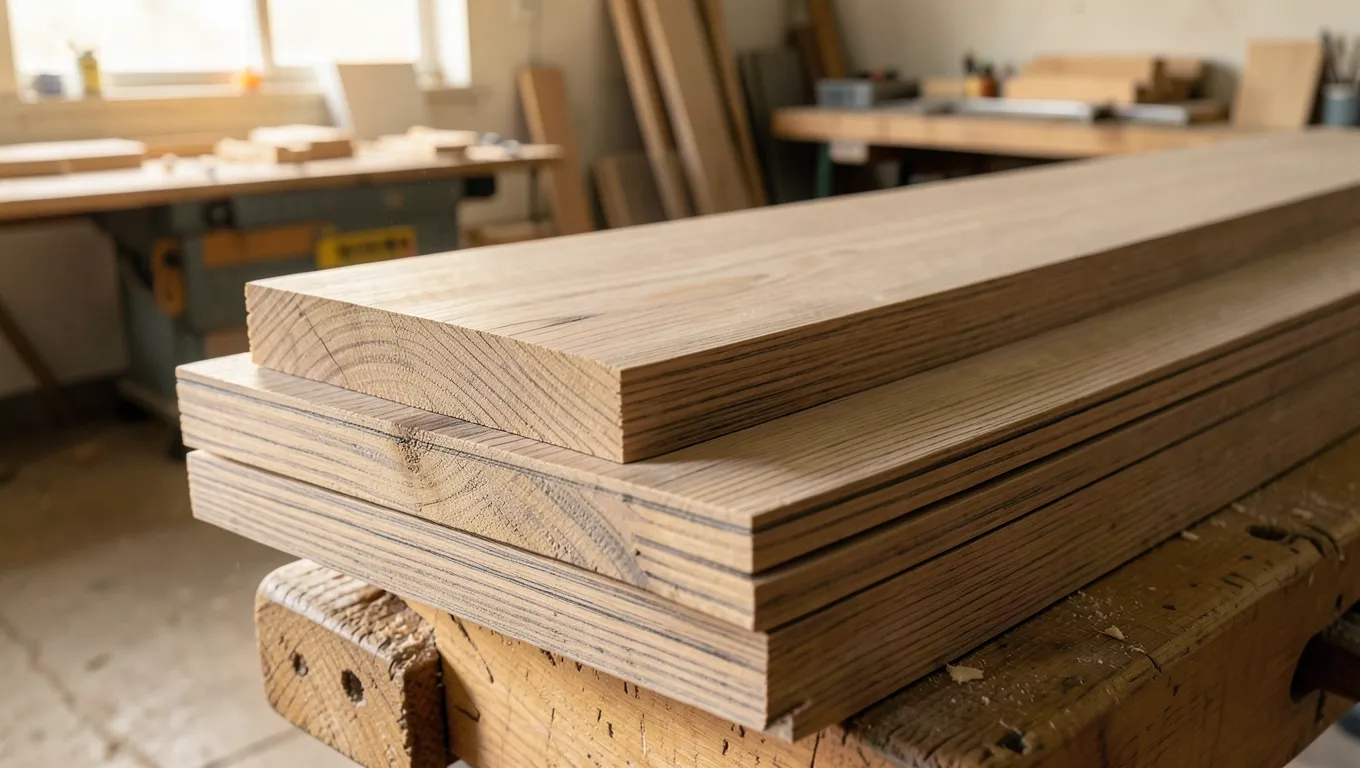
Kiln Dried Ash Wood: What to Check Before You Buy
Kiln-dried ash is hardwood lumber that’s been heated in a controlled chamber to bring its moisture content down to roughly 6-8%, the stable range most furniture and flooring projects need. That process is what keeps ash from warping, twisting, or cracking after you’ve already built something out of it.
Ash has one wrinkle most buying guides skip entirely: a lot of the ash lumber on the market today exists because of the Emerald Ash Borer, not in spite of it.
What Ash Wood Is, And Why The Emerald Ash Borer Matters To Buyers
Best Prep For An Even Finish On Ash
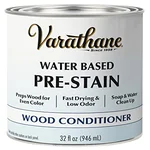 |
Varathane Pre-Stain Wood Conditioner – $18.29 Ash’s open grain can absorb stain unevenly and blotch – this conditions the wood first so color goes on consistently.
|
Ash is a hardwood prized for a specific combination: it’s strong relative to its weight, flexes without snapping (which is exactly why it was the traditional wood for baseball bats and tool handles), and has a straight, attractive grain that finishes cleanly. It machines, sands, and glues easily, which is part of why it’s a common recommendation for woodworkers who haven’t worked with hardwood before.
What most guides don’t mention: since the early 2000s, the invasive Emerald Ash Borer beetle has killed hundreds of millions of ash trees across North America. A large share of the ash lumber sold today, especially from the Midwest and Northeast, comes from salvage logging of dead or dying trees. That’s not automatically a quality problem – a lot of it is perfectly good lumber – but it does mean two things worth checking for: rapid salvage harvesting sometimes means less careful grading, and standing dead ash can develop blue-gray staining from ambrosia beetles that got in after the tree died. Neither ruins the wood structurally, but both are worth knowing about before you buy, especially if you want a consistent, unblemished color.
What “Kiln Dried” Actually Does To The Wood
Freshly cut ash holds a lot of water, and as it dries naturally, uneven moisture loss is what causes warping, twisting, cracking, and mold. A kiln controls heat and humidity in stages so the whole board dries at a consistent rate, landing at a stable moisture content instead of the unpredictable result you’d get from air-drying alone.
One detail worth knowing if you’re comparing species: ash is genuinely easier to kiln dry than a dense hardwood like white oak. Oak’s density and tannin content make it prone to surface checking if it’s dried too fast, so oak needs slower, more conservative kiln schedules. Ash dries faster and more forgivingly, which is part of why kiln-dried ash tends to be more consistently available and reasonably priced compared to some other hardwoods.
The high heat involved in kiln drying (sustained core temperatures well above what any wood-boring insect survives) also acts as a pest treatment, killing off insects and their eggs that were in the wood when it went into the kiln. That’s a real benefit, but it doesn’t make finished lumber immune to new insect activity in storage – check any board for fresh signs before you buy, kiln-dried or not.
What To Check Before You Buy
- Moisture content: Ask for it directly, or check it yourself with a pin-type moisture meter. For indoor furniture, 6-8% is the target; a board reading noticeably higher hasn’t finished drying properly.
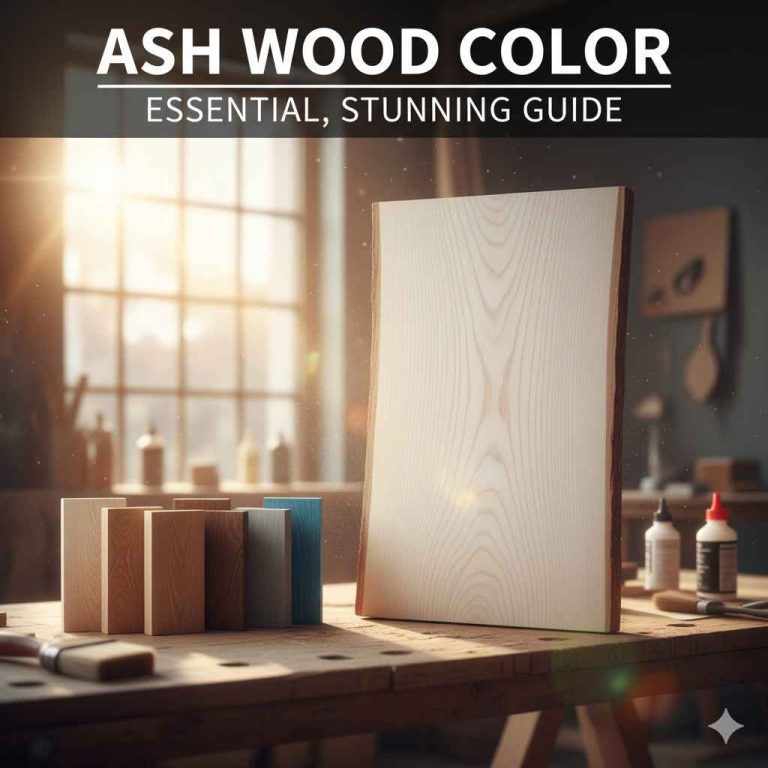
- Color consistency: Ash ranges from pale yellowish-brown to darker brown. If you want uniform color, watch for the blue-gray staining mentioned above, which shows up more often on salvage-cut, beetle-killed stock.
- Straightness: Sight down the length of each board for bow, twist, or cup. A little is often workable depending on where you’ll cut from it; significant warping in a board that’s supposedly kiln-dried is a sign it wasn’t dried or stored correctly.
- End checks and cracks: Small surface checks at the board ends are common and usually fine once you cut past them. Deep splits running well into the board are a reason to pass.
- Grain pattern: Straight grain is the more stable, easier-to-work option; wavy or figured grain looks striking but can be trickier to plane and finish evenly.
Where To Buy It
A local hardwood supplier or sawmill is the best option when you can manage it – you get to inspect actual boards for the issues above instead of trusting a product photo. Online lumber retailers are convenient and often the only practical option outside a metro area, but check return policies before ordering since you can’t inspect the wood first. Big-box home improvement stores occasionally carry ash, but selection and drying quality tend to be less consistent than a dedicated hardwood dealer.
Ash Compared To Other Common Hardwoods
| Wood Type | Janka Hardness | Typical Uses | Drying Notes |
|---|---|---|---|
| Ash | 1,320 lbf | Furniture, flooring, tool handles, bats | Dries relatively fast and evenly; kiln-dried stock is widely available |
| Red / White Oak | 1,290 / 1,360 lbf | Furniture, cabinetry, flooring, barrels | Dense and tannin-rich; needs slower kiln schedules to avoid checking |
| Hard / Soft Maple | 1,450 / 950 lbf | Furniture, cutting boards, instruments | Very stable once dried; hard maple dries somewhat slower than ash |
| Pine | 380-870 lbf (varies by species) | Construction, basic furniture, paneling | Dries fast but is far more prone to denting if not kiln-dried |
For more on how ash’s hardness and density specifically compare to other options, see our dedicated breakdown of ash wood density.
Working With Kiln-Dried Ash
Standard tools handle ash well: a table saw or circular saw for ripping and crosscutting, a miter saw for angled cuts, sandpaper starting around 100-120 grit and working up to 220 for a smooth surface, and ordinary wood glue and clamps for joinery. Drill pilot holes before driving screws near edges to prevent splitting, and wear eye protection, a dust mask, and hearing protection with power tools – ash dust is a real skin, eye, and respiratory irritant for some people, so good shop ventilation matters.
Ash’s grain can absorb stain unevenly, especially lighter boards taking a darker stain, which is where a pre-stain conditioner earns its keep – it evens out absorption so you don’t end up with blotchy dark patches. Apply finish in thin coats rather than one heavy one, test color and sheen on scrap from the same board first, and scuff-sand lightly between coats of a clear topcoat with 320-400 grit for the smoothest final result.
Storing Kiln-Dried Ash So It Stays Dry
Kiln drying only holds if you don’t undo it in storage. Keep boards indoors, out of direct sun and away from humidity swings, and stack them flat with thin spacer sticks between each layer so air can circulate evenly on all sides. Wood stored flat on a concrete floor without any airflow underneath, or leaned upright against a damp wall, can reabsorb enough moisture to partially undo the kiln-drying benefit within weeks.
Frequently Asked Questions About Kiln-Dried Ash Wood
Are There Safety Concerns When Working With Ash Wood?
Ash dust can irritate the skin, eyes, and respiratory system in some people, similar to most hardwood dust. Wear safety glasses and a dust mask or respirator when cutting or sanding, and work with good shop ventilation or dust collection. OSHA’s woodworking machinery standards are a solid reference for safe tool operation around any hardwood, ash included.
Can I Use Kiln-Dried Ash Wood For Outdoor Projects?
Kiln drying makes ash more dimensionally stable, but it doesn’t make it rot- or weather-resistant – ash isn’t naturally durable outdoors the way cedar or redwood is. If you use it outside, it needs to stay fully sealed with a quality exterior finish and regular maintenance, or it will deteriorate faster than a naturally weather-resistant species would in the same spot.
How Do I Store Kiln-Dried Ash Wood?
Store it indoors, out of direct sunlight and away from big humidity swings. Stack boards flat with spacer sticks between layers so air reaches all sides evenly, rather than leaning them upright or stacking them tight with no airflow. This keeps the wood from slowly reabsorbing the moisture the kiln removed.
Is Kiln-Dried Ash Wood Good For Beginners?
Yes. It’s stable, machines and sands predictably, and is far less likely to warp mid-project than air-dried or undried lumber, which makes it a forgiving choice while you’re still building confidence with hand tools or a table saw.
Conclusion
Kiln-dried ash earns its reputation as a beginner-friendly hardwood: stable, workable, and attractive once finished. The one thing worth remembering that most guides leave out is where a lot of today’s supply actually comes from – salvage lumber from an ongoing beetle epidemic – which is a reason to inspect for color consistency and grading quality a bit more carefully, not a reason to avoid the wood itself.
Sponsored / affiliate links. As an Amazon Associate I earn from qualifying purchases. I may earn additional commission from eligible campaigns.