What Size Motor Does a Bandsaw Need? (HP, RPM & Frame Guide)
Most 14-inch bandsaws use a 3/4 to 1.5 HP, 1725 RPM motor on a 56 or 56C frame, though resaw-heavy setups often need 2 HP and a 220V circuit. Fitting the wrong frame size or RPM throws off blade speed through the drive pulley and can strain the bearings. This guide covers matching horsepower to blade width, checking frame and shaft compatibility before buying a replacement, and fixing the most common motor problems.
Quick Answer
A 14-inch bandsaw typically needs a 3/4 to 1.5 HP motor running at 1725 RPM on a 48 or 56/56C frame. Go up to 2-3 HP (220V) only if you regularly resaw hardwood wider than 6 inches – more power than that just wears out the blade faster without cutting any straighter.
What Size Motor Does a Bandsaw Need? (HP by Blade Width)
A bandsaw needs enough horsepower to keep the blade moving at a steady speed under load, not to cut faster on its own – the blade does the cutting, the motor just has to avoid bogging down. As a rough rule from motor and saw suppliers, budget about 1 HP for every 4 inches of resaw capacity you actually use.
| Blade Width | Recommended HP | Typical Use |
|---|---|---|
| 1/4″ | 1/3 – 1/2 HP | Scroll cuts and curves in stock under 1.5″ thick |
| 1/2″ | 3/4 – 1 HP | General curve cutting and resawing up to about 4″ |
| 3/4″ | 1 – 1.5 HP | Resawing 4–6″ hardwood on a 14-inch saw |
| 1″ (17″+ saws) | 2 – 3 HP | Thick or exotic hardwood resaw, usually needs 220V |
| Wide mill blades | 5 HP | 36″-wheel resaw and production milling |
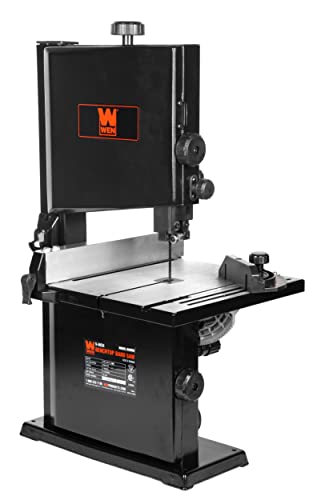
Most hobbyist 14-inch saws in the bandsaw category ship with a 3/4 or 1 HP motor, which the table above shows is enough for anything short of regular hardwood resawing. If your saw is already maxed out on the resawing and curve-cutting jobs a band saw is built for, jumping to 1.5 HP is the usual next step before you need a 220V circuit at all.
|
Best Bandsaw Replacement Motor Pick  |
VEVOR 1HP Electric Motor, 1725 RPM, 56C Frame A 1725 RPM, 56C-frame single-phase motor – the RPM and frame size most 14-inch bandsaws already use, so the swap usually doesn’t need a new drive pulley.
|
As an Amazon Associate we earn from qualifying purchases.
RPM, Frame Size & Shaft: Matching a Replacement Motor
A NEMA frame size is a standardized motor mounting dimension that lets a replacement motor from a different brand bolt into the same mounting holes and shaft height as the original. Get the frame size wrong and the new motor simply won’t line up with your saw’s mounting plate, regardless of horsepower.
- RPM: North American 60Hz induction motors run at 1725 RPM (4-pole) or 3450 RPM (2-pole). Bandsaws almost always use 1725 RPM – a 3450 RPM motor spins the blade twice as fast unless you also swap the drive pulley.
- Frame size: Most 14-inch saws use a 48 or 56/56C frame. A 56C frame has a “C-face” mounting flange with threaded holes instead of a base-only mount – check which one your saw actually has before ordering.
- Shaft diameter: A 56-frame motor almost always has a 5/8″ keyed shaft; smaller 48-frame motors are often 1/2″. The pulley’s bore has to match exactly.
- Rotation direction: Single-direction motors are wired for one rotation only. If the replacement spins backward, the blade drive belt runs the wrong way – look for a reversible (CW/CCW) motor if you’re not certain.
- Enclosure type: A TEFC (Totally Enclosed Fan-Cooled) motor keeps sawdust out of the windings far better than an open drip-proof (ODP) motor, which matters more in a bandsaw than almost any other shop tool.
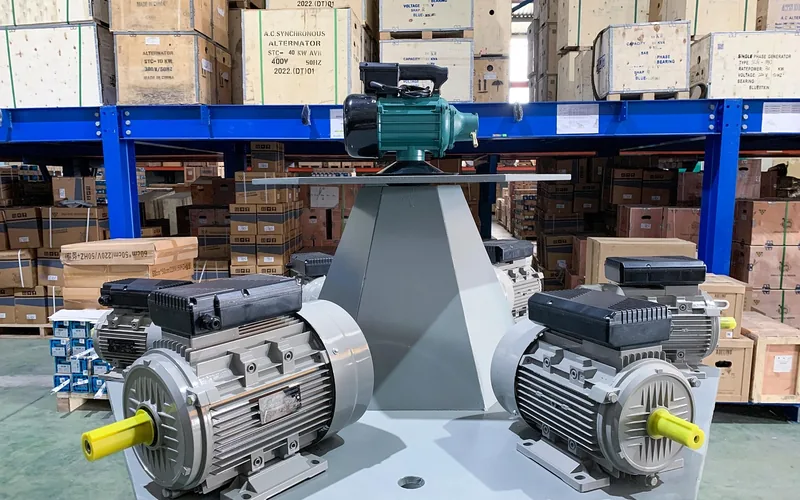
📊 A NEMA 56 frame motor has a standardized 5/8″ shaft diameter across every manufacturer that builds to the spec – Source: Engineers Edge, NEMA Frame Table
If you’re replacing a motor on a table saw instead, the same frame-and-shaft logic applies – see our table saw replacement motor guide for the equivalent specs on that tool.
Common Bandsaw Motor Problems (and How to Fix Them)
- Motor hums but won’t spin: Usually a failed start capacitor on a single-phase motor, or the shaft is seized. Try turning the pulley by hand with the power off – if it won’t turn freely, the bearings (not the motor) are the problem.
- Breaker trips repeatedly: Often an undersized circuit for the motor’s starting current, a feed rate that’s bogging the blade down, or a motor overload switch that needs a manual reset after a stall.
- Overheating or a burning smell: Sawdust packed into the cooling vents is the most common cause on an open-frame motor – a compressed-air blowout every few months prevents most of these trips before they start.
- Unusual vibration or strain noise: Check blade tension first – see our guide on how tight a bandsaw blade should be, since overtensioning strains the motor and bearings without improving the cut.
“Most of the overheating trips I’ve chased down in the shop turned out to be caked sawdust blocking the motor’s cooling vents, not a failing motor. A quick blowout with compressed air a few times a year has saved me more motor replacements than any upgrade has.”
Common Mistakes When Replacing a Bandsaw Motor
- Buying by horsepower alone: A higher-HP motor that doesn’t match the frame or shaft simply won’t mount, no matter how good the price.
- Ignoring RPM and the pulley ratio: Swapping in a 3450 RPM motor without re-pulleying runs the blade at roughly double the intended speed, which chews through blades fast.
- Skipping the rotation check: A single-direction motor wired backward drives the blade the wrong way – always confirm CW/CCW before final mounting.
- Going non-standard to save money: A motor built to a non-NEMA frame may be cheaper but won’t bolt to a standard mounting plate without custom brackets.
- Staying on 115V above about 1.5-2 HP: Larger motors draw enough current that most shops need to run a dedicated 220V circuit rather than overloading a standard outlet.
Frequently Asked Questions About Bandsaw Motors
What is a bandsaw motor and how does it work?
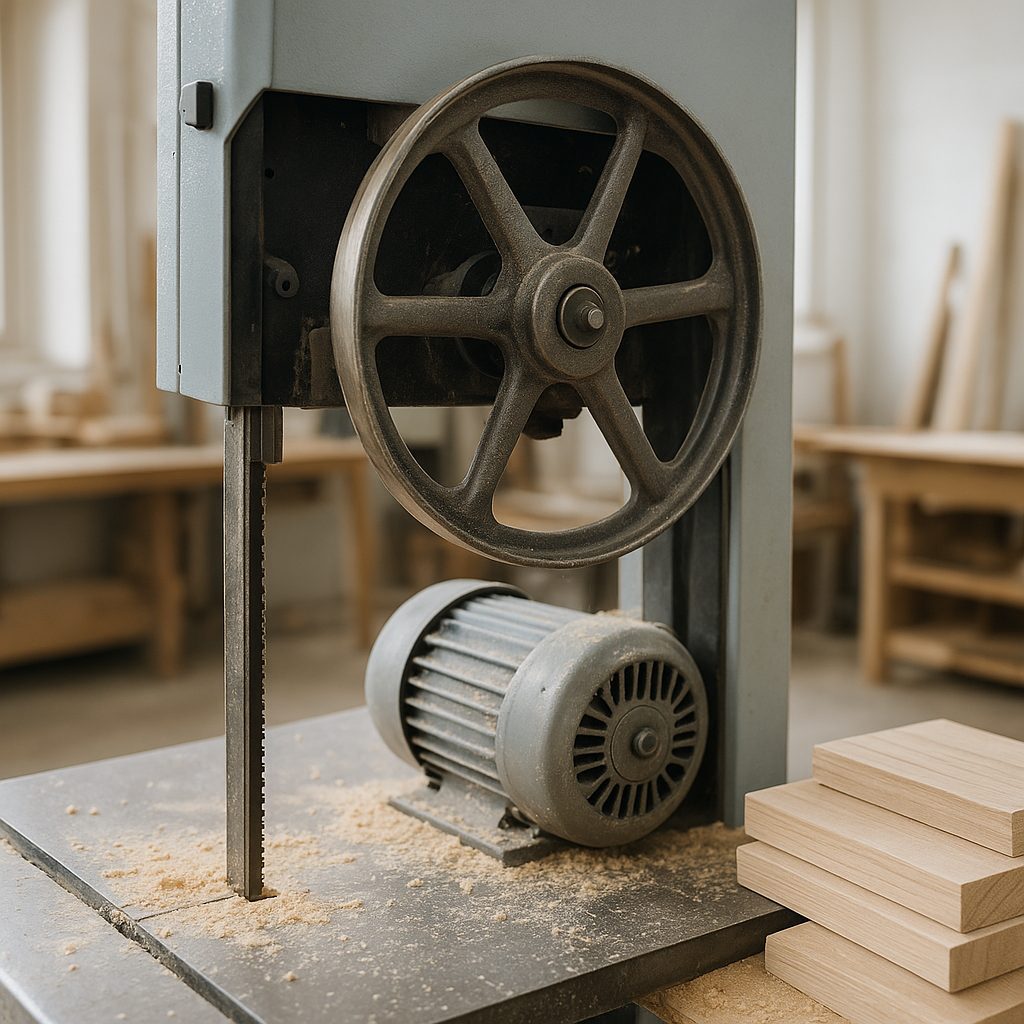
The bandsaw motor is the power source that spins the drive wheel, which pulls the blade around the two (or three) wheels at a constant speed. It converts electrical energy into the rotating force that keeps the blade moving through the cut.
What size motor does a bandsaw need?
Most 14-inch bandsaws need a 3/4 to 1.5 HP motor at 1725 RPM. Go to 2-3 HP only if you regularly resaw hardwood over 6 inches wide, since anything larger than the blade can use just wears it out faster without improving the cut.
Can I upgrade the motor on my existing bandsaw?
Yes, in most cases, as long as the replacement matches the original RPM, NEMA frame size, and shaft diameter. If the RPM is different, you’ll also need to change the drive pulley to keep the blade speed correct.
What maintenance does a bandsaw motor require?
Blow out the cooling vents with compressed air every few months to prevent overheating trips, check that the mounting bolts and belt tension stay snug, and follow the manufacturer’s lubrication schedule if the motor has grease fittings.
Can I use a furnace fan or washing machine motor on a bandsaw?
Only if it’s a standard induction motor at a normal speed like 1725 RPM – a universal motor with brushes (common in some appliance motors) isn’t built for the continuous, steady-speed duty a bandsaw needs and wears out quickly under that load.
Why does my bandsaw motor keep tripping the breaker?
Usually an undersized circuit for the motor’s starting current draw, a feed rate that’s stalling the blade under load, or the motor’s own overload protection tripping from heat buildup – clean the vents and check the circuit rating before assuming the motor itself is failing.
Buying Guide: Choosing the Right Bandsaw Motor
Start with the blade width table above to land on a horsepower range, then confirm three physical specs before you buy anything: RPM (1725 for almost every hobbyist saw), NEMA frame size (48 or 56/56C), and shaft diameter (usually 5/8″ on a 56 frame). Those three specs, not horsepower, are what actually determine whether a replacement motor bolts up and runs the blade at the right speed.
If your saw still runs fine but you’re resawing wider hardwood than it was built for, upgrading a frame size is usually cheaper than replacing the whole saw – just budget for a 220V circuit once you cross into the 2 HP range. If the motor has already failed, match RPM, frame, and shaft first and horsepower second, and you’ll get a drop-in replacement instead of a rebuild project.
Sponsored / affiliate links. As an Amazon Associate I earn from qualifying purchases. I may earn additional commission from eligible campaigns.