How Tight Should a Bandsaw Blade Be: Expert Tips & Guidelines
A bandsaw blade should be tight enough that it doesn’t flex or wander during a cut, but not so tight that you’re straining the saw’s frame and bearings for no real benefit. Most saws have a built-in tension scale on the upper wheel housing that gets you close based on blade width – use it as your starting point, then fine-tune with a deflection or flutter test.
There’s no single universal number that applies across every brand and blade width, despite what some guides claim. Here’s how to actually get it right.
Start With Your Saw’s Built-In Scale
Best For Precise Tension Readings
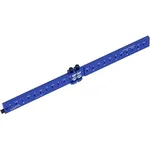 |
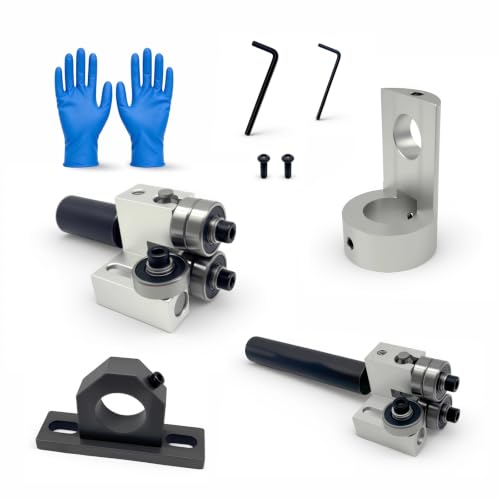
iGaging Band Saw Gauge – $29.75 Takes the guesswork out of tensioning by giving you an actual reading instead of relying on the flutter test alone.
|
Most bandsaws have a tension scale next to the tension knob, calibrated to common blade widths (1/4″, 3/8″, 1/2″, etc.). This is manufacturer-specific – it accounts for that particular saw’s wheel size, frame stiffness, and spring setup, which is exactly why a single tension number can’t apply across every brand. Set the knob to match your blade’s width on the scale first; that gets you in the right neighborhood before any fine-tuning. Not sure of your blade’s exact width or length? See our guide on how to measure a bandsaw blade first.
If your saw doesn’t have a scale, or you want more precision than the scale alone gives you, a dedicated tension gauge reads the actual tension on the blade directly and is worth the money if you resaw often or run narrow blades that are especially sensitive to under-tensioning.
The Deflection Test
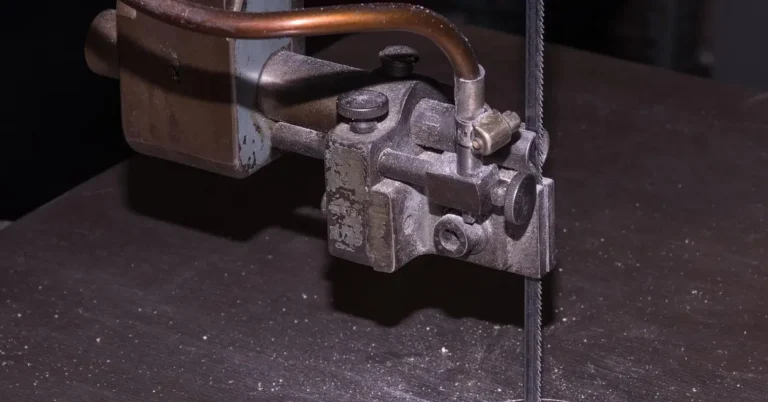
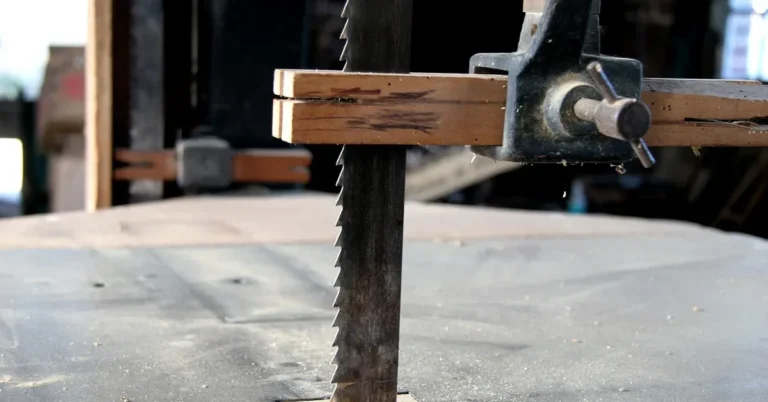
With the guides moved out of the way, push sideways on the blade at the midpoint between the wheels with moderate finger pressure. A properly tensioned blade should deflect only slightly – roughly 1/4″ to 3/8″ of side movement is the commonly used rule of thumb for a blade under correct tension. If it moves noticeably more than that, add tension; if it barely moves at all even under firm pressure, you’re likely over-tensioned.
The Flutter (Ping) Test
Pluck the blade like a guitar string with the guard open and the saw off. A properly tensioned blade gives a solid, higher-pitched “ping” or twang. A loose blade produces a dull thud with almost no ring to it. This isn’t a precise measurement, but it’s a fast sanity check between more careful adjustments, and most experienced bandsaw users rely on it as a quick day-to-day check even when they’ve dialed in tension more precisely with a gauge.
Signs Your Tension Is Wrong
Too loose: The blade wanders off your cut line, produces rough or wavy cuts, makes a thumping noise as it runs, or can jump off the wheels entirely during a cut – a real safety issue, not just an accuracy problem.
Too tight: You’ll see premature blade cracking (especially at the gullets), excessive vibration, unusual strain noise from the motor, and accelerated wear on the tires, bearings, and thrust bearings. Overtensioning doesn’t make cuts straighter past a certain point – it just shortens the life of the blade and the saw.
Why Blade Width and Material Matter
Wider blades need more tension to resist deflection during a cut – that’s part of why they resaw straighter than narrow blades in the first place. Narrow blades (1/8″–1/4″) for tight-radius scroll cuts need proportionally less tension, but “less” doesn’t mean “loose” – they still need to be tight enough to track true, and they’re actually more sensitive to under-tensioning because they have less material to resist twisting.
Blade material affects how much tension the blade itself can safely handle before it takes a permanent set or cracks – carbon steel blades generally have a narrower safe tension window than bi-metal blades, so check the manufacturer’s spec for the specific blade you’re running rather than assuming last year’s blade’s settings still apply.
Adjusting Tension Step by Step
- Turn off and unplug the saw before adjusting anything.
- Set the tension knob to your blade’s width on the built-in scale, if your saw has one.
- Rotate the wheels by hand a few times to seat the blade evenly on the tires.
- Run the deflection test at the midpoint between the wheels and adjust as needed.
- Close the guards, plug in, and run a short test cut on scrap before starting your actual project.
- Recheck tension periodically – it can drift over a work session, especially on saws with a spring-tensioning system.
Maintenance That Keeps Tension From Drifting
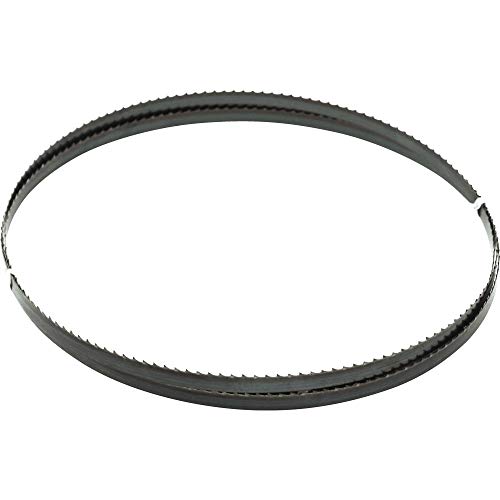
Clean pitch and dust off the blade and tires regularly – buildup changes how the blade seats on the wheel and can throw off tension readings even when the knob hasn’t moved. Inspect the blade for cracks at the gullets before each session, and replace it once it’s showing wear rather than trying to compensate with more tension. For a replacement, our comparison of bandsaw blades for woodworking ranks options by cost per linear foot and minimum cutting radius, and our guide to bandsaw blades for metal covers width and length fit by machine type if you’re cutting anything other than wood.
Frequently Asked Questions
How tight should a bandsaw blade be?
Tight enough that it deflects only about 1/4″ to 3/8″ under moderate finger pressure at the midpoint between the wheels, and gives a solid ping rather than a dull thud when plucked. Start from your saw’s built-in tension scale for your blade width, then fine-tune from there.
What happens if a bandsaw blade is too tight?
Excess tension accelerates blade cracking at the gullets, adds unnecessary strain on the wheels, tires, and bearings, and can cause vibration and unusual motor noise. It doesn’t improve cut quality past the correct tension point.
Can a loose bandsaw blade cause problems?
Yes. A loose blade wanders off the cut line, produces rough or wavy cuts, and in more extreme cases can jump off the wheels entirely while running, which is a real safety hazard, not just a quality issue.
How do I check bandsaw blade tension?
Use your saw’s built-in tension scale as a starting point, then check with a sideways deflection test (about 1/4″-3/8″ of movement under moderate pressure) or the flutter/ping test. A dedicated tension gauge gives the most precise reading if you want to skip the guesswork.
Bottom Line
Set the tension scale to your blade width, confirm with a deflection or ping test, and recheck periodically – there’s no single PSI number that applies across every brand and blade width, so trust your saw’s own scale and a physical check over a generic rule you saw somewhere else.
Sponsored / affiliate links. As an Amazon Associate I earn from qualifying purchases. I may earn additional commission from eligible campaigns.