BC vs AC Plywood What’s the Difference
Choosing the right plywood can feel tricky, especially when you see terms like ‘BC’ and ‘AC’. Many DIYers and even some pros scratch their heads wondering about BC vs AC Plywood: What’s the Real Difference? It’s a common question because these grades sound similar but can impact your project. Don’t worry!
We’ll break it down simply, step by step, so you know exactly what each letter means and which one you need. Get ready to discover the clear path to plywood perfection.
Understanding Plywood Grading Explained
Plywood grading might seem complicated, but it’s just a way to describe the quality of the wood you’re buying. Think of it like a report card for the plywood’s surfaces. The letters tell you what each side looks like, how smooth it is, and if it has any knots or patches.
This grading system helps builders pick the right material for what they’re making, whether it needs to look perfect or just be strong and functional. Knowing these grades means you won’t waste money or end up with a project that doesn’t look as good as you hoped.
What the ‘A’ and ‘B’ Grades Mean
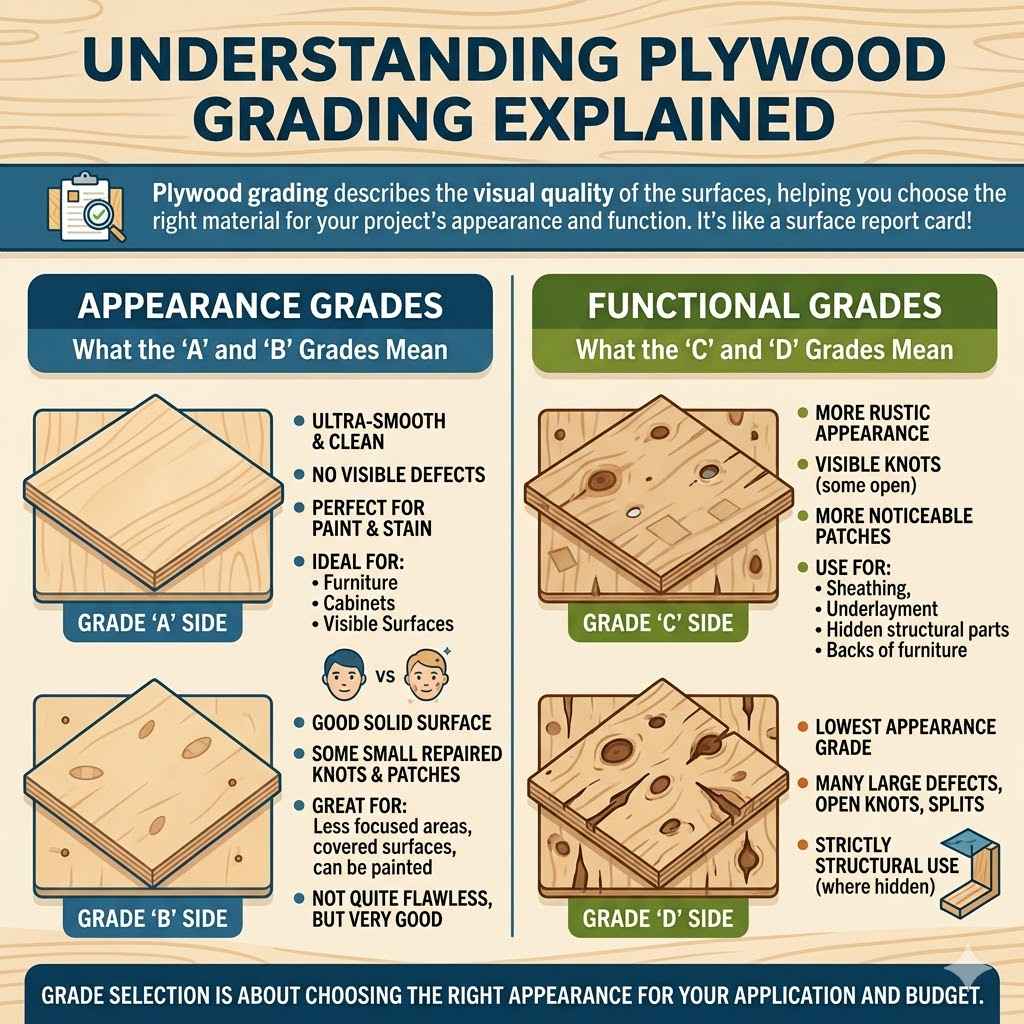
The ‘A’ grade side of plywood is the best you can get for appearance. It’s super smooth, clean, and has no visible defects like knots or patches. This makes it perfect for furniture, cabinets, or any place where the surface will be seen and maybe painted or stained.
It’s like the cover of a book – it needs to look nice.
The ‘B’ grade side is also pretty good but not perfect. It might have some small, neatly repaired knots or small patches where imperfections were fixed. It’s still a solid surface, great for areas that won’t be the main focus or will be covered by something else.
You can still paint or finish it, but it won’t have that flawless, showroom look of an ‘A’ side. It’s more about function and a good, solid finish.
What the ‘C’ and ‘D’ Grades Mean
Moving down the grading scale, the ‘C’ grade is where things get a bit more rustic. You’ll likely see more knots, and some of these might be loose or open. There can also be more patches, and they might be more noticeable.
It’s still structurally sound, but it’s not for show. Think of it as a surface that needs to hold things together rather than look pretty on its own. It’s a good option when the plywood will be covered, like in the back of a closet or under flooring.
The ‘D’ grade is the lowest and is usually not found in standard AC or BC plywood. It’s characterized by a lot of defects, including large open knots and splits. This grade is primarily for structural use where appearance is absolutely no concern.
It’s the workhorse grade, meant to provide strength and support without any pretense of beauty. If you see a ‘D’ side, it’s almost always going to be hidden.
Decoding Plywood Grade Combinations
Plywood grades are usually shown as a pair of letters, like AC or BC. The first letter tells you about the quality of the good side of the plywood, and the second letter tells you about the other side. This simple system helps you quickly figure out what you’re getting.
It’s like a quick description of the plywood’s appearance from top to bottom.
BC Plywood Explained
BC plywood is a very common and useful type. The ‘B’ side means it has a good surface, with only minor imperfections like small repaired knots or patches. The ‘C’ side, however, is less perfect.
It can have more knots, some of which might be open or loose, and more noticeable patches. This makes BC plywood a great choice for projects where one side needs to look decent, but the other doesn’t have to be perfect. It’s often used for cabinets, shelves, and even some furniture where the back or bottom might be less visible.
Example Scenario for BC Plywood
Imagine you’re building a set of built-in bookshelves for your home office. You want the front and sides of the shelves to look nice, maybe even painted. For this, the ‘B’ side of BC plywood is perfect.
It’s smooth enough for a good finish. However, the back of the shelves, which will be against the wall, doesn’t need to be pristine. The ‘C’ side of BC plywood is more than adequate for this.
It provides the necessary strength and support without the higher cost of a double ‘A’ or ‘B’ grade, making it a cost-effective solution for your project.
Another common use for BC plywood is for cabinet doors. The ‘B’ face can be painted or stained for a pleasing appearance, while the ‘C’ back is perfectly fine as it won’t be seen by anyone. This grade strikes a good balance between aesthetics and economy.
AC Plywood Explained
AC plywood is considered a higher quality option. The ‘A’ side is the best of the best – smooth, clean, and virtually defect-free. This makes it ideal for projects where the surface will be highly visible and needs a flawless finish, like tabletops, cabinet fronts, or decorative panels.
The ‘C’ side is still the same as in BC plywood, meaning it has more knots and potential imperfections. So, with AC plywood, you’re paying for that superior ‘A’ grade surface on one side, while the other side is functional but less attractive.
Example Scenario for AC Plywood
Let’s say you’re building a custom coffee table. The top surface of this table will be the focal point. You’ll want it to be smooth, free of distracting knots, and ready for a beautiful stain or paint job.
This is where AC plywood shines. The ‘A’ grade face will give you that smooth, high-end finish you desire. The ‘C’ grade on the underside is completely acceptable, as it won’t be seen when the table is in use.
This allows you to achieve a premium look without overspending on a double ‘A’ grade that isn’t necessary.
Think about building a display case for collectibles. The glass doors will reveal the shelving inside. Using AC plywood for the shelves ensures a beautiful, consistent look for your display, even with the less perfect ‘C’ side hidden from view.
It’s about presenting your items in the best possible light.
BC vs AC Plywood What’s the Real Difference?
The core of BC vs AC Plywood: What’s the Real Difference? lies in the quality of the better side. Both grades typically have a ‘C’ or sometimes a ‘D’ grade on their backside, which means that side is not meant for appearance. The key distinction is the face veneer, the side that’s most visible.
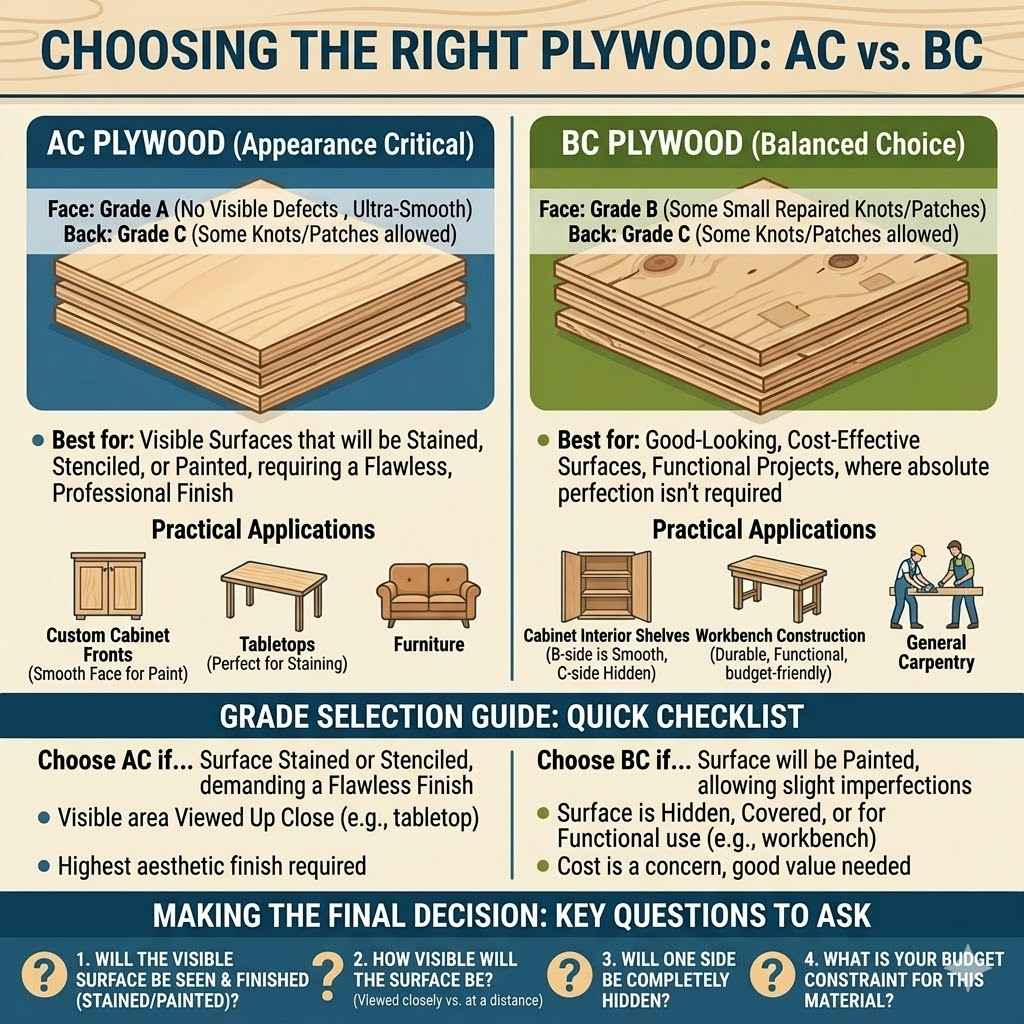
AC plywood has an ‘A’ face, which is smooth and nearly perfect, ideal for visible surfaces that need painting or staining without flaws. BC plywood has a ‘B’ face, which is also good and smooth but might have a few more minor, repaired imperfections like small knots. This difference means AC plywood is generally more expensive than BC plywood because the ‘A’ grade veneer is harder to find and requires more careful production.
Appearance and Finish Expectations
When you’re choosing between BC and AC plywood, think about how the final project will look. If you plan to paint or stain a surface that will be very visible, like the front of a cabinet door or a desktop, the ‘A’ side of AC plywood offers a cleaner, more uniform base. It minimizes the chances of knots or imperfections showing through your finish, giving a more professional result.
The ‘B’ side of BC plywood is still quite good for many applications, but if you’re aiming for a truly flawless, high-end look, the ‘A’ face is the better investment.
For projects where the surface is less critical, or if you plan to cover it with laminate or other materials, the ‘B’ face of BC plywood is often perfectly sufficient. You can still achieve a very nice finish, especially with good preparation, but you might see a few more minor natural variations from the wood itself. The cost savings can be significant.
Cost Considerations
Generally, AC plywood costs more than BC plywood. This price difference is directly related to the quality of the face veneer. Producing an ‘A’ grade veneer requires selecting higher-quality logs and a more intensive manufacturing process to ensure a smooth, knot-free surface.
The ‘B’ grade veneer used on BC plywood is less costly to produce. For budget-conscious projects, or when the appearance of one side is less important, BC plywood offers a more economical choice without sacrificing structural integrity.
Consider a large shelving unit for a garage. The ‘C’ or ‘D’ side facing the wall and the ‘B’ side facing outwards are both fine. The ‘B’ side is smooth enough for general use and painting, and the cost savings of BC over AC can add up across many sheets.
However, for a fine furniture piece like a custom vanity, the extra cost for the ‘A’ side of AC plywood is often justified by the superior finish it allows.
Structural Integrity and Strength
It’s important to know that both BC and AC plywood grades are typically made with the same core construction. The difference is in the surface veneers, not the internal layers that provide strength. This means that structurally, both types of plywood are very similar.
Whether you choose AC or BC, you can expect the same level of durability and stability from the internal plies. The choice between them is primarily about appearance and how you plan to finish the visible surfaces of your project.
This is why, in many structural applications where the plywood will be covered or hidden, the grade difference between AC and BC is often irrelevant. For example, in subflooring or wall sheathing, the focus is on strength and stability, not the appearance of the wood itself. Both grades will perform admirably in these roles.
When to Choose AC Plywood
AC plywood is the go-to choice when you need a premium, finished look on one side of your project. This is especially true for furniture-making, cabinet doors, visible shelving, and any application where the surface will be stained, painted, or otherwise finished to a high standard. The ‘A’ side is smooth, clean, and free from significant defects, providing a flawless canvas.
If your project demands a high-end aesthetic and the budget allows for the extra cost, AC plywood is the superior option for the visible face.
Projects Benefiting from AC Plywood
Custom furniture is a prime example. Imagine building a beautiful dresser where the drawer fronts need to be perfectly smooth for a painted finish. The ‘A’ side of AC plywood is ideal.
Similarly, if you’re crafting built-in entertainment centers where visible panels will be stained, the ‘A’ grade ensures a consistent, attractive grain pattern. Tabletops, decorative wall paneling, and even some types of cabinetry where appearance is paramount are all excellent candidates for AC plywood. The ‘C’ side is functional for the back or bottom, saving some cost.
Consider a project like a handcrafted toy chest. The exterior needs to be safe and attractive for children. The ‘A’ grade face ensures a smooth surface free from splinters, and it takes paint beautifully, making the toy chest both durable and visually appealing.
The ‘C’ back is just fine for the bottom of the chest.
Preparing and Finishing the ‘A’ Face
The ‘A’ face of AC plywood is designed for a beautiful finish. It’s typically sanded smooth at the factory. For most projects, you’ll want to give it a light sanding with fine-grit sandpaper, like 180 or 220 grit, to ensure it’s perfectly smooth and free of any dust or minor imperfections from handling.
Cleaning the surface thoroughly before applying any finish is crucial. Whether you’re painting, staining, or varnishing, starting with a clean, smooth ‘A’ face will yield the best results. The minimal defects mean your finish will look uniform and professional.
When staining, the ‘A’ grade allows the stain to penetrate evenly, bringing out the natural beauty of the wood without being interrupted by knots or large patches. For painting, a good primer followed by your chosen paint will create a smooth, consistent color. The inherent quality of the ‘A’ grade minimizes the need for extensive filling or sanding of imperfections.
When to Choose BC Plywood
BC plywood strikes an excellent balance between cost and appearance, making it a workhorse for many DIY and professional projects. The ‘B’ side is smooth enough for many visible applications, while the ‘C’ side offers practical functionality without a premium price tag. It’s a smart choice for projects where one side needs to look good but doesn’t have to be absolutely perfect, or when budget is a significant factor.
Many cabinetry interiors, utility shelving, and workshop projects benefit greatly from the versatility and affordability of BC plywood.
Projects Benefiting from BC Plywood
Think about the inside of kitchen cabinets or closet shelving. The ‘B’ side provides a decent surface that’s easy to clean, and the ‘C’ side is perfectly acceptable for areas that are not seen. It’s also a good choice for furniture that will be painted, where the ‘B’ face offers a good base for a smooth paint job, and the cost savings compared to AC are noticeable.
Workshop benches, storage units, and even garage cabinetry are excellent uses for BC plywood. It’s strong, durable, and economical.
Consider building a set of garage shelves. The ‘B’ side facing outwards can be painted to look tidy and presentable, while the ‘C’ side facing the wall is purely functional. This grade allows you to build sturdy, useful storage without breaking the bank.
It’s also common for the interior of utility trailers or the floors of some RVs where durability and cost are key factors.
Finishing the ‘B’ Face
The ‘B’ face of BC plywood can be finished quite nicely. While it may have a few more small, repaired knots or minor imperfections than an ‘A’ grade, it’s still a good surface for painting or staining. A light sanding with fine-grit sandpaper is recommended, followed by thorough cleaning.
If you’re painting, a good quality primer will help to cover any minor inconsistencies. For staining, you might want to use a wood conditioner first to ensure the stain absorbs evenly, especially around any small knot fills.
With careful preparation, the ‘B’ side can look very appealing. For instance, when painting, you can achieve a smooth, professional finish. If you are aiming for a rustic or natural look, the slight variations in the ‘B’ face can even add character to your project without detracting from its overall appearance.
It’s about setting realistic expectations for the finish.
Choosing the Right Plywood for Your Project
The decision between AC and BC plywood really boils down to how the finished project will look and your budget. If appearance is critical for a specific surface, and that surface will be seen and finished, opt for AC. The ‘A’ grade provides that superior smoothness and lack of defects.
If you need a good-looking surface but don’t require absolute perfection, or if the project is more about function and cost-effectiveness, BC plywood is an excellent choice. Its ‘B’ grade face is still very presentable for many applications, and the ‘C’ back is perfectly functional.
Practical Application Examples
Let’s look at two common scenarios. For the front of a custom cabinet where you want a smooth, paintable surface, AC plywood is the better bet. The ‘A’ side will give you that clean, professional finish.
For the interior shelves of that same cabinet, BC plywood would be perfectly fine. The ‘B’ side is smooth enough, and the ‘C’ side is hidden, saving you money. Another example: building a workbench where durability is key but the surface doesn’t need to be furniture-grade.
BC plywood is a solid, cost-effective choice for this.
Here’s a quick guide: If the surface will be stained and viewed up close, like a tabletop, choose AC. If it will be painted and the slight imperfections of a ‘B’ grade are acceptable, or if it will be covered, choose BC. Both offer structural soundness.
Making the Final Decision
To make your final decision, ask yourself a few key questions about your project. What will the visible surfaces look like after finishing? Is budget a major concern?
Will one side be completely hidden? If you need a flawless finish on a highly visible area, invest in AC plywood. If a good, functional finish on one side is enough, and the other side is less important, BC plywood offers great value.
Understanding the grades helps you get the best result for your specific needs and budget, ensuring your project turns out exactly as you envision.
Frequently Asked Questions
Question: What does the grading system for plywood mean
Answer: Plywood grading uses letters to describe the quality of each side. The first letter refers to the face veneer (the best side), and the second letter refers to the back veneer. Grades range from A (best, smooth, defect-free) down to D (lowest, many defects).
Question: Is AC plywood stronger than BC plywood
Answer: Plywood strength primarily comes from its internal layers (the core), not just the surface grades. Both AC and BC plywood are typically constructed with the same number and quality of inner plies, so their structural strength is very similar.
Question: Can I paint BC plywood
Answer: Yes, you can definitely paint BC plywood. The ‘B’ grade face is smooth enough to take paint well. You may want to use a good primer and do a light sanding first for the best results, but it’s very suitable for painted projects.
Question: Which plywood is better for furniture
Answer: For furniture where appearance is important, especially if you plan to stain or varnish, AC plywood is generally better because of its smooth ‘A’ grade face. For the hidden parts of furniture or if you’re painting, BC plywood can also be a good, more economical choice.
Question: What is the difference between the ‘C’ side of AC and BC plywood
Answer: The ‘C’ side on both AC and BC plywood is generally the same. It means the wood may have knots, some of which might be open, and more patches. This side is considered functional rather than decorative.
Summary
Choosing between AC and BC plywood comes down to your project’s needs. AC plywood offers a superior ‘A’ face, perfect for visible surfaces needing a flawless finish, while BC plywood provides a good ‘B’ face that’s still presentable and more budget-friendly. Both have functional backs, and their core strength is similar.
Consider your finishing plans and budget to pick the best plywood for a successful outcome.