What Is APA Rated Plywood? (How to Read the Grade Stamp)
APA Rated plywood is a panel that carries the APA trademark, which means the mill built it under APA’s quality-assurance program with third-party audits. The mark is not a grade: the span rating, exposure class, thickness and mill number printed beside it say what the panel can do, and an APA Rated panel is not always plywood. This guide reads a stamp field by field and sorts out PS 1, PS 2 and PRP-108.
What Does APA Rated Mean on Plywood?
Best Clear Sealer Pick | |
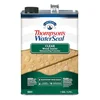 |
Thompson’s WaterSeal Clear Wood Sealer, 1 Gallon, $19.94 An Exposure 1 or Exterior stamp vouches for the glue bond, not the surface, so cut edges and faces of a stamped panel still need a finish if they will see moisture.
|
As an Amazon Associate we earn from qualifying purchases.
APA is the trade association whose trademark appears on the panel. By its own description, the mark appears only on products made under its quality assurance, inspection and testing programs, and that program includes unannounced inspections at every participating mill (APA). So “APA Rated” tells you who built and audited the panel. It does not rank the panel. One APA-stamped sheet can be a sanded A-C face panel and the next a rough C-D sheathing panel.
APA says its trademark program inspects every participating mill without warning. Source: APA, How to Read an APA Trademark Stamp
“Rated” is also APA’s own wording. Its panel names are APA Rated Sheathing, APA Rated Sturd-I-Floor and APA Rated Siding, so the phrase “APA approved plywood” that people search for is not how the products are named. And none of those names says “plywood.” APA Rated Sheathing is defined as a wood-based structural-use panel, which is why OSB can carry the same kind of stamp and span rating.
What Does APA Stand For? American Plywood Association vs. The Engineered Wood Association
APA was founded in 1933 as the Douglas Fir Plywood Association, became the American Plywood Association in 1964, and has been APA, The Engineered Wood Association, since 1994. It is a nonprofit trade association with member mills in the United States and Canada, and it provides quality assurance, testing, certification and standards work (APA overview).
The name changed because members make more than plywood: OSB, glulam, wood I-joists and structural composite lumber too. Searches for the American Plywood Association, APA wood, and APA Engineered Wood Association all point to the same organization, and the same trademark.
How to Read an APA Grade Stamp, Field by Field
A full stamp has several fields, and which ones appear depends on the product. The sheathing example below is illustrative, not a real mill’s mark: APA RATED SHEATHING, 32/16, 15/32 INCH, SIZED FOR SPACING, EXPOSURE 1, mill number, PS 2.
| Stamp field | What it tells you | Where it matters |
|---|---|---|
| Panel grade or end-use name | Veneer grades (A-B, B-C) or a name such as APA Rated Sheathing | Choosing sheathing vs a sanded face panel |
| Span rating (32/16) | Maximum support spacing in inches: roof on the left, subfloor on the right | Rafter and joist spacing |
| Sized for spacing | Panel is made slightly under 48 x 96 inches to leave a gap | Layout and expansion gaps |
| Exposure (Exterior or Exposure 1) | How much weather and moisture the glue bond is designed for | Indoor vs exposed jobs |
| Decimal thickness | Thickness in decimals, generally at or near the lower tolerance | Fitting hardware, dados, flooring heights |
| Mill number | Identifies the plant that made the panel | Tracing a panel to its source |
| Product standard (PS 1, PS 2, PRP-108) | The standard the panel was made to | Code and spec sheets |
| Performance Category (CAT) | Thickness designation tied to IBC and IRC nominal sizes | Reading “23/32” vs “3/4 inch” |
Every row above comes from APA’s own stamp guide, except the span-rating details on specific panel types, which come from our own breakdown of the PS 1 standard.
Span Rating: The Two Numbers Separated By A Slash
A span rating like 32/16 gives two maximum center-to-center support spacings in inches. The left number applies to roof sheathing with the long dimension across the supports, and the right number applies to subflooring. A 32/16 panel suits rafters 32 inches apart or floor joists 16 inches apart. These are recommended spacings, and local building codes set the actual allowed spans, so check yours before sizing a roof deck. If you are weighing a thin panel overhead, our guide on using 1/2 plywood on a roof walks through that choice.
Not every stamped panel carries one. A sanded A-A cabinet panel has no span rating, and single-floor panels show a single floor-spacing number such as 16, 20 or 24 instead. For veneer grades and grade limits, see our DOC PS 1 plywood guide, which covers the PS 1-22 tables in full.
Exposure Durability Classification: Exterior vs. Exposure 1
APA says exposure classes for structural panels are Exterior or Exposure 1, based on the severity and duration of weather and moisture the panel is designed to take. Exterior panels handle repeated wetting and redrying or long-term weather exposure. Exposure 1 panels handle construction-stage moisture, but are not meant for long-term weather. That distinction is about the glue bond, so even an Exterior panel still needs a finish.
Older guides list four classes, including Exposure 2 and Interior. PS 1-07 eliminated the interior and intermediate bond types, so a current stamp reads Exterior or Exposure 1. If you find an old panel marked Interior, it was made before that change and is not a safe pick for any wet or exposed job.
What Does CAT Mean On A Plywood Stamp?
CAT stands for Performance Category, a panel designation tied to the thickness range and linked to the nominal thickness sizes used in the International Building Code and International Residential Code. It is not a competing rating to APA: it is one more field on the same stamp. PS 1-09 introduced Performance Category thickness labels, so “CAT PS 1” simply means the panel is labeled by category under that standard. The categories overlap, so a 3/4 inch label alone does not tell you the true thickness. Our 3/4 inch plywood price guide shows how that plays out at the lumberyard.
Decimal Thickness and Mill Number: The Two Fields People Skip
APA says the decimal thickness is generally at or near the lower tolerance in PS 1 or PS 2, so expect the real board to measure at that number or slightly above it, not above the nominal label. If you are fitting a dado, a hinge plate or a floor transition, measure the sheet or use the decimal number instead of trusting “3/4.”
The mill number is more useful than it looks. APA’s certified manufacturers directory lists each plant with its mill number: for example, Georgia-Pacific’s Madison, Georgia plant appears as mill 404, making plywood (APA directory entry). That lets you match the number on a stamp to a real plant, something the stamp’s logo alone does not let you do.
PS 1 vs PS 2 vs PRP-108: Which Standard Is on Your Stamp?
The product standard line can read PS 1, PS 2 or PRP-108. They are different documents, and mixing them up is why “APA spec” searches turn up so many half answers.
| Standard | Who publishes it | What it covers |
|---|---|---|
| PS 1 | U.S. Department of Commerce, administered by NIST; initiated by APA | Structural plywood only: veneer grades, species groups, glue bonds (current edition PS 1-22) |
| PS 2 | U.S. Department of Commerce, administered by NIST | Performance standard for wood structural panels, plywood and OSB alike; finalized in 1992 |
| PRP-108 | APA | APA’s performance standard and qualification policy; the technical basis for PS 2 |
PRP-108 was developed by APA in the early 1980s for Rated Sturd-I-Floor and Rated Sheathing, and Rated Siding was added in 1984. PS 2 was built on its technical criteria. The 2021 edition of PRP-108 still covers all three products, but it refers to PS 2 for Sturd-I-Floor and Sheathing, and APA’s stamp guide describes PRP-108 as the document that sets qualification and marking for Rated Siding. In practice: expect PS 1 on veneer-graded plywood, PS 2 on span-rated sheathing and subfloor panels (plywood or OSB), and PRP-108 on siding.
What Does CDX Mean, And Is It The Same As APA Rated?
CDX is a trade nickname for a C-face, D-back panel, and APA states that panels commonly called CDX are Exposure 1, not Exterior. It describes a grade-and-exposure combination, not a separate rating system, and a CDX sheet can also carry the APA mark. “APA Rated” tells you who certified the panel, while “CDX” is shorthand for what that stamp says about its grade. See our ACX vs. CDX comparison for a project-by-project choice, or our CDX plywood vs. OSB comparison if you are deciding between sheathing types.
Which APA Rated Panel Fits Which Job?
| APA product | Intended use | What the stamp shows |
|---|---|---|
| APA Rated Sheathing | Roofs, subfloors and walls, fastened to supports spaced per the span rating | Span rating such as 32/16, exposure class, thickness, mill number |
| APA Structural I Rated Sheathing | Where cross-panel strength and stiffness or racking shear matter most | Same fields, plus the Structural I designation |
| APA Rated Sturd-I-Floor | Combination subfloor and underlayment | A single floor-spacing number, plus tongue-and-groove if applicable |
| APA Rated Siding | Exterior siding | Exterior bond, span rating and nominal thickness |
| Veneer-graded sanded panels (A-B, A-C) | Cabinets, furniture, visible faces | Face and back grades, species group and exposure, usually without a span rating |
Overlaid panels such as MDO are a separate product. They fall under PS 1’s Special Exterior grades, and our where to buy MDO plywood guide covers where to find them.
Common Misreadings of the APA Stamp
- “APA Rated means plywood.” Not necessarily. APA Rated Sheathing is a structural-use panel, and OSB is made to PS 2 and PRP-108 as well.
- “The APA logo is the grade.” The logo is a quality-assurance mark. Grade, span, exposure and thickness are separate fields printed beside it.
- “Exposure 1 is fine outdoors.” It is not. Exposure 1 covers construction-stage moisture, not long-term weather.
- “The span rating is the code limit.” It is a recommended maximum spacing, and local codes decide actual spans.
- “3/4 inch means 0.75 inch.” The Performance Category and decimal thickness fields tell you the real number.
How to Check a Panel Before You Buy
- Find the stamp. It is printed on the face or edge of the panel, so check the sheet you are actually buying, not just the stack’s label.
- Read the exposure class. Exposure 1 is for covered work, and Exterior is the minimum if the panel will see repeated wetting.
- Match the span rating to your framing. Compare both numbers to your rafter or joist spacing, and confirm your local code.
- Check the decimal thickness. Use it, not the nominal size, for any fit-sensitive work.
- Look up the mill number. Match it against APA’s certified manufacturers directory if you want to confirm the panel’s source.
Store panels flat and dry, lift them rather than dragging, and cover them if they must sit outside. Our DOC PS 1 guide notes that PS 1 caps panel moisture content at 18% when a sheet ships, so a visibly wet sheet is a defect worth rejecting at the rack.
Frequently Asked Questions
What Is APA Rated Plywood?
APA Rated plywood carries the APA trademark, which means the panel was made under APA’s quality-assurance program with third-party inspection. The trademark is not a grade. The span rating, exposure class, thickness and mill number on the stamp say what the panel is for.
Is APA Rated Plywood Waterproof?
No. An Exposure 1 stamp covers construction-stage moisture, and an Exterior stamp covers repeated wetting and redrying, but neither makes the panel waterproof. The classification describes the glue bond, so cut edges and faces still need a finish when exposed.
Is CDX The Same As APA Rated?
No. CDX is a trade nickname for a C-face, D-back panel, and APA says panels commonly called CDX are Exposure 1. APA Rated tells you who certified the panel, while CDX describes a grade and exposure combination. A CDX sheet can carry the APA mark.
What Does The Span Rating On An APA Stamp Mean?
The span rating, such as 32/16, gives two maximum support spacings in inches. The left number is for roof sheathing and the right is for subflooring. A 32/16 panel suits rafters 32 inches apart or joists 16 inches apart, and local codes set the actual allowed spans.
What Does PRP-108 Mean On A Plywood Stamp?
PRP-108 is APA’s own Performance Standards and Qualification Policy for wood structural panels. It was the technical basis for PS 2, and its current edition covers Rated Siding while referring to PS 2 for Sturd-I-Floor and Sheathing panels.
How Can I Verify An APA Stamp?
Read the mill number on the stamp and match it to a plant in APA’s certified manufacturers directory, which lists each plant’s location, mill number and products. APA also says it runs unannounced inspections at every participating mill.
Is APA Rated Sheathing Always Plywood?
No. APA Rated Sheathing is defined as a wood-based structural-use panel, so it can be plywood or OSB. Both are made to PS 2 and can carry span ratings.
Conclusion
An APA stamp is a bundle of separate facts, not a single quality score. Read the exposure class first, match the span rating to your framing, measure the decimal thickness, and check the standard line. For grade limits and the full PS 1-22 tables, our DOC PS 1 guide goes deeper.
Sponsored / affiliate links. As an Amazon Associate I earn from qualifying purchases. I may earn additional commission from eligible campaigns.