Belt Sander vs Planer: What Each Tool Is Actually For
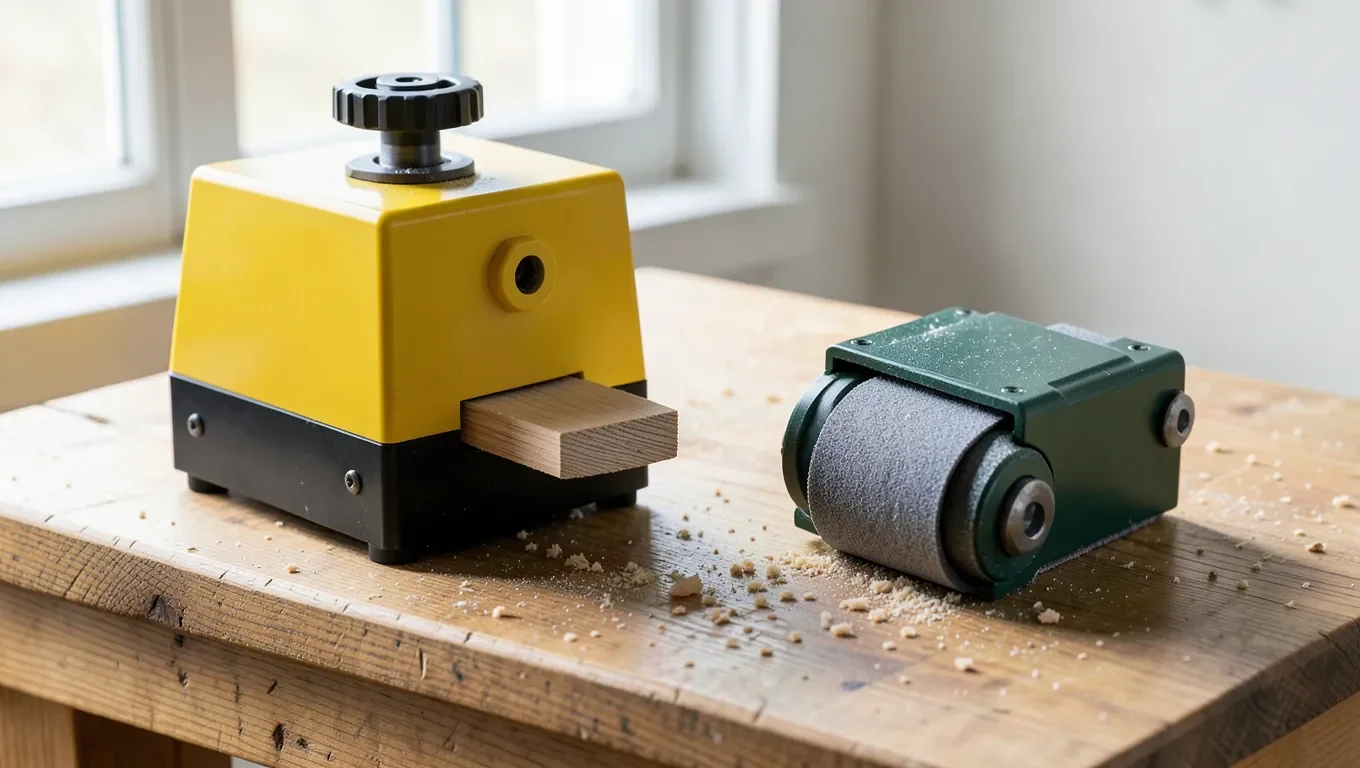
A belt sander and a thickness planer are not two versions of the same tool — they solve different problems entirely. A belt sander is a hand-guided machine that removes wood through abrasion, built for smoothing, shaping, and finish work. A planer is a fixed-feed machine that removes wood through cutting, built to bring a board to a precise, consistent thickness with two parallel faces. Reach for the wrong one and you’ll either burn hours trying to hand-sand a board flat, or feed a warped board through a planer expecting it to come out straight — and be disappointed either way.
This guide covers what each tool physically does, when each one is actually the right call, and a detail most comparison articles skip: a planer doesn’t flatten a board on its own. It just mirrors whatever’s already underneath it.
The Real Difference: Abrasion vs. Precision Cutting
Best Benchtop Planer for Dimensioning Rough Lumber
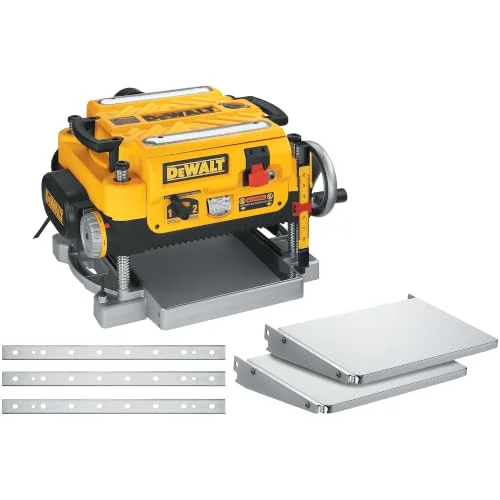 |
DEWALT DW735X 13-inch Thickness Planer – $684 The kind of fixed-feed dimensioning power this article is about — a two-speed, three-knife cutterhead that brings rough lumber to a precise, consistent thickness in repeatable passes.
|
Start with how each tool physically removes material, because that’s what drives everything else.
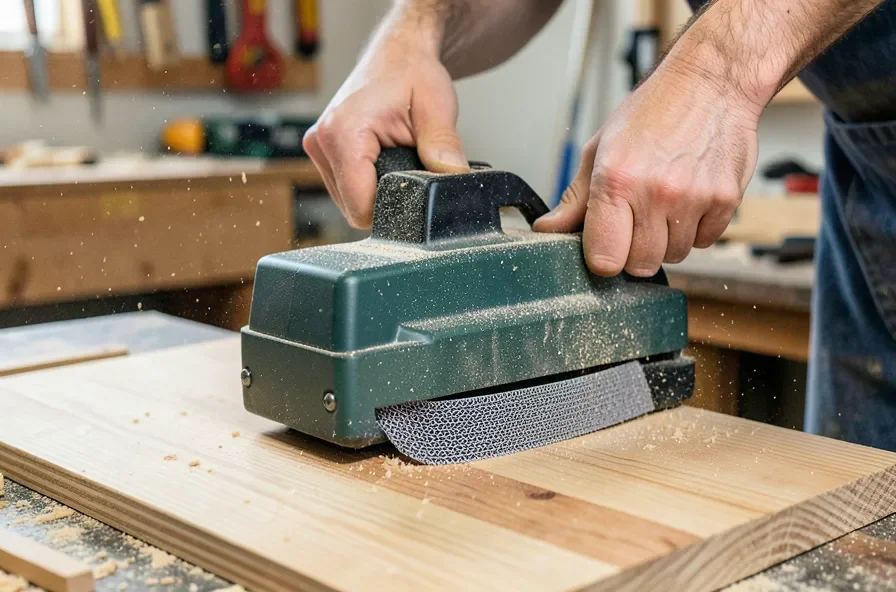
A belt sander uses a loop of abrasive-coated fabric stretched between two drums, spinning at high speed. You hold the sander and guide it across the wood by hand, and the moving belt grinds material away through friction. Because a human hand is doing the guiding — not a fixed mechanism — a belt sander is fast and versatile, but it’s also unforgiving of an uneven touch. Tip it, linger too long in one spot, or apply uneven pressure, and you can dig a low spot into an otherwise flat surface just as easily as you can smooth one out. It’s a finishing and shaping tool, not a tool built to guarantee flatness.
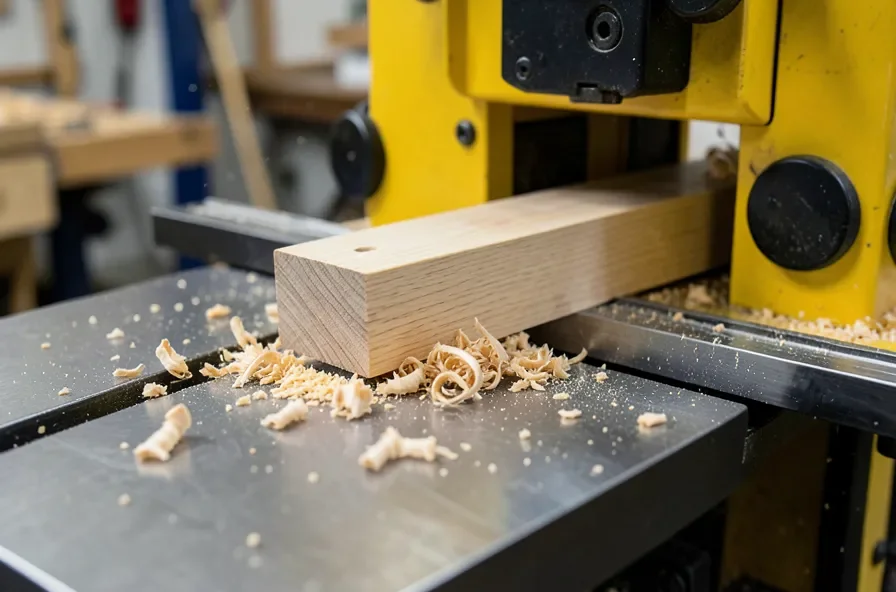
A planer works completely differently. Inside the machine, a rotating cutterhead carries sharp steel knives that shave off thin, uniform layers of wood — true cutting, not abrasion. The board itself doesn’t move by hand; a set of motor-driven feed rollers pulls it through at a fixed rate, past a stationary bed and a pressure bar that hold it flat against the table as it passes under the cutterhead. Because the machine controls the path instead of a hand, every pass produces a face that’s parallel to whatever face is resting on the bed, cut down to the exact thickness you dial in. That’s precision dimensioning — repeatable in a way hand-guided sanding simply can’t match.
The Planer "Flattening" Myth Most Guides Get Wrong
Here’s the detail that trips up a lot of woodworkers, and one most comparison articles gloss over: a thickness planer does not flatten a warped, cupped, or twisted board by itself.
A planer’s cutterhead only ever cuts a face that’s parallel to whatever face is currently sitting on the bed. Feed a board through with a twisted or cupped face down, and the planer’s rollers will simply pull it through following that same distortion — planing both faces down thinner and thinner while the board stays just as warped as when you started. You end up with a thinner, still-crooked board, not a flat one.
To actually flatten a board, one face has to be made flat first, before the planer ever gets involved. Traditionally that’s a jointer’s job — it has a flat, adjustable table specifically designed to remove twist, cup, and bow from a single reference face. If you’re deciding which of those two tools you actually need, our jointer guide breaks down what a jointer does differently from a planer. Without a jointer, the same result is possible with hand planes and winding sticks, or by building a simple plywood sled that shims the board’s high spots so it sits still while the planer’s first pass copies a flat face onto the bottom. Only after that first face is genuinely flat can the planer’s second pass make the opposite face parallel to it — the step that actually brings the board to final thickness.
A belt sander can flatten a small panel or a glued-up tabletop by hand, working carefully against a straightedge, but it’s slow and entirely dependent on a steady hand — exactly the trade-off you’d expect from an abrasive, hand-guided tool going up against a job a fixed-feed machine is built for.
When a Belt Sander Is the Right Call
A belt sander earns its place in the shop for jobs where speed and hand control matter more than machine precision:
- Stripping old finish, paint, or varnish off furniture before refinishing — a belt sander removes it in a fraction of the time hand-sanding would take
- Leveling proud glue lines on a panel glue-up, where a few boards have dried slightly uneven and need to be brought flush before final sanding
- Smoothing large flat surfaces like tabletops, doors, and hardwood floors, where the piece is too big or too fixed in place to run through a stationary machine
- Rough-shaping curves, chamfers, or contoured edges that a planer’s straight, fixed bed can’t follow
- Working on-site or on an assembled piece that can’t be fed through a benchtop machine
If the job is about surface condition — removing material from the top of something that’s already roughly the right shape and thickness — a belt sander is almost always the faster, more practical choice.
When a Planer Is the Right Call
A planer is the right tool any time the actual dimension of the board matters, not just its surface:
- Dimensioning rough-sawn lumber straight from a sawmill down to a usable, consistent thickness
- Matching multiple boards to the identical thickness before a glue-up, so a panel or tabletop doesn’t have visible steps between boards
- Resawing thick stock into thinner panels and cleaning up the sawn faces in the same pass
- Milling furniture-grade parts — table legs, aprons, drawer sides — where a few thousandths of an inch of inconsistency shows up as a wobble or a gap later
Buying rough lumber is usually cheaper than pre-surfaced boards from a home center, but only a planer makes that savings worth the trouble — it’s the tool that turns rough stock into something you can actually build furniture with.
Which One Should You Buy First?
For most home shops, it comes down to what stage of the process is currently the bottleneck.
A belt sander is the smaller investment, has a smaller footprint, and covers a wider range of everyday tasks — stripping, leveling, smoothing — which makes it the more common first purchase. A planer costs more and needs bench or floor space, but it’s the only realistic way to reliably dimension rough lumber at home; there’s no hand-tool shortcut that matches its speed and consistency across a whole stack of boards.
If you mostly work with pre-surfaced lumber from a home center, a belt sander alone may cover everything you need for a long time. If you’re starting to buy rough-sawn lumber to save money, or you’re gluing up panels that need to match in thickness, a planer stops being optional — see our full breakdown of whether you actually need a wood planer for the complete buying-decision rundown. Most shops that do enough woodworking eventually own both — they’re handling two different stages of the same project, not competing for the same job.
Keeping Either Tool Running Well
Both tools are low-maintenance if you stay ahead of dust and wear. Unplug the tool before any cleaning or adjustment, every time.
For a belt sander: brush dust out of the motor housing regularly, check the dust bag or port so airflow isn’t restricted, and replace the sanding belt once it stops cutting efficiently rather than forcing a worn belt to keep working.
For a planer: keep the bed and rollers clean of sawdust and pitch buildup, which can cause feed problems and snipe. Check the knives for nicks or dullness — dull knives tear the wood instead of cutting it cleanly — and keep the depth-adjustment mechanism free of dust. Store both tools somewhere dry; rust on a planer’s bed or a sander’s base plate will mark every board that touches it.
Frequently Asked Questions
Is a Belt Sander or a Planer Better?
Neither is better — they’re built for different jobs. Use a planer when you need a board brought to a precise, consistent thickness with parallel faces. Use a belt sander when you need to smooth a surface, remove old finish, or level a glue-up by hand. Most serious woodworking shops eventually need both.
Can a Planer Flatten a Warped Board by Itself?
No. A planer only cuts a face parallel to whatever face is already resting on its bed, so it copies a warped board’s shape rather than correcting it. One face needs to be flattened first — typically with a jointer, hand planes, or a shop-made sled — before a planer can make the opposite face parallel to it.
Can You Flatten Wood With a Belt Sander?
Yes, on smaller panels or glue-ups, working carefully against a straightedge to check your progress. It’s slower and more dependent on a steady hand than machine methods, since the sander is hand-guided rather than following a fixed path.
Can a Planer Be Used as a Sander?
Not really. A planer cuts wood with knives to change its thickness; it isn’t designed to produce a sanded finish. Run a board through a planer to dimension it, then move to sanding — starting with a belt sander or orbital sander — for the actual finish surface.
Conclusion
A belt sander and a planer aren’t rivals — they’re tools for different stages of the same project. Reach for a planer when a board’s actual thickness and flatness need to be precise and consistent, and reach for a belt sander when the job is about smoothing, shaping, or finishing a surface that’s already roughly right. Most shops end up needing both eventually, and knowing which one a given task actually calls for will save you time, material, and a fair amount of frustration.
Sponsored / affiliate links. As an Amazon Associate I earn from qualifying purchases. I may earn additional commission from eligible campaigns.