Trex Decking Fasteners: Hidden Clips vs Screws, Gaps and Spacing (2026)
The real Trex fastener decision is hidden clips or face screws, and it comes down to board edge, the gap each one leaves, and where you can safely mix them. Hideaway clips need grooved boards and set a 1/4 inch gap on their own; screws work on any board but leave the 3/16 inch gap to you. Below are the spacing rules, a count by deck size and seven real screws compared by cost per 100. For the warranty side of fastener choice, see our Trex composite decking reviews.
Trex recommends three fastening systems: (1) Hideaway hidden clips — one clip per joist per board, for grooved boards only, creates a 1/4″ gap automatically; (2) color-matched composite screws — two screws per joist crossing, pre-drill required; (3) plug systems — two screws per joist covered with color-matched plugs. For a 200 sq ft deck with 16″ OC joists, plan for approximately 300 face screws or 175 hidden clips. Yes, Trex requires composite-specific, corrosion-resistant screws — standard wood screws will stain and damage the boards. For a specific product, the Trex Color Match Deck Screw ($24.28 per 100, verified pricing below) is our #1 overall pick because it’s engineered specifically for Trex board density and ships in an exact color match — see the full 7-screw comparison table further down this guide.
Why Trex Composite Decking Fasteners Matter
Best Color-Match Screw Pick
 |
Trex Color Match Deck Screws, 2-1/2 inch, 350 count, $84.99 A 350-count tub of composite deck screws sold by Trex itself in colors made for its boards, for the places a hidden clip cannot go.
|
As an Amazon Associate we earn from qualifying purchases.
Trex composite decking expands and contracts with temperature changes more than wood does — up to 1/8″ per 12 ft board between winter and summer. Standard wood screws do not accommodate this movement. They either mushroom the surface material upward as the board expands, or they cause micro-cracks near the fastener hole over time. Trex-recommended fasteners are engineered with the right thread pitch, shank diameter, and coating to hold without resisting thermal movement.
Using non-recommended fasteners also voids Trex’s warranty — in some cases the 25-year fade and stain warranty — if the failure is linked to fastener choice. Corrosion is the other practical concern: standard zinc-plated screws corrode within 2–3 seasons in humid or coastal environments, leaving dark staining streaks down the board face that are very difficult to remove from composite material.
Types of Trex Composite Decking Fasteners
Trex offers three fastening approaches. The right choice depends on whether your boards are grooved-edge or square-edge, your budget, and the finish look you want.
Hidden Fasteners: The Secret to a Sleek Look
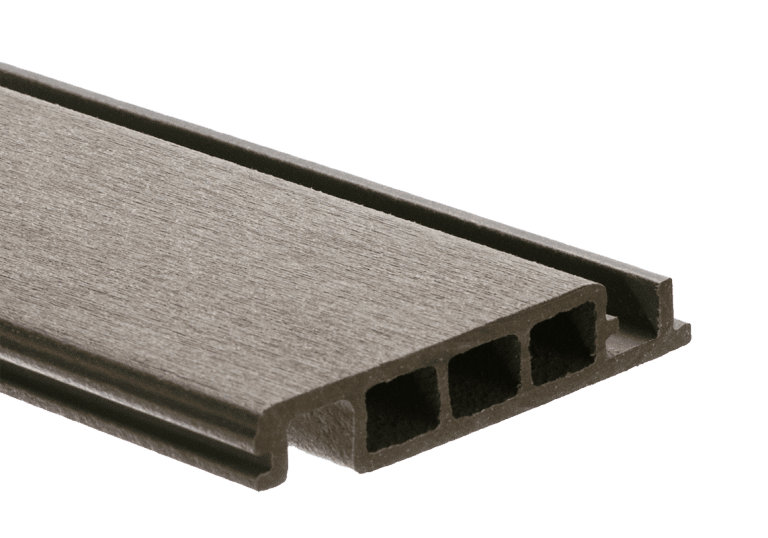
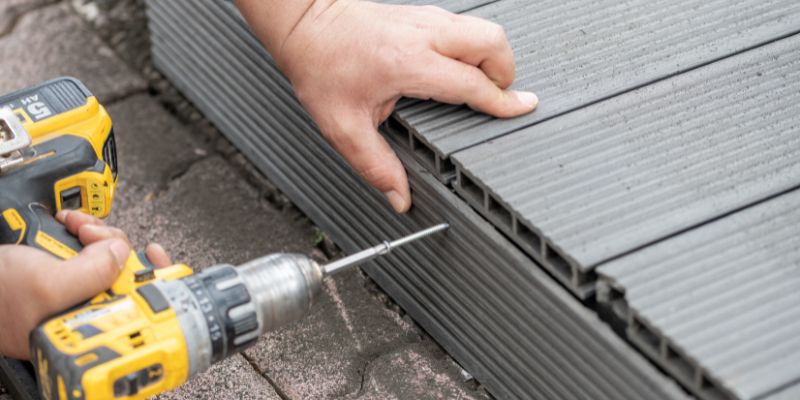
The Trex Hideaway Universal Hidden Fastener is a glass-filled nylon clip with a pre-set stainless steel screw. The clip slides into the grooved edge of one board and the adjacent board simultaneously, then the screw drives down into the joist below. This creates a perfectly consistent 1/4″ gap between boards — no measuring, no guessing. The walking surface is completely free of visible fastener heads.
Key limitations: Hideaway clips only work with grooved-edge Trex boards. Square-edge boards (commonly used for picture-frame borders, stair treads, and fascia) cannot use hidden clips and require face screws or plugs instead. One bag of 90 clips covers approximately 50 sq ft of decking at 16″ OC joist spacing.
Color-Matched Screws: A Traditional Yet Polished Choice
Trex Color-Match Composite Deck Screws are coated to match each Trex deck board color. They drive flush to the surface — the head geometry is designed specifically to prevent the mushrooming effect that happens with standard screws on composite material. These are the correct choice for square-edge boards, fascia, stair treads, picture-frame borders, and anywhere hidden clips cannot be used.
Always pre-drill composite material near board ends — within 6 inches of any end. Use a 1/8″ bit, drill to board depth (not through the joist). Drive screws flush, not countersunk. Two screws per board per joist is the standard installation pattern.
Plug Systems: The Best of Both Worlds
The Trex Hideaway Plug System uses a face screw countersunk below the board surface, then covered with a color-matched composite plug cut from actual Trex decking material (typically cut with a composite-rated jigsaw blade). The result is a walking surface with no visible metal — just flush composite plugs that match the board grain and color. This system works on both grooved and square-edge boards and is the preferred method for picture-frame borders and other design elements where hidden clips cannot be used but a screw-free look is still desired.
The plug system requires a specific counterbore bit to create the correct hole depth — the plug must sit flush, not raised or recessed. Installation is slower than either screws or hidden clips, but the finished appearance is the cleanest of any face-fastening method.
| Fastener Type | Board Compatibility | Visible on Surface | Best For |
|---|---|---|---|
| Hideaway Hidden Clips | Grooved-edge only | No | Main deck field |
| Color-Matched Screws | Grooved or square-edge | Yes (color-matched) | Fascia, borders, stairs |
| Plug System | Grooved or square-edge | No (plug covers screw) | Picture frames, premium look |
Hidden Clips vs Screws: Gaps, Counts and Mixing Both
The two systems do not leave the same gap. Trex says its Hideaway clips are designed to create a 1/4 inch gap automatically, because each clip has a tongue on each side that holds the grooved edges of two neighboring boards. Screwed boards have no such guide, so you space them yourself, and Trex’s own board-spacing page gives 3/16 inch side to side in all weather, widening to 3/8 inch where trees drop debris that needs to pass through.
| Question | Hideaway hidden clips | Face screws |
|---|---|---|
| Who sets the side gap? | The clip (1/4 in) | You (3/16 in, 3/8 in in debris-heavy yards) |
| Board edge required | Grooved only | Grooved or square |
| Fastening point | One clip at every joist the board crosses, shared by two boards | Screws through the face at each joist |
| First and last board rows | Starter clips fixed to the rim joist at each joist | Same screws as the field |
Mixing them on one deck is normal. A common layout is clips across the grooved field and screws or plugs on square-edge picture-frame borders, stair treads and fascia, since clips cannot grip a square edge. The catch most guides skip is that the two methods leave different gaps (1/4 inch versus 3/16 inch, a 1/16 inch difference). That is small enough to hide in a border row, but set the border screws to the 3/16 inch figure, not by eye against the clipped field.
End gaps do not change with the fastener. Whether a board is clipped or screwed, Trex’s end-to-end gap is 1/8 inch above 40 degrees F and 3/16 inch below, and boards that butt a wall or other solid object need 1/4 inch above 40 degrees F and 1/2 inch below. Those numbers, and how an improper gap affects the warranty, are laid out in the installation table on our Trex composite decking reviews page, so we are not repeating that table here.
Which lasts longer, clips or screws? We could not find a manufacturer comparison of clip life against screw life, so we will not claim one. What the sources do support is narrower: a clip hides the screw head from the weather and foot traffic, while a face screw is exposed, which is why the corrosion grade of the screw (covered in the comparison below) matters most on screwed decks.
The 7 Best Composite Deck Screws for Trex Decking (Compared)
Once you’ve decided between hidden fasteners, face screws, or a plug system, the next question is which actual product to buy. We pulled live pricing and pack counts for seven real, currently-purchasable screws and fastening systems marketed for Trex composite decking, then normalized every one to a cost-per-100-screws figure — a comparison none of the other Trex fastener guides currently online actually do. The table below is the full dataset; the write-ups after it cover what each pick is actually good and bad at.
| Screw | Material / Corrosion Grade | Head & Thread Design | Price (verified Aug 2026) | Cost per 100 Screws | Best For |
|---|---|---|---|---|---|
| Trex Color Match Deck Screws (2-1/2″, 350ct) | Coating-based (not bare stainless) | Cap head, HEXSTIX STICK-TIGHT drive | $84.99 / 350ct | $24.28 | #1 Best Overall |
| FastenMaster Cortex Hidden Fastening System — Malted Barley (100 ln/ft) | Coated screw core, sealed under plug | Concealed screw + color-matched plug | $96.99 / 100 ln ft kit | N/A — kit price* | Best Hidden Fastening System for Trex |
| Starborn Cap-Tor xd Screws — 305 Stainless (100ct) | True stainless (305) | Undercut head | $75.97 / 100ct | $75.97 | Best Anti-Mushroom Coating Technology |
| Simpson Strong-Tie Deck-Drive DCU234C316 — Type 316 Stainless (70ct) | True marine-grade stainless (316) | T-20 6-lobe cap head | $31.36 / 70ct | $44.80 | Best for Coastal & Saltwater Decks |
| FastenMaster TrapEase Composite Deck Screw — Gray (350ct pail) | Coating-based | Standard flat head | $69.23 / 350ct | $19.78 | Best Value — Lowest Cost Per 100 Screws |
| CAMO Edge Deck Screws — Stainless Steel (2-3/8″, 700ct) | True marine-grade stainless (316) | Edge/angled drive | $148.00 / 700ct | $21.14 | Best for Grooved-Board Edge Fastening |
| Eagle Claw 304 Stainless Steel Deck Screws (#10 x 2-1/2″, 350ct) | True stainless (304) | Flat head, T25 star/Torx drive | $77.95 / 350ct | $22.27 | Best Budget Stainless Alternative |
*The FastenMaster Cortex system bundles 224 screws, 300 color-matched plugs, and 2 setting tools in one 100-linear-foot box — its $96.99 price isn’t a per-screw cost and isn’t directly comparable to the other six single-screw SKUs above. Prices and stock status were live-verified via the Amazon Creators API on the date shown; Amazon’s review API returned no rating data for any of these seven listings, so no star ratings are shown here — we’re not going to invent them.
1. Trex Color Match Deck Screws (2-1/2″, 350ct) — #1 Best Overall
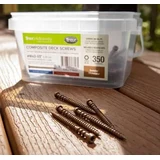
Price: $84.99 for 350 screws ($24.28 per 100) — check current price on Amazon.
- Engineered specifically for Trex boards, not a generic composite screw
- Patented HEXSTIX STICK-TIGHT technology for a wobble-free drive
- Tri-lobe shank with sharp upper threads shear away debris to prevent mushrooming
- UV-resistant color coating matched to every current Trex collection
Pros:
- Widest, most exact color match of the seven compared — made from the same pigments as Trex boards
- Sold under the Trex name, so there is no question whether it is a Trex-approved fastener
- Purpose-built thread geometry for Trex’s specific board density
Main drawback:
- Not bare stainless steel — corrosion resistance comes from the coating, not the base metal
- Costs more per 100 screws than TrapEase, CAMO, or Eagle Claw
Verdict: The safest default pick if you’re installing genuine Trex boards and want a guaranteed factory color match with no question about the match.
2. FastenMaster Cortex Hidden Fastening System — Malted Barley (100 ln/ft) — Best Hidden Fastening System for Trex
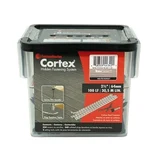
Price: $96.99 per 100-linear-foot kit — check current price on Amazon.
- Each box: 224 screws, 300 plugs, and 2 setting tools — covers 100 linear feet
- Conceals fasteners across the entire deck, including first/last boards, breaker boards, perimeter, and stairs
- Plugs are made from real Trex deck board material for an exact color/texture match
- Works on square-edge boards, where hidden clip systems cannot
Pros:
- Completely invisible fastening — no visible screw heads anywhere on the deck
- Only system of the seven compared whose plugs are made from actual decking material rather than a color-matched coating
- Covers field boards, borders, and stairs in one system
Main drawback:
- Highest total project cost of any system compared — this is a kit price, not a per-screw price (see note below the table)
- Requires the Cortex setting tool and a slower installation process than face screws
Verdict: Worth the premium when zero visible fasteners is the priority — especially on square-edge boards, stair treads, and picture-frame borders where clip systems can’t reach.
3. Starborn Cap-Tor xd Screws — 305 Stainless (100ct) — Best Anti-Mushroom Coating Technology
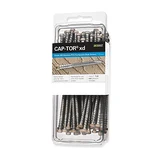
Price: $75.97 for 100 screws ($75.97 per 100) — check current price on Amazon.
- True 305 stainless steel core, coated to match popular PVC/composite decking colors
- Reverse threading specifically engineered to prevent mushrooming and surface defects
- Undercut head cleanly penetrates the hard outer capstock layer
- Star drive with an extra-deep recess to reduce cam-out
Pros:
- The only pick combining a true stainless base with reverse-thread anti-mushroom geometry
- Undercut head sits flush without pre-drilling on most capstock boards
- Tri-lobe shank and acute thread angle drive cleanly through dense composite
Main drawback:
- Most expensive pick compared — roughly 3.8x the per-100 cost of the cheapest comparable screw (TrapEase)
- No dedicated Trex color match — ships in generic composite-decking tones
Verdict: The pick for high-density capstock boards (like Trex Transcend or Select) where mushrooming has been a repeat problem with standard screws.
4. Simpson Strong-Tie Deck-Drive DCU234C316 — Type 316 Stainless (70ct) — Best for Coastal & Saltwater Decks
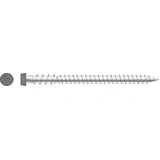
Price: $31.36 for 70 screws ($44.80 per 100) — check current price on Amazon.
- Type 316 stainless steel — molybdenum-alloyed for chloride/saltwater resistance
- Inverted upper threads clear excess material for a consistently seated screw
- Tri-lobe threads with a double-cut point
- Also sold in a Trex Pebble Gray color-matched plug version (model TRX20PG)
Pros:
- True 316 marine-grade stainless — the same grade cited in IRC coastal fastener provisions
- Trex-approved fastener
- A color-matched plug variant exists for the same product line
Main drawback:
- Smallest box count compared (70) — more reorders on a large deck
- The base 316 SKU itself is not color-matched (only the separate Pebble Gray plug SKU is)
Verdict: The pick for coastal and high-humidity builds where corrosion history or code (IRC R507.2.3’s stainless-steel requirement within 300 ft of salt water) calls for true marine-grade stainless.
5. FastenMaster TrapEase Composite Deck Screw — Gray (350ct pail) — Best Value — Lowest Cost Per 100 Screws
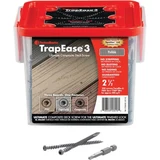
Price: $69.23 for 350 screws ($19.78 per 100) — check current price on Amazon.
- Coated composite-specific deck screw, sold in multiple colors matched across several decking brands
- 350-count bulk pail
- Cheapest verified cost per 100 screws of every comparable single-screw SKU in this dataset
Pros:
- Lowest verified cost per 100 screws — $19.78, versus $75.97 for the most expensive pick
- Color options span multiple composite decking brands, not just Trex
- Large bulk pail reduces reorders on bigger decks
Main drawback:
- Listing does not publish a stainless-steel grade — this appears to be a coated screw, not bare stainless
- Thinner published spec sheet than the stainless picks above
Verdict: The pick for budget-focused, larger-deck installs where dozens of boards need face screws and stainless-grade certainty isn’t the top priority.
6. CAMO Edge Deck Screws — Stainless Steel (2-3/8″, 700ct) — Best for Grooved-Board Edge Fastening
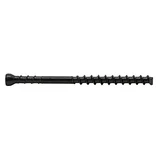
Price: $148.00 for 700 screws ($21.14 per 100) — check current price on Amazon.
- 316 stainless steel construction
- Drives into the routed edge/groove of the board rather than the face
- Rake tip augers material out of the pilot hole to prevent splitting, cracking, or bubbling
- Works on pressure-treated lumber, hardwoods, cedar, and composite decking
Pros:
- True 316 marine-grade stainless at a competitive per-100 price
- Edge installation leaves a completely screw-free walking surface without buying into a separate hidden-clip system
- Rake-tip design specifically addresses composite splitting at the groove
Main drawback:
- Requires the CAMO Marksman/edge guide tool for accurate installation angle
- Only works on grooved-edge boards — same limitation as clip-based hidden fastener systems
Verdict: The pick for grooved-board decks where you want edge-hidden fastening without committing to Trex’s own Hideaway clip ecosystem.
7. Eagle Claw 304 Stainless Steel Deck Screws (#10 x 2-1/2″, 350ct) — Best Budget Stainless Alternative
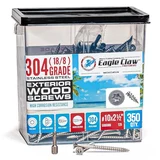
Price: $77.95 for 350 screws ($22.27 per 100) — check current price on Amazon.
- 304-grade (18-8) stainless steel
- Flat head with T25 star/Torx drive to reduce cam-out and stripping
- Type 17 point — not self-drilling; pre-drilling recommended
- Includes a matching driver bit
Pros:
- True 304 stainless at a near-budget price point
- Corrosion resistance suitable for most inland climates
- Comes with the correct driver bit included
Main drawback:
- Not color-matched to any specific Trex line — visible face screws will contrast with the board color
- 304 grade is not rated for the 300-ft saltwater code zone where 316 is specified
Verdict: The pick for inland (non-coastal) installs where true stainless corrosion resistance matters more than an exact color match, and budget is a real factor.
How We Compared These Screws
We have not physically driven all seven of these fasteners into a Trex deck for this article — so we’re not going to claim we did. What we did do: pulled live, currently-purchasable ASINs and buy-box pricing for each product via Amazon’s Creators API on the date shown in the table, cross-checked every material and thread claim against the manufacturer’s own listing copy and, where available, their spec sheet (Trex, Starborn, Simpson Strong-Tie, FastenMaster, and CAMO all publish their own product pages), and computed the cost-per-100 figure ourselves from each listing’s stated pack count rather than trusting Amazon’s own per-unit price field (which is frequently wrong-unit or missing). Where a claim couldn’t be independently verified — star ratings, for instance — we left it out rather than guessing or copying a number from a competitor’s page.
For real-world installation experience beyond the spec sheet, see Eagle Claw’s own field notes on mushrooming and pre-drilling (cited in the buying guide below) and Trex’s own recommended-fasteners documentation, both linked as sources throughout this guide.
What to Consider When Choosing Trex Deck Screws
The picks above cover the seven screws we’d actually shortlist. Here’s the reasoning behind the criteria that actually separate them, so you can weigh the trade-offs against your own deck.
Head Design & Anti-Mushrooming Technology
Mushrooming happens when a screw head forces composite material outward instead of cutting through it cleanly. Undercut heads (Starborn) and reverse-thread designs cut through the board’s hard capstock shell rather than pushing it aside; standard flat heads rely more on pre-drilling to avoid the same problem. If you’ve had mushrooming issues with a standard screw before, an undercut-head, reverse-thread design is the fix — not just a sharper bit.
Corrosion Coating vs. True Stainless Steel
Three of the seven picks above are coating-based (Trex Color Match, FastenMaster TrapEase, and the Cortex system’s screw core) and four are bare stainless steel in 304, 305, or 316 grade. A coating can match a board’s color exactly; bare stainless can’t be color-matched as precisely but doesn’t depend on a coating staying intact for 25 years. Neither is wrong — they’re solving for different priorities.
304 vs. 316 Stainless — Does It Matter for Your Deck?
304 stainless (used in the Eagle Claw pick) resists rust in ordinary inland conditions. 316 stainless (used in the Simpson Strong-Tie and CAMO picks) adds molybdenum, which specifically resists chloride pitting from salt exposure. The IRC’s deck fastener provisions (Section R507.2.3) require stainless steel fasteners within 300 feet of a salt-water shoreline — if your deck is that close to the coast, 316 isn’t optional, it’s code.
Cost Per 100 Screws — Why We Normalized It
A 350-count pail and a 70-count box aren’t priced on the same scale, and none of the competing guides we read while researching this article actually did the math to make them comparable. Once normalized, the spread across our seven picks runs from $19.78 to $75.97 per 100 screws — a roughly 4x difference for products all marketed as “composite deck screws.” On a 300-screw deck, that’s the difference between about $59 and $228 in fasteners alone.
Grooved vs. Square-Edge Board Compatibility
Hidden clip systems (Trex Hideaway) and edge screws (CAMO Edge) only work on grooved-edge boards. Square-edge boards — common on stair treads, picture-frame borders, and fascia — need face screws or a plug system like Cortex instead. Check which edge profile your boards actually have before choosing a fastening method, not just a screw brand.
How Many Screws Do You Need for a Trex Deck?
This is the most-searched question about Trex fasteners — and the answer depends on joist spacing and fastening method.
Face screws (color-matched or plug system):
- At 16″ OC joists: approximately 1.5 screws per linear foot of decking (2 screws per board per joist, joists every 16″)
- At 12″ OC joists: approximately 2 screws per linear foot
Hidden clips (Hideaway system):
- At 16″ OC joists: approximately 1 clip per linear foot (one clip per board-joist crossing, shared between two boards)
- At 12″ OC joists: approximately 1.33 clips per linear foot
| Deck Size | Face Screws (16″ OC) | Face Screws (12″ OC) | Hidden Clips (16″ OC) |
|---|---|---|---|
| 100 sq ft (10×10) | ~150 screws | ~200 screws | ~100 clips |
| 200 sq ft (10×20) | ~300 screws | ~400 screws | ~175 clips |
| 300 sq ft (15×20) | ~450 screws | ~600 screws | ~265 clips |
| 400 sq ft (20×20) | ~600 screws | ~800 screws | ~350 clips |
Add 10% to any estimate for waste, starter boards, and end-of-row cuts. For fascia boards, add color-matched screws at 12–16″ intervals along the board length regardless of joist location.
Does Trex Decking Need Special Screws?
Yes. Trex composite decking requires composite-specific, corrosion-resistant fasteners. Regular wood screws will cause three problems: (1) mushrooming — the screw head geometry forces composite material upward as it drives, creating a raised ring around each fastener; (2) cracking near board ends, where the coarser thread of a wood screw splits the composite fiber matrix; (3) rust staining — zinc-plated wood screws corrode within 1–3 seasons and leave dark streaks on composite board faces that are extremely difficult to remove.
Trex-recommended screws use a fine thread optimized for composite density, a specific head angle that drives flush without mushrooming, and either stainless steel or a polymer coating rated for 25+ years of corrosion resistance.
Installation Tips for Trex Fasteners
Get Your Spacing Right
Trex boards need 1/4″ side-to-side gap (automatically set by Hideaway clips) or 3/16″ for face-screw installations using a spacer. End-to-end gap at butt joints: 1/8″ above 40°F and 3/16″ below 40°F, per Trex’s board-spacing page. For joist spacing, Trex standard decking requires 16″ OC maximum, and diagonal boards need 12″ OC – always verify in the installation guide for your specific product.
Pre-Drill Like a Pro
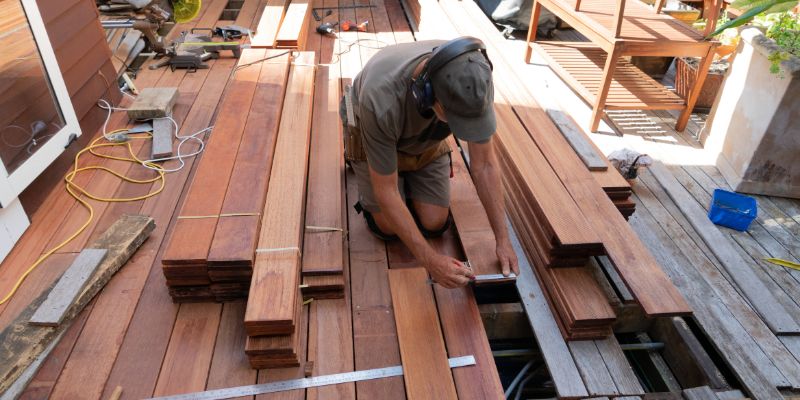
Pre-drill any fastener location within 6″ of a board end. Use a 1/8″ bit. Drive to board thickness — do not drill into the joist. This prevents end-splitting, which is irreversible in composite material and voids the warranty for that board. Mid-board fasteners do not require pre-drilling, though it speeds installation on harder Trex products like Transcend.
Use the Right Tools
The Trex Universal Fastener Installation Tool is worth the investment for hidden clip installations — it drives the clip screw at the correct angle in one motion, cutting per-clip time to a few seconds. For color-matched screws, use the correct star-drive bit (T-20 or T-25 depending on screw size). A magnetic bit holder prevents dropped screws between joists.
Don’t Skimp on Fasteners
Two face screws per joist crossing per board, or one hidden clip per joist crossing. Never reduce to one screw per joist to save material — a single fastener per joist allows the board to rotate slightly over time, creating a wavy surface. For fascia and rim boards, face screw every 12–16″ along the board length, independent of joist location.
Watch Out for Common Mistakes
- Over-driving screws: drives the head below the surface and creates a recess that fills with debris. Drive flush, not countersunk.
- Skipping the starter clip: the first board needs a special Hideaway Starter Clip that fastens to the rim joist — the standard clip cannot be used for the first board.
- Using wrong clip for board profile: Trex makes clips for different groove widths. Verify clip compatibility with your specific board line (Transcend, Enhance, Select).
- Mixing clip types from different manufacturers: only Trex Hideaway clips are approved for use with Trex boards.
Why Choose Trex-Recommended Fasteners?
Trex’s composite-specific fasteners are engineered around the specific density, thermal expansion coefficient, and surface hardness of each Trex product line. The warranty argument is practical, not just a sales pitch: if a board fails or stains adjacent to a non-recommended fastener, the warranty claim will be denied. Using Trex fasteners keeps that 25-year coverage intact for the entire deck surface.
Maintenance and Care for Your Trex Deck
Hidden fasteners and plug systems eliminate the main long-term maintenance headache of face-screwed decks: screw hole degradation. On composite decks with face screws, water infiltration at the screw hole is a slow but real concern over 10–15 years — keeping screws flush and in good condition prevents this. Inspect fasteners annually, particularly in freeze-thaw climates where board movement stress is highest. Any screw that has backed out slightly should be re-driven flush before the next seasonal expansion cycle.
Conclusion
Trex composite decking fasteners are not interchangeable with standard wood screws. Hidden Hideaway clips for grooved-edge main deck fields, color-matched screws for square-edge boards and fascia, and plug systems for premium face-fastening — each serves a specific purpose. Calculate fastener count from joist spacing before ordering (1.5 screws/ft at 16″ OC, 1 clip/ft at 16″ OC), and add 10% for waste. For more on composite deck construction, see can you paint Trex composite decking and composite decking screw plugs.
Frequently Asked Questions
Hidden Hideaway clips fit into the grooved edge of composite boards, fastening them to the joist with no visible hardware on the walking surface. Color-matched screws drive through the board face and are visible, but coated to match the board color. Hidden clips require grooved-edge boards; screws work on both grooved and square-edge boards.
Can I use regular wood screws with Trex decking?
No. Standard wood screws cause mushrooming of the composite surface, cracking near board ends, and rust staining within 1–3 seasons. They also void Trex’s warranty. Use only composite-specific, corrosion-resistant fasteners — Trex color-matched screws or Hideaway clips.
How many screws do I need for a Trex deck?
At 16″ OC joists with face screws: approximately 1.5 screws per linear foot of decking, or 150 screws per 100 sq ft. At 12″ OC: approximately 2 screws per linear foot, or 200 per 100 sq ft. For hidden clips at 16″ OC: approximately 1 clip per linear foot, or 100 clips per 100 sq ft. Add 10% for waste and special areas.
Are Trex fasteners corrosion-resistant?
Yes. Trex Hideaway clips use stainless steel screws and glass-filled nylon bodies. Color-matched composite screws use a polymer coating rated for 25+ years. Both are suitable for coastal and high-humidity environments where standard zinc-plated screws would corrode within 2–3 seasons.
Can I install Trex fasteners myself?
Yes. Color-matched screws require only a drill and the correct star-drive bit. Hidden Hideaway clips are fastest with the Trex Universal Fastener Installation Tool, but can be installed with a standard drill at the correct angle. Pre-drilling board ends and following Trex’s spacing guidelines are the two most important DIY steps to get right.
What is the best screw for Trex decking overall?
Trex Color Match Deck Screws are the safest default pick for genuine Trex boards — they’re engineered specifically for Trex’s board density and ship in a color match for every current Trex collection. If your priority is true stainless-steel corrosion resistance instead of an exact color match, Starborn Cap-Tor xd (305 stainless) or Simpson Strong-Tie’s Deck-Drive DCU (316 stainless) are the stronger picks — see the full comparison table above for the trade-offs.
What kind of screw can I use in Trex decking?
Any screw marketed specifically as a “composite deck screw” or “capstock screw” — these use a thread and head design engineered to cut through composite’s hard outer shell without mushrooming it. Standard wood screws, deck screws for pressure-treated lumber, and drywall screws are not designed for this and will cause visible mushrooming, stripping, or premature corrosion staining on Trex boards.
Can Fiberon fasteners be used on Trex decking?
Only Fiberon’s Phantom Universal hidden fasteners are cross-compatible — Fiberon’s own FAQ confirms the Phantom Universal line works with Trex, TimberTech, and Azek boards in addition to Fiberon’s own decking. Fiberon’s other fastener products are designed specifically for Fiberon decking only, and using them on a different brand isn’t recommended.
Yes. Use Hideaway clips across the grooved field and screws or plugs where a clip cannot grip, such as square-edge borders, stair treads and fascia. Clips set a 1/4 inch side gap while screwed boards should be spaced at 3/16 inch, so measure the screwed rows instead of matching them to the clipped field by eye.
Sponsored / affiliate links. As an Amazon Associate I earn from qualifying purchases. I may earn additional commission from eligible campaigns.