What Is the Best Mulch for Oak Trees? Mulch Choice Guide
For most oak trees, a good mulch choice is about 2 to 4 inches of coarse wood chips or shredded bark, spread over the root zone and kept a few inches back from the trunk. Bad mulching can rot the root flare, trap moisture, and stress drought-sensitive roots. This guide gives oak-specific mulch choices, depth rules, spacing from the trunk, and what to avoid.
what is the best mulch for oak trees?


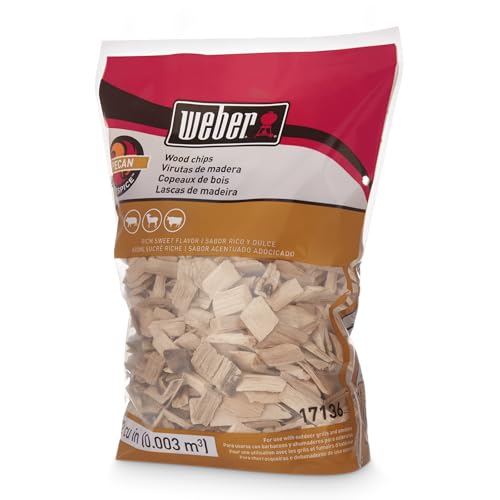
For most oak trees, organic wood-chip mulch is the best all-around choice because it breaks down slowly, holds moisture, suppresses weeds, and adds organic matter as it decomposes. Pine bark mulch works well in wetter beds, and arborist wood chips are a strong low-cost option for broad root zones.
Why organic wood-chip mulch is the default choice
Coarse wood chips stay loose on oak root zones instead of packing flat. That matters because oak roots need air near the surface, and a loose mulch layer lets rain and irrigation soak in rather than run off. The choices in this guide focus on moisture control, soil health, and weed blocking.
When pine bark mulch makes more sense
Pine bark mulch is a good bark-chip option when drainage is a concern or when you want a longer-lasting mulch that does not collapse into a dense mat quickly. Pine bark nuggets are commonly sold as 100% natural with no added fertilizers or pesticides, which fits around sensitive tree roots when the source is trustworthy.
Where arborist wood chips fit best
Arborist wood chips are often the best value for large oak canopies. Mixed chip sizes resist packing better than fine shredded mulch, and they are usually free or low-cost if you can source them from a reputable tree service. For large oaks, they are often the practical choice.
📊 Brut Organic Aspen Mulch is described as 12 lbs. Source: Best Mulch Options for Oak Trees to Promote Healthy Growth and Soil….
is mulch good for oak trees?
Yes. Mulch protects oak roots from drying and helps hold soil moisture, which matters because many feeder roots sit close to the soil surface. It also blocks weeds, cuts water competition, and buffers summer heat. The gain is strongest when the mulch stays off the trunk and covers the root zone correctly.
How mulch helps soil moisture around oak roots
Mulch slows evaporation from the soil surface, so moisture stays available longer between rains or watering. That matters for young oak trees and for established trees during drought or long heat spells. A mulch ring is not a replacement for irrigation, but it does slow how fast the soil dries out.
How mulch reduces weeds and competition
A weed-free ring around an oak cuts competition for water and nutrients in the top few inches of soil. This helps because grass and aggressive weeds can outcompete young oaks, especially during establishment. The goal is not appearance. It is root protection.
Why mulch helps during drought and summer heat
During hot, dry periods, oak roots can lose steady surface moisture. Mulch moderates soil temperature and slows drying, which helps both newly planted trees and mature trees in exposed sites. In drought-prone regions, the right mulch is part of stress reduction, not decoration.
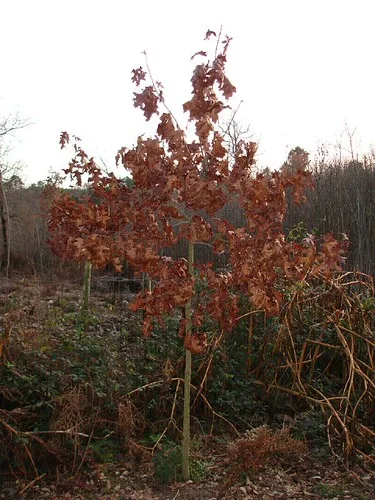
how deep should mulch be around oak trees?
The usual target is about 2 to 4 inches deep after settling. Thinner layers do less for weed control and moisture retention, while thicker layers can hold too much moisture, compact, and starve the roots of oxygen. Never build mulch into a cone at the trunk.
Why thicker layers cause problems
Overmulching can create a wet, low-oxygen zone that invites root rot, bark decay, and girdling roots. Fine mulch piled too deep also settles into a crust that sheds water instead of absorbing it. For oaks, the damage often starts at the trunk flare and moves outward.
How to measure depth after settling
Measure the mulch after you rake it level, not right after dumping it. A fresh layer often settles after rain or watering, so mulch placed at about 3 inches may end up closer to 2 inches. That is still within the useful range for most oak plantings.
should mulch touch the trunk of an oak tree?
No. The trunk flare, also called the root collar, should stay exposed. Mulch against the trunk traps moisture at the bark, encourages decay, and can hide problems until the bark softens or roots circle inward. Keep a clear no-mulch ring around the base.
Why the root flare must stay exposed
The flare marks where the trunk widens before the main roots leave the stem. If mulch buries that area, the bark stays damp too long. That creates conditions for rot and bark decay, and it can also make it harder to see whether the tree was planted too deeply in the first place.
How to stop volcano mulching before it starts
Flatten the mulch into a broad ring, not a cone. A common first-timer mistake is piling fresh mulch higher every year without checking the trunk. If the mulch looks like a volcano, pull it back until the trunk flare is visible and the surface slopes gently away from the tree.
best mulch choices by oak type and site
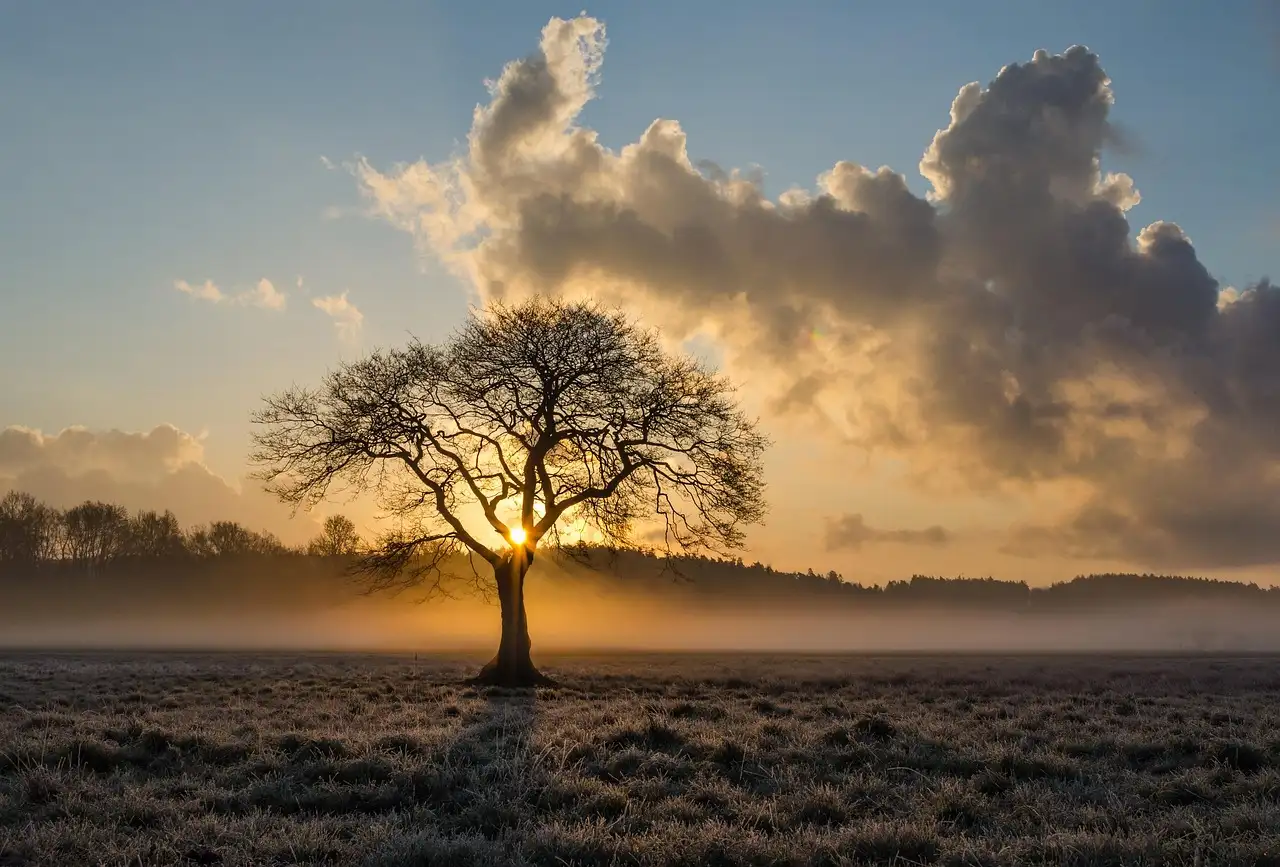
Oak species and site conditions matter. Live oak in hot climates usually does best with coarse, moisture-holding mulch that does not bake into a crust. Red oak and other upland oaks often do well with the same basic approach, but poorly drained beds call for a coarser, better-draining material like pine bark.
Live oak in hot or drought-prone climates
Live oaks often face heat, reflected sun, and dry soil. In those settings, coarse wood chips are usually the safest default because they retain moisture without sealing the soil surface. Avoid piling any mulch against the trunk, and keep the ring broad enough to cover the active root zone.
Red oak and other upland oaks
Red oaks, white oaks, and many other upland species generally tolerate slightly acidic to neutral soils. That means mulch choice should not be used to force a pH correction. Skip alkaline amendments unless a soil test calls for them. The mulch should manage moisture and weeds first.
Young newly planted oaks versus mature trees
Young oaks need a wider moisture buffer and stricter trunk clearance because their root systems are not established. Mature trees still benefit from mulch, but the ring can be shallower in practical appearance if the root zone is already covered. The flare still stays visible either way.
| Tree stage | Mulch depth | Trunk clearance | Best fit |
|---|---|---|---|
| Young newly planted oak | 2 to 4 inches | 3 to 6 inches clear | Coarse wood chips for moisture control |
| Mature oak | 2 to 4 inches | 3 to 6 inches clear | Arborist wood chips for wide root zones |
| Wet bed or poorly drained site | 2 to 3 inches | 3 to 6 inches clear | Pine bark mulch for better drainage |
Wet beds and poorly drained sites
If the bed stays wet after rain, do not reach for a fine mulch that mats tightly. Pine bark mulch is the better fit because it tends to stay looser than shredded products in these conditions. Good drainage matters more than a polished look near an oak.
what mulch should i avoid under oak trees?
Avoid thick fresh grass clippings, dyed or contaminated material when the source is unknown, and any mulch that sits against the trunk. These materials can heat, mat, hold excess moisture, or introduce contaminants. For oak roots, the safest mulch is clean, breathable, and applied with space around the flare.
Fresh grass clippings in thick layers
Fresh grass clippings compact quickly and can create a slimy, airless layer if applied thickly. That is a poor match for oak roots, especially in humid weather. Small, dry amounts are different, but thick layers belong on the compost pile, not around the trunk line.
Unknown-source dyed mulch
If the source is unclear, skip dyed mulch. The color itself is not the issue; the problem is not knowing what else is in the material. Clean wood chips, pine bark, or reputable arborist chips are the safer path around long-lived trees like oaks.
Piling any mulch against the trunk
Even good mulch becomes harmful when it touches the bark. This is where trunk rot, bark decay, and hidden girdling roots often begin. The boundary is simple: mulch goes over the root zone, not over the trunk flare.
mulch placement checklist for oak trees
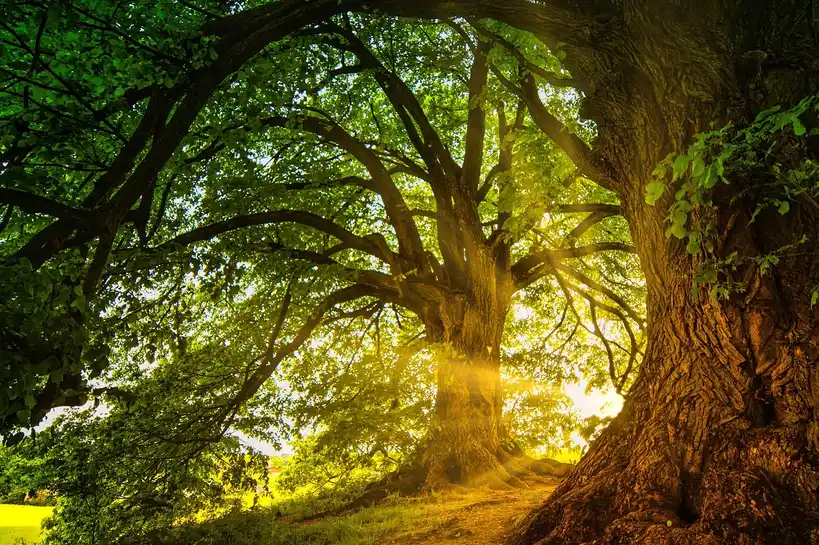
Use this checklist to verify that the mulch is protecting the oak instead of burying it. The right ring is broad, flat, and open at the center. A properly placed mulch bed supports water retention, weed suppression, and root protection without hiding the trunk flare.
- Find the trunk flare and make it visible before adding mulch.
- Keep a 3 to 6 inch clear ring around the trunk.
- Spread mulch 2 to 4 inches deep after settling.
- Extend mulch outward over the root zone, not upward in a mound.
- Use coarse wood chips, pine bark, or arborist chips rather than packed fines.
- Recheck the bed after rain and pull mulch back if it drifts toward the trunk.
| Check item | Proper placement | Problem sign |
|---|---|---|
| Trunk flare | Visible above the mulch line | Buried under mulch |
| Clearance from trunk | 3 to 6 inches | Mulch touching bark |
| Mulch depth | 2 to 4 inches | Deep cone or mound |
| Bed shape | Flat ring that spreads outward | Volcano shape at the base |
Simple diagram notes for a proper mulch ring
Picture a flat donut, not a cone. The center hole is the exposed trunk flare. The mulch fills the ring around it at 2 to 4 inches deep, and the outer edge spreads well beyond the base so surface roots stay protected. That shape works for both young and mature oaks.
Young-tree versus mature-tree placement rules
A young oak gets the same 3 to 6 inch trunk clearance, but the ring should be watched more often because fresh mulch can shift toward the stem. A mature oak can take a broader ring over a larger root area, which is where arborist wood chips often make the most sense.
Frequently asked questions
is wood chip mulch good for oak trees
Yes. Wood chip mulch is one of the best choices for oak trees because the mixed particle size helps it resist packing while still reducing evaporation and weed growth. It also breaks down into organic matter, which supports long-term soil health around the root zone.
can i use pine bark mulch under oak trees
Yes, especially in beds that stay wet or where drainage is a concern. Pine bark mulch lasts longer than many fine mulches and tends to stay open. It is a good fit when you want a bark-based material that does not pack tightly around the root zone.
Sponsored / affiliate links. As an Amazon Associate I earn from qualifying purchases. I may earn additional commission from eligible campaigns.