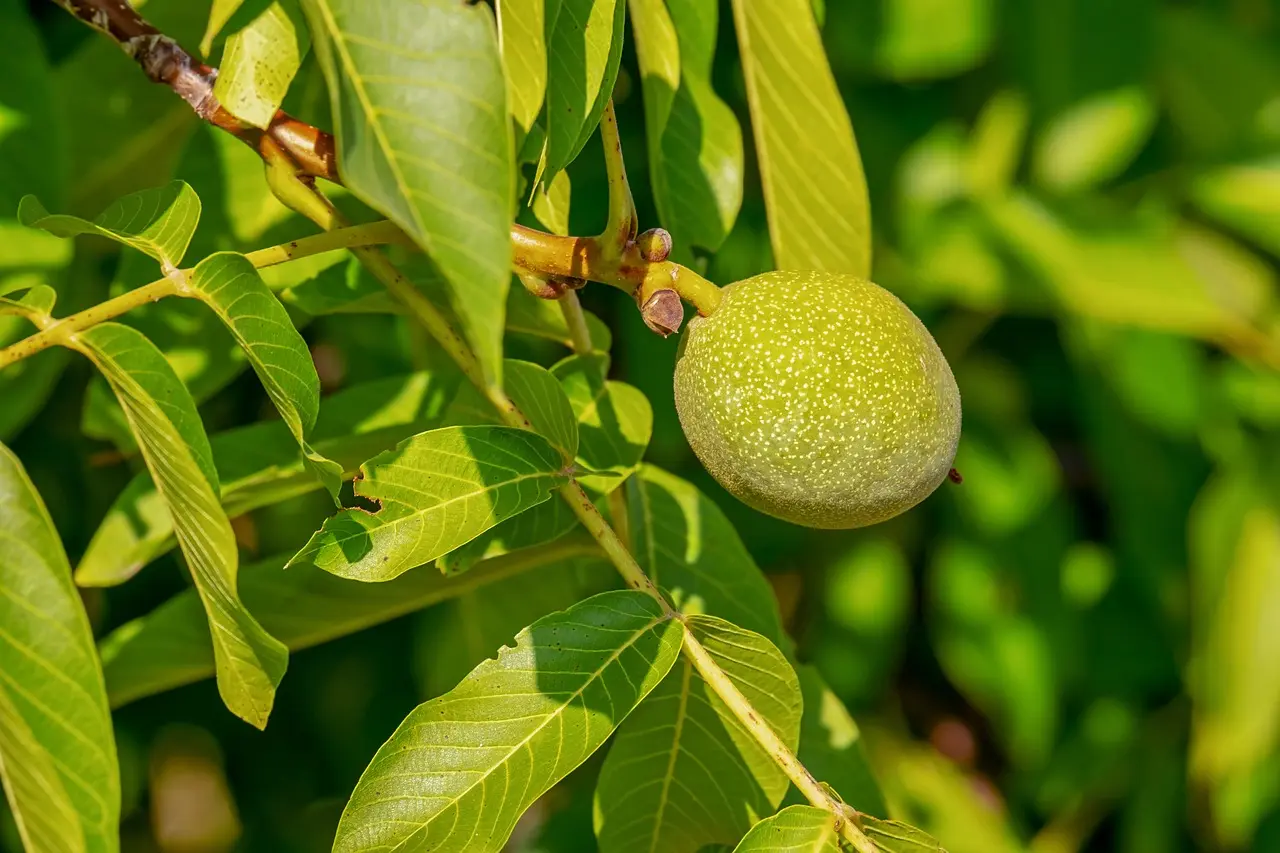
Walnut Tree Growth Rate Chart by Age: Height, DBH, Nuts
Walnut trees usually add about 1 to 3 feet of height a year, and black walnut often takes longer to bear, especially from seed, while English walnut may bear earlier on good sites. Poor site matching can mean slow growth, weak trunks, and delayed nut crops that waste years. This guide gives an age-by-age walnut growth chart for height, trunk caliper or DBH, canopy spread, and nut-bearing timing by species and site quality.
Walnut growth chart by age
Use growth in three separate ways. Height tells you top growth. DBH, or diameter at breast height, tells you trunk thickness at 4.5 feet above ground. Canopy spread shows how much shade the tree is building and how much room it needs. Nut production runs on a different schedule, so a tall young tree is not automatically a nut-producing tree.
Normal growth depends on age, species, and site quality. A tree on well-drained loam can stay near the upper end of the ranges below, while drought, clay, or compaction can push it well down the chart. Early height gain can be faster than trunk thickening because the tree puts energy into roots and stem support first.
Walnut tree growth rate Matrix
| Age | Expected height range | Trunk DBH range | Canopy spread | First nut-bearing likelihood | Typical for |
|---|---|---|---|---|---|
| 1 year | 1 to 3 ft | 0.25 to 0.75 in | 1 to 2 ft | No | Both |
| 3 years | 6 to 12 ft | 1 to 2 in | 4 to 8 ft | Very unlikely | Both |
| 5 years | 12 to 20 ft | 2 to 4 in | 8 to 12 ft | Possible for English walnut on good sites | Both |
| 10 years | 20 to 35 ft | 4 to 8 in | 12 to 20 ft | Likely for English walnut, possible for black walnut | Both |
| 15 years | 30 to 45 ft | 8 to 12 in | 18 to 28 ft | Likely for English walnut; early bearing for black walnut | Both |
| 20 years | 40 to 55 ft | 10 to 14 in | 24 to 35 ft | Yes, though crop size varies | Both |
| 30 years | 50 to 65 ft | 14 to 18 in | 30 to 40 ft | Strong production, especially English walnut | Both |
| 40 years | 55 to 70 ft | 16 to 20+ in | 35 to 50 ft | Full production for many trees | Both |
At age 1 to 5, the tree is in its root establishment period and early sapling stage. From roughly 10 to 20 years, canopy expansion becomes obvious, and trunk thickening speeds up on good sites. By 30 to 40 years, a walnut tree is moving into mature tree growth, with size gains slower than before but still steady if moisture and soil remain favorable.
How fast do walnut trees grow?
Walnut growth is moderate, not explosive. A useful yardstick is 1 to 3 feet of height gain per year for many young trees. Height is only one part of growth, though. Diameter and canopy spread usually increase more slowly at first.
Early height gain can look impressive while the trunk stays thin. That is normal. If the top stretches quickly but the trunk remains slender, the tree may still be spending much of its energy on root establishment and support tissue rather than on wider stem diameter.
Typical early height gain for black walnut
Black walnut trees generally reach full size and nut production between 40 and 60 years of age. That is fast enough to build a tall shade tree eventually, but not fast enough to mean early timber maturity or immediate nut crops.
Typical early height gain for English walnut
English walnut often grows a little more predictably in mild climates and can bear earlier than black walnut. Height gain is still site dependent, and a young tree on dry or compacted soil may lag far behind a tree on deep, fertile, well-drained loam. Earlier bearing does not guarantee earlier full production.
Why trunk diameter often lags height in young trees
Trunk DBH usually trails height because a young walnut must build roots before it can support a wider stem and heavier canopy. A tree can be 20 feet tall at about 10 years and still have a modest trunk diameter. That is why height alone is a poor shortcut for judging tree age or readiness for nuts.
What changes from seedling to mature tree?
Walnut growth stages are easiest to read in three phases: seedling, sapling, and mature tree. The first phase is root establishment. The second phase is canopy expansion. The third phase is slower height gain, thicker wood, and increasingly regular nut production, if the species and site match.
Seedling stage and root establishment
In the seedling stage, the tree looks small above ground because much of its energy goes below ground. This is the period when transplant shock, drying, and soil problems cause the biggest setbacks. A seedling planted into dry, compacted, or poorly drained soil may stall for a full season or longer.
Sapling growth and canopy expansion
By the sapling stage, the tree starts building a wider crown. Branch spacing, sunlight, and water decide how quickly the canopy opens. This is also when spacing matters most. Trees crowded too tightly stretch upward, close their crowns sooner, and often carry thinner stems than well-spaced trees.
Mature tree growth slowdown
At maturity, annual height gain slows and diameter gain becomes a more useful measure. Black walnut can reach full size over decades, and harvestable timber size comes later than first nut bearing. English walnut may bear earlier, but nut production still changes year to year rather than staying perfectly even.
Black walnut vs English walnut
Black walnut and English walnut should not be read from one generic timeline. Black walnut usually grows more slowly into commercial timber size but becomes a large, durable tree with strong wood value. English walnut often enters nut production earlier and is usually the better fit where the climate is mild and the season is long enough.
Growth rate and mature size
Black walnut is a strong timber species with a long run to maturity. Its size and trunk thickness depend heavily on site quality. English walnut typically matures as a nut tree earlier, but size still depends on climate and management.
Nut-bearing age and yield expectations
English walnut generally bears earlier than black walnut. Black walnut usually starts later and reaches more meaningful nut production over a longer timeline. Yield varies by species, age, spacing, weather, and pruning history.
English walnut yields are often discussed in pounds per year, but exact pounds cannot be promised for every tree. Crop load changes with frost, pollination, cultivar, and tree vigor. A productive mature tree can still have a light year if spring weather interrupts flowering or if the tree is stressed.
Climate and site preferences
Black walnut is more site sensitive than many homeowners expect. It performs best where soil is deep, moist, and well drained. English walnut prefers a milder climate and generally does better where winters are not too harsh and spring frost risk is manageable. Both dislike wet feet.
How site quality changes growth
Site quality can move a walnut tree years ahead or years behind schedule. Soil texture, drainage, root space, and moisture supply all matter. The difference between a good site and a poor one is not subtle. It changes height, trunk diameter, canopy spread, and nut-bearing age together.
Well-drained loam and moist cove sites
Well-drained loam gives roots oxygen, moisture, and room to spread. A rich, moist cove site is one of the better settings for black walnut and can support faster diameter growth. On this kind of site, canopy closure comes sooner and nut production is more dependable.
Clay, compaction, and poor drainage
Clay and compacted soil slow walnut growth because roots hit resistance and oxygen drops. Poor drainage also raises the chance of root rot. A tree can remain alive and still move far more slowly than expected. In a poor, drought-prone site, reaching 20-inch DBH may take much longer.
Drought-prone soil and spacing effects
Drought-prone soil cuts height growth and shrinks canopy spread. Tight spacing adds competition for water and nutrients, so each tree grows slower even when the soil is otherwise decent. Suppose two young black walnuts are planted 15 feet apart on the same site. The crowded pair will usually close canopy sooner and thicken more slowly than a well-spaced tree.
When do walnut trees produce nuts?
First bearing happens earlier than full production. English walnut generally bears earlier than black walnut, but neither species should be judged ready just because it is tall. Nut production is tied to age, flowering, pollination, and tree health, and annual yield can swing noticeably from one year to the next.
First bearing age by species
English walnut commonly begins bearing earlier, often in the 5 to 8 year range on good sites. Black walnut usually starts later and reaches more meaningful nut production over a longer timeline. A young tree with rapid height gain may still be years away from dependable crops if trunk and crown development are still underway.
Full production age
Black walnut trees generally reach full size and nut production between 40 and 60 years of age. English walnut may reach useful production earlier, but full production still depends on tree size, pollination, and climate. Full production is a stage, not a single date.
Do walnut trees produce every year?
Not always. Walnut crops can vary from year to year because weather, frost, pollen flow, and tree vigor change. A tree may carry a strong crop one season and a lighter crop the next. That variation is normal, so a single lean year does not mean the tree is failing.
How to support faster establishment
The best way to speed walnut growth is to remove stress during the first years. That means deep watering, correct spacing, and drainage that keeps roots oxygenated. Fast top growth without root health is a poor trade, especially on clay or any site that stays wet after rain.
- Plant in well-drained soil with enough root room.
- Water deeply rather than with frequent shallow sprinkling.
- Water when the soil begins to dry, and let the root zone drain before watering again.
- Keep mulch away from direct trunk contact.
- Avoid planting in low spots where water lingers.
- Give the canopy space so growth is not wasted in crowding.
Deep watering and irrigation timing
Deep watering encourages roots to move downward instead of staying near the surface. Young trees usually need more frequent watering during establishment than older trees do. During dry spells, a slow soak is better than a quick splash. The goal is to wet the root zone, then let it breathe before the next watering.
Root rot risk and drainage
Poor drainage is a serious problem, not a minor one. Standing water and soggy soil raise root rot risk and can stall growth even when the top of the tree looks green. If the site drains slowly after rain, planting on a mound or choosing a better location is safer than trying to force growth through wet soil.
Pruning and spacing basics
Prune lightly and keep the trunk form clean while the tree is young. Heavy pruning can slow a stressed tree. Spacing matters just as much as pruning because crowded trees spend energy fighting for light. A common first-timer mistake is planting walnut trees too close to fences or other trees, then expecting timber-like trunk growth.
Frequently asked questions
How tall do walnut trees grow?
Many mature walnut trees reach 50 to 70 feet, depending on species and site quality. Black walnut can eventually reach full size and nut production between 40 and 60 years of age. English walnut can also become a large tree, but climate and soil strongly affect final height.
How long for walnut tree to produce?
For first bearing, a well-sited English walnut may begin sooner than a black walnut. For meaningful, regular production, expect a longer timeline and allow for year-to-year variation. Site quality, spacing, pruning, and weather all affect when production starts and how steady it becomes.
How fast do black walnut trees grow?
Black walnut is a moderate grower with strong early height gain on good sites. Site conditions can shift that timeline sharply.
Sponsored / affiliate links. As an Amazon Associate I earn from qualifying purchases. I may earn additional commission from eligible campaigns.