Live Oak vs Red Oak: Which Is Better for Lumber?
Live oak is the better lumber choice when durability and moisture resistance matter more than milling difficulty; choose Red Oak when lower cost, wider availability, and easier machining matter more. Picking the wrong oak can waste time, raise tool wear, and leave an outdoor project prone to rot or an indoor project overpaying for performance you will not use. This guide compares strength, stability, workability, price, and best uses so you can choose the right oak for the job.
This guide is part of our Oak and walnut trees guide series.
| Factor | Live Oak | Red Oak | Winner |
|---|---|---|---|
| Hardness and wear | Janka hardness 2,680 lbf; very high dent resistance | Hard, but lower than live oak in typical shop comparisons | Live Oak |
| Moisture and decay resistance | Very good decay resistance; better for wet service | Lower natural rot resistance; open pores move water more easily | Live Oak |
| Milling and drying | Harder to work, with higher drying and machining risk | Easier to machine and dry than live oak | Red Oak |
| Availability and price | Seldom available commercially; often higher priced | Common domestic hardwood benchmark; easier to source | Red Oak |
| Outdoor suitability | Better fit for exposed parts and boatbuilding | Poorer fit unless the part is sheltered and well sealed | Live Oak |
| Best overall shop fit | High-stress, moisture-prone parts | Interior furniture, millwork, and flooring where supply matters | Tie |
Live Oak vs Red Oak at a glance
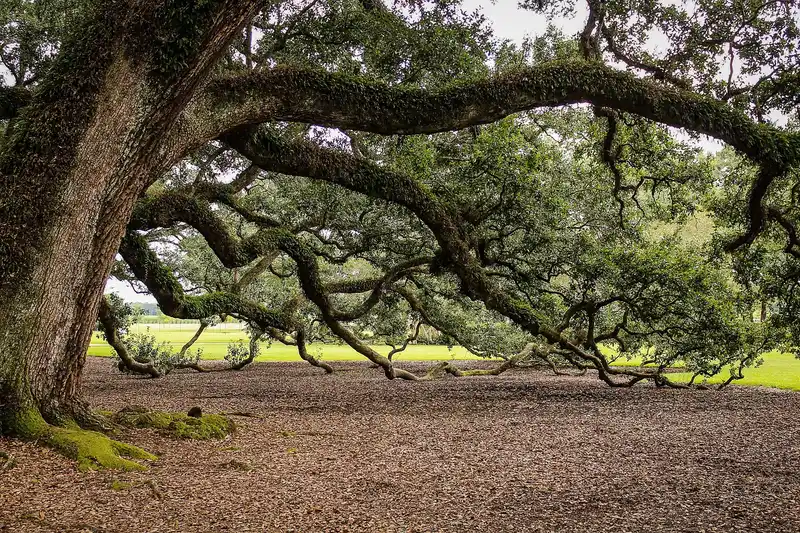
Live Oak is the better choice when the part will face moisture, decay risk, or long service outdoors. Red Oak is the better buy when you need easier milling, broader supply, and lower typical cost. The trade-off is simple: live oak buys durability with labor, while red oak buys convenience with less resistance to wet conditions.
Live Oak, or Quercus virginiana, is the denser and more decay-resistant lumber of the two. Its average dried weight is 63 lbs/ft3, its Janka hardness is 2,680 lbf, and its specific gravity is listed as .80, 1.00. It is rated very good for resistance to decay and is used in cabinetry, furniture, flooring, boatbuilding, barrels, and veneer.
Red Oak, or Quercus rubra, is the more common domestic benchmark. It has open pores in the endgrain, so water can move through it more readily than through live oak. That pore structure makes it a familiar shop hardwood, but it also explains why red oak is less suitable for wet exposure, exterior parts, and boat work.
Live Oak lumber decision table
This table turns the comparison into a buying rule. Use it to match the species to the job instead of judging by name alone.
| Criteria | Live Oak | Red Oak | Project winner |
|---|---|---|---|
| Hardness | Higher dent resistance | Lower than live oak | Live Oak |
| Rot resistance | Very good | Lower natural rot resistance | Live Oak |
| Milling difficulty | Harder to work | Easier to process | Red Oak |
| Drying risk | Higher risk of checks and warp if dried poorly | Lower drying burden than live oak | Red Oak |
| Finishability | Can finish well, but dense grain raises prep demands | Usually easier to sand and finish cleanly | Red Oak |
| Availability | Seldom available commercially | Commonly available | Red Oak |
| Price | Typically higher than most domestic species | Usually lower than live oak | Red Oak |
| Outdoor suitability | Better for exposed service | Limited without strong protection | Live Oak |
Hardness and strength
Live Oak wins on wear resistance because its Janka hardness is 2,680 lbf. That matters for flooring, stair treads, work surfaces, and any part that will see repeated impact. Red Oak remains a useful hardwood, but it gives up hardness and dent resistance to live oak.
Strength alone does not make live oak the default choice. Its high density can increase tool load, and it can punish dull cutters faster than lighter hardwoods. In practice, the stronger species is not always the better shop choice if the part will stay indoors and never face moisture.
Rot resistance and outdoor use
Live Oak is the clear winner for outdoor woodworking because its heartwood has very good decay resistance. That makes it a better candidate for boatbuilding, exterior joinery, and parts that may see intermittent wetting. Red Oak has lower natural rot resistance, so it needs much better protection if you use it outside.
Heartwood versus sapwood matters here. Live oak heartwood is the part that gives the species its durability advantage, while sapwood in any oak is not the part you want exposed for long-term wet service. Red oak can be used outdoors only with careful sealing, drainage, and maintenance, and even then it is not the safer pick for persistent moisture.
Milling and drying behavior
Red oak is generally easier to mill, glue, and finish. Live Oak is harder to work with than other Quercus species, and its density makes every machining step less forgiving. That means more strain on cutters, slower feed rates, and a greater chance of burning if tools are not sharp.
Live oak is also more demanding to dry. Dense wood dries less forgivingly, and poor handling increases the chance of checks, warp, and extra waste. A common first-timer mistake is choosing live oak for a wide tabletop or thick exterior blank, then discovering that extra thickness is not free if the stock moves badly during drying.
Availability and price
Red Oak is easier to source because it is a common domestic hardwood benchmark. Live Oak is seldom available commercially and may only be available from local sawmills within its native range. That supply gap usually pushes live oak pricing higher than most domestic species.
For small-shop buyers, the hidden cost is not only sticker price. Live oak can raise waste factor and machining time per board foot because the material is harder on blades and less forgiving during drying. If you need a clean, predictable bill of materials, red oak usually offers the safer production choice.
Endgrain pore structure and identification
Live oak and red oak separate clearly at the endgrain. Live oak has tyloses abundant in the endgrain, which block vessels and reduce water movement through the wood. Red oak has open pores in the endgrain, which is why it is more permeable and why liquid can travel through it much more easily.
Tyloses are outgrowths or plugs that block the vessels in the heartwood. They matter for water resistance and for oak group identification. If the endgrain looks open and ready to pass liquid, you are likely looking at red oak; if the pores are more closed off, live oak is the better fit.
Common project fit
Interior furniture usually favors Red Oak when the buyer wants easier sourcing, lower cost, and less machining trouble. Live Oak can still work for furniture, but its price and workability make it a deliberate choice rather than the default. If the piece is a tabletop, bench, or cabinet base that will take abuse, live oak can justify itself.
Flooring is a closer call, because both species are hard enough for wear surfaces. Live oak brings better dent resistance, while red oak brings easier processing and wider availability. For most interior floors, red oak is the more practical procurement choice; for high-wear or damp locations, live oak has the stronger performance case.
Suppose you need a 12-foot porch rail and two exposed posts on a coastal property. Live Oak gives you a better margin against moisture and decay, even though the stock may be harder to find and slower to machine. Red Oak would save time upfront, but it raises the risk of failure if the finish gets breached.
Picture a shop order for 3/4-inch interior panel parts, face frames, and a dining table base. Red Oak usually makes more sense because the pieces need clean machining and predictable supply more than maximum decay resistance. Live Oak would only be worth the extra labor if the design will see heavy wear or occasional wet exposure.
📊 Live oak’s average dried weight is 63 lbs/ft3. Source: Wood-database.
Choose Live Oak if… / Choose Red Oak if…
Choose Live Oak if the project will live outdoors, near salt air, or in any place where decay resistance matters more than ease of milling. Choose it for boat parts, exterior joinery, wet-service components, heavy-use flooring, and small parts that need high dent resistance. Choose it when you can accept extra milling time and harder procurement.
Choose Red Oak if the part is indoors, the budget matters, and you want easier sourcing and processing. Choose it for cabinetry, standard furniture, millwork, and flooring where wet exposure is controlled. Choose it when you need predictable supply, lower waste, and a species that is simpler to machine, sand, and finish.


Frequently asked questions
Is live oak stronger than red oak for lumber?
For wear resistance and density-related performance, live oak has the edge. Its Janka hardness is 2,680 lbf, which is very high and signals strong dent resistance. That does not make it the best choice for every job, because higher density also makes it harder to mill, dry, and fasten cleanly.
Which oak is better for outdoor woodworking, live oak or red oak?
Live Oak is better for outdoor woodworking because it has very good decay resistance and a pore structure that limits water movement. Red Oak can be used only with caution and strong protection. If the part will see rain, splash, or repeated humidity, live oak is the safer lumber choice.
Does red oak rot faster than live oak?
Yes. Red Oak has lower natural rot resistance than live oak, and its open pores make it easier for moisture to move through the wood. That does not mean every red oak part fails quickly, but it does mean the species is a weaker choice for exterior or damp service.
Is live oak harder to mill than red oak?
Yes. Live Oak is harder to work than other Quercus species, and its high density adds tool wear and machining resistance. Red oak is generally easier to machine, glue, and finish. For a small shop, that difference can matter as much as strength when you are pricing a job.
What are the Janka hardness values for live oak and red oak?
Live oak’s Janka hardness is 2,680 lbf. Red Oak is lower and is commonly treated as the easier-to-work benchmark of the two in domestic hardwood buying. If the project depends on dent resistance, live oak has the stronger numerical case.
Can red oak be used for boatbuilding or exterior projects?
Only with strong caution, and usually not as the first choice. Red Oak’s open pores and lower natural rot resistance make it a poor fit for wet service compared with live oak. If you must use it, the part should be well sealed and kept out of persistent moisture.
Why is live oak so difficult to dry and work?
Its density is the main reason. Live oak’s average dried weight is 63 lbs/ft3, and its specific gravity is listed as .80, 1.00, both signs of a heavy, dense wood. Dense oak dries less forgivingly and tends to ask more from cutters, clamps, and finishing prep.
Which oak is easier to find and buy as lumber?
Red Oak is much easier to find in the market. Live Oak is seldom available commercially and may only be available from local sawmills within its native range. For a project where supply matters more than decay resistance, red oak is usually the practical purchase.
Sponsored / affiliate links. As an Amazon Associate I earn from qualifying purchases. I may earn additional commission from eligible campaigns.