Best 5 Table Saws for Beginners (2026): research shows
The best table saw for beginners is a compact jobsite saw with a rack-and-pinion fence, a 24 to 32 inch rip capacity, and a sharp 10-inch blade. Choose a contractor saw only if you will regularly break down sheet goods and need the extra width and support. Pick the wrong size or fence, and you spend more while getting a saw that feels hard to control. This guide matches saw type, rip capacity, and safety features to your shop and first projects.
This guide is part of our Woodworking joinery and cutting techniques series.
Quick picks
- Best default for most beginners: SKIL 15 Amp 10-Inch Jobsite Table Saw with Folding Stand. It pairs a 10-inch blade, 15-amp power, and a rack-and-pinion fence with portable storage.
- Best for the smallest spaces: A benchtop-style 8.25-inch saw such as the Craftsman 8.25-inch portable option. It saves space, but it gives up cutting depth and usually some rip capacity.
- Best for more plywood work: A 10-inch jobsite saw with a 32-inch-class rip capacity, such as the DEWALT DWE7491RS or Delta 36-6023.
📊 Bob Vila says beginner saw selection centered on powerful 15-amp models. Source: Bobvila.
Quick comparison
| Product | Badge | Best for | Price | ||
|---|---|---|---|---|---|
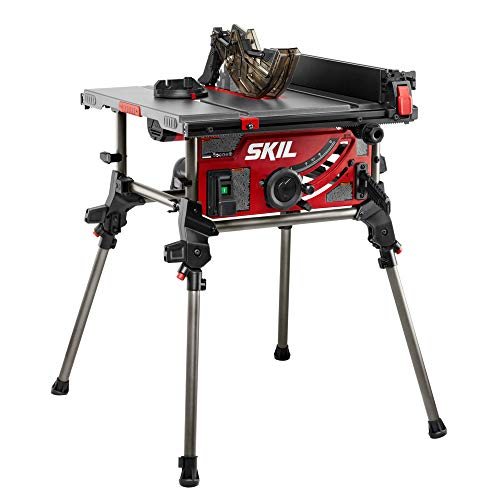 |
SKIL 15 Amp 10-Inch Jobsite Table Saw with FoldingSkil | Budget pick | 10-inch · 15 Amp · Folding stand | $299.00
Price as of 11 Oct 2026
|
View |
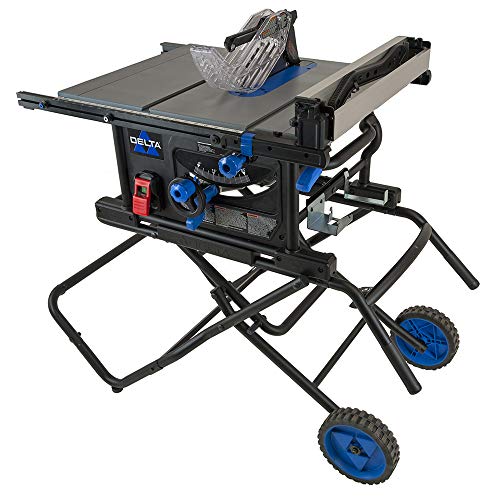 |
Delta 36-6023 10 Inch Table Saw with 32.5 Inch Rip CapacityDelta | Also great | 10-inch · 32.5-inch rip capacity · 15 Amp | $499.99
Price as of 11 Oct 2026
|
View |
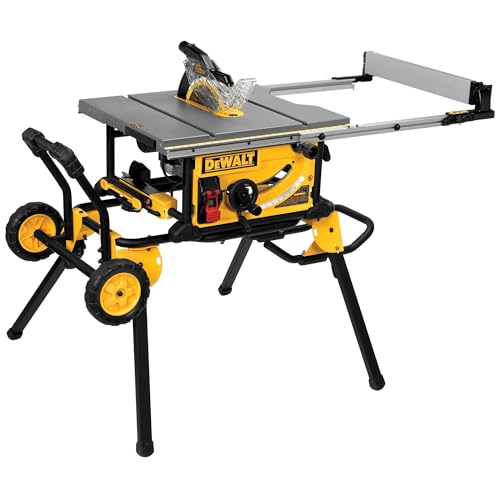 |
DEWALT Table Saw 10 Inch with Foldable Rolling Table SawDEWALT | Our pick | 10-inch · 4800 RPM · Rolling stand | $599.00
Price as of 11 Oct 2026
|
View |
 |
BOSCH GTS15-10 10 Inch Portable Jobsite Table Saw with RiseBosch | Upgrade pick | 10-inch · Portable · Wheeled stand | $649.00
Price as of 11 Oct 2026
|
View |
This comparison helps separate saw shape from the details that affect your first cuts. The numbers that matter most for beginners are blade diameter, rip capacity, cutting depth, fence design, and whether the base feels stable enough to set up without fuss.
How we chose these beginner table saws
The shortlist focuses on beginner-friendly details that change setup and cut quality, not spec-sheet clutter. That means portable storage, a stable base, a fence that is easy to set square, and enough rip capacity for common first projects.
Bob Vila’s beginner picks also point toward 15-amp models and saws that store well in small spaces. That fits the actual needs of most first-time buyers better than oversized cabinet saws or feature-heavy machines meant for full-time shops.
We also weighed blade diameter, cutting depth, and whether the saw type fits the workspace. A saw can look strong on paper and still frustrate you if it is hard to move, hard to align, or too small for plywood rips.
 As an Amazon Associate we earn from qualifying purchases. Prices and availability are accurate as of the date shown and are subject to change.
SKIL 15 Amp 10-Inch Jobsite Table Saw with Folding Stand: best for most beginners
This is a safe default for many new woodworkers because it is presented as a strong beginner pick. It gives you a 10-inch blade, a cut depth around 3.5 inches, a rip capacity in the mid-20-inch range, and a folding stand, which fits common first projects and small workshops.
The rack-and-pinion fence is the key feature here. It makes side-to-side adjustment easier, supports repeatable rip cuts, and reduces the odds of fighting a fence that drifts while you lock it down.
The main drawback is simple: a 25.5-inch rip capacity is fine for many beginner tasks, but it is not the best choice if you expect to break down full sheet goods often. If wider plywood rips are part of your regular work, move up to a larger-capacity jobsite saw.
As an Amazon Associate we earn from qualifying purchases. Prices and availability are accurate as of the date shown and are subject to change.
Delta 36-6023 10 Inch Table Saw: best for more plywood work
This saw suits a beginner who already knows that wider sheet goods are part of the plan. It has a 10-inch blade, a 15-amp motor, and a rip capacity in the low 30-inch range, which gives you more room for cabinet parts, shelving, and plywood work than a smaller beginner saw.
The durable rack-and-pinion fence rails are the main plus. That style of fence is easier to set accurately than a fussy sliding fence, and repeatable cuts matter fast when you are making several parts to the same width.
The drawback is cost and size. It is harder to justify if your first projects are small boxes, shop fixtures, or narrow boards, because the extra rip capacity may sit unused while taking up more floor space.
As an Amazon Associate we earn from qualifying purchases. Prices and availability are accurate as of the date shown and are subject to change.
DEWALT Table Saw 10 Inch with Foldable Rolling Table Saw Stand, 15 Amp, 4800 RPM, 32-1/2-Inch Rip Capacity (DWE7491RS): best for frequent sheet goods
This is a better fit if your beginner projects quickly move into plywood panels and wider stock. A 10-inch model with a larger rip capacity and a rack-and-pinion fence system can be helpful for repeatable cuts.
Its onboard storage for accessories and cord also matters for beginners, because missing push sticks, wrenches, and guards slow setup and can lead to sloppy habits. The rolling stand helps with storage and transport, but the saw is still a larger commitment than a compact benchtop model.
The drawback is clear: this is a premium-priced choice for a first saw. If your workshop is tiny or your projects stay small, you may pay for capacity you will not use yet.
As an Amazon Associate we earn from qualifying purchases. Prices and availability are accurate as of the date shown and are subject to change.
BOSCH GTS15-10 10 Inch Portable Jobsite Table Saw with Rise Wheeled Stand: best for moving the saw often
This one fits a beginner who needs a portable jobsite saw with stronger setup convenience. The rack-and-pinion rip fence with index pins helps with alignment, and the wheeled stand makes storage and repositioning easier in a garage that shares space with cars or other tools.
It also includes a convenience brake that stops the blade quickly and soft-start circuitry that minimizes circuit tripping. Those are useful beginner features because they make startup feel less abrupt and reduce the chance that the saw trips a marginal circuit while cutting.
The drawback is price. At this level, you are paying more for mobility and convenience than for a bigger jump in beginner cut quality, so it only makes sense if the stand and moving system solve a real storage problem.
What is the best table saw for beginners?
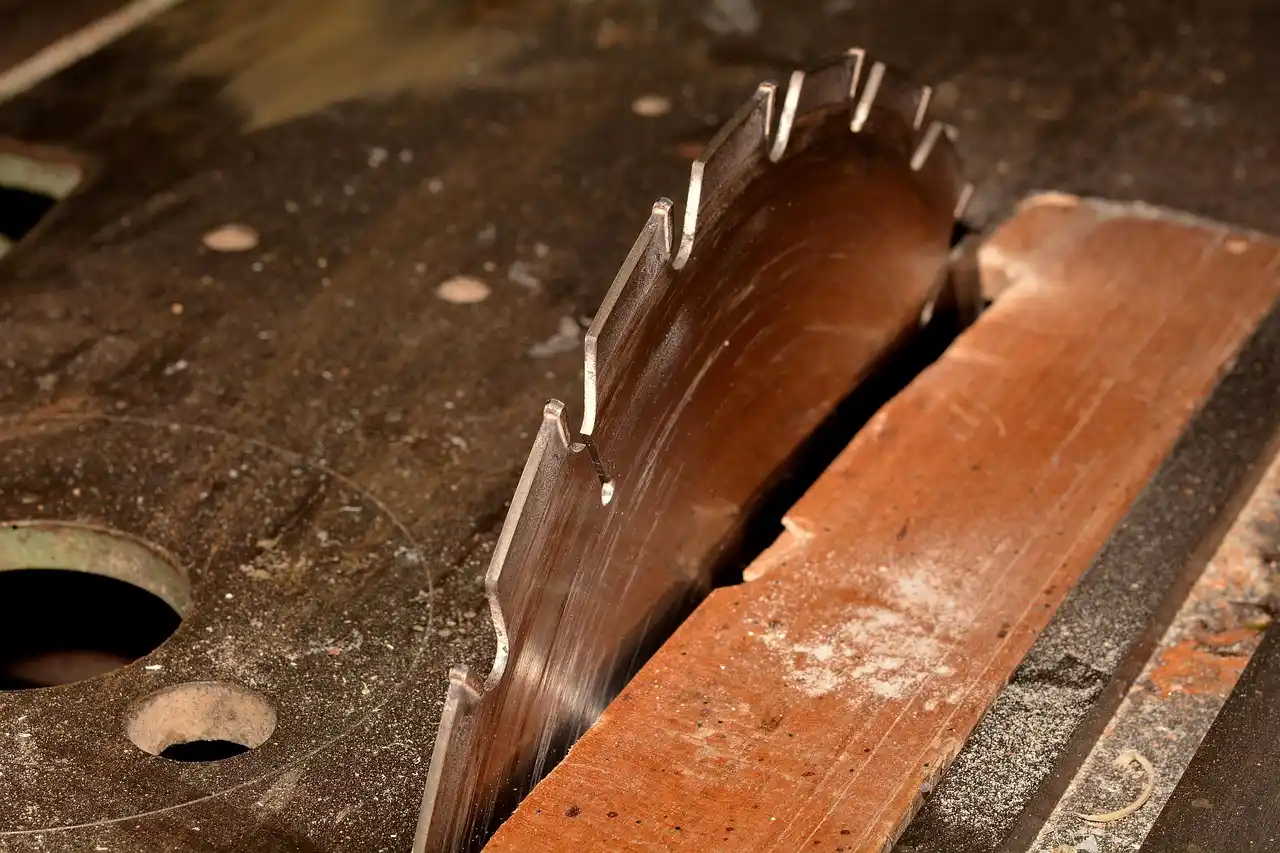
The best table saw for beginners is usually a 10-inch jobsite saw with a rack-and-pinion fence, 15-amp power, and at least about 24 inches of rip capacity. That combination handles common first cuts, stores more easily than a stationary saw, and gives you enough control to learn safely.
The SKIL 10-Inch Jobsite Table Saw is the cleanest default from the models here. It hits the beginner sweet spot: enough capacity for narrow cabinetry parts, enough depth for common lumber, and a folding stand that makes storage less painful.
Why this default works
Most beginners cut narrow boards, shelf parts, and the occasional plywood panel, not full-time cabinet stock. A compact jobsite saw fits that pattern better than a large contractor saw, and a 15-amp motor is the standard beginner power level for that reason.
Where beginners go wrong
A common first-timer mistake is buying a saw for a project list they do not actually have yet. If your real work is picture frames, shop jigs, and 1x stock, a giant rip capacity does not help much. If you need 24 to 32 inches of rip space, though, small benchtop saws can feel cramped fast.
What is a good table saw for beginners?
A good table saw for beginners is stable, easy to align, and large enough for the first few projects without being hard to store. In practice, that means a sturdy base, decent guarding, a fence that locks predictably, and a blade size that matches the material you plan to cut.
Good beginner saws are not the same as the most powerful saws. They are the saws that reduce setup mistakes and let you make the same cut twice without a lot of correction.
What rip capacity do beginners actually need?
Beginners usually need a rip capacity in roughly the 24 to 32 inch range. That covers many shelves, face-frame parts, and smaller plywood rips while still fitting into a garage or shared workspace. Lower capacities can work for trim and narrow boards, but they limit sheet goods quickly.
Rip capacity is measured in inches from the blade to the fence at its maximum setting. If you plan to cut plywood, a larger rip capacity matters because it gives you room to support the panel and keep the fence setting accurate.
Rip capacity by first projects
- Under 24 inches: Fine for narrow boards, jigs, and small box parts.
- 24 to 32 inches: Better for most beginner furniture parts and many plywood strips.
- Over 32 inches: Useful if full sheet-goods work is on your near-term list.
Is a 10-inch table saw better for beginners than an 8.25-inch saw?
Usually yes, because a 10-inch saw gives you more cutting depth and better compatibility with common beginner tasks like 2x material. An 8.25-inch portable benchtop saw saves space, but it usually gives up cutting depth and some rip capacity, so it is better for very tight areas.
Bob Vila’s beginner list includes a Craftsman 8.25-inch portable benchtop saw and a DeWalt 8.25-inch portable jobsite saw, which shows that the smaller blade can still work for beginners. The tradeoff is that a 10-inch blade diameter gives you more room for thicker stock and broader use.
Cutting depth explained
Cutting depth is the maximum board thickness the saw can handle, and it depends on blade diameter. The SKIL beginner saw cuts to a 3.5-inch depth, while the DeWalt beginner saw is listed at 2.56 inches. That difference matters when you move from thin sheet goods to thicker lumber.
What is a 10-inch jobsite table saw?
A 10-inch jobsite table saw is the standard portable saw size for many beginner woodworkers. It usually uses a 10-inch blade, runs on a 15-amp motor, and folds or rolls for storage, which makes it a practical first saw for a garage, basement, or shared shop.
Bob Vila’s beginner picks also center on powerful 15-amp models and portable storage for small spaces. That is why the format matters as much as the blade size.
Blade diameter and cutting depth
A 10-inch blade diameter gives you more cutting depth than an 8.25-inch blade. For beginners, that means less worry about whether the saw can handle thicker material, and fewer limits when you move from thin project stock to common 2x lumber.
15-amp power and thicker stock
A 15-amp motor is the beginner-friendly standard because it delivers enough power for common household woodworking without pushing you into larger stationary machines. It helps the saw maintain cut quality better in thicker stock, though blade choice still matters a lot.
Portability, foldable legs, and stability
Portable and jobsite saws often use foldable legs or rolling stands. That helps storage footprint, but the base still has to feel stable enough that the saw does not shift during a cut. A flimsy stand is a reason to pass, even if the spec sheet looks good.
What is an 8.25-inch portable benchtop table saw?
An 8.25-inch portable benchtop table saw is a compact saw designed to save space first. It can suit beginners in very small garages or apartments, but it usually trades away cutting depth and rip capacity to get that smaller footprint.
That tradeoff matters most when you move beyond trim and small boards. If your first projects stay modest, the smaller saw can work. If not, a 10-inch jobsite model usually gives you more room to grow.
What you gain in space savings
The main gain is storage. A smaller benchtop saw occupies less floor space and is easier to lift onto a bench or shelf, which matters when the workshop has to share space with a car or seasonal storage.
What you give up
You give up cutting depth and often some rip capacity. That makes thicker stock and wider plywood rips harder, so the saw can become limiting sooner if you take on furniture parts or larger shop projects.
Who should skip this size
If you plan to cut a lot of 2x material, build storage cabinets, or work with sheet goods, skip the smaller blade size. A beginner does not need maximum capacity on day one, but the saw should not block common future cuts either.
What safety features should a beginner table saw have?
A beginner table saw should have a stable base, solid guarding, simple adjustment, and a fence that locks predictably. Those features do not replace safe technique, but they reduce setup errors and help you keep the workpiece under control during common cuts.
Sturdy materials matter because wobble and flex make alignment harder. A dependable stand or base matters because the saw must stay put while you feed stock, especially during narrow rips or long boards.
Features that matter most
- Stable base or stand: Keeps the saw from shifting while you feed stock.
- Guarding: Helps keep hands away from the blade area.
- Easy adjustment: Reduces setup mistakes before the cut starts.
- Rack-and-pinion fence: Makes repeatable rip cuts easier to set.
What table saw features make accuracy easier for beginners?
Accuracy gets easier when the fence moves in a controlled way and stays square after you lock it. A rack-and-pinion fence is the clearest example because it makes small adjustments predictable, which is what beginners need when setting width for repeated cuts.
A rigid base, clear scale markings, and a blade that tracks consistently also help. If any one of those feels sloppy, the saw may still cut wood, but it will be harder to trust the result.
How much does a good table saw cost?
A good beginner table saw usually costs less than a stationary cabinet saw, but the real budget is more than the sticker price. You also need to plan for a better blade, push sticks, and possibly a stand or outfeed support if the saw does not include them.
The products here range from about $299.00 for the SKIL saw to $649.00 for the Bosch portable saw, with other beginner options at $499.99 and $599.00. That spread shows why features and storage needs should guide the budget, not price alone.
Hidden ownership costs
- Blade upgrade: A sharp, better-quality blade often matters more than a minor spec bump.
- Push sticks: Essential for safer narrow cuts.
- Outfeed support: Helpful for long boards and plywood.
- Stand or base: Needed if the saw is benchtop or the included stand is weak.
How to choose the right beginner table saw
Choose the saw by matching workshop size, project type, budget, and safety priorities to the smallest saw that still covers your real cuts. If you only need narrow boards and shop fixtures, a compact saw may be enough. If plywood and 2x lumber are on the list, buy more capacity now.
Beginner table-saw decision matrix
| Workshop size | Project type | Budget level | Safety priority | Minimum blade size | Minimum rip capacity | Best form factor |
|---|---|---|---|---|---|---|
| Very small garage or shared space | Small boxes, trim, narrow boards | Tight | High | 8.25-inch | 24 inches | Portable benchtop |
| One-car garage | General beginner furniture and shelving | Moderate | High | 10-inch | 25 to 32 inches | 10-inch jobsite with folding stand |
| Garage plus regular plywood work | Cabinet parts, panel breakdown, wider shelves | Moderate to higher | High | 10-inch | 32 inches or more | Portable jobsite with rolling stand |
| Dedicated shop space | Frequent sheet goods and larger assemblies | Higher | High | 10-inch | 32 inches or more | Large-capacity jobsite or contractor saw |
Use the matrix like this
Suppose your workshop is a single garage bay and your first projects are shop cabinets and a workbench. A 10-inch jobsite saw with about 25 inches or more of rip capacity makes more sense than a tiny benchtop saw, because you will quickly need wider cuts and better stability.
Say your space is a narrow storage room and you only need a saw for trim, small boxes, and occasional narrow boards. An 8.25-inch benchtop saw may fit the footprint better, but accept the lower cutting depth and plan carefully around stock thickness.
What are the best beginner table saw picks by use case?
If you want the easiest first purchase, buy the SKIL 10-Inch Jobsite Table Saw. If you need the most plywood-friendly capacity in this group, choose the DEWALT DWE7491RS or Delta 36-6023. If storage is the limiting factor, the 8.25-inch Craftsman-style benchtop saw is the compact option.
Best for a tight budget
The SKIL model is the strongest value default here because it delivers the beginner-friendly basics without pushing the budget into premium territory. The main tradeoff is that its 25.5-inch rip capacity may be enough, not generous.
Best for more frequent plywood work
The DEWALT and Delta saws make more sense when you expect to break down sheet goods. Their larger rip capacity is the practical advantage, even though they cost more and take up more storage space.
Best for the smallest workshop
An 8.25-inch portable benchtop saw is the space saver. It is the right answer only when footprint matters more than depth and rip capacity, which is a real tradeoff rather than a minor difference.
Which one should you buy?
Buy a 10-inch jobsite saw if you want one machine that can cover most beginner projects, store in a garage, and handle common lumber sizes. Buy an 8.25-inch benchtop saw only if storage is tight and your projects stay small. Skip any saw that feels unstable or awkward to align.
If you plan to cut plywood more than occasionally, favor the larger rip-capacity jobsite saws. If your budget is tight and your first projects are basic, the SKIL is the cleanest default. If the stand, fence, or base looks flimsy, do not talk yourself into it.
Frequently asked questions
How to use a table saw for beginners?
Start with a square fence setting, the right blade height, and a clear cut path before turning the saw on. Feed the board steadily, keep hands away from the blade line, and use push sticks for narrow cuts. Safe setup matters as much as the cut itself.
Should a beginner buy a jobsite table saw or benchtop table saw?
Buy a jobsite saw if you want better stability, more rip capacity, and a more versatile first machine. Buy a benchtop saw only if storage space is the main constraint and your projects are small enough that lower cutting depth will not get in the way.
Sponsored / affiliate links. As an Amazon Associate I earn from qualifying purchases. I may earn additional commission from eligible campaigns.
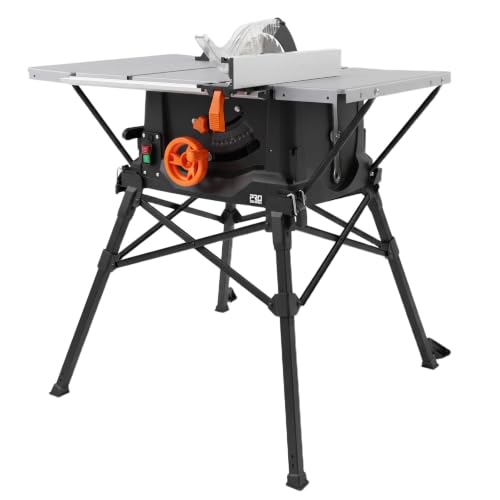 10-Inch Portable Table Saw with Folding Stand, 0-45° Bevel Cut, 15A 5000RPM, Adjustable Blade Height, Multifunctional Benchtop Wood Saw for DIY & Woodworking
 Mini Table Saw, 0°-90° Angle Adjustment, Woodworking Mini Sliding Table Saws Household Multifunctional Bench Saw Kit for Cutting, Grinding, Polishing Jade, Wood, Acrylic