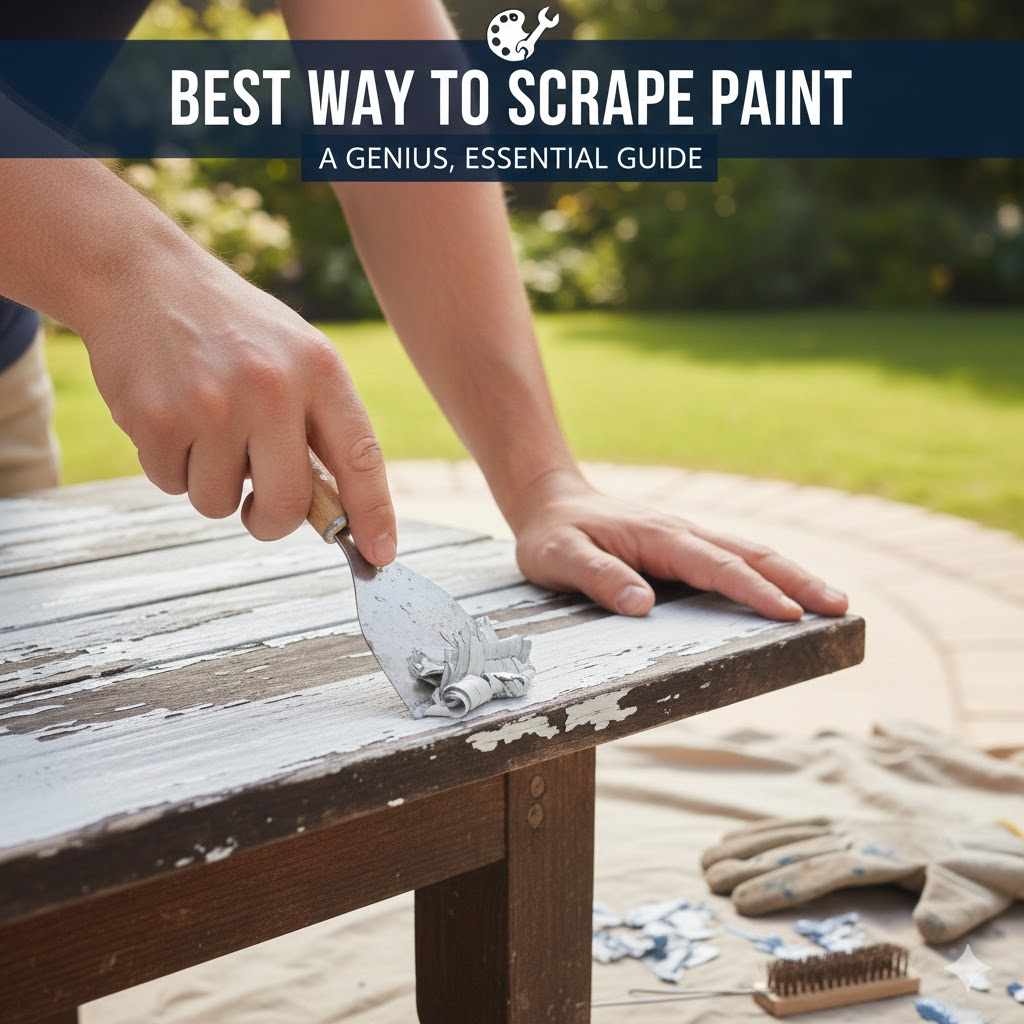
Best Way to Scrape Paint: A Genius, Essential Guide
The best way to scrape paint for most DIY projects is using a combination of a heat gun and a carbide scraper. Applying gentle heat softens the paint, allowing you to easily lift it away with a sharp scraper without damaging the surface. This method is faster than manual scraping and avoids the harsh fumes of chemical strippers.
Hello there! It’s Md Meraj, your friendly guide in the workshop. Are you staring at a piece of furniture with layers of cracking, peeling paint? Maybe it’s a door, a window frame, or a beautiful old chair you found. You know it has potential, but that old finish has to go. Trying to get it off can feel like a real chore. It’s messy, slow, and often frustrating.
Don’t worry, you’re in the right place. Many people get stuck here, but I promise it’s easier than it looks. With the right tools and a little guidance, you can get a clean, smooth surface that’s ready for a fresh new look. Together, we’ll walk through the process step by step. Let’s turn that frustrating task into a rewarding one!
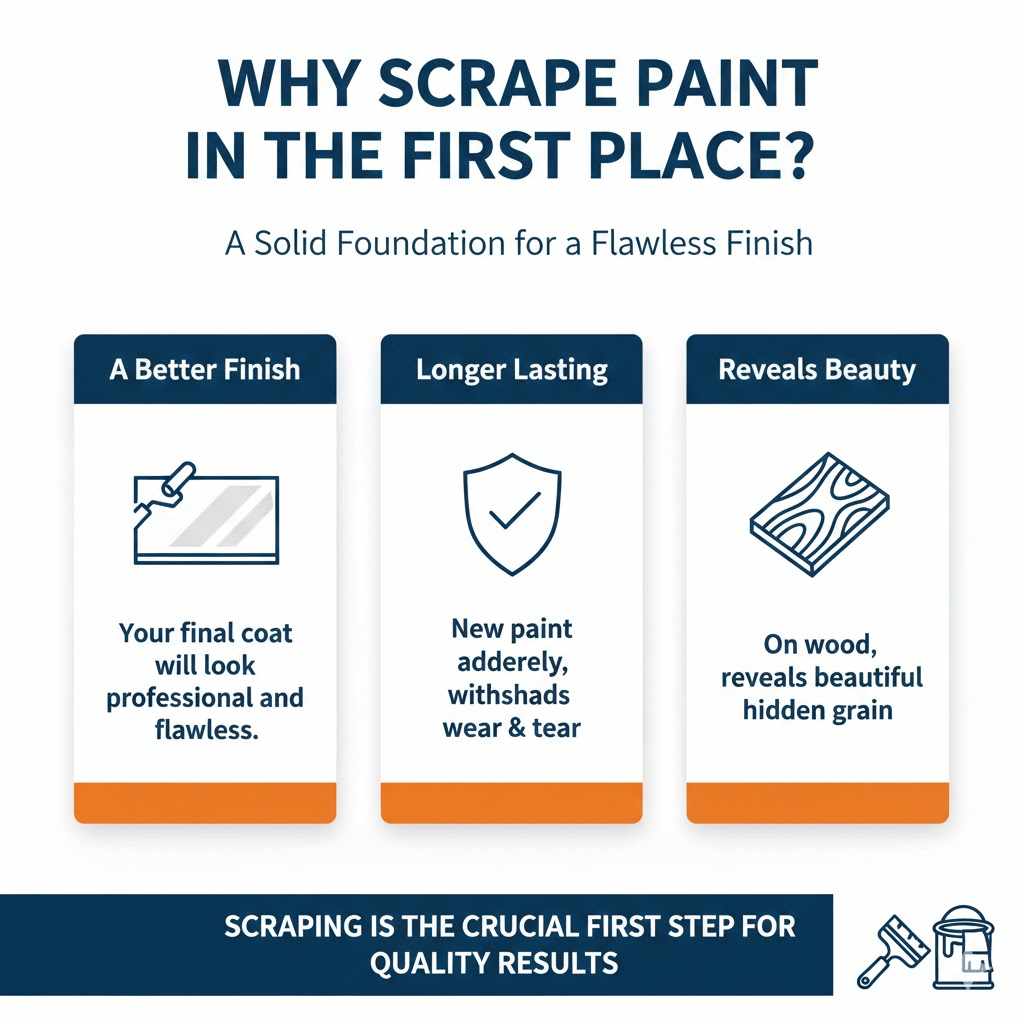
Why Scrape Paint in the First Place?
You might wonder, “Can’t I just paint over the old layer?” It’s a tempting shortcut, but it often leads to disappointment. Painting over peeling or cracking paint is like building a house on a shaky foundation. The new paint won’t stick properly, and soon you’ll have bumps, bubbles, and fresh peeling. It just won’t look good or last long.
Properly scraping old paint ensures your new coat of paint or stain has a solid, smooth surface to bond with. This means:
- A Better Finish: Your final coat will look professional and flawless.
- Longer Lasting: The new paint will adhere properly and withstand wear and tear for years.
- Reveals Beauty: On wood projects, scraping away old paint can reveal beautiful wood grain you didn’t even know was there.
Taking the time to scrape paint correctly is a crucial first step for any refinishing project. It’s the difference between a quick fix and a high-quality result you can be proud of.
Safety First: A Critical Warning About Lead Paint
Before you pick up a single tool, we need to talk about safety. This is the most important part of the job. Many homes built before 1978 used paint containing lead, which is very harmful if inhaled or ingested as dust. You can’t see, taste, or smell lead, so you must test for it.
You can buy a simple, inexpensive lead paint test kit at any hardware store. It only takes a few minutes to use. Simply rub the test swab on a chip of paint and see if it changes color according to the instructions.
If your test is positive for lead, your approach needs to change. Scraping or sanding lead paint creates dangerous dust. I strongly recommend visiting the Environmental Protection Agency (EPA) website for detailed guidance on how to handle lead-based paint safely. For large jobs involving lead paint, it is often best to hire a certified professional.
Even if you don’t have lead paint, always protect yourself. Paint dust and fumes aren’t good for anyone. Your basic safety gear should always include:
- Safety Goggles: To protect your eyes from paint chips and dust.
- Dust Mask or Respirator: A good N95-rated respirator is best to keep dust out of your lungs.
- Gloves: Heavy-duty gloves protect your hands from scrapes and blisters.
Choosing Your Paint Scraping Method
There isn’t just one way to remove paint. The best method depends on the surface, the type of paint, and how many layers you’re dealing with. Let’s look at the most common options for DIYers.
Method 1: Manual Scraping (The Classic)
This is the most straightforward method. It involves using muscle power and a sharp tool to physically remove the paint. It’s great for smaller areas or paint that is already loose and flaky.
- Pros: Inexpensive, requires minimal tools, great control over the process.
- Cons: Can be slow and physically demanding, risks gouging the wood if you’re not careful.
- Best For: Small projects, loose paint, and delicate areas where heat or chemicals could cause damage.
Method 2: Heat Gun
A heat gun looks like a heavy-duty hair dryer. It blows very hot air that softens the paint, causing it to bubble up. Once softened, the paint is incredibly easy to scrape away. This is my go-to method for most projects.
- Pros: Very fast and effective, no chemical fumes, gets through multiple layers at once.
- Cons: Fire risk if not used carefully, can scorch wood if held too close, not for use with lead paint (creates toxic fumes).
- Best For: Large surfaces, multiple layers of latex or oil-based paint on wood.
Method 3: Chemical Strippers
Chemical paint strippers are gels or liquids that you apply to the surface. They work by dissolving the bond between the paint and the surface underneath. After letting the stripper sit for a specified time, you scrape away the softened gunk.
- Pros: Excellent for intricate details and carved surfaces, effective on metal and masonry.
- Cons: Can be messy, involves harsh chemicals and strong fumes, requires good ventilation and protective gear.
- Best For: Detailed furniture, metal railings, or when heat is not an option.
Here’s a quick comparison to help you decide:
| Method | Best For | Speed | Difficulty |
|---|---|---|---|
| Manual Scraping | Small areas, flaky paint | Slow | Easy |
| Heat Gun | Large wood surfaces, thick paint | Fast | Moderate |
| Chemical Stripper | Intricate details, metal surfaces | Moderate | Messy/Complex |
Your Toolkit: Gathering the Right Tools for the Job
Having the right tools makes any job easier. You don’t need a giant professional workshop, just a few key items. Here is your essential checklist:
- Safety Gear: Goggles, N95 dust mask, heavy-duty gloves. (Non-negotiable!)
- Drop Cloths: Canvas or plastic to protect your floors and workspace.
- Paint Scrapers: A good set is a worthy investment. We’ll discuss these more below.
- Heat Gun: (Optional, but highly recommended) A basic model with variable temperature settings is perfect.
- Stiff-bristled Brush: For cleaning off loose paint chips and dust.
- Empty Metal Can: For safely disposing of hot paint scrapings.
- Sandpaper: A variety of grits (like 80, 120, and 220) for smoothing the surface afterward.
- Shop Vacuum: Makes cleanup much faster and more effective.
A Closer Look at Paint Scrapers
Not all scrapers are created equal. Walking down the hardware store aisle can be confusing. Let’s simplify it. For most woodworking and home projects, you’ll want one or two of these:
| Scraper Type | Description | Best Use |
|---|---|---|
| 5-in-1 Tool | A versatile painter’s multi-tool with a stiff scraper edge, a curved edge, a point, and a roller cleaner. | An excellent all-around tool for general scraping and prying. A must-have for any DIYer. |
| Carbide Scraper | Features a super-hard, long-lasting tungsten carbide blade that stays sharp much longer than steel. It’s often a “pull” scraper. | The absolute best for removing stubborn paint, especially after using a heat gun. Its sharpness makes the job faster. |
| Putty Knife | A thin, flexible blade. Not ideal for heavy-duty scraping, but useful for certain tasks. | Applying wood filler, or gentle scraping on very delicate surfaces where a stiff scraper might cause damage. |
My advice? Start with a good 5-in-1 tool and a 2-inch carbide scraper. This combination will handle over 90% of the paint scraping jobs you’ll ever face.
Step-by-Step: The Best Way to Scrape Paint with a Heat Gun
Ready to get started? We’re going to focus on my favorite method: combining a heat gun with a carbide scraper. It gives you professional results without the frustration. Follow these steps carefully, and you’ll do great.
Step 1: Prepare Your Workspace
A clean and organized workspace is a safe workspace. Lay down your drop cloths to cover the floor completely. If you’re working indoors, open windows for ventilation and cover any furniture you can’t move. Remove any hardware, like knobs or hinges, from the piece you’re working on.
Step 2: Put on Your Safety Gear
This is your uniform for the job. Put on your safety goggles, your N95 dust mask, and your gloves. Don’t skip this, even for a “quick” job. Your health is worth the extra 30 seconds it takes to gear up.
Step 3: Apply Gentle Heat
Turn on your heat gun, starting with a medium heat setting. Hold it about 6-8 inches away from the surface. Keep the gun moving continuously in a slow, sweeping motion, just like you’re spray painting. Never let it sit in one spot, as this can scorch the wood or even start a fire.
You’ll see the paint start to soften, wrinkle, and bubble in just a few seconds. That’s your signal that it’s ready!
Step 4: Scrape with the Grain
As soon as the paint bubbles, put down the heat gun (in a safe spot where it won’t touch anything) and pick up your carbide scraper. Hold the scraper at a low angle (around 30 degrees) to the surface. Push or pull the scraper firmly but gently in the same direction as the wood grain. The warm, soft paint should peel away in long, satisfying strips.
The key is to let the heat and the sharp tool do the work. Don’t force it or press too hard, as this can gouge the wood. Work in small, manageable sections—heat an area, then scrape it, then move to the next section.
Step 5: Tackle Corners and Details
For tricky spots like corners, curves, or detailed moldings, use the pointed corner of your 5-in-1 tool or a specialized contour scraper. Apply heat carefully and use light pressure to ease the paint out of these tight areas.
Step 6: Clean As You Go
Scrape the hot, gummy paint peels directly into a metal can. Don’t let them pile up on your drop cloth, as they can be a fire hazard while they are still hot. Keeping your area tidy will also prevent you from tracking paint bits around.
Step 7: Sand for a Silky-Smooth Finish
Once you’ve scraped all the paint off, there will likely be some small, stubborn bits left. Don’t worry, that’s normal. Let the surface cool completely. Then, it’s time to sand.
- Start with a medium-grit sandpaper (like 120-grit) to remove any remaining paint residue and smooth out minor imperfections.
- Always sand with the grain of the wood. Going against the grain will leave visible scratches.
- After the initial sanding, wipe the surface clean with a cloth.
- Finish with a fine-grit sandpaper (like 220-grit) for a beautifully smooth surface that’s perfectly prepped for paint or stain.
Step 8: Final Cleanup
Use a shop vacuum with a brush attachment to thoroughly clean all the dust and debris from your project and your workspace. Carefully fold up your drop cloths to contain the mess. Now, stand back and admire your hard work! You have a perfectly clean canvas ready for a fresh start.
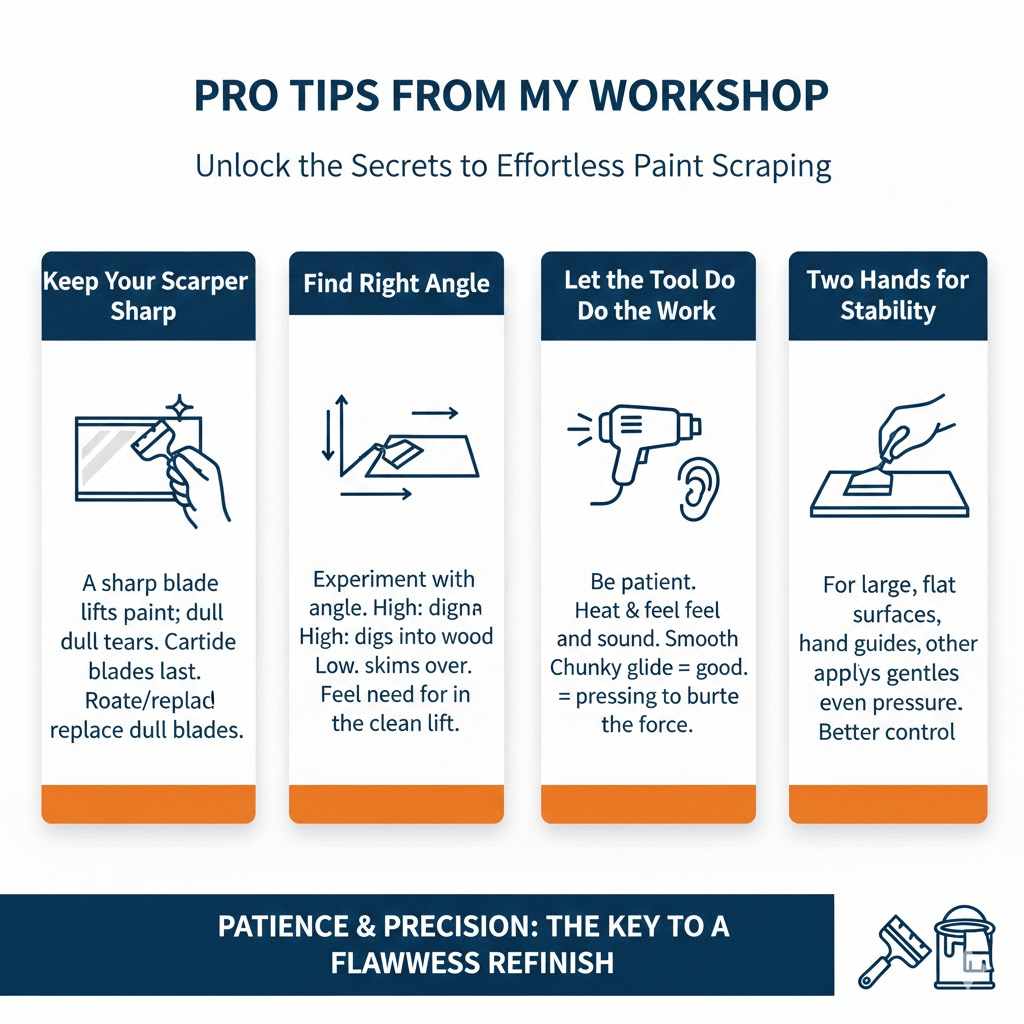
Pro Tips from My Workshop
Over the years, I’ve picked up a few tricks that make paint scraping much smoother. Here are some of my favorites:
- Keep Your Scraper Sharp: A sharp blade is your best friend. A dull scraper tears paint instead of lifting it and forces you to use more pressure, which can damage the wood. Carbide blades stay sharp for a long time, but you can rotate or replace them when they get dull.
- Find the Right Angle: Experiment with the angle of your scraper. Too high, and you’ll dig into the wood. Too low, and you’ll skim over the paint. You’ll feel when you hit that sweet spot where the paint comes off cleanly.
- Let the Tool Do the Work: This applies to both the heat gun and the scraper. Don’t rush or use brute force. A little heat and a sharp blade are a powerful combination. Be patient.
- Listen to the Wood: Pay attention to how the scraper feels and sounds. A smooth, gliding sound is good. A chunky, tearing sound means you might be pressing too hard or going against the grain.
- Two Hands for Stability: When scraping larger, flat surfaces, use one hand to guide the scraper and the other to apply gentle, even pressure. This gives you much better control.
Frequently Asked Questions (FAQ)
1. Can I just paint over old, peeling paint?
I really don’t recommend it. Your new paint needs a stable surface to stick to. Painting over flaky paint is a short-term fix that will quickly lead to bubbling, peeling, and a finish you won’t be happy with. Proper preparation is the key to a lasting result.
2. How do I know if I have lead paint?
The only way to be certain is to test it. If your home was built before 1978, you should assume it might have lead paint. You can buy a lead test kit from any hardware store. It’s an easy, instant test that gives you peace of mind and helps you proceed safely.
3. What do I do if I accidentally gouge the wood while scraping?
Don’t panic! It happens to everyone. If the gouge is small, it will often disappear after you sand the surface. For deeper marks, you can use a small amount of wood filler. Apply the filler, let it dry completely, and then sand it smooth so it’s flush with the surrounding wood.
4. Is a heat gun safe to use indoors?
A heat gun is safer than chemical strippers indoors because it doesn’t produce toxic fumes (unless you are heating lead paint). However, you must be extremely cautious about the fire risk. Always work in a well-ventilated area, keep a fire extinguisher nearby, and never leave the heat gun unattended or pointed at flammable materials.
5. Do I need to remove every single speck of paint?
It depends on your final finish. If you plan to repaint with a solid color, especially a dark one, you can often get away with a few tiny, well-sanded specks of old paint in the wood grain. If you plan to apply a light-colored paint, a stain, or a clear finish, you need to be much more thorough and remove all traces of the old paint for an even result.
6. How long does paint scraping take?
The time it takes depends on the size of the project, the number of paint layers, and the method you use. A small project like a chair might take a few hours. A large project like a door could take a full day. Using a heat gun will significantly speed up the process compared to manual scraping.
Your Fresh Start Awaits
There you have it—a complete guide to scraping paint the right way. It might seem like a lot of steps, but once you get into a rhythm, it becomes a simple and even satisfying process. You’re not just removing an old finish; you’re preparing a surface for a beautiful new beginning.
Remember to put safety first, choose the right tools for your project, and be patient with the process. By combining a bit of heat with a sharp scraper, you can tackle almost any paint removal job with confidence. You’ve got this! Now go ahead and give that old piece a new life. Happy woodworking!