What Paint Can You Use Over Oil-Based Paint? (Primer Guide)
Latex paint won’t grip cured oil-based paint on its own – the hard, glossy film needs a bonding primer like KILZ Adhesion first, or the new coat peels within months. Alkyd, epoxy, and urethane paints bond directly to oil-based paint without a special primer, but each trades off dry time, odor, and flexibility. This guide covers which paint types actually work, how to prep the surface, and which primer to buy when latex is the plan.
Why Paint Won’t Stick to Oil-Based Paint Without the Right Prep
Cured oil-based paint dries into a hard, low-porosity film with almost no texture for a new coat to grip. Latex and acrylic paints are water-based and shrink slightly as they dry, so without a bonding layer between the two coats, the new paint pulls away from the slick oil film – often within the first year of everyday use.
The other three types behave differently: their solvents soften and etch into the old oil film as they cure, which is why alkyd, epoxy, and urethane bond directly without a dedicated bonding primer. That difference is the entire decision tree for this project – if you want to keep using an oil-compatible paint, skip ahead to the paint options below. If you want to switch to latex (the more common choice today, since most retailers have phased out oil-based interior paint), a bonding primer is not optional.
Best Bonding Primer Pick
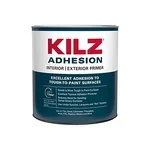 |
KILZ Adhesion Primer, Interior/Exterior, 1 Quart – $36.05 This is the bonding primer to reach for when the plan is latex over an old oil-based coat – it’s formulated specifically for glossy, hard-to-paint surfaces like cured oil paint.
|
How to Prep an Oil-Painted Surface Before Repainting
Good prep is what actually prevents peeling – the paint you choose matters less than whether the surface was deglossed and cleaned first. Follow these steps in order:
- Clean the surface: Wash with a degreasing cleaner (TSP substitute or dish soap and water) to remove grease, dust, and cooking residue, then rinse and let it dry fully.
- Scuff-sand to remove the gloss: Sand with 100-150 grit sandpaper until the sheen disappears and the surface feels slightly rough to the touch – this step matters even when using a bonding primer.
- Wipe with a tack cloth: Remove all sanding dust before priming; dust trapped under primer causes a gritty, weak bond.
- Spot-prime any bare or repaired areas: Apply bonding primer to bare wood, filled dents, or exposed old finish, and let it dry completely (about an hour for most bonding primers).
- Apply the topcoat in thin, even coats: Two thin coats of the finish paint outperform one thick coat, which is more prone to sagging and slow, uneven curing.
This short video shows the single most common mistake DIY painters make on this exact job, and a quick way to tell whether an old coat is oil-based or latex before you start:
Best Paint Options for Covering Oil-Based Paint
Four paint types work over oil-based paint, but only one of them (latex) needs the bonding primer above. The table below compares dry time, odor, and what each is best suited for.
| Paint Type | Needs Bonding Primer? | Dry to Recoat | Best For |
|---|---|---|---|
| Latex / Acrylic | Yes – required | 2-4 hours | Walls, trim, low-odor indoor projects |
| Alkyd (oil-modified) | No | 16-24 hours | High-traffic trim and doors needing a hard finish |
| Epoxy | No | 24-72 hours (full cure up to 7 days) | Workbenches, garage floors, heavy wear surfaces |
| Urethane | No | 6-12 hours | Cabinets and furniture needing chip resistance |
Latex or Acrylic Paint (With Bonding Primer)
Latex paint is a water-based coating that dries quickly and cleans up with soap and water, but it needs a bonding primer over oil-based paint because it can’t chemically etch into the old film the way solvent-based paints do. For the complete latex-specific prep sequence, hardware, and drawer/hinge tips if you’re working on cabinets or furniture, see our full guide to painting latex over oil-based paint.
Alkyd (Oil-Based) Paint
Alkyd paint is a synthetic-resin paint that behaves like traditional oil paint but dries a bit faster and with less yellowing over time. Because it shares the same solvent-based chemistry as the old coat, it bonds directly to cured oil-based paint after a scuff-sand – no bonding primer needed. The tradeoff is stronger fumes during application and a much longer recoat window than latex.
Epoxy Coatings
Epoxy is a two-part coating (resin plus hardener) that cures into an extremely hard, chemical-resistant surface. It bonds well to old oil-based paint after deglossing, which makes it a common choice for workbenches and shop floors rather than furniture or trim, since it’s overkill – and harder to repair – for surfaces that just need a fresh look.
Urethane Paint
Urethane paint combines some of latex’s low odor with alkyd-like hardness and chip resistance, which is why it shows up often on kitchen cabinets. It adheres to properly sanded oil-based paint without a bonding primer, though many urethane product lines still recommend a compatible primer coat for the smoothest, most even finish – check the specific product’s label rather than assuming.
Common Problems When Painting Over Oil-Based Paint
Peeling and Cracking
Peeling almost always traces back to one of two causes: the gloss wasn’t sanded off before priming, or the new coat went on before the primer had fully dried. If peeling shows up within weeks rather than years, strip the affected area back to bare surface, re-sand, and re-prime – painting over active peeling only delays the failure.
📊 A bonding primer step is the difference most professional painters point to between a repaint that lasts and one that peels within a year over glossy oil-based surfaces. – Source: BEHR PRO, professional painting guidance, 2026
Yellowing and Stains Bleeding Through
Old oil-based paint can yellow with age, and stains, water marks, or wood tannins underneath can bleed through a new latex topcoat if they aren’t sealed first. A stain-blocking primer (a separate product from a bonding primer, though some are labeled to do both) handles the bleed-through; it won’t fix adhesion on its own, so glossy surfaces may still need the bonding step above as well.
Ventilation and Safety With Solvent-Based Paints
Alkyd, epoxy, and oil-based bonding primers release more VOCs (volatile organic compounds) during application and drying than latex does, which is part of the tradeoff for their direct adhesion to old oil paint. Open windows and run a box fan exhausting outward for the full dry time listed on the can, not just while you’re actively painting – most off-gassing happens in the first 24-72 hours. Wear a respirator rated for organic vapors (not just a dust mask) when working with epoxy or oil-based alkyd paint in an enclosed room, and keep the work area closed off from sleeping areas until the smell clears.
Frequently Asked Questions
Can You Paint Regular Paint Over Oil-Based Paint?
Yes, but only after deglossing the surface and, if you’re switching to latex, applying a bonding primer first. Regular latex paint applied straight onto glossy oil-based paint with no prep is the single most common cause of peeling in the first year.
What Is the Best Paint to Use Over Oil-Based Paint Without Primer?
Three paint types – alkyd, epoxy, and urethane – can go directly over properly sanded oil-based paint without a separate bonding primer, because their solvents etch into the old film as they cure. Latex is the exception – it needs a bonding primer regardless of how well the surface is sanded.
Can You Put Water-Based Paint Over Oil-Based Paint?
Yes, water-based (latex or acrylic) paint can go over oil-based paint, but only with a bonding primer in between. Without it, the water-based coat shrinks as it dries and separates from the slick oil film, leading to peeling.
What Goes Over Oil-Based Paint?
Latex paint with a bonding primer, or alkyd, epoxy, and urethane paint applied directly after deglossing – all four are workable options. Which one to pick depends mostly on odor tolerance, dry time, and how much wear the surface takes.
Do You Need to Sand Before Painting Over Oil-Based Paint?
Yes. Even with a bonding primer, scuff-sanding with 100-150 grit sandpaper to remove the gloss significantly improves adhesion. Skipping sanding and relying on primer alone is a common shortcut that raises the risk of peeling on high-touch surfaces like doors and cabinets.
Can You Paint Oil-Based Paint Over Latex Paint?
Yes, and this direction is actually easier than latex over oil – oil-based and alkyd paints bond well over properly cleaned and lightly sanded latex. A bonding primer isn’t required in this direction, though a light scuff-sand still helps the finish look even.
The paint type matters less than the prep. Degloss the surface, choose a bonding primer if you’re switching to latex, and let every coat cure fully before the next one – that sequence is what actually prevents the peeling and cracking that sends people searching for a fix in the first place. For related coverage questions, see how many square feet 5 gallons of paint covers, or check whether lacquer over latex is workable for a different combination. If you’re removing rather than covering an old coat, our guide to getting acrylic paint off wood covers that instead. Oil-based paint itself is a pigment-in-oil-binder formula that predates modern latex chemistry by centuries, which is part of why so many older homes still have it under later coats.
Sponsored / affiliate links. As an Amazon Associate I earn from qualifying purchases. I may earn additional commission from eligible campaigns.