Birch Vs Poplar: The Ultimate Essential Guide
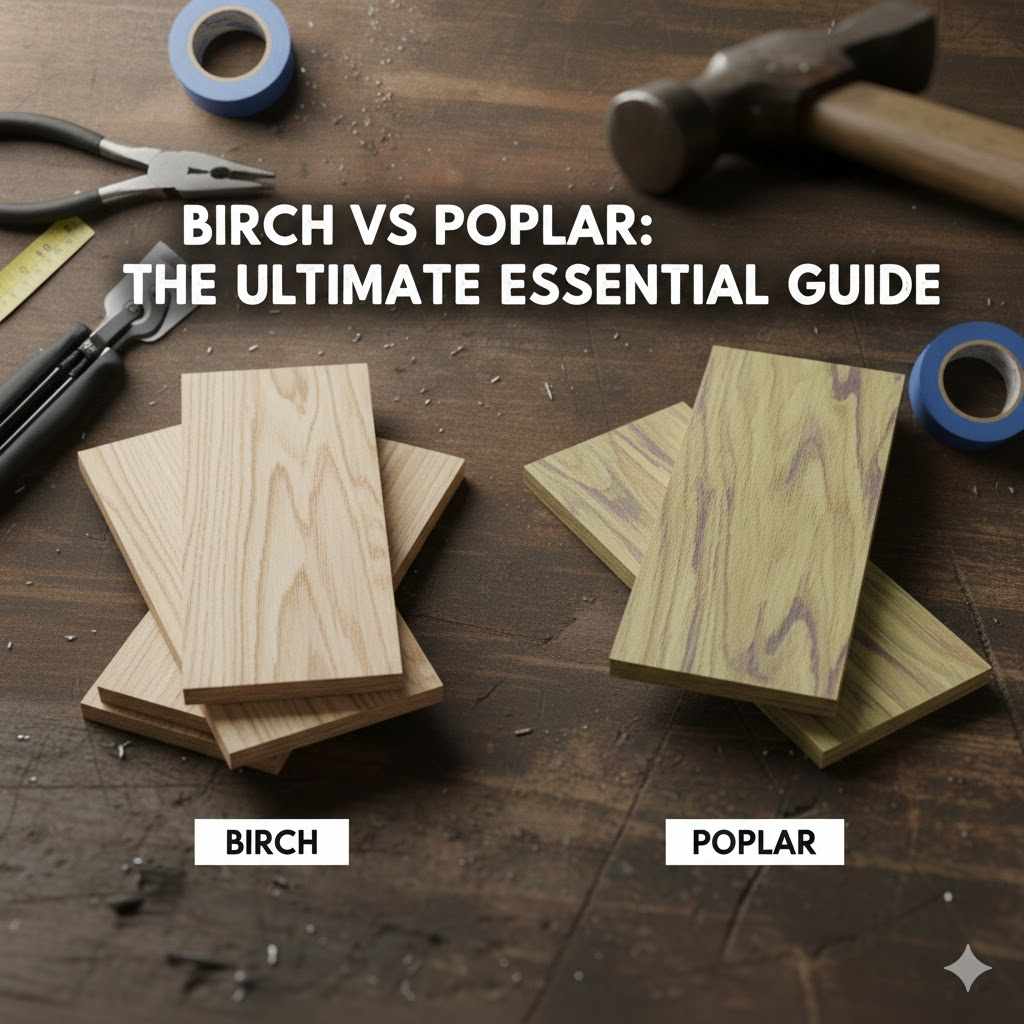
Choosing between birch and poplar comes down to your project’s needs. Birch is a harder, more durable wood ideal for furniture, cabinets, and high-traffic items that need a natural or stained finish. Poplar is a softer, lighter, and more affordable wood that is incredibly easy to work with, making it perfect for painted projects, interior trim, and beginner-friendly creations.
Hello, fellow makers! I’m Md Meraj, and in my workshop, I see one question come up time and time again: “Should I use birch or poplar for my project?” It’s a classic dilemma for a good reason. Both are light-colored, affordable, and readily available hardwoods, making them top choices for DIYers. But choosing the wrong one can lead to frustration.
Don’t worry—picking the right wood isn’t complicated. Think of it like choosing the right tool for the job. Once you understand the key differences between these two amazing woods, you’ll feel confident every time you walk into the lumber aisle. In this guide, I’ll break everything down for you, step by step, so you can choose the perfect wood for your next creation. Let’s get started!
First, Let’s Meet the Woods
Before we put them head-to-head, let’s get properly introduced. Understanding the personality of each wood is the first step to making a smart choice.
What is Birch Wood?
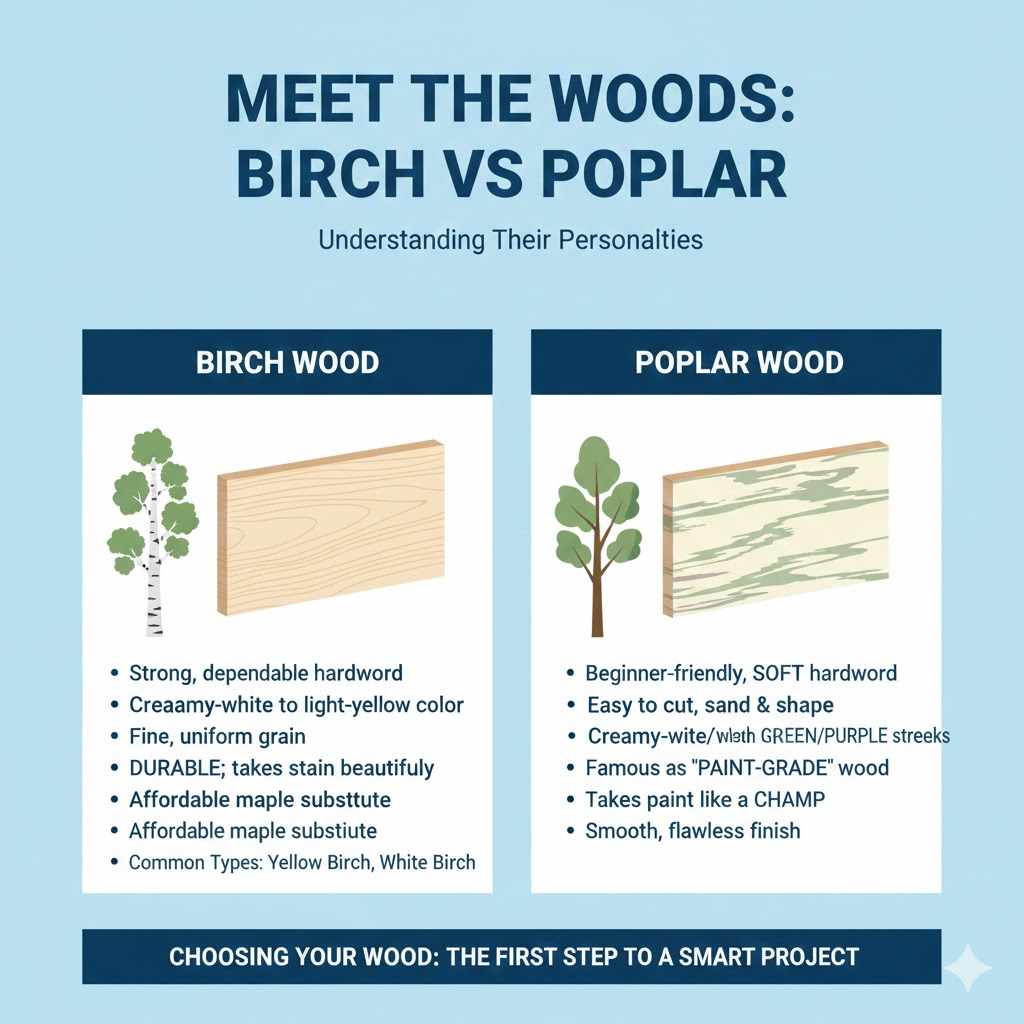
Birch is a strong and dependable hardwood that grows abundantly across North America. When you think of birch, picture the classic, light-colored wood used in Scandinavian furniture. It’s known for its creamy-white to light-yellow sapwood and a fine, uniform grain that’s both beautiful and consistent. Common types you’ll find include Yellow Birch and White Birch. Its claim to fame is its durability and its ability to take a stain beautifully, often used as an affordable substitute for more expensive woods like maple.
What is Poplar Wood?
Poplar is one of the most beginner-friendly woods you can find. While it’s technically a hardwood (meaning it comes from a deciduous tree), it’s one of the softest hardwoods available. This makes it a dream to cut, sand, and shape. Poplar’s color can be a bit of a surprise; it’s usually creamy white or pale yellow, but it often features green, gray, or even purplish mineral streaks. These streaks are why poplar is most famous as a “paint-grade” wood—it takes paint like a champ, providing a smooth and flawless finish.
Birch vs Poplar: A Quick Comparison Table
Sometimes, the easiest way to see the differences is to put them side by side. Here’s a quick-glance table to help you compare the essential features of birch and poplar.
| Feature | Birch | Poplar |
|---|---|---|
| Hardness (Janka Scale) | 1260 lbf (Yellow Birch) – Hard & Durable | 540 lbf – Soft & Easy to Dent |
| Color & Appearance | Creamy white to light yellow; fine, uniform grain. | Creamy white to yellowish-green, often with mineral streaks. |
| Weight & Density | Moderately heavy and dense. | Lightweight and less dense. |
| Workability | Good, but can be tough on blades. Can burn with router bits. | Excellent. Very easy to cut, sand, and shape by hand or with power tools. |
| Finishing | Takes stain and finishes very well. Can mimic more expensive woods. | Exceptional for painting. Can look blotchy when stained. |
| Cost | Moderately priced, usually more expensive than poplar. | Very affordable and widely available. |
| Best Uses | Furniture, cabinetry, shelving, toys, plywood. | Painted projects, trim, moulding, drawer boxes, beginner projects. |
Deep Dive: Let’s Break Down the Differences
Now that you’ve seen the overview, let’s dig a little deeper. Understanding why these woods behave differently will help you master your projects.
Hardness and Durability: Who Wins the Strength Test?
The biggest difference between birch and poplar is their hardness. We measure this using the Janka Hardness Scale, which tests how much force it takes to embed a small steel ball into the wood. The higher the number, the harder the wood.
- Birch: Yellow Birch clocks in at around 1260 lbf on the Janka scale. This makes it a very respectable hardwood, harder than oak in some cases. It resists scratches, dents, and dings well, making it a fantastic choice for items that will see a lot of use, like a tabletop, kitchen cabinets, or a child’s toy.
- Poplar: Poplar is much softer, with a Janka rating of only 540 lbf. You can often leave a dent in poplar just by pressing your fingernail into it. While this makes it incredibly easy to work with, it also means it’s not suitable for high-impact surfaces. It’s best used for projects that won’t get knocked around too much.
As the U.S. Forest Service research shows, a higher Janka rating directly correlates with greater resistance to wear and tear. For anything needing real muscle, birch is your champion.
Appearance: Color, Grain, and Finishing
How your final project looks is just as important as how strong it is. Birch and poplar offer very different aesthetics.
Birch’s Natural Beauty
Birch is known for its clean, bright appearance. Its sapwood is a lovely creamy white, while the heartwood can have a slightly warmer, reddish-brown tint. The grain is typically straight or slightly wavy and very fine, which gives it a smooth, uniform texture. This subtle pattern makes birch an excellent candidate for staining. It can absorb stain evenly (with a pre-stain conditioner) and can be made to look like more expensive woods like cherry or maple.
Poplar’s “Paint-Grade” Personality
Poplar is the ultimate chameleon of the workshop, but it prefers to hide under a coat of paint. Its color ranges from white to a pale yellow, but it’s famous for its mineral streaks, which can be green, gray, brown, or even purple. While some find this variation interesting, it can make staining a challenge. Poplar tends to absorb stain unevenly, resulting in a blotchy look. However, its fine grain and smooth texture make it one of the best woods for a painted finish. Paint adheres beautifully, leaving a crisp, professional look with minimal effort.
Workability: Which is Easier for Beginners?
For anyone new to woodworking, workability is a huge factor. You want a wood that forgives mistakes and is easy to handle.
- Poplar: This is where poplar truly shines. It’s incredibly soft and lightweight, making it a joy to work with. It cuts easily with both hand and power tools, sands down to a smooth finish quickly, and is easy to join with glue, screws, or nails. Its soft nature means less wear and tear on your tools and less muscle needed from you. It’s the perfect wood for practicing new techniques.
- Birch: Birch is still a workable wood, but it puts up more of a fight. Its density means you need sharp blades to get clean cuts and avoid burning, especially when using a router. It sands well but takes a bit more elbow grease. Because it’s harder, it holds screws and joints very securely, which is a big plus for furniture building. It’s a great wood to move up to once you feel comfortable with softer woods.
Cost and Availability: Which is Friendlier on the Wallet?
Budget is always a concern for home projects, and this is another area where these two woods differ significantly.
Poplar is the clear winner on price. It is one of the most affordable and widely available utility hardwoods you can buy. It’s grown domestically and sustainably, which helps keep costs low. You can find it in nearly any home center or lumberyard.
Birch is also widely available but will cost you more. Its price falls in the mid-range for domestic hardwoods—more expensive than poplar, but usually cheaper than oak, maple, or cherry. The extra cost is for its superior hardness, durability, and finishing qualities.
Your Go-To Guide: When to Pick Birch Wood
Choose birch when your project demands strength, durability, and a beautiful natural or stained wood finish. Its resilience makes it perfect for items that will be used daily.
Ideal Projects for Birch:
- Kitchen Cabinets: Birch can withstand the daily wear and tear of a busy kitchen and looks beautiful stained or painted.
- Furniture: It’s a fantastic choice for building sturdy tables, desks, chairs, and bed frames that are meant to last for generations.
- Bookshelves: Birch is strong enough to hold heavy books without sagging over time.
- High-Quality Plywood: Baltic Birch plywood is prized by woodworkers for its stability, strength, and void-free core. It’s perfect for shop jigs, drawer boxes, and modern furniture designs.
- Children’s Toys: Because it’s hard and doesn’t splinter easily, it’s a safe and durable option for toys that will be well-loved.
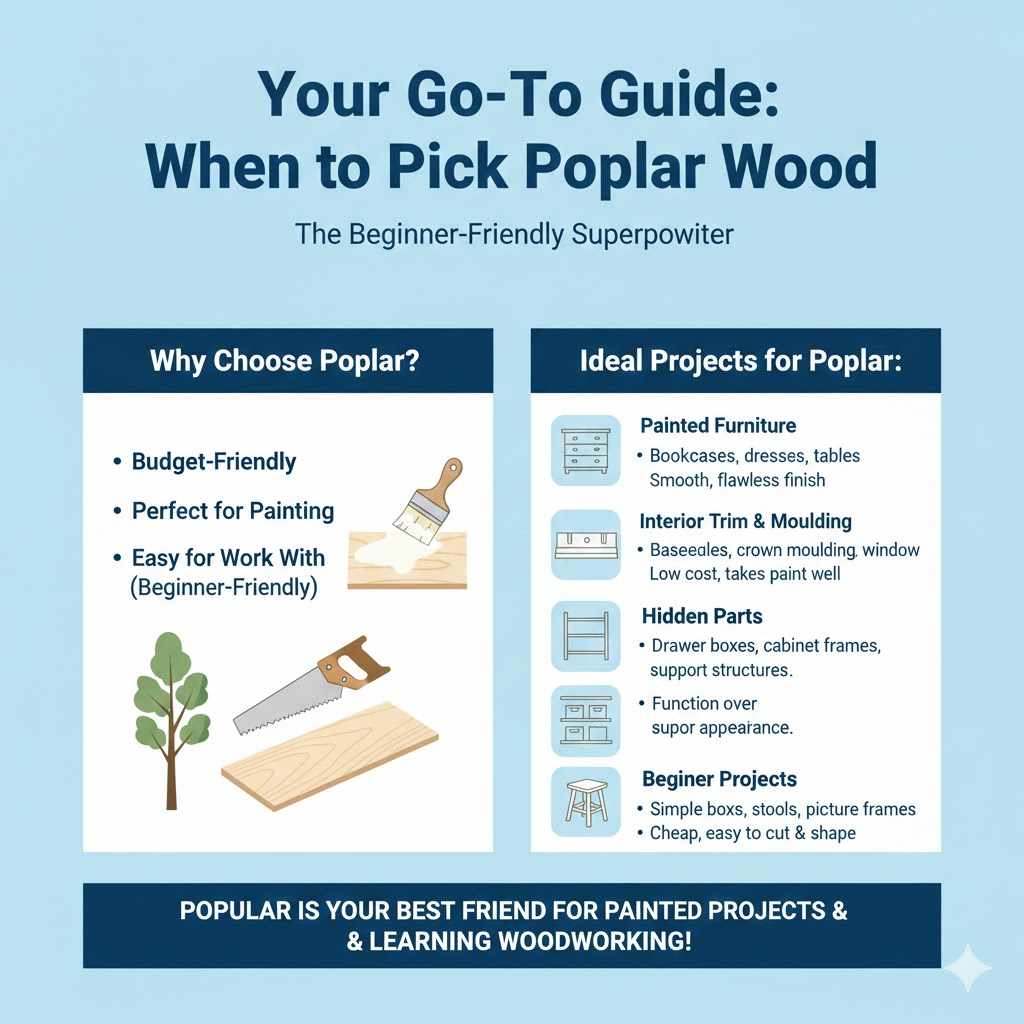
Your Go-To Guide: When to Pick Poplar Wood
Reach for poplar when you’re on a budget, plan to paint your project, or are looking for a forgiving wood to practice your skills. Its ease of use is its superpower.
Ideal Projects for Poplar:
- Painted Furniture: If you’re planning to paint a bookcase, dresser, or side table, there is no better choice than poplar for a smooth finish.
- Interior Trim and Moulding: Its low cost and excellent painting properties make it the standard for baseboards, crown moulding, and window casings.
- Hidden or “Secondary” Parts: It’s perfect for internal parts of furniture that won’t be seen, like drawer boxes, cabinet frames (face frames), or support structures.
- Utility Shelving: Great for shelves in a closet, pantry, or garage where function matters more than appearance.
- Beginner Projects: Making a simple box, a small stool, or a picture frame? Poplar is the best learning material because it’s cheap, easy to cut, and won’t fight you every step of the way.
Frequently Asked Questions about Birch and Poplar
Let’s tackle a few common questions that I often hear in the workshop. Clear, simple answers can make all the difference.
Is poplar considered a hardwood?
Yes, it is! This confuses a lot of people. The term “hardwood” refers to wood from a deciduous tree (a tree that loses its leaves), while “softwood” comes from a coniferous tree (like a pine). Even though poplar is physically soft, it comes from a deciduous tree, making it a hardwood by definition.
Can you stain poplar wood effectively?
You can, but it requires extra steps for a good result. Poplar’s varying density and mineral streaks cause it to absorb stain unevenly, leading to a blotchy finish. To stain poplar, you must use a pre-stain wood conditioner first. This helps even out the absorption. Even then, it’s best to use a darker stain or a gel stain for a more uniform color.
Is birch good for outdoor furniture?
No, birch is not recommended for outdoor use. Like most hardwoods with a tight grain, it has very poor rot and insect resistance. If exposed to moisture, it will warp, swell, and decay quickly. For outdoor projects, stick to naturally weather-resistant woods like cedar, cypress, or teak, or use pressure-treated lumber.
Which is better for cabinets, birch or poplar?
For kitchen or bathroom cabinets, birch is the superior choice. It is much harder and more durable, standing up better to daily use, moisture, and impact. Poplar is a great, affordable choice for the cabinet box or face frame if you plan to paint it, but birch doors and drawer fronts will last longer and resist dings much better.
How can I tell the difference between birch and poplar at the store?
There are a few easy ways to tell them apart. First, check the color. Poplar often has telltale green or grayish streaks, while birch is more uniformly creamy white or yellow. Second, try the fingernail test. You can easily indent poplar with firm pressure from your fingernail; it’s much harder to do that with birch. Finally, birch usually feels heavier and denser for a board of the same size.
Is Baltic Birch plywood better than regular plywood?
Absolutely. Baltic Birch plywood is a premium product known for its quality. Unlike standard plywood, it has more layers (plies) of solid birch veneer, which makes it stronger, more stable, and gives it a clean, beautiful edge without voids. It’s the top choice for fine woodworking projects like high-end cabinetry, jigs, and furniture.
Which wood is better for carving?
Poplar is a better choice for beginners learning to carve. Its softness makes it easy to shape with hand tools. However, for more detailed and professional carvings, many carvers prefer woods like basswood or butternut, which have a finer, more consistent grain and hold detail even better than poplar.
The Final Verdict: Choosing the Right Wood for You
So, after all that, which wood should you choose? The truth is, there’s no single “best” wood—only the best wood for your project.
Think of it this way:
- If your project needs to be tough, will see a lot of action, and you want to show off the natural beauty of the wood with a stain, birch is your trusted partner. It brings strength and elegance to the table.
- If your project is destined for a coat of your favorite color paint, you’re looking to save some money, or you want a frustration-free building experience, poplar is your best friend. It’s forgiving, affordable, and gives you a flawless painted surface.
The journey of woodworking is all about learning and trying new things. Both birch and poplar are fantastic materials that have a place in every workshop. Now that you know their strengths and weaknesses, you have the power to make the perfect choice for whatever you dream of building next. Grab a board, make some sawdust, and have fun creating!