Bloodwood vs Padauk: Hardness, Color Fade and Workability Compared
Bloodwood is the harder, denser, more brittle wood, and padauk is the easier one to work. Neither one keeps its color. Bloodwood rates 2,900 lbf on the Janka scale against 1,710 lbf for African padauk, and the Wood Database gives both woods the same 2 out of 5 colorfast rating. Pick padauk for a first exotic project, furniture, and musical instruments. Pick bloodwood when you want a tight, fine-textured surface for knife handles, inlays, and small turned pieces and can live with slow, dulling cuts.
A lot of advice online gets one thing backwards: that bloodwood holds its red while padauk fades to brown. Both end up brown. This guide lays out the published numbers, the dust warnings, and the working differences so you can pick the right wood for the project rather than the right color on day one.
Bloodwood vs Padauk: The Short Answer
Best Padauk Starter Pick
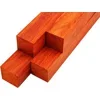 |
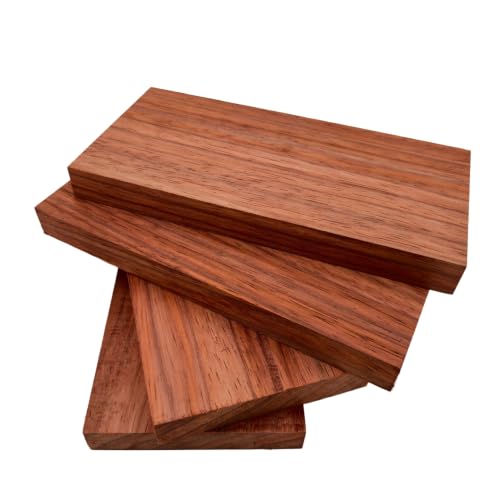
Barrington Hardwoods Padauk Turning Blanks, 2 x 2 x 18 in (4 pieces), $49.95 A low-risk way to try the easier of the two red woods before you commit to a full board.
|
If you are buying your first red exotic, padauk is the safer purchase. It is roughly 30% lighter (46.5 lbs per cubic foot dried, against 66 for bloodwood), cuts and turns with far less tool wear, and is widely sold as lumber and turning blanks. The box above is a four-piece set of kiln-dried padauk blanks, a low-risk way to test the wood before you commit to a full board.
Bloodwood earns its place when you want a fine, even texture with real luster. It is used for knife handles, inlays, guitars, and turned objects, and it is not listed in the CITES appendices or on the IUCN Red List, which matters if sourcing is a concern for you.
Side-by-Side Comparison Table
Every figure below comes from the Wood Database entries for bloodwood (Brosimum rubescens) and African padauk (Pterocarpus soyauxii). The last column shows how the bloodwood number compares.
| Property | Bloodwood | African Padauk | Bloodwood vs Padauk |
|---|---|---|---|
| Janka hardness | 2,900 lbf | 1,710 lbf | 1.7x harder |
| Dried weight | 66 lbs/ft3 (1,050 kg/m3) | 46.5 lbs/ft3 (745 kg/m3) | 42% heavier |
| Bending strength (MOR) | 25,290 lbf/in2 | 18,380 lbf/in2 | 38% higher |
| Crushing strength | 14,310 lbf/in2 | 9,240 lbf/in2 | 55% higher |
| Volumetric shrinkage | 11.7% | 7.9% | More movement |
| Grain and texture | Straight to slightly interlocked, fine texture, chatoyant | Usually straight, sometimes interlocked, coarse open texture | Bloodwood is finer |
| Fresh-cut color | Bright, vivid red | Reddish orange (pale pinkish orange to deep brownish red) | Different hue |
| Colorfast rating (1 to 5) | 2 | 2 | Tied |
| Rot resistance | Very durable, resists most insects | Durable to very durable, resists termites and insects | Both good |
| Price (Wood Database) | Moderate to moderately high | Moderate | Padauk cheaper |
| Sourcing status | Not in CITES or IUCN Red List | CITES Appendix II (African Pterocarpus) | Bloodwood simpler |
The percentages are simple ratios of the published numbers. The strength gap is smaller than the hardness gap: bloodwood is 70% harder by Janka but only 38% stronger in bending, so do not assume it will carry a load 70% better.
The Color Myth: Both Woods Turn Brown
The Wood Database has a dedicated article on preventing color changes in exotic woods, and it scores bloodwood and padauk identically at 2 out of 5 for colorfastness. Its notes say bloodwood turns a very deep reddish brown, almost black, and padauk turns a very deep reddish brown, with lighter pieces turning brownish gray. The bloodwood entry itself says the heartwood darkens to a darker brownish red with light exposure.
So the fair comparison is starting color, not staying power. Bloodwood starts a vivid red and padauk starts reddish orange. Padauk usually looks like it changes more because fresh orange is so far from where it settles, but bloodwood does not get a pass.
What actually slows the fade
- Several coats of a film-building finish. A rub-in oil or paste wax gives very little protection.
- Keeping the piece out of direct sunlight.
- An exterior-grade spar varnish with UV inhibitors as an extra precaution. The Wood Database says UV-inhibiting finishes may prolong the shift but not prevent it.
- Dye, if you need a color that lasts. The same source says dyes give the best shot at lasting, vibrant color.
One more buying tip from the Wood Database: many bloodwood boards show only a dull reddish brown, and truly blood-red pieces are the ideal. Choose boards in person or ask the seller for photos of the actual board.
Hardness and Strength: Where Bloodwood Wins
At 2,900 lbf, bloodwood sits far above padauk at 1,710 lbf. (An earlier version of this page listed padauk at about 1,970 lbf; the Wood Database figure is 1,710.) For a full ranking against other species, see our wood hardness scale.
In practice, extra hardness helps on surfaces that take abuse, such as knife scales, tool handles, and inlay that is handled daily. Padauk is still hard and dense enough for higher-wear uses, and the Wood Database describes it as sitting in a sweet spot of density: hard enough for wear, not so dense that it is excessively difficult to work. Its lower shrinkage (7.9% volumetric against 11.7%) fits its use in flooring, veneer, and instruments.
Workability: Padauk Is Easy, Bloodwood Fights Back
Working bloodwood
The Wood Database says bloodwood is extremely dense with a pronounced blunting effect on cutters, and that it tends to be brittle and can splinter easily. Plan on sharpening more often, taking light passes, and supporting thin edges. Those who persist are rewarded with an exceptional, lustrous red surface.
Working padauk
Padauk is easy to work overall, and it turns and glues well. Tearout can occur when planing quartersawn or interlocked grain. Because the pores are large and open, you will usually need to fill them for a glass-smooth surface.
Finish choice matters too. The Wood Database warns that reactive oil-based finishes, such as polyurethane, may have curing issues on padauk if the heartwood is not sealed properly first. Test any finish on an offcut before you commit a finished project. Padauk has a faint, pleasing scent while being worked, and bloodwood a mild one.
For either wood, use carbide-tipped saw blades and keep planer and jointer knives sharp. Dull tools tend to burn and chip dense tropical woods instead of cutting them.
Dust and Safety: Read This Before You Sand
Both woods carry health notes, and they differ. Per the Wood Database, bloodwood dust has occasionally been reported to cause thirst, salivation, and nausea, and it can irritate skin. Padauk has been reported as a sensitizer: severe reactions are uncommon, and the usual complaints are eye, skin, and respiratory irritation.
- Use dust collection at the tool and wear a respirator rated for fine dust when sanding either wood.
- Wear gloves and long sleeves if your skin is sensitive, and wash up after a long session.
- Stop and see a doctor if you develop a persistent rash, breathing trouble, or nausea after working either wood.
For an exotic with a stronger dust-allergy reputation, read our guide on whether cocobolo is toxic.
Best Projects for Each Wood
The Wood Database lists these common uses for each species. Note that flooring is a listed padauk use, not a bloodwood one.
| Project type | Better pick | Why |
|---|---|---|
| Knife handles and scales | Bloodwood | Hard, fine texture, takes a lustrous finish |
| Inlay and small accents | Bloodwood | Listed use for bloodwood, fine tight texture |
| Guitars and instruments | Either | Bloodwood is listed for guitars, padauk for musical instruments; padauk is easier to shape |
| Turned objects and pens | Either | Both are listed for turning; padauk is gentler on tools, bloodwood is brittle |
| Flooring and veneer | Padauk | Listed uses for padauk, with lower shrinkage |
| Furniture | Padauk | Listed for both; padauk is easier to machine and glue |
| Tool handles | Either | Padauk is a listed use; bloodwood is harder and more wear resistant |
Planning a kitchen project? Food contact and finish change the answer, which we cover in our guides on padauk cutting boards and bloodwood cutting boards.
Cost and Sourcing
The Wood Database prices bloodwood as moderate to moderately high for an imported hardwood, and padauk as moderate. Bloodwood is widely available in wide boards and in turning squares and blanks. Padauk is widely imported as lumber and blanks, but with increasing scarcity and trade restrictions. African padauk falls under the CITES Appendix II listing that covers all African Pterocarpus species, while bloodwood is in neither the CITES appendices nor the IUCN Red List.
If color is what draws you to these woods, our purpleheart guide covers a third vivid exotic with the same tendency to turn brown.
Which Wood Should You Choose?
Choose bloodwood if you want the hardest, finest-textured surface, your parts are small (handles, inlay, turned pieces), and you are comfortable sharpening often and handling a brittle wood.
Choose padauk if you are new to exotics, need lumber-sized stock for furniture or instruments, want lower shrinkage, or want a more forgiving wood at a lower price.
If color is the deciding factor, remember that both are heading to brown. Seal the piece well, keep it out of the sun, or dye a pale wood for a color that lasts.
Frequently Asked Questions
Is bloodwood harder than padauk?
Yes. Bloodwood measures 2,900 lbf on the Janka scale and African padauk measures 1,710 lbf, so bloodwood is about 1.7 times harder. It is also about 42% heavier when dried.
Which red wood keeps its color longer, bloodwood or padauk?
Neither one holds its color. The Wood Database gives both woods a colorfast rating of 2 out of 5, and both settle into a very deep reddish brown (bloodwood can go nearly black). A film finish with UV protection and keeping the piece out of sunlight only slows the change.
Is padauk easier to work than bloodwood?
Yes. Padauk is easy to work overall and turns and glues well, though it can tear out on interlocked grain. Bloodwood is extremely dense, dulls cutters quickly, and can be brittle and splinter easily.
Is bloodwood or padauk dust harmful?
Both can irritate. Bloodwood dust has occasionally caused thirst, salivation, nausea, and skin irritation. Padauk is reported as a sensitizer, usually causing eye, skin, and respiratory irritation. Use dust collection and a respirator with either wood.
Which is cheaper, bloodwood or padauk?
Padauk is usually cheaper. The Wood Database prices padauk as moderate and bloodwood as moderate to moderately high, though prices vary by supplier and board quality.
How do I stop padauk dust from staining lighter wood like maple?
Sand the padauk piece separately, seal it before gluing it up next to pale wood, and clean off the dust before assembly. Test the sealer on a scrap first, because padauk can also interfere with the cure of some oil-based finishes.
Sponsored / affiliate links. As an Amazon Associate I earn from qualifying purchases. I may earn additional commission from eligible campaigns.