Birch vs Poplar: Hardness, Staining and Paint-Grade Compared
Birch is the harder, denser, better-staining wood, and poplar is the softer, cheaper, easier-to-cut wood that takes paint like a champ. That is the short version, but the numbers underneath it are more interesting than most guides let on. “Birch” is not one hardness (it ranges from about 910 to 1,470 lbf on the Janka scale depending on the species), and poplar is stiffer than its soft reputation suggests.
I pulled the actual species data from the Wood Database so you can compare real figures instead of vague words like “hard” and “soft.” Below you will find the side-by-side table, what the numbers mean for dents, shelf sag, staining and painting, and a project-by-project pick list.
This guide covers solid lumber. If you are choosing between plywood sheets instead, read our birch vs poplar plywood comparison for ply counts, grades and sheet pricing.
Quick Answer: Which One Should You Buy?
Best Stain Prep for Birch or Poplar
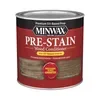 |
Minwax Pre-Stain Wood Conditioner, 1/2 Pint An oil-based prep coat that evens out how the wood soaks up stain. If you plan to stain either species, this is the cheap insurance.
|
As an Amazon Associate we earn from qualifying purchases.
- Choose birch for stained or clear-finished furniture, tabletops, and anything that gets bumped: it is 1.7 to 2.7 times harder than poplar depending on the species.
- Choose poplar for painted cabinets, drawer boxes, trim, shop jigs and practice builds: it is among the most economical domestic hardwoods and cuts cleanly.
- Choose neither for unprotected outdoor use: the Wood Database rates birch as perishable and poplar heartwood as moderately durable to non-durable.
Birch vs Poplar Side by Side: The Real Numbers
All values below come from the Wood Database entries for yellow birch, paper birch, sweet birch and yellow poplar (Liriodendron tulipifera). I included three birch species because lumber sold as “birch” can be any of them.
| Property | Poplar | Paper birch | Yellow birch | Sweet birch |
|---|---|---|---|---|
| Janka hardness | 540 lbf | 910 lbf | 1,260 lbf | 1,470 lbf |
| Dried weight | 29 lbs/ft3 | 38 lbs/ft3 | 43 lbs/ft3 | 46 lbs/ft3 |
| Bending strength (MOR) | 10,100 psi | 12,300 psi | 16,600 psi | 16,900 psi |
| Stiffness (MOE) | 1,580,000 psi | 1,590,000 psi | 2,010,000 psi | 2,170,000 psi |
| Volumetric shrinkage | 12.7% | 16.2% | 16.8% | 15.6% |
| Tangential/radial ratio | 1.8 | 1.4 | 1.3 | 1.4 |
| Rot resistance | Moderately durable to non-durable | Perishable | Perishable | Perishable |
Not All Birch Is Equally Hard
Most comparison articles quote a single birch number, usually 1,260 lbf, which is yellow birch. But paper birch tests at only 910 lbf, and sweet birch at 1,470 lbf. Set against poplar’s 540 lbf, that is a gap of anywhere from 1.7 times to 2.7 times.
This matters at the lumberyard. If a board is labeled just “birch” and priced cheaply, ask which species it is. Paper birch is the softer end of the family, while yellow and sweet birch are the ones that behave like a real furniture hardwood.
Hardness vs Stiffness: The Shelf-Sag Myth
Hardness tells you how well a surface resists dents. It does not tell you how much a board bends under load. That is stiffness, measured as modulus of elasticity (MOE), and here the gap between the two woods shrinks a lot.
- Dent resistance: yellow birch is about 2.3 times harder than poplar (1,260 vs 540 lbf).
- Stiffness: yellow birch is only about 27% stiffer than poplar (2,010,000 vs 1,580,000 psi), and paper birch and poplar are essentially tied (1,590,000 vs 1,580,000 psi).
- Breaking strength: yellow birch is about 1.6 times stronger in bending than poplar (16,600 vs 10,100 psi).
In practice, a poplar shelf of the same size will sag only modestly more than a yellow birch shelf, and about the same as a paper birch one. Poplar is a perfectly reasonable choice for bookshelves and cabinet frames. Where it loses is the surface: a poplar tabletop or workbench top will dent and scratch far sooner than yellow or sweet birch.
Staining and Paint-Grade: Where Each Wood Wins
Poplar takes paint; it fights stain
Poplar’s heartwood ranges from light cream to yellowish brown with streaks of gray or green, and mineral-stained boards can show dark purple, red or yellow (sold as rainbow poplar). The Wood Database also notes that poplar’s color tends to darken with light exposure. Under stain, those color swings show through, which is why poplar is the classic paint-grade wood: paint hides the streaks, and the straight, uniform grain sands to a smooth surface for a clean painted finish.
If you do want to stain poplar, expect a mix of color patches and test on a scrap first. Our poplar staining guide walks through the fix, and gel stain vs oil stain explains how a gel stain sits on the surface instead of soaking in unevenly.
Birch stains more evenly, with one caveat
Birch has a fine, even texture and very little color difference between growth rings, which gives it a uniform look that suits stain. Heartwood runs light reddish brown against nearly white sapwood, so a board with both will show two tones. Birch still benefits from a conditioner: the Minwax listing for its pre-stain conditioner names birch among the woods that especially need it. See our how to stain birch guide for the step-by-step process.
Workability: Tools, Tear-out and Fuzz
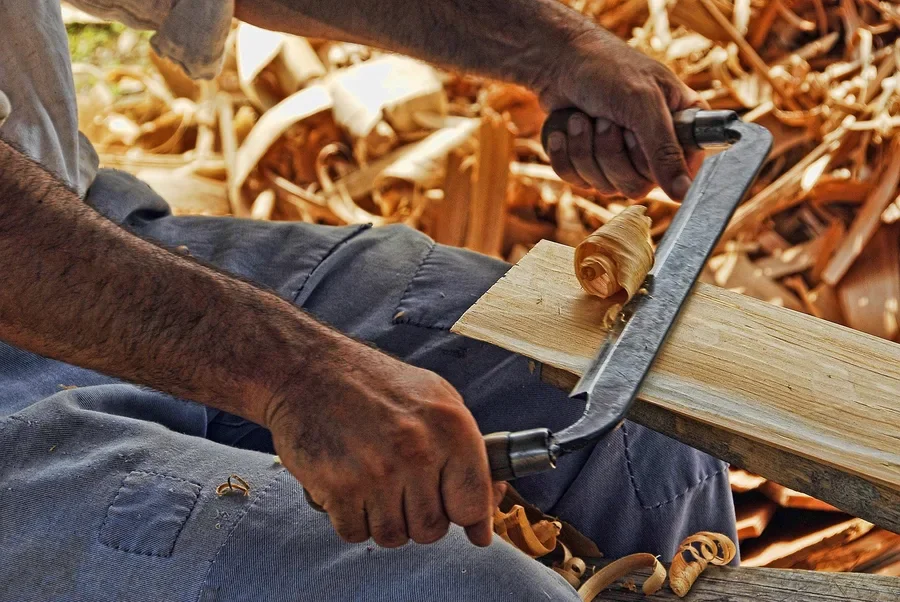
Both woods are easy to machine, but they misbehave in different ways. The Wood Database describes birch as generally easy to work with hand and machine tools, though boards with wild grain can tear out during machining. Poplar is very easy to work, but its low density can leave fuzzy surfaces and edges during shaping or sanding, and you may need to sand to finer grits to get it smooth.
- Birch: keep blades sharp, take lighter passes on wild-grain boards, and expect it to turn, glue and finish well.
- Poplar: use sharp cutters and finish with finer grits to knock down the fuzz before you paint or stain.
Movement, Moisture and Outdoor Use
Neither wood belongs outdoors without protection. The Wood Database calls birch perishable, saying it readily rots if exposed to the elements and is susceptible to insects, and rates poplar heartwood as moderately durable to non-durable. Our can poplar be used outside article covers what to do if you have to.
Movement is a subtler difference. Birch shrinks more overall from green to dry (16.8% volumetric for yellow birch vs 12.7% for poplar), but its tangential-to-radial ratio is lower (1.3 vs 1.8). A higher ratio means the wood shrinks more unevenly across the board, so poplar’s smaller total shrinkage comes with a greater tendency to distort as humidity changes. Either species is fine indoors if it is properly dried and finished on all faces.
Cost and Availability
Poplar is listed by the Wood Database as among the most economical and inexpensive of all domestic hardwoods, especially in the Eastern United States where it grows. Plain birch lumber is described as rather economical too, but in the same price range as maple or oak, so expect to pay noticeably more per board foot than for poplar. Prices vary by region and grade, so check your local yard before you build a budget around the difference.
Which Wood for Which Project?
| Project | Better pick | Why |
|---|---|---|
| Painted cabinet doors and face frames | Poplar | Takes paint cleanly and costs less; see poplar for cabinets |
| Stained cabinets | Birch | More uniform under stain; see birch for cabinets |
| Tabletops, workbench tops, desks | Yellow or sweet birch | Roughly 2.3 to 2.7 times the dent resistance of poplar |
| Drawer boxes and hidden parts | Poplar | Cheap, easy to cut and glue |
| Shelves and bookcases | Either | Paper birch and poplar have nearly equal stiffness |
| Painted trim and moulding | Poplar | Cuts and nails easily, paint hides the color streaks |
| Turning and small boxes | Birch | Turns and finishes well; poplar can leave fuzzy surfaces |
| Shop jigs and practice builds | Poplar | Cheap and forgiving |
For more on what poplar is commonly used for, see our poplar uses guide. If you are weighing poplar against another light hardwood, our poplar vs maple comparison is the next stop.
Wood Dust Safety
Both species can bother your airways. The Wood Database notes that birch in the Betula genus has been reported as a sensitizer, with skin and respiratory irritation the most common reactions, and that poplar has been reported as an irritant, with eye, skin and respiratory irritation and asthma-like symptoms. Cut and sand with dust collection and wear a well-fitted respirator, especially when sanding poplar’s fine fuzz.
Frequently Asked Questions About Birch and Poplar
Is poplar considered a hardwood?
Yes, botanically. Poplar comes from a deciduous tree, so it is a hardwood, but it is one of the softer ones at 540 lbf on the Janka scale. The Wood Database also points out that it is not in the Populus genus with cottonwood and aspen: it is Liriodendron tulipifera, the tulip tree, which is why it is also sold as tulip poplar.
Can you stain poplar wood effectively?
You can, but the result is often uneven because of poplar’s green, gray and purple mineral streaks. Apply a pre-stain conditioner or use a gel stain, test on scrap, or choose a dark color that hides the variation. If you want a crisp, uniform look, painting is the safer route.
Is birch good for outdoor furniture?
Not without protection. The Wood Database rates birch as perishable, meaning it readily rots when exposed to the elements. It is better suited to indoor furniture, cabinets and toys.
Which is better for cabinets, birch or poplar?
Birch for stained cabinets, poplar for painted ones. Birch’s even texture stains more uniformly, while poplar is cheaper and paints smoothly. For a deeper look at each, see our guides to birch and poplar for cabinets linked above.
How can I tell birch and poplar apart at the store?
Start with weight and color. Poplar dries to about 29 lbs per cubic foot against 38 to 46 for birch, so a poplar board feels noticeably lighter. Birch heartwood is light reddish brown with white sapwood, while poplar often shows green or gray streaks. If in doubt, ask the yard for the species name.
The Final Verdict: Choosing the Right Wood for You
Pick birch when the surface will be stained, clear-coated or used hard. Pick poplar when the project will be painted, hidden, or built on a budget. If you are stuck, remember that stiffness is much closer than hardness, so poplar is fine for structure and birch is worth the extra money for surfaces you touch every day. Whatever you choose, condition before you stain and sand poplar to a finer grit before you paint.
Sponsored / affiliate links. As an Amazon Associate I earn from qualifying purchases. I may earn additional commission from eligible campaigns.