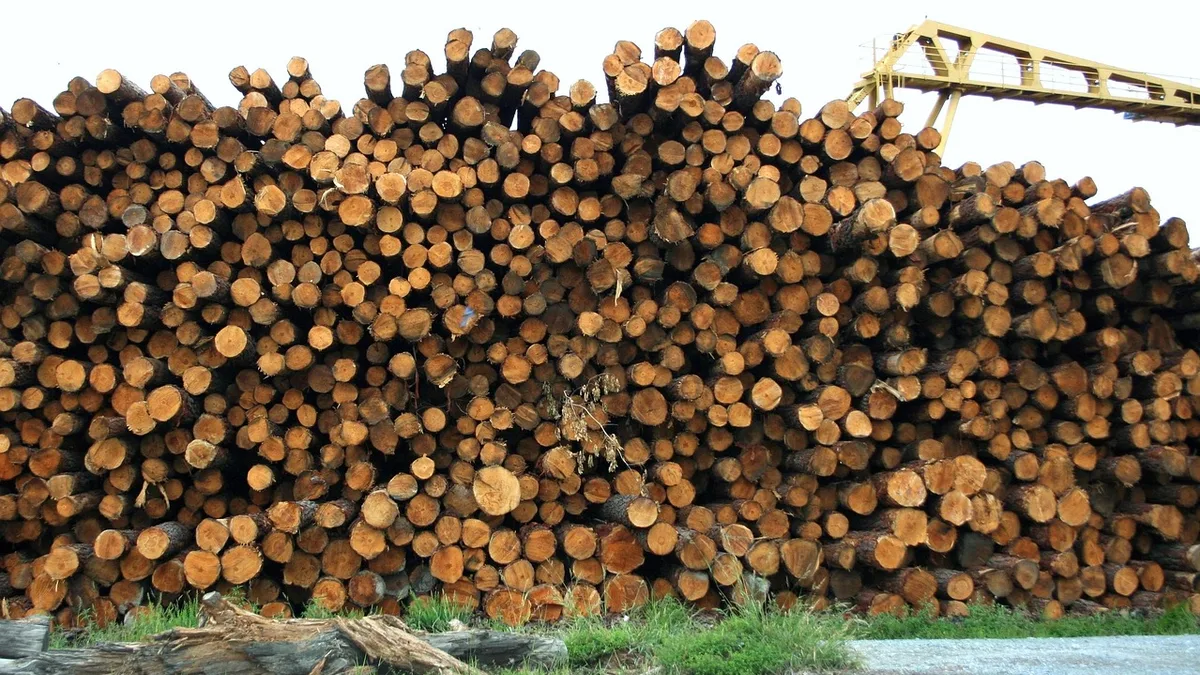
Sawmill vs Lumber Mill: The Real Difference (Size + Moisture)
A sawmill saws logs into rough boards; a lumber mill is usually a larger operation that also kiln-dries, planes, and grades them, though the two words overlap and no official definition separates them. What matters is what you receive: green rough lumber or dried, surfaced boards. This guide covers the real differences, why a store 2×4 measures 1-1/2 by 3-1/2 inches, and the moisture targets to check before you build.
Sawmill vs Lumber Mill: What Actually Separates Them
Best Pick for Checking Mill Lumber
 |
General Tools MMD4E Moisture Meter Whether a sawmill sold you green boards or a lumber mill stamped them dry, a pin meter tells you the actual moisture content before you cut.
|
Here is the part most articles skip: the two terms are not cleanly defined. Forest-products trade usage treats “sawmill” as the sawing plant and often lumps the drying kilns and planer mill into the same site. So a large operation might be called a sawmill by one person and a lumber mill by the next. The label matters less than three practical differences.
- Scale: a sawmill can be a single portable bandsaw mill in a backyard. A lumber mill is a full production plant running logs through automated lines.
- Steps: a sawmill guarantees only the sawing. A lumber mill adds kiln drying, planing to a standard size, and grading.
- Customer: small sawmills sell direct to woodworkers and builders who want custom cuts. Lumber mills sell to distributors and home centers by the truckload.
So when you ask which one you should buy from, the real question is whether you want wood that is ready to use or wood you will finish yourself.
What a Sawmill Does
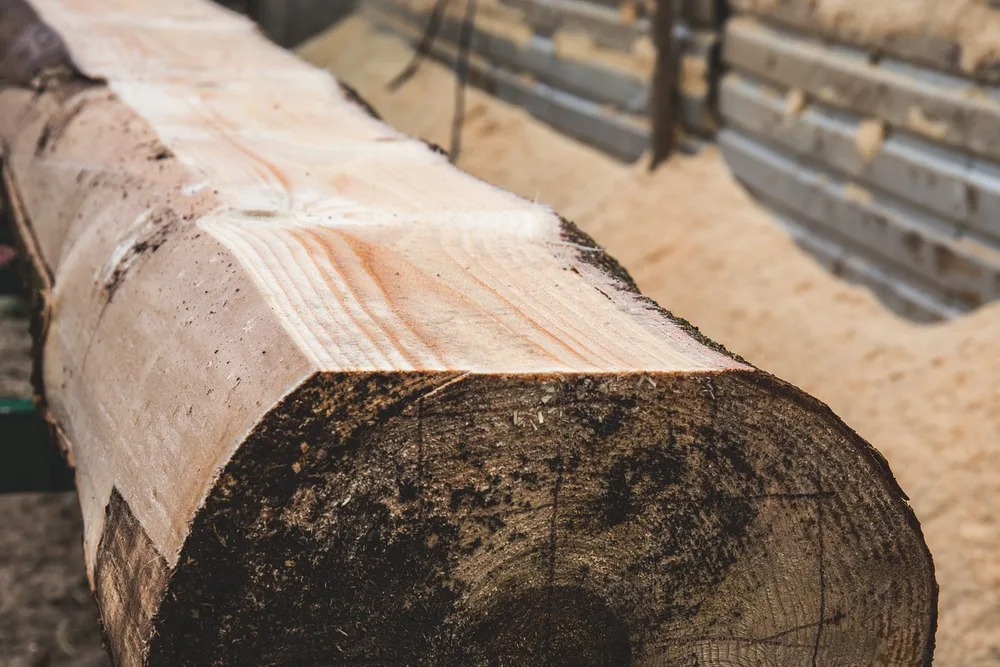
A sawmill turns logs into boards, beams, and slabs. The output is called rough-sawn lumber: the faces show saw marks, thickness varies a little from board to board, and the wood is usually still green, meaning it holds the moisture it had in the living tree. Green wood commonly sits well above 30 percent moisture content, and sapwood can be far wetter.
Types of Sawmills
- Portable bandsaw mills: towed to a job site or yard. Their thin band blades typically remove about 1/16 to 1/8 inch per cut, so more of the log becomes board. See our guide to Wood-Mizer portable sawmill models or how to rent a portable sawmill.
- Small stationary mills: local shops that often specialize in hardwoods, live-edge slabs, and custom dimensions.
- Large circular or band production mills: larger circular blades commonly remove around 1/4 inch or more per cut, which is acceptable at volume but wasteful on a single valuable log.
How the Sawmill Process Works
- Logs arrive and are sorted by species and diameter.
- The bark may be removed so dirt and grit do not dull the blade.
- The log is sawn into slabs, boards, or beams, often turned to get the best faces.
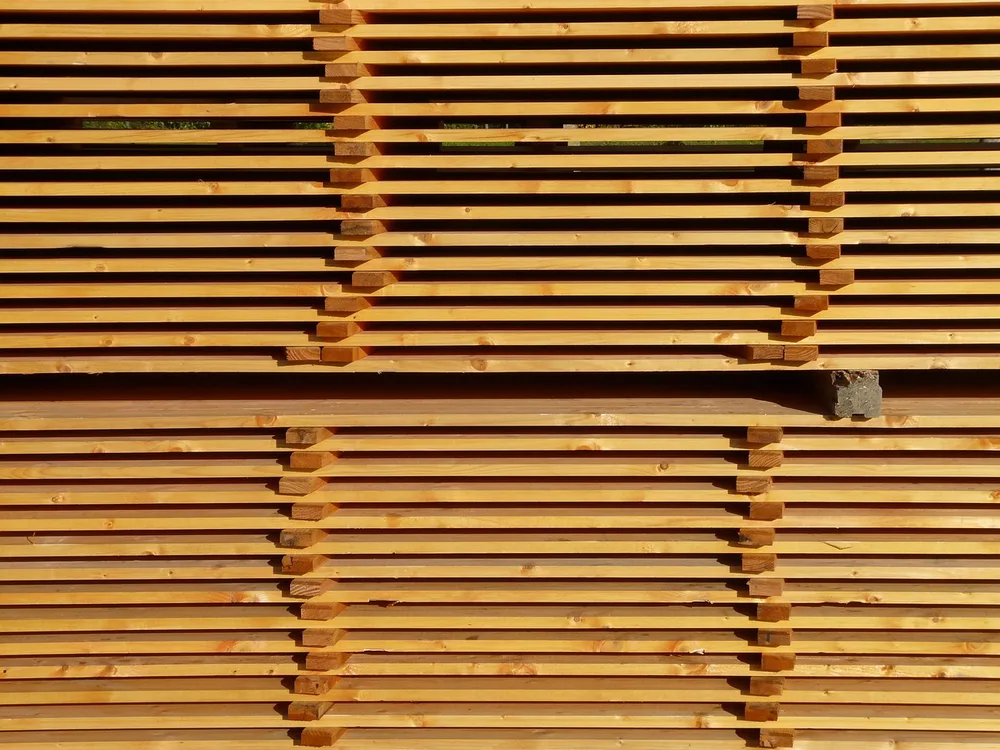
- Boards are stacked with stickers (dry spacer sticks) so air can move between layers.
Stickers should be evenly spaced, roughly every 12 to 24 inches, and lined up vertically so the weight of the stack holds boards flat. Sealing the end grain quickly with a wax-based end sealer also slows the end checking that ruins the ends of freshly sawn hardwood.
What a Lumber Mill Does
A lumber mill is best understood as a sawmill with the rest of the production line attached. Big softwood plants typically run four stages on one site:
- Primary breakdown: logs are scanned and sawn at high speed to squeeze out as many boards as possible.
- Kiln drying: boards are dried under controlled heat and humidity, which stops most of the later shrinking and twisting.
- Planing: a planer surfaces the boards to a standard finished size (dressed or surfaced lumber).
- Grading and stamping: inspectors or scanners sort boards by defects and strength, then stamp them.
How to Read a Lumber Grade Stamp
That stamp is the easiest way to tell what kind of mill product you are holding. A softwood grade stamp normally shows the grading agency, a mill identification number, the grade, the species group, and a moisture designation. The moisture mark is the one to check:
| Stamp | Meaning | What to expect |
|---|---|---|
| S-GRN | Surfaced green | Moisture above 19 percent, will shrink after you buy it |
| S-DRY or KD | Surfaced dry or kiln-dried | 19 percent or less, standard for framing |
| MC15 | Moisture content 15 percent or less | Drier, used for trim and some exposed framing |
Sawmill vs Lumber Mill: Side-by-Side Comparison
| Feature | Sawmill | Lumber mill |
|---|---|---|
| Typical size | Portable rig to mid-size local shop | Large integrated plant |
| Main output | Rough-sawn boards, slabs, and beams | Dried, planed, graded, and stamped boards |
| Moisture when sold | Usually green unless the seller dried it | Framing lumber 19 percent or less; hardwood often 6 to 8 percent |
| Sizes | Often true dimension or custom, cut to order | Standard nominal sizes such as 2×4 and 2×6 |
| Grading | Optional, seller-specific | Formal grade stamp |
| Best for | Live edge, custom widths, timbers, your own logs | Framing, decks, sheds, standard plans |
| Who can buy | Anyone, often direct from the mill | Mostly through distributors and home centers |
Why a Sawmill 2×4 and a Store 2×4 Are Different Sizes
This is where the two kinds of mills bite unwary builders. A small sawmill will often cut a 2×4 that really is 2 inches by 4 inches unless you ask otherwise. A lumber mill produces a 2×4 that measures 1-1/2 by 3-1/2 inches. Under PS 20, the American Softwood Lumber Standard, boards are sawn a little oversize while green so that they land on the finished size after drying and planing.
| Nominal size | Minimum green size (PS 20) | Dry surfaced size | True-dimension sawmill cut |
|---|---|---|---|
| 2×4 | 1-9/16 x 3-9/16 in | 1-1/2 x 3-1/2 in | 2 x 4 in |
| 2×6 | 1-9/16 x 5-5/8 in | 1-1/2 x 5-1/2 in | 2 x 6 in |
| 2×8 | 1-9/16 x 7-1/2 in | 1-1/2 x 7-1/4 in | 2 x 8 in |
The practical lesson: do not mix true-dimension sawmill boards with store framing lumber in the same wall or deck frame, because the sizes will not line up. If you order from a sawmill for a structure, tell them the finished dimension you need. For quantities, our framing lumber calculator works from standard nominal sizes.
Green, Air-Dried, and Kiln-Dried: The Moisture Numbers
One old claim worth correcting: lumber mills do not dry everything to 6 to 12 percent. Framing lumber is commonly dried only to 19 percent or less, which is fine for a wall stud but far too wet for a dining table. Furniture-grade hardwood is dried further, typically to 6 to 8 percent for interior use in most of the U.S., a target the USDA Forest Products Laboratory documents in its Wood Handbook.
| Stage | Typical moisture content | Suited to |
|---|---|---|
| Green (fresh sawn) | Above 30 percent, often much higher | Nothing yet; must dry first |
| Air-dried | About 12 to 15 percent in most U.S. climates | Outdoor projects, rustic work, or pre-drying before a kiln |
| Kiln-dried softwood framing | 19 percent or less (15 percent for MC15) | Framing, decks, sheds |
| Kiln-dried hardwood | 6 to 8 percent typical for interior use | Furniture, cabinets, flooring |
Rough lumber that dries unevenly moves, so know how to handle it: see how to fix warped wood if a board has already cupped. A moisture meter takes the guesswork out of any purchase, and a mismatch between the wood in your shop and the wood you buy is a common cause of gaps and cracks. If you buy dried hardwood, our page on kiln-dried ash shows what to check.
Which One Should You Buy From?
Choose a Sawmill When
- You want live-edge slabs, wide boards, or thick timbers you cannot find at a store.
- You need custom thicknesses or lengths, or true-dimension stock.
- You have your own logs to mill, such as leftover cedar logs.
- You have the space and patience to sticker and dry the wood, or you buy it kiln-dried from the sawmill.
Choose a Lumber Mill Product (Through a Store) When
- You are framing a wall, shed, or deck and need graded, stamped, uniform lumber.
- You need ready-to-use boards without a jointer and planer.
- Your plans call for standard nominal sizes so parts fit off the shelf.
Cost and Effort: What Rough Lumber Really Costs
Rough lumber is priced by the board foot, which is thickness in inches times width in inches times length in feet, divided by 12. A rough 1×12 that is 10 feet long is 10 board feet, and a true 2×4 that is 8 feet long is about 5.3 board feet. Our board foot guide has a full chart.
The lower sticker price is only part of the picture. Drying by rule of thumb takes about a year per inch of hardwood thickness, so a 2-inch slab needs around two years before it is ready. You also lose wood when flattening: a board that dries cupped must be jointed and planed, and the finished thickness will be less than the rough thickness. Compare the total, not just the price per board foot.
When you get a quote, ask five things: whether the price is per board foot or per hour, whether the wood is green or dried, whether they cut true dimension, whether they will sticker and stack it, and what the minimum order is.
Frequently Asked Questions
Are a sawmill and a lumber mill the same thing?
Often, yes. There is no official definition that separates the two words, and many people use them interchangeably. In practice, “sawmill” usually means the sawing operation or a small local shop, and “lumber mill” means a larger integrated plant that also dries, planes, and grades the boards.
Where does the lumber at Home Depot or Lowe’s come from?
Framing lumber at big-box stores is produced by large integrated mills that saw, kiln-dry, plane, and grade it, then ships it through distributors. It is graded and stamped, which is why every 2×4 in the stack has the same finished size.
Is rough sawn lumber from a sawmill cheaper than lumber mill lumber?
Usually it costs less per board foot, especially for hardwoods, because you are not paying for drying and surfacing. The savings shrink once you count drying time, a jointer and planer, and the wood lost when you flatten warped boards.
Can I use lumber straight from a sawmill?
Only if it has been dried. Green lumber shrinks, warps, and checks as it dries, so it suits things like fence rails and rustic outdoor pieces you can tolerate moving. For furniture, dry it first or buy it already kiln-dried.
Why is a 2×4 not 2 inches by 4 inches?
A 2×4 is a nominal size. Under the American Softwood Lumber Standard (PS 20), a dry surfaced 2×4 measures 1-1/2 by 3-1/2 inches. The board is sawn slightly oversize while green, then shrinks as it dries and loses more thickness when it is planed smooth.
What does kiln-dried mean on a lumber stamp?
It means the board was dried in a kiln. On softwood framing lumber, the stamps KD and S-DRY both indicate a moisture content of 19 percent or less, while S-GRN means the board was surfaced while green, above 19 percent. MC15 marks lumber dried to 15 percent or less.
How long does it take to air-dry lumber?
A common rule of thumb for hardwood is about one year per inch of thickness, and softwoods usually dry faster. Air drying outdoors typically gets lumber to around 12 to 15 percent in most of the U.S., so a kiln or a heated indoor stack is needed to reach furniture-grade dryness.
Can I have my own logs milled?
Yes. Many portable sawmill operators will come to your property and saw logs into boards for a fee. Ask whether they price per board foot or per hour, what thickness you want, and whether you will stack and sticker the lumber yourself.
Conclusion
A sawmill and a lumber mill sit on the same spectrum. The sawing is the same; what varies is how many finishing steps come after it and how large the operation is. Buy from a sawmill for character, custom sizes, and your own logs, and check the moisture before you build. Buy lumber mill product when you want graded, stamped, ready-to-use boards in standard sizes.
Sponsored / affiliate links. As an Amazon Associate I earn from qualifying purchases. I may earn additional commission from eligible campaigns.