Black Walnut Wood Table Mats: Style, Care, and Buying Tips
Black walnut table mats earn their reputation from a real combination of dark, distinctive grain and genuine durability – a Janka hardness around 1,010 lbf that holds up to daily dining use without being so hard it’s difficult to work into the smooth, finished mats you actually want on a table. Here’s what makes the wood a good fit for this use, how to tell a well-made mat from a cheap one, and how to actually keep it looking good.
What Makes Black Walnut Good for Table Mats
Real Black Walnut Table Mat Set
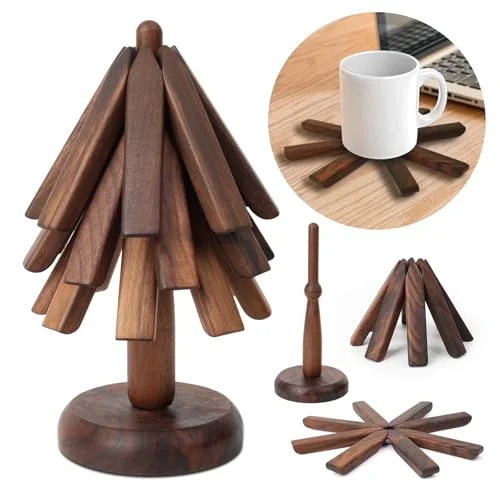 |
Black Walnut Wood Table Mat & Coaster Set A real solid-wood set with a stand for storage between uses, not a printed-vinyl imitation.
|
Black walnut’s durability comes from its density and tight, straight grain – not from natural oils the way teak’s rot-resistance does, a distinction worth knowing since the two are often lumped together in wood-comparison content. At roughly 1,010 lbf on the Janka scale, walnut sits well below hard maple (~1,450 lbf) or red oak (~1,290 lbf), which is actually an advantage for a table mat: it’s tough enough for daily handling and hot dishware, but soft enough to mill, sand, and finish to the smooth surface a good mat needs without excessive tool wear. This same middle-ground hardness is also why walnut has stayed a standard choice for gunstocks, cutting boards, and other items that need to survive regular handling without becoming difficult or expensive to shape in the first place.
What to Look for When Buying
- Solid wood vs. veneer or laminate. A real solid walnut mat shows consistent grain through the full thickness; a thin veneer over a cheaper substrate often shows a different color or material at the edge.
- Finish type. A food-safe oil or wax finish (mineral oil, walnut oil, or a beeswax blend) is standard for anything that touches dishware; avoid mats finished with a film-forming lacquer if you want a natural, touchable surface.
- Size match to your table and place settings. Measure your table and the plates you’ll actually use before buying – a mat that’s too small under a large dinner plate defeats its protective purpose.
- Edge treatment. A rounded or eased edge feels better under the hand and resists chipping better than a sharp 90-degree edge over years of sliding on and off the table.
Pairing With Different Table Settings

Walnut’s dark brown tone works as a neutral in most table settings – it grounds bright white dinnerware without competing with colorful ceramics the way a lighter wood sometimes can. It reads equally at home in a modern minimalist setting and a more traditional formal table, which is part of why it’s a common choice across very different home styles and regions.
Care and Maintenance
- Wipe with a soft, barely damp cloth after use – avoid soaking the wood, which can cause warping or cracking over time.
- Dry immediately with a clean towel rather than air-drying, especially if any moisture pooled on the surface.
- Recondition every few months with food-safe mineral oil or a beeswax-based wood conditioner to prevent the surface from drying out and developing surface checks.
- Keep out of direct sunlight when not in use – UV exposure fades walnut’s dark color toward a lighter brown faster than normal aging does.
- Always use a trivet under anything above roughly 150°F; a table mat protects against everyday warmth and minor spills, not a pot straight off the stove or a pan fresh from the oven – both can scorch even a well-finished surface almost instantly.
Is Black Walnut Actually Sustainable?
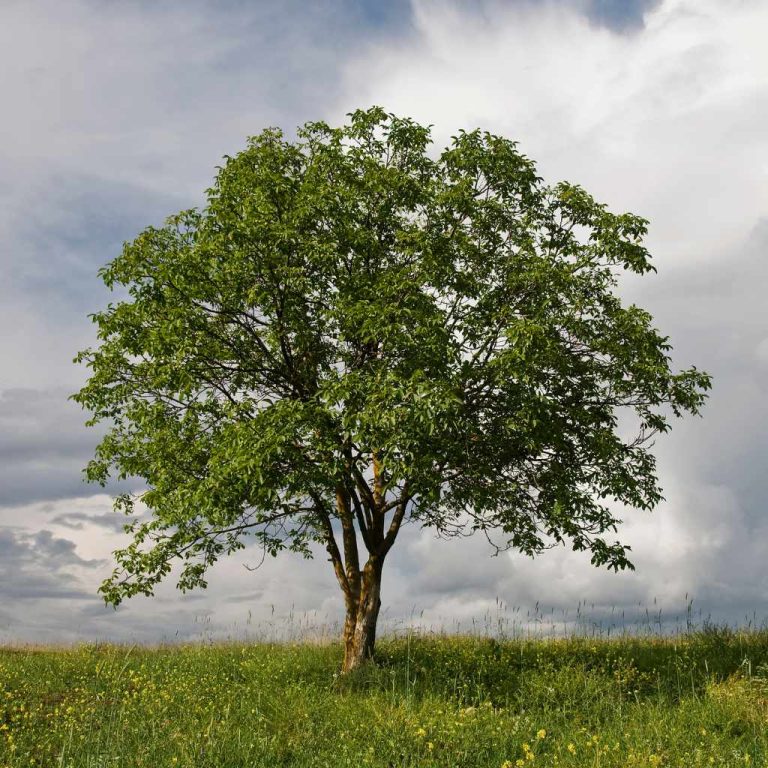
American black walnut (Juglans nigra) is farmed domestically in the eastern and central U.S. and is not on any endangered or restricted species list – unlike some imported tropical hardwoods, sourcing concerns here are mostly about buying from a supplier with responsible forestry certification (FSC or SFI) rather than about the species itself being at risk. It’s a genuinely renewable, domestically available hardwood, which also tends to mean shorter shipping distances and a smaller footprint than an imported alternative.
Black Walnut vs. Other Table Mat Woods
| Wood | Janka Hardness | Color | Best For |
|---|---|---|---|
| Black walnut | ~1,010 lbf | Dark chocolate brown | Neutral look against most dishware, easy to finish smooth |
| Maple | ~1,450 lbf | Pale cream to light tan | Bright, modern settings; more dent-resistant than walnut |
| Cherry | ~950 lbf | Warm reddish-brown, darkens with age | Traditional or formal settings |
| Red oak | ~1,290 lbf | Light brown with visible open grain | Rustic or farmhouse-style tables |
Maple beats walnut on raw hardness, but that extra hardness makes it slightly harder to hand-finish to the same silky feel, and its pale color shows scratches and stains more readily than walnut’s dark tone does. Cherry is actually softer than walnut and will dent more easily under daily use, though many people accept that tradeoff for its color, which deepens attractively with age and UV exposure – the opposite of walnut, which fades if left in direct sun.
Common Buying Mistakes
- Buying a mat without checking if it’s solid wood. “Walnut finish” or “walnut-look” in a listing title often means a walnut-colored stain over a cheaper wood or MDF, not actual walnut lumber – read the material specification, not just the product name.
- Ignoring the finish type for food contact. A mat that will sit directly under plates and glasses needs a food-safe finish; a decorative-only mat finished with standard wood lacquer isn’t necessarily rated for that use.
- Skipping reconditioning entirely. An oil or wax finish is not permanent like a polyurethane film – skipping the periodic reconditioning schedule is the single most common reason a nice walnut mat looks dried-out and dull within a year.
- Not measuring against your actual dishware. A mat sized for an average dinner plate may not work under a larger charger plate or serving dish – measure your specific tableware, not just the table – a five-minute check that avoids an awkward return.
Making Your Own Walnut Table Mats
If you have basic woodworking tools, a set of walnut table mats is a genuinely approachable project – walnut’s moderate hardness that makes it good for buying also makes it forgiving to work with by hand. Start with 3/4″ walnut stock, cut it to your target size (a common starting point is 12″ x 18″ for a standard placemat-style mat, smaller for coaster-sized pieces), and sand progressively from 120 up through 320-grit for a smooth, tactile surface. Ease every edge with a roundover bit or sandpaper wrapped around a dowel, since a sharp edge on a piece that gets picked up and set down repeatedly will eventually chip. Finish with food-safe mineral oil or a beeswax-and-mineral-oil blend – apply generously, let it soak in for 15-20 minutes, then wipe off the excess and buff with a clean cloth. Two or three coats over the first week, spaced a day apart, gives new walnut a good initial seal before you switch to the periodic reconditioning schedule covered above.
One thing to watch for with a DIY mat: walnut’s natural color varies significantly between the darker heartwood and the pale sapwood at the edges of the tree, so pick boards with consistent heartwood coloring if you want a uniform look across a matched set, or embrace the contrast deliberately if you like the two-tone effect some woodworkers specifically seek out for this reason in their own furniture and small-project work.
Frequently Asked Questions
What are the benefits of a black walnut wood table mat?
Real durability from its density (Janka ~1,010 lbf), a distinctive dark grain that works as a neutral against most dishware, and a domestically farmed, sustainable wood source.
How do you care for a black walnut wood table mat?
Wipe with a barely damp cloth and dry immediately, recondition every few months with food-safe mineral oil, and keep it out of direct sunlight and away from anything hotter than about 150°F.
Is black walnut wood eco-friendly?
Yes – it’s a domestically farmed U.S. hardwood, not an endangered species, and buying from an FSC or SFI certified supplier confirms responsible sourcing. Domestic sourcing also means most black walnut products travel a much shorter supply chain than imported tropical hardwoods, which is a real, if often overlooked, sustainability factor.
Why choose black walnut over other woods?
It hits a practical middle ground – hard enough for daily use, soft enough to finish smoothly, with a genuinely distinctive dark color that most other domestic hardwoods can’t match without staining.
Conclusion
Black walnut earns its place as a table mat wood on real merits – density, grain, and color – not on the natural-oil durability claim sometimes wrongly borrowed from teak, a mix-up that’s common enough across wood-comparison content that it’s worth double-checking any site making that specific claim. Buy solid wood over veneer, keep it oiled a few times a year, and it’ll outlast most other material choices on your table.
Sponsored / affiliate links. As an Amazon Associate I earn from qualifying purchases. I may earn additional commission from eligible campaigns.