Does Burning Wet Wood Cause Creosote?
Yes, burning wet wood raises creosote risk because moisture cools the fire, increases smoke, and slows draft; burn only wood dried to about 20% moisture content or less. Left unchecked, that buildup can restrict draft, stain the flue, and raise chimney-fire risk. This guide explains why wet wood causes creosote, how to spot warning signs, and when to stop burning and call a chimney sweep. (EPA)
Does burning wet wood cause creosote?
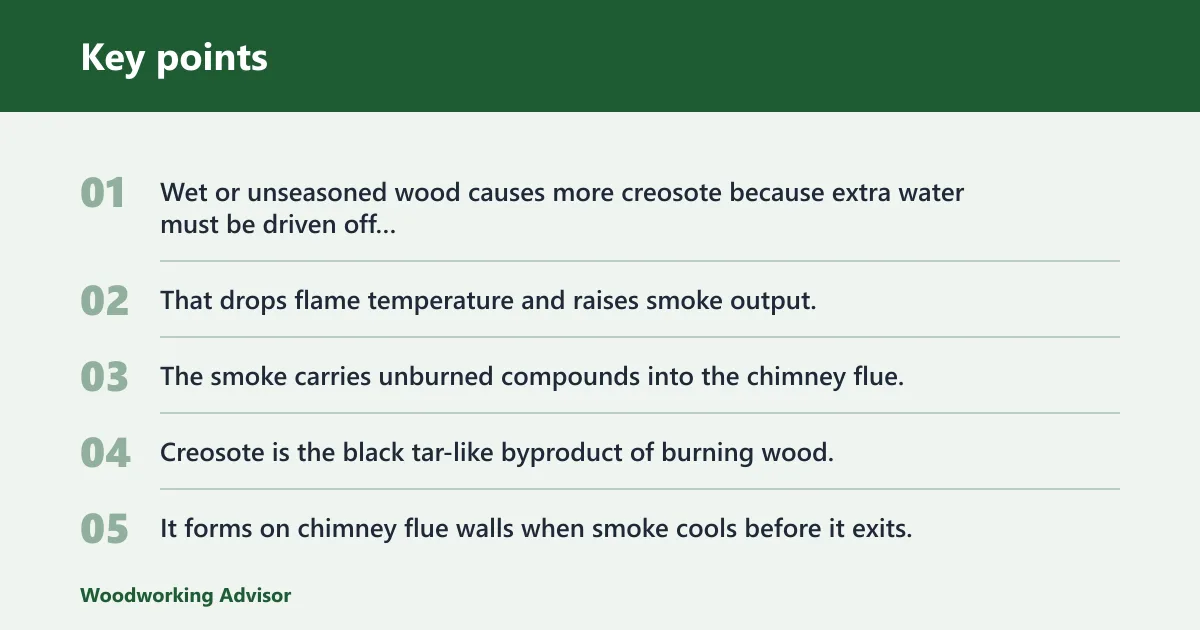


Yes. Wet or unseasoned wood causes more creosote because extra water must be driven off before the fuel burns fully. That drops flame temperature and raises smoke output. The smoke carries unburned compounds into the chimney flue, where they cool and condense into a dark tar-like residue.
Creosote is the black tar-like byproduct of burning wood. It forms on chimney flue walls when smoke cools before it exits. A hot, efficient fire sends more of those gases up the flue in a cleaner state, while a cool, smoky fire leaves more residue behind.
How creosote forms in a chimney
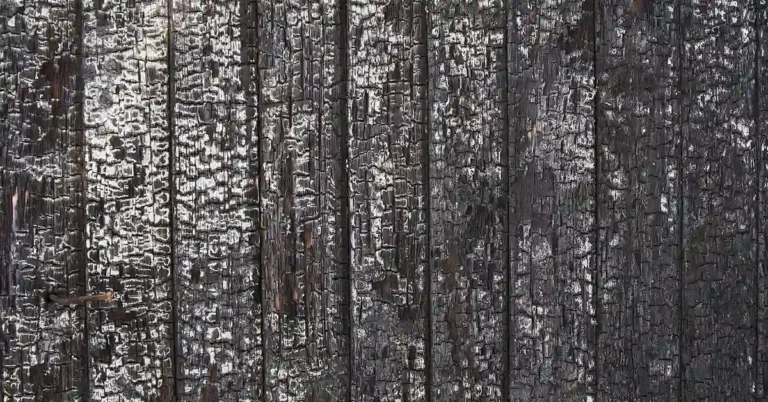
Creosote can form in stages as smoke cools on the flue wall. Stage 1 is mainly soot and is the easiest to clean. Stage 2 is black tar-like flakes. Stage 3 is often described as a hard, glossy glaze and is widely considered the most flammable form; it may need specialized tools or chemical softeners.
Draft quality matters because the chimney has to keep the smoke moving. If the flue stays cool, or if air supply is weak, smoke condenses faster on the walls. Annual chimney sweeping is recommended at least once per year so buildup is removed before it becomes harder to clear.
Why moisture makes the problem worse
Wet wood creates a chain reaction. First, heat is spent evaporating water. Then the fire burns cooler. Then the smoke is heavier and dirtier, which increases the amount of residue that can stick to the chimney flue. That is why wood with low moisture content helps keep creosote production down.
Insufficient air supply can add to the problem. A fire that is starved for oxygen burns incompletely and sends more smoke into a cooler flue. The result is thicker deposits, and in some cases stage 2 creosote can develop from burning wood that is too wet.
Why wet wood is bad to burn
Wet wood is bad to burn because it is harder to ignite, burns less steadily, and usually gives less usable heat. The moisture also creates hissy, smoky fire behavior that signals poor combustion. That does not mean every smoky fire is dangerous, but it does mean the fuel or airflow needs attention.
Common signs of wet wood include hard starts, hissing at the firebox, heavy smoke from the chimney, low heat output, dark glass on a stove door, and stubborn coals that refuse to burn down cleanly. Those signs often show up before serious creosote is visible in the flue.
Suppose a stove is loaded with a full firebox of wood that was brought in damp after rain. If the air control stays partly closed to keep the room from overheating, the fire may smolder longer, make more smoke, and leave more residue than the same stove loaded with dry fuel and better airflow.
Why dry wood burns cleaner
Dry, seasoned wood reaches a hotter burn with less effort. That hotter burn supports more complete combustion, which means less smoke, less condensation in the flue, and less creosote overall. The difference is most obvious when comparing a lively fire with steady flames to a lazy fire that just smolders.
| Fuel and fire condition | Typical burn behavior | Creosote risk |
|---|---|---|
| Dry, seasoned wood | Easy ignition, bright flame, higher heat | Lower |
| Wet or unseasoned wood | Hard starts, hissing, smoky fire, low heat | Higher |
| Closed-down, oxygen-starved fire | Slow, lazy burn with more smoke | Higher |
| Hot, efficient fire with good airflow | Steady flame and cleaner exhaust | Lower |
What kind of wood fire creates the most creosote?
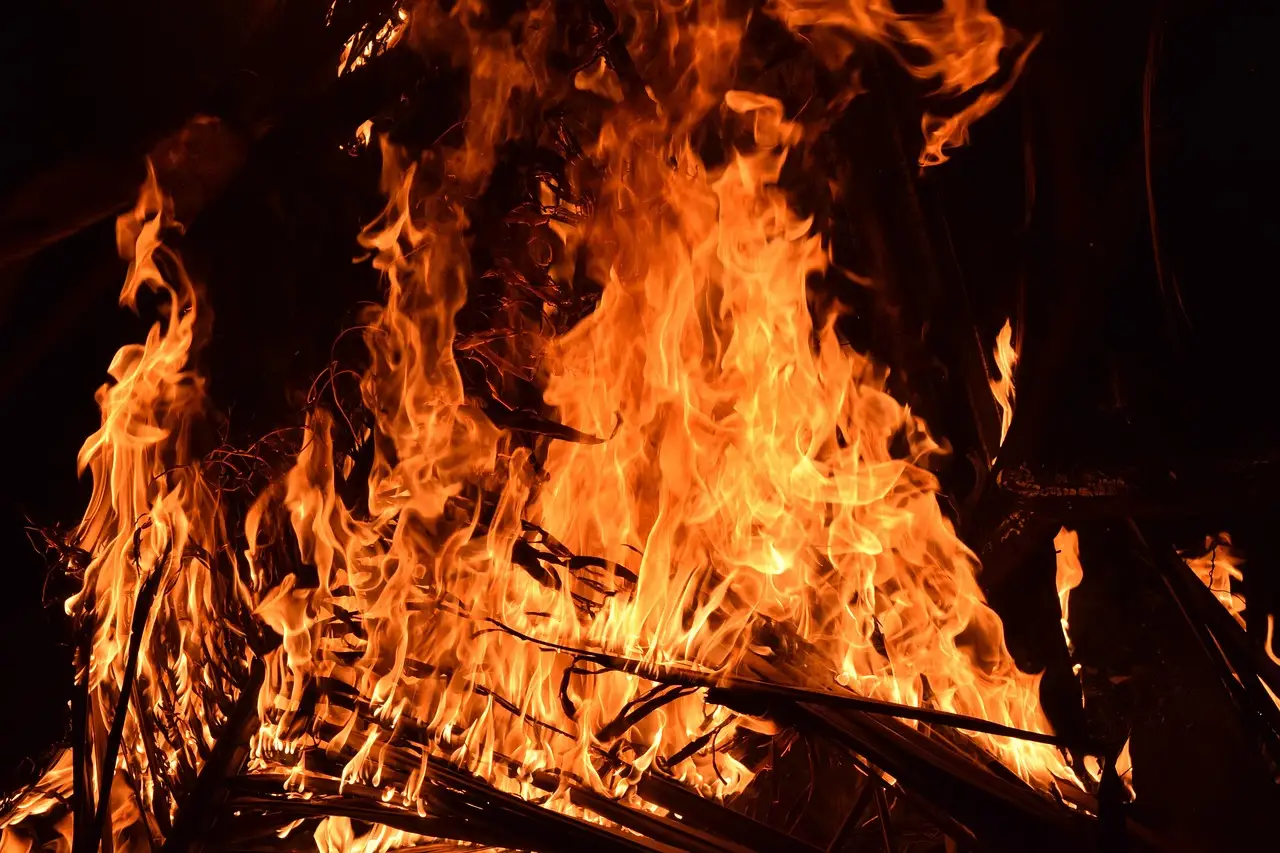
The fires that create the most creosote are low-temperature, oxygen-starved fires, especially overnight smoldering fires and fires run with the air control too far closed. Those conditions make more smoke and cool the flue, which gives creosote more chances to stick and harden.
Fireplaces and wood stoves do not behave the same way. A fireplace typically loses more heat up the chimney, so it can cool smoke quickly if the fire is small or slow. A wood stove usually controls air more tightly, so a closed-down setting can turn a fire from efficient to smoky very fast.
Fireplace and stove differences
In a fireplace, an oversized flue or a cold exterior chimney can pull heat out of the smoke before it leaves the system. In a stove, restricted air control can do the same job from the other end by dropping fire temperature. Both problems raise the odds of condensation on the flue walls.
Picture a fireplace with a tall exterior chimney on a cold day. If the fire is small and the damper is only partly open, the flue may stay cool long enough for smoke to condense. The wood may be fine, but the appliance and draft are still setting up a creosote problem.
Common draft and airflow failures
Poor draft can show up as sluggish startup, smoke spilling into the room, or a fire that will not stay bright. Restricted dampers, a blocked cap, an oversized flue, or an exterior chimney all make it harder to keep flue temperatures high enough to limit condensation.
- Check whether the fire lights reluctantly and dies back quickly.
- Look for smoke roll-out when the door opens or the damper changes position.
- Notice whether the chimney seems slow to draft on cold starts.
- Watch for repeated dark deposits even when wood quality seems acceptable.
Is wet wood the main creosote problem?
Use these yes/no checks to separate wet fuel from airflow or appliance trouble. If several answers point to wet wood, the fuel is likely a major driver of the creosote issue. If the fuel looks dry but the chimney still smokes or drafts poorly, the problem may sit in the flue or appliance instead.
| Check | Yes or no | What it suggests |
|---|---|---|
| Are logs hard to light and slow to catch? | Wet or unseasoned wood is likely | |
| Do you hear hissing or see steam from the wood? | Excess moisture is burning off | |
| Does the fire make heavy smoke before it settles? | Incomplete combustion is likely | |
| Does the stove or fireplace struggle to reach a hot flame? | Fuel moisture or weak draft may be involved | |
| Is the glass darkening quickly with soot? | Smoke and incomplete burn are building up | |
| Do coals stay stubborn and smoky instead of burning down cleanly? | Smoldering conditions are present | |
| Does the chimney draft poorly even with a hot fire? | Draft, damper, or flue cooling may be the main issue | |
| Do you see shiny glaze, black flakes, or loose soot in the flue? | Schedule a sweep; buildup is already present |
If you answered yes to the first six checks, wet wood is likely a major cause of the creosote problem. If you answered yes mainly to the last two, stop burning and schedule a sweep before more fuel is added. Either way, repeated smoke problems should not be treated as normal.
Signs your chimney has buildup
How do you know if your chimney has dangerous creosote buildup? Look for warning signs at the appliance and in the flue. Poorly burning fires can be a sign of creosote buildup, and reduced draft can point to narrowing in the chimney from deposits.
Stage 1, stage 2, and stage 3 signs
Stage 1 creosote looks like soot or powder and is usually the easiest to remove with standard brushing. Stage 2 creosote looks like black tar-like flakes and is harder to clean. Stage 3 creosote is a thick, glossy glaze and is the most flammable form, so it needs prompt attention.
Stage 2 creosote is often tied to damp wood and poor airflow. Stage 3 is the most serious because it clings hard to the flue and can ignite more easily if another hot fire or spark reaches it. That is why prevention is easier than cleaning after the fact.
When to stop burning and schedule a sweep
Stop burning and schedule a sweep if you see shiny glaze, repeated smoke roll-out, a strong creosote smell, or a clear drop in draft that does not improve. If the chimney already has stage 3 material, do not keep adding fuel in hopes that it will burn away. It will not.
Chimney sweeping is recommended at least once per year, and sooner if you burn a lot of wood, use an older appliance, or notice draft trouble. A sweep may use brushes, rotary tools, or chemical softeners depending on the buildup stage and the chimney’s condition.
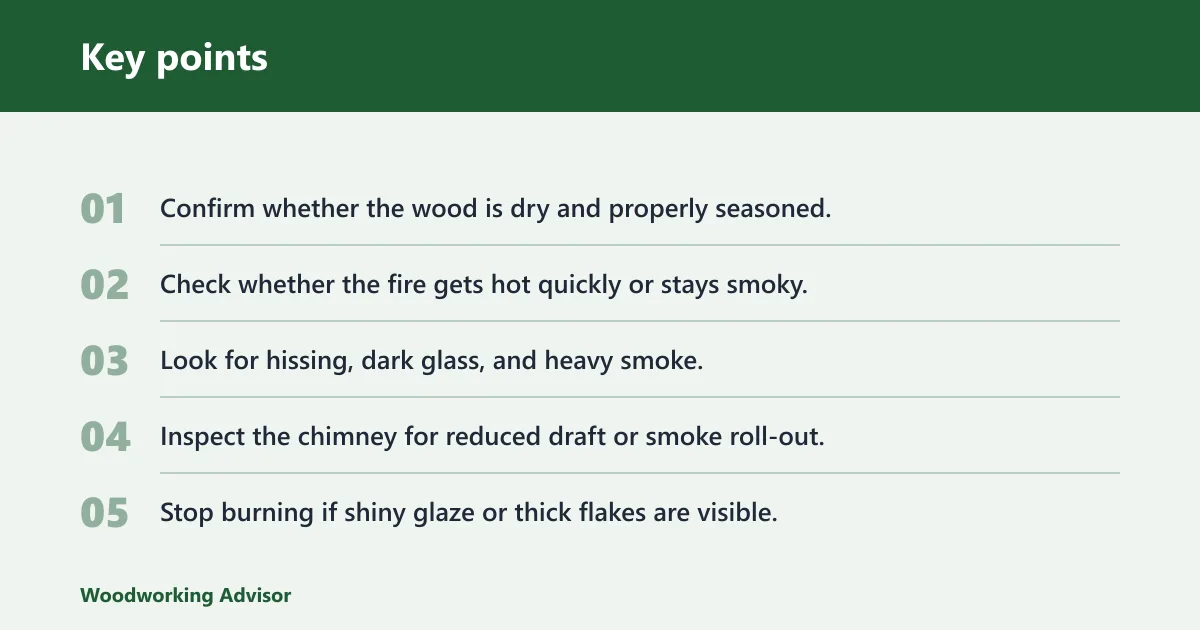
- Confirm whether the wood is dry and properly seasoned.
- Check whether the fire gets hot quickly or stays smoky.
- Look for hissing, dark glass, and heavy smoke.
- Inspect the chimney for reduced draft or smoke roll-out.
- Stop burning if shiny glaze or thick flakes are visible.
- Schedule a chimney sweep if buildup is present or suspected.
- Have the chimney inspected if the draft is still weak after cleaning.
Frequently asked questions
Does burning wet wood create creosote?
Yes. It can create creosote directly by increasing smoke and incomplete combustion. The result is often faster stage 1 soot buildup, and in worse cases stage 2 flakes or thicker deposits if the fire stays cool for long periods.
Does burning wet wood create more creosote?
Yes. Wet wood can produce much higher quantities of creosote than dry wood because the fire spends energy boiling off moisture instead of burning cleanly. That lower temperature allows more smoke to condense on the chimney walls.
Does wet wood cause creosote?
Yes, but not by itself alone. Wet wood is a major cause because it drives cooler, smokier burning, and the chimney’s draft and temperature then decide how much of that smoke condenses. Weak draft can make the problem worse fast.
How often should a wood-burning chimney be cleaned?
At least once per year is the baseline recommendation. Clean sooner if you burn often, use wood that may be damp, or notice poor draft, heavy smoke, or dark deposits. Annual sweeping removes buildup before it reaches harder stages.
How does creosote form in a chimney?
Creosote forms when smoke from wood combustion cools and condenses on the chimney flue walls. Soot and tar-like compounds stick there, then build layer by layer. Cooler flues, weak airflow, and smoldering fires all speed up that process.
Sponsored / affiliate links. As an Amazon Associate I earn from qualifying purchases. I may earn additional commission from eligible campaigns.