Is Pine Good Firewood? Creosote, Resin and Safe Uses
Yes, pine is safe firewood only when it is fully seasoned, split, and burned hot in a stove or fireplace that drafts well. As a rule, avoid wet pine and long, smoldering burns. Burn it badly, and you raise creosote buildup, smoke, and chimney-fire risk. This guide explains creosote, resin, seasoning, appliance fit, and when pine makes sense indoors or outdoors.
Pine firewood basics
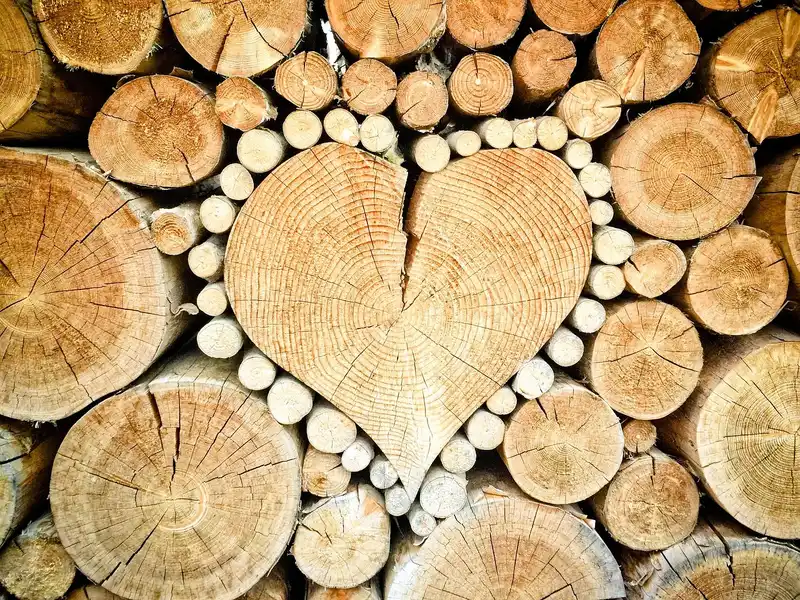
Pine is a softwood with high resin or sap content. That resin is why pine lights fast and splits easily when dry, but it also makes the wood smoke more if the fire is cool or the fuel is wet. Pine generally burns faster than many hardwoods.
That fast ignition helps. It also means pine is usually better as kindling or starter wood than as a long-burn fuel. When people ask whether pine is good firewood, the real answer depends on the firebox, the draft, and how dry the split really is.
Why pine lights fast
Resin helps pine catch quickly because it ignites with less heat than dense hardwood. That helps start a coal bed or wake up a cold stove. It helps less when the goal is a long, steady burn.
Wet pine does the opposite. Green wood holds more moisture, so more energy goes into drying the fuel in the firebox before it can burn cleanly. That means more smoke, more residue, and less useful heat.
How resin affects smoke and sparks
Resin and sap can make pine smell pleasant outdoors, but they can also increase smoke and sparking. That matters most in a fireplace or any setup with weak draft, because smoke lingers longer and deposits more residue in the flue.
Cutting and splitting pine can also be messier than handling many hardwoods. Sticky pitch can gum up tools and gloves, especially on fresh rounds or knots.
Is pine good firewood?
Pine is good firewood in the right role, not as a universal main fuel. Pine is often better for kindling, starter loads, quick outdoor fires, and boosting an existing coal bed. It is a weaker choice for slow, overnight, or low-air burns, especially in oversized or hard-to-draft appliances.
Appliance type changes the answer. A stove that can run hot with strong airflow can handle seasoned pine better than an open fireplace or a smoky, underdrafted setup. The wood itself is not the whole story; combustion conditions matter just as much.
When pine is a poor choice
Pine is a poor choice when the goal is a lazy fire, a low firebox temperature, or a long smolder. Those conditions leave more unburned vapors in the flue, where creosote forms. They also make the fire dirtier and harder to control.
It is also a poor choice if the wood is not dry, if the chimney is cold, or if the appliance already struggles with draft. In those cases, even seasoned pine can behave badly because the system cannot keep combustion hot enough.
How appliance type changes the answer
In a wood stove with strong draft, pine can work well as part of a hot fire. In an open fireplace, the same load may send more heat up the chimney and leave more smoke in the room. The difference is airflow control.
EPA-rated stoves are usually more forgiving because they are designed to burn cleaner when operated correctly. They still need dry fuel, an open enough air setting, and a hot start. Pine is not a free pass for poor stove operation.
Creosote and chimney safety
Creosote is the main chimney-safety concern people raise with pine. It is a sticky deposit that builds when smoke cools in the flue, especially during damp, slow, or poorly vented fires. That buildup raises chimney-fire risk and calls for annual inspection and cleaning.
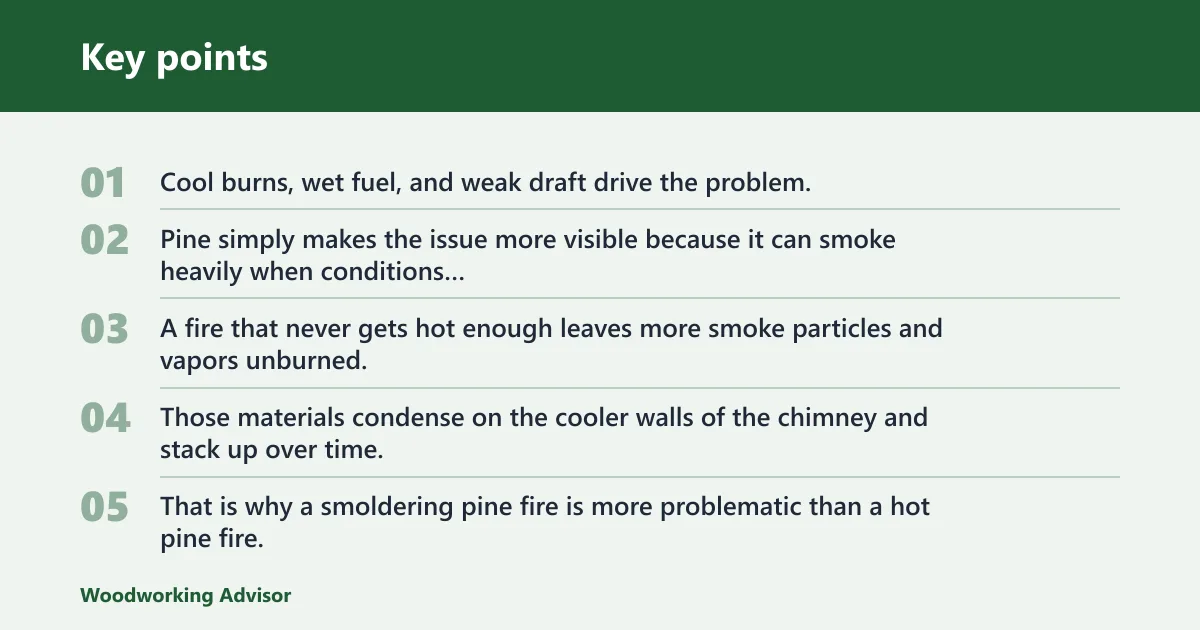
The risk is not pine alone. Cool burns, wet fuel, and weak draft drive the problem. Pine simply makes the issue more visible because it can smoke heavily when conditions are wrong.
How cool burns increase residue
A fire that never gets hot enough leaves more smoke particles and vapors unburned. Those materials condense on the cooler walls of the chimney and stack up over time. That is why a smoldering pine fire is more problematic than a hot pine fire.
A load of damp pine in a fireplace with the damper partially closed can leave residue behind. The fire may look active, but the flue stays cool and smoky. That setup leaves residue behind.
Why wet pine is a problem
Wet pine is harder to split cleanly, burns dirtier, and sends more moisture into the firebox. That moisture slows combustion and makes smoke linger. It also makes the fire less predictable, which is the opposite of what you want indoors.
A common first-timer mistake is to assume pine is “bad” when the real issue is fuel condition. Dry pine can be workable; green pine is a bad burn in almost any indoor setup.
Annual inspection and cleaning
Annual chimney inspection and cleaning are recommended for every fuel type, and they matter even more if you burn softwoods often. A yearly check helps catch creosote, damaged liners, and venting problems before they turn into a bigger hazard.
If a chimney has a history of cool burns or heavy smoke, inspection should not be delayed. Pine does not remove the need for maintenance; it makes maintenance more important when the fire is not kept hot.
Seasoning pine for burning
Pine commonly seasons for around six to twelve months, and some sources cite 6-8 months. The better target is not the calendar alone but a moisture content below 20%. That is the point where pine is far more likely to light cleanly and smoke less.
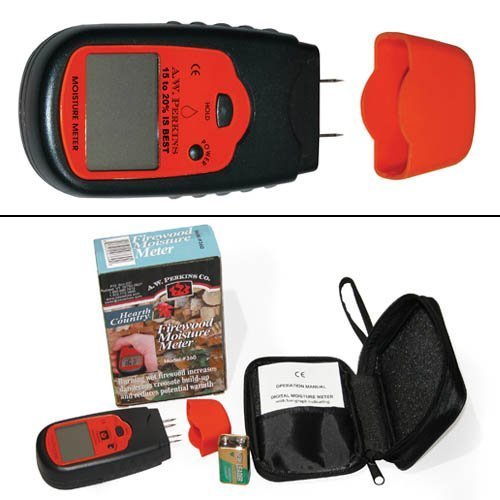
Freshly cut pine can still look ready because it splits easily once started, but looks are not enough. Use a moisture meter on a freshly split face, not just the outside surface. Surface dryness can hide wet centers.
How to check moisture content
Split a piece and test the exposed interior, because the split face tells you more than the bark or end grain alone. A meter reading below 20% is the practical target. If the reading is above that, give the stack more time and better airflow.
Even without a meter, a fresh split-face reading matters. If the interior feels cool and damp, or if the wood feels heavy for its size, it likely needs more seasoning. Dry pine should sound lighter and burn with less hiss.
Why green pine behaves poorly
Green pine carries more water, so it is harder to split and harder to burn cleanly. It tends to smolder, smoke, and waste heat evaporating moisture instead of warming the room. That is the wrong tradeoff for indoor heating.
Seasoned pine is safer than green pine because it reaches useful burn temperatures faster. That shorter smoke phase matters in any appliance with a chimney.
When pine is okay vs not okay
Pine works in some jobs and misses in others. The table below gives a simple rule for four common uses, based on dryness, airflow, and residue risk.
| Use case | Required dryness | Airflow setting | Risk level | Recommended role |
|---|---|---|---|---|
| Kindling | Very dry; below 20% moisture is the goal | High airflow | Low | Booster |
| Outdoor fire pit | Seasoned, with dry splits preferred | Open airflow | Low to moderate | Primary fuel or booster |
| EPA wood stove | Fully seasoned; test split face before use | Open enough for a hot start, then controlled | Moderate | Booster or primary fuel in hot burns |
| Open fireplace | Very dry, split small | Strong draft only | High | Avoid unless conditions are excellent |
This matrix is the clearest rule set for pine: use it freely outdoors, use it carefully in a stove, and be much more selective in an open fireplace. If the wood is damp or the draft is weak, the answer turns to no fast.
Can you burn pine indoors?
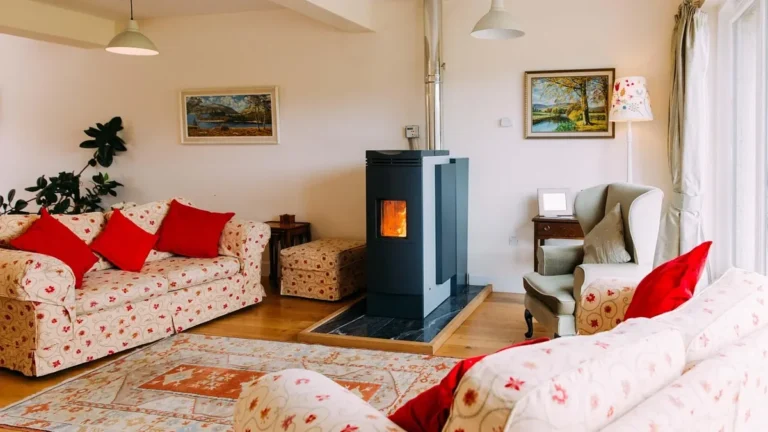
Yes, but only in the right appliance and only when the pine is seasoned properly and burned correctly. A wood stove with good draft, an open damper, and a hot start is a reasonable indoor use. A cold, smoky fireplace is not the same situation.
Indoor burning depends on getting the flue hot quickly and keeping the fire active rather than smoldering. If the appliance cannot do that, pine becomes a residue problem instead of a heat source.
Wood stove setup for hot fires
Use dry splits, open the air control enough to build a strong flame, and start with a hot kindling bed. A preheated flue helps the draft pull smoke up the chimney sooner. That shortens the dirty start-up phase.
Once the stove is hot, you can reduce airflow to maintain an active burn, but do not choke it down so far that the flames disappear and the load starts to smolder. That is where creosote risk rises.
Open fireplace limits
Open fireplaces are less forgiving because they often send more heat up the chimney and can leave the fire cooler in the box. Pine may still burn, but the margin for error is small. Use only very dry wood, small splits, and a strong draft.
If the fireplace room fills with smoke, stop adding fuel and correct the draft problem first. Pine is not the right wood for a fireplace that already struggles to vent.
Draft, damper, and flue conditions
Cold chimneys need a hotter start. Open the damper fully before lighting, and keep the initial load small enough to establish flame quickly. If the flue is cold and the appliance is oversized, pine can smolder before the draft catches up.
Suppose a large stove needs to heat a long flue in a cold house. A few dry pine splits can get the system moving, but a full load closed down too soon will likely smoke. The same wood, different result.
Pine species and heat output
BTU is the standard way to compare heat output per cord, but pine species vary a lot. Some pines burn closer to many people’s expectations for softwood, while others reach numbers that make them more useful than the “pine is always weak” rule suggests.
One page estimates some pines at about 14.3 to 17.1 million BTUs per cord. Another list gives pine firewood at 22 million per cord, with white pine at 15.9 BTUs, ponderosa pine at 16.2 BTUs, and lodgepole pine at 21.1 BTUs. Those figures are not identical, which is the point: species matters.
Why BTU numbers vary
Heat output changes with species, density, moisture, and how the wood is split and burned. Southern yellow pine is not the same as white pine, ponderosa pine, or lodgepole pine. That is why general pine advice can mislead if it ignores the exact wood on the pile.
Better-drying species and drier splits can outperform a higher-BTU label if the fuel reaches combustion temperature faster and smokes less. In practical terms, a clean burn often matters more than a paper number.
What heat output means for home heating
Pine can help heat a house, but it is usually better as part of a burn plan than as the only fuel. Its fast burn rate means you may need more frequent loading than with dense hardwoods. That can be fine in a stove with a responsive draft.
For many homes, pine works best as a starter, a shoulder-season fuel, or a daytime booster. It is less convincing as a long-night heating wood unless the stove and chimney support hot, controlled burns.
Frequently asked questions
Is pine good firewood for a fireplace?
Pine can work in a fireplace only if it is very dry and the chimney drafts strongly. Even then, it is a cautious choice because open fireplaces tend to burn cooler and lose more heat up the flue. For many homeowners, pine is better reserved for kindling or outdoor use.
Can you safely burn pine in a wood stove?
Yes, seasoned pine can be safe in a wood stove when you build a hot fire, keep airflow adequate, and avoid smoldering. The stove should draft well, and the flue should be warm enough to move smoke out quickly. Wet pine or a starved fire changes that answer.
Does pine cause creosote buildup in chimneys?
Pine can contribute to creosote buildup when it is burned cool, wet, or with poor airflow. The problem is less about pine alone and more about smoke condensing in a cold flue. Annual chimney inspection and cleaning are the right response no matter what wood you burn.
How long should pine firewood season before burning?
Pine commonly seasons for around six to twelve months, and some sources cite 6-8 months. The better target is moisture content below 20%, checked with a moisture meter on a fresh split face. If the reading is higher, the wood needs more time.
Is seasoned pine safer than green pine?
Yes. Seasoned pine lights more easily, burns cleaner, and is less likely to smoke heavily than green pine. Green pine holds more moisture, which makes it harder to split and more likely to produce dirty combustion. If you burn pine indoors, seasoning is not optional.
Is pine better for indoor use or outdoor fires?
Pine is usually better outdoors because smoke, sparks, and resin odor are less of a problem there. Indoors, it can work only in a stove or fireplace that drafts well and is loaded with dry wood. Outdoor fires give pine its most forgiving use case.
Sponsored / affiliate links. As an Amazon Associate I earn from qualifying purchases. I may earn additional commission from eligible campaigns.