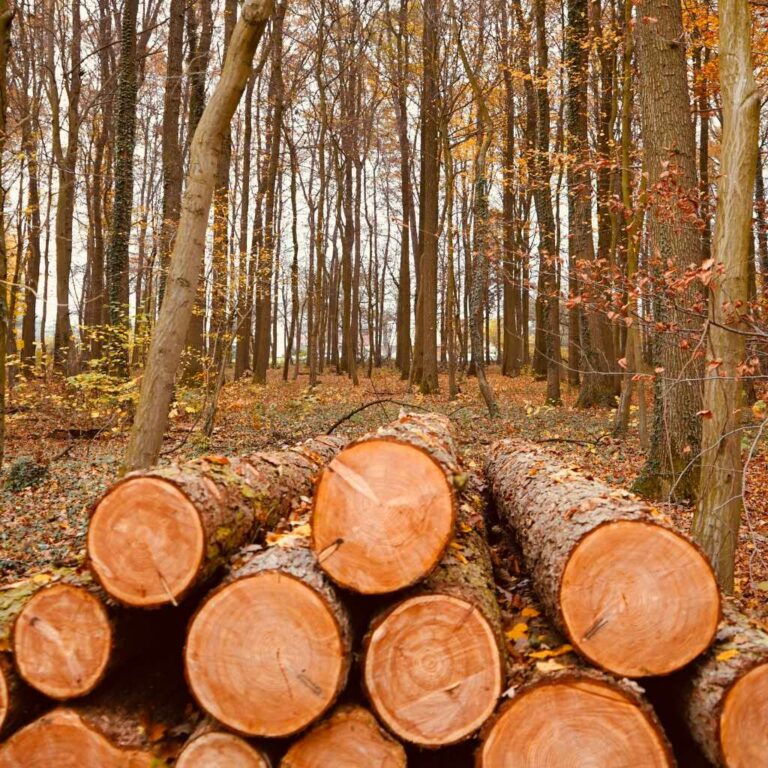
What Wood Creates the Most Creosote?
The woods that create the most creosote are wet or resin-heavy softwoods, especially pine, spruce, fir, cedar, and green wood of any species; the wetter the fuel, the more creosote, often far more than species alone. Poor burning clogs the chimney, cuts draft, and can ignite a chimney fire. This guide ranks the worst offenders and explains the moisture, temperature, and airflow conditions that matter most.
Resinous and green woods produce the most creosote
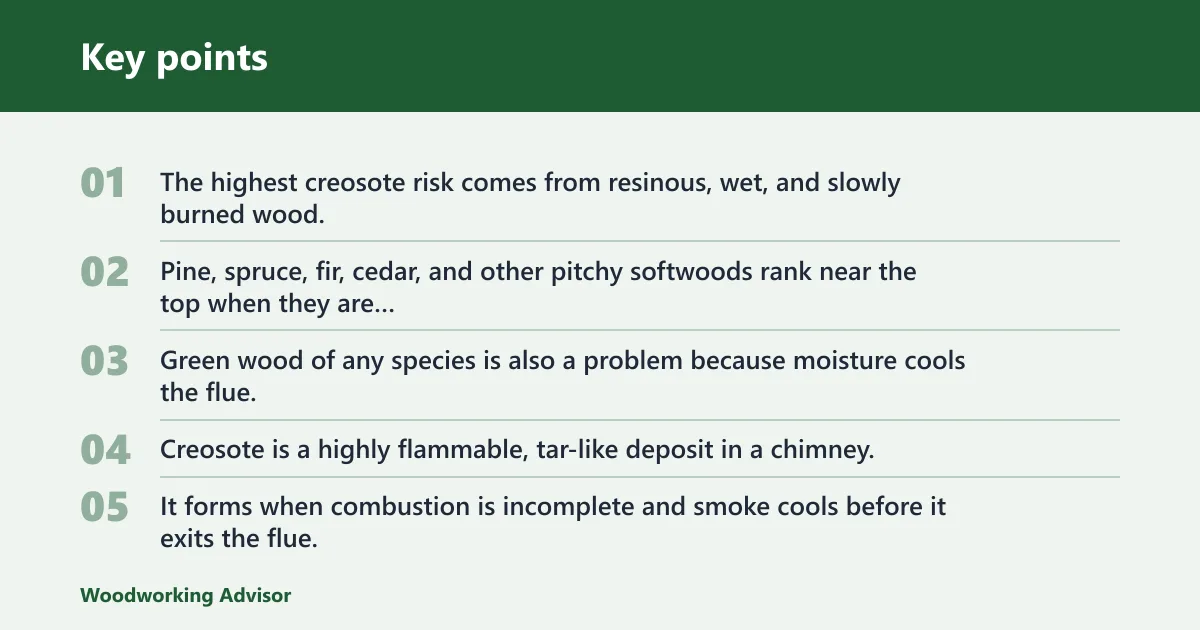


The highest creosote risk comes from resinous, wet, and slowly burned wood. Pine, spruce, fir, cedar, and other pitchy softwoods rank near the top when they are burned damp or allowed to smolder. Green wood of any species is also a problem because moisture cools the flue, raises smoke output, and increases condensation.
Why the answer changes with draft and flue temperature
Creosote is a highly flammable, tar-like deposit in a chimney. It forms when combustion is incomplete and smoke cools before it exits the flue. Cold chimney walls condense more vapors, and poor draft keeps those vapors in the system longer. A wood species that seems manageable in one setup can become a heavy depositor in another.
That is why species alone never tells the full story. A dry hardwood burned hot may leave far less buildup than a wet softwood burned slowly in a cool chimney. Appliance sizing matters too. If the firebox and chimney do not match well, the flue may never stay hot enough to carry smoke out cleanly.
How creosote forms in a chimney
Smoke contains fine carbon particles and tarry vapors. When those vapors hit cooler flue walls, they condense into soot-and-tar deposits. Vertical Chimney Care says burning wood produces creosote, and their page describes it as a combination of soot and tar. That deposit can accumulate from light dusting to thick glaze.
First degree creosote is the easiest to eliminate. Second degree creosote forms thick, shiny black flakes and needs power sweeping tools. Third degree creosote resembles glossy, thick tar dripping down the chimney, is incredibly difficult to remove, cannot be brushed off normally, and is highly flammable. Brushing Stage 3 glaze without pre-treatment can cause large sections to fall.
Do softwoods create more creosote than hardwoods?
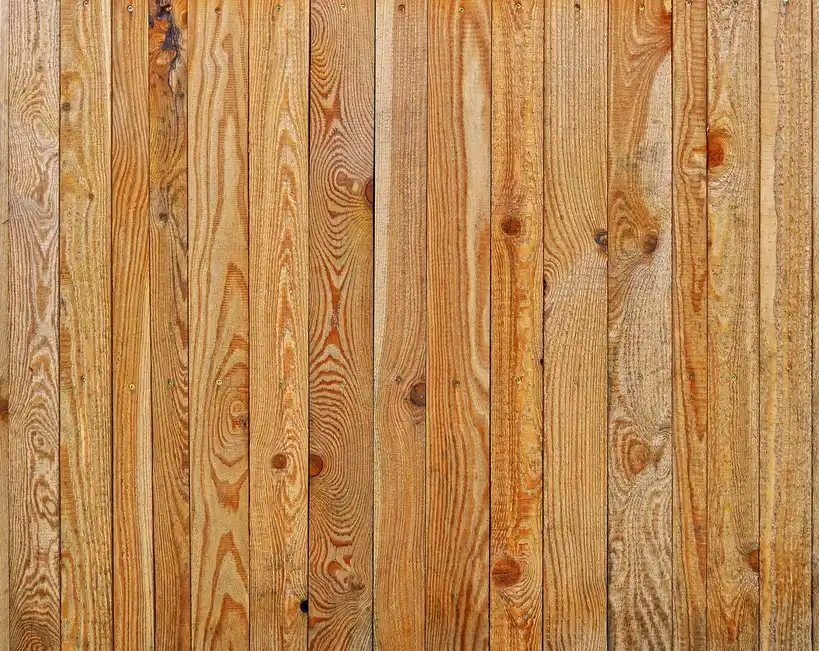
Softwoods often create more creosote than hardwoods because many are resinous and can smoke heavily when burned slowly. That is not a blanket rule. A dry hardwood burned in a cool, smoldering fire can still leave serious deposits, while a dry softwood burned hot and clean may leave much less.
Resinous softwoods that can be higher risk
Pine, spruce, fir, cedar, and similar softwoods usually deserve more caution because they tend to contain more resin. Resin does not automatically mean heavy creosote, but it gives a poorly burning fire more sticky material to condense in the flue. That risk rises sharply when the fire is starved for air or started with damp splits.
Picture a small stove loaded with pine that is closed down early to stretch the burn. The room may stay warm for a while, but the flue can cool enough for smoke to condense. In that case, the species matters less than the low-temperature burn pattern.
Hardwoods that still create heavy deposits
Hardwoods such as oak, maple, ash, and beech are not automatically safe from creosote. If they are wet, large, or burned in a weak draft, they can still smoke enough to coat the chimney. Wet hardwood often takes longer to come up to temperature, which lengthens the period when vapors condense on cold surfaces.
A common first-timer mistake is assuming “hardwood” means “safe.” A stack of oak that was split late and stored poorly can hold enough moisture to behave like marginal fuel. If the fire spends too much time in a low, smoky state, the deposit risk climbs fast.
Why species matters less than burn conditions in many homes
Species choice helps, but burn conditions decide much of the outcome. Wet fuel, restricted air, weak draft, and cold flue walls all push creosote formation upward. That is why the same cord of wood can behave differently in two homes, or even in the same home on a mild shoulder-season day versus a freezing night.
Does wet wood create more creosote than seasoned wood?
Yes. Wet wood creates more creosote than seasoned wood because moisture absorbs heat, lowers fire temperature, and increases smoke cooling in the flue. Burning wood with moisture content under 20% helps reduce creosote formation. When fuel is wetter than that target, the fire spends more energy drying itself before it burns cleanly.
Why damp fuel lowers fire temperature and raises smoke output
Moisture in the wood must evaporate before the wood can burn well. That evaporation steals heat from the firebox. The result is more smoke, cooler exhaust, and more condensation on chimney walls. The cooler and smokier the burn, the more likely the chimney is to collect tar-like deposits.
Suppose you load a fireplace with borderline fuel on a mild evening and close the air down to avoid overheating the room. The wood may light, but the fire can slide into a smoky, lazy burn. That is exactly the kind of low-temperature condition that leaves sticky buildup behind.
Why shoulder-season smoldering is a common failure case
Shoulder-season fires are a common problem because the home does not need much heat, so the fire is often turned down. Outside temperatures may also be mild enough that the chimney does not draft strongly. Those two conditions combine into a low flue temperature and more condensation. The result is more creosote, even with decent wood.
This is one reason regular sweeping matters. A chimney sweep or inspection can assess deposit stage before cleaning and catch buildup before it becomes a larger fire risk. Regular service is especially useful after a season of low, lazy fires.
Creosote risk matrix
The table below ranks common firewood types and burning conditions on a 1-5 risk scale, where 1 is low and 5 is high. It separates resin level, moisture risk, smoke output, likely creosote stage, and best-use notes so you can compare species with real burn conditions.
| Firewood type or condition | Risk score | Resin level | Typical moisture risk | Smoke output | Likely creosote stage | Best-use notes |
|---|---|---|---|---|---|---|
| Dry ash | 1 | Low | Low if seasoned | Low | Stage 1 at most | Good choice when split, stacked, and dried well. |
| Dry maple | 2 | Low | Low if seasoned | Low to moderate | Stage 1 | Burns cleaner when the fire is kept hot and steady. |
| Dry oak | 2 | Low | Moderate if not fully seasoned | Moderate | Stage 1 or Stage 2 | Strong fuel, but dense splits need full seasoning. |
| Pine | 4 | High | Moderate to high | High if burned slowly | Stage 2 or Stage 3 | Use only dry, hot burns; avoid long, low smoldering periods. |
| Spruce | 4 | High | Moderate to high | High if damp | Stage 2 or Stage 3 | Higher risk when the fire is throttled down too early. |
| Fir | 4 | High | Moderate to high | High if damp | Stage 2 or Stage 3 | Better only when dry and burned with strong airflow. |
| Cedar | 5 | Very high | Moderate to high | High | Stage 2 or Stage 3 | Among the worst choices for slow, low-temperature burns. |
| Green wood of any species | 5 | Varies | Very high | Very high | Stage 2 or Stage 3 | Avoid for normal heating; moisture drives the deposit problem. |
| Wet hardwood in a closed-down fire | 5 | Low to moderate | High | High | Stage 2 or Stage 3 | One of the most common real-world causes of heavy buildup. |
| Dry softwood burned hot and open | 2 | High | Low if seasoned | Low to moderate | Stage 1 | Risk stays lower when the fire is established and not smoldering. |
| Any wood burned with poor draft | 5 | Varies | Any | High | Stage 2 or Stage 3 | Poor draft traps smoke and can overwhelm even decent fuel. |
Read the table this way: resin raises the ceiling for risk, moisture pushes the fire toward smoke, and poor burn conditions decide whether deposits stay light or become glaze. That is why the worst chimney cases often involve more than one factor at once.
Which creosote stage is most dangerous?
Stage 3 is the most dangerous. It is glossy, thick, tar-like glaze that is highly flammable, and it can lead to chimney fire if it ignites. HETAS notes that large creosote deposits can cause carbon monoxide to re-enter the room, and chimney fires are the most common cause of combustible-deposit ignition.
Stage 1: light and flaky deposits
Stage 1 is the easiest to remove. It is usually a light, flaky deposit that standard sweeping can handle. Even though it is the least severe stage, it still matters because it can build toward harder deposits if the same burn conditions continue.
Stage 2: harder tar-like buildup
Stage 2 creosote forms thick, shiny black flakes. It is harder to remove and may require power sweeping tools. This stage often appears after repeated low-temperature burns, especially when the chimney has been allowed to stay cool while smoke keeps moving through it.
Stage 3: glossy glaze
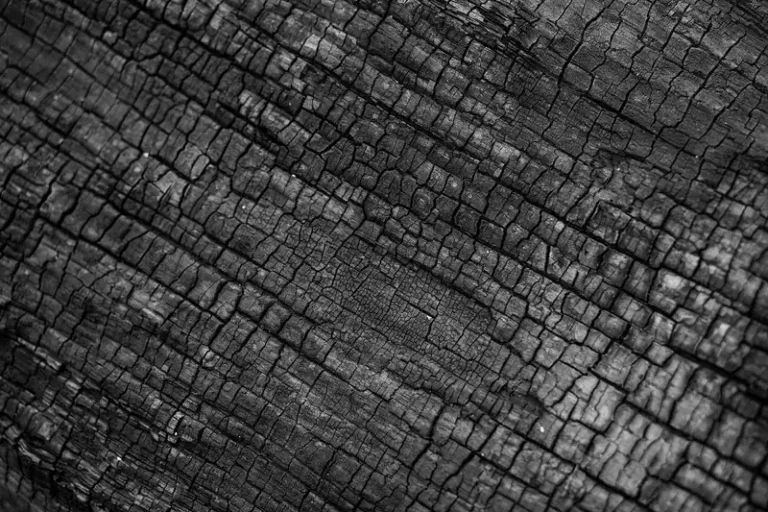
Stage 3 creosote resembles glossy, thick tar dripping down the chimney. It is incredibly difficult to remove, cannot be brushed off normally, and may need a chemical modifier or rotary chain removal. Because it is highly flammable, a sweep should assess it before any cleaning attempt.
How can you lower creosote buildup?
Burn dry wood, keep the fire hot enough to avoid smoldering, and make sure the chimney and appliance are sized correctly. Add regular inspection and sweeping. Those steps attack the main causes: wet fuel, smoke cooling, cold flue walls, and poor draft. That combination matters more than any single species label.
Practical homeowner rule for wood choice
- Choose seasoned fuel with moisture content under 20% whenever possible.
- Use dry hardwoods for longer, cleaner heat when available.
- Use resinous softwoods only when they are fully dry and the fire can stay hot.
- Avoid green wood, damp splits, and shoulder-season smoldering fires.
- If the chimney has a history of buildup, schedule an inspection before the next heating cycle.
Regular sweeping reduces risk because it removes deposits before they thicken and harden. A chimney sweep can also judge which stage is present before cleaning starts. That matters, because Stage 3 may need more than ordinary brushing, while Stage 1 often does not.
Burning small hot fires can reduce creosote buildup if “small” does not mean “smoldering.” The goal is a lively, well-drafted fire with enough heat to keep flue walls warm. A tiny, oxygen-starved fire does the opposite. It cools the chimney and increases condensation.
Frequently asked questions
What wood creates the most creosote?
Wet or resin-heavy softwoods create the most creosote, especially pine, spruce, fir, and cedar. Green wood of any species also ranks high because moisture cools the flue and increases smoke condensation. In real homes, the worst buildup usually comes from wet fuel burned slowly in a cool chimney.
Which firewood is worst for a fireplace flue?
The worst fuel for a fireplace flue is wet, resinous wood burned in a low-temperature fire. Pine, spruce, fir, cedar, and green wood of any species are common troublemakers. The risk climbs further when the fireplace is closed down too early or the chimney drafts poorly.
How does creosote form in a chimney?
Creosote forms when wood smoke does not burn completely and then cools against the chimney walls. The smoke’s tarry vapors condense and stick to the flue, starting as light soot and moving toward flakes and glaze. Cold walls, poor draft, and damp wood all speed that process.
What stage of creosote is the most dangerous?
Stage 3 is the most dangerous because it is a glossy, thick tar-like glaze that is highly flammable. It cannot be brushed off normally and may need chemical treatment or specialized removal tools. It also raises chimney fire risk and can contribute to carbon monoxide leakage.
Can small hot fires reduce creosote buildup?
Yes, if they stay hot and well drafted. A small fire that burns cleanly can reduce deposits compared with a smoky, throttled-down fire. But a small smoldering fire does the opposite. The key is heat and airflow, not fire size alone.
Sponsored / affiliate links. As an Amazon Associate I earn from qualifying purchases. I may earn additional commission from eligible campaigns.