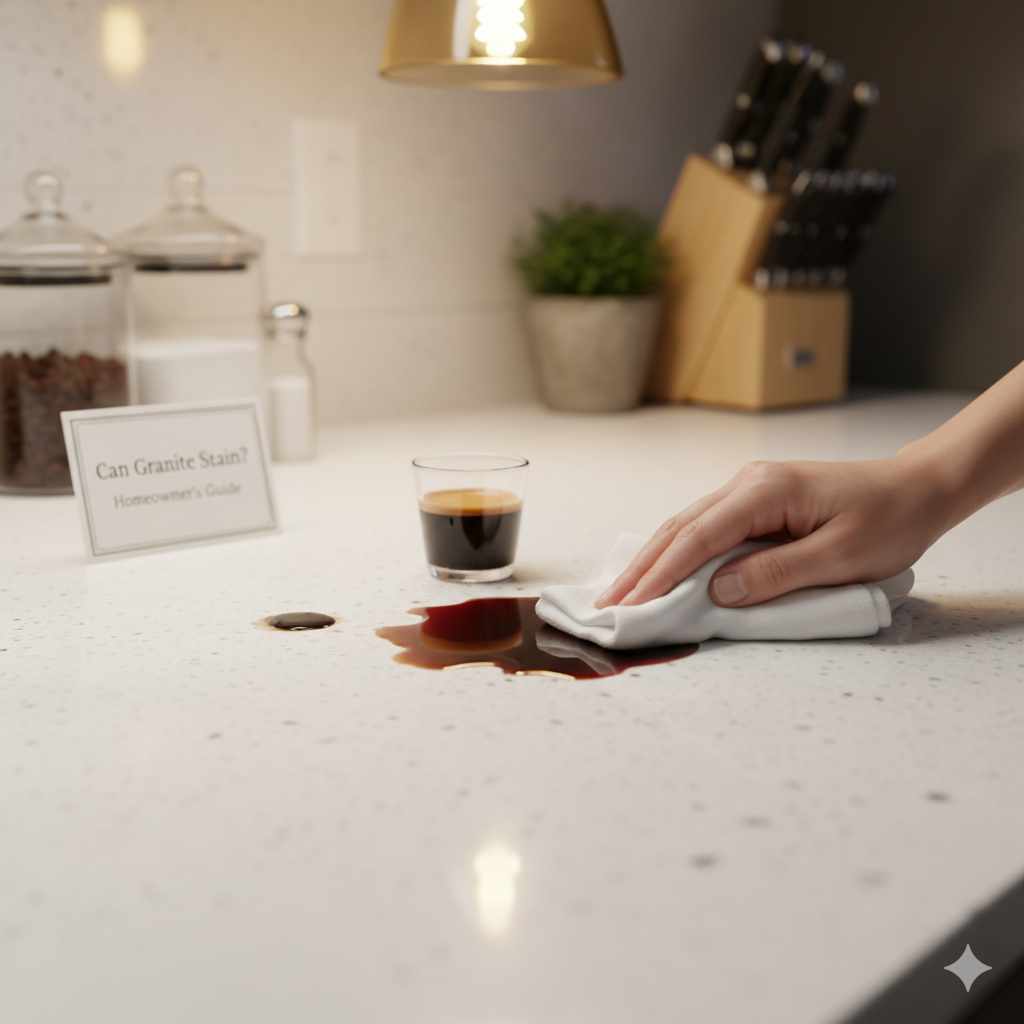
Can Granite Countertops Stain? A Guide for Homeowners
If you’re wondering, Can Granite Countertops Stain?, you’re not alone! It’s a very common question, especially for those new to granite. Granite is beautiful, but it can seem a bit tricky to care for at first. Don’t worry, though. The good news is, we’re here to help. This guide will take you step-by-step through everything you need to know to keep your granite countertops looking great for years to come. We’ll explore why staining happens, what you can do to prevent it, and how to fix stains if they occur. Let’s get started!
What Makes Granite Countertops Susceptible to Stains?
Granite is a natural stone, formed over millions of years deep within the earth. It is prized for its beauty, durability, and unique patterns. However, despite its strength, granite is porous. This means it has tiny holes and spaces within its structure. Liquids can seep into these pores, and if they contain staining agents like oils, acids, or dyes, they can leave behind noticeable marks. The level of porosity varies from one granite slab to another, depending on its mineral composition and how it was formed. Some granite varieties are more susceptible to staining than others. The lighter the color of the granite, the more visible stains tend to be. This is why proper care and maintenance are important to keep your countertops pristine.
The Anatomy of Granite: Understanding Porosity
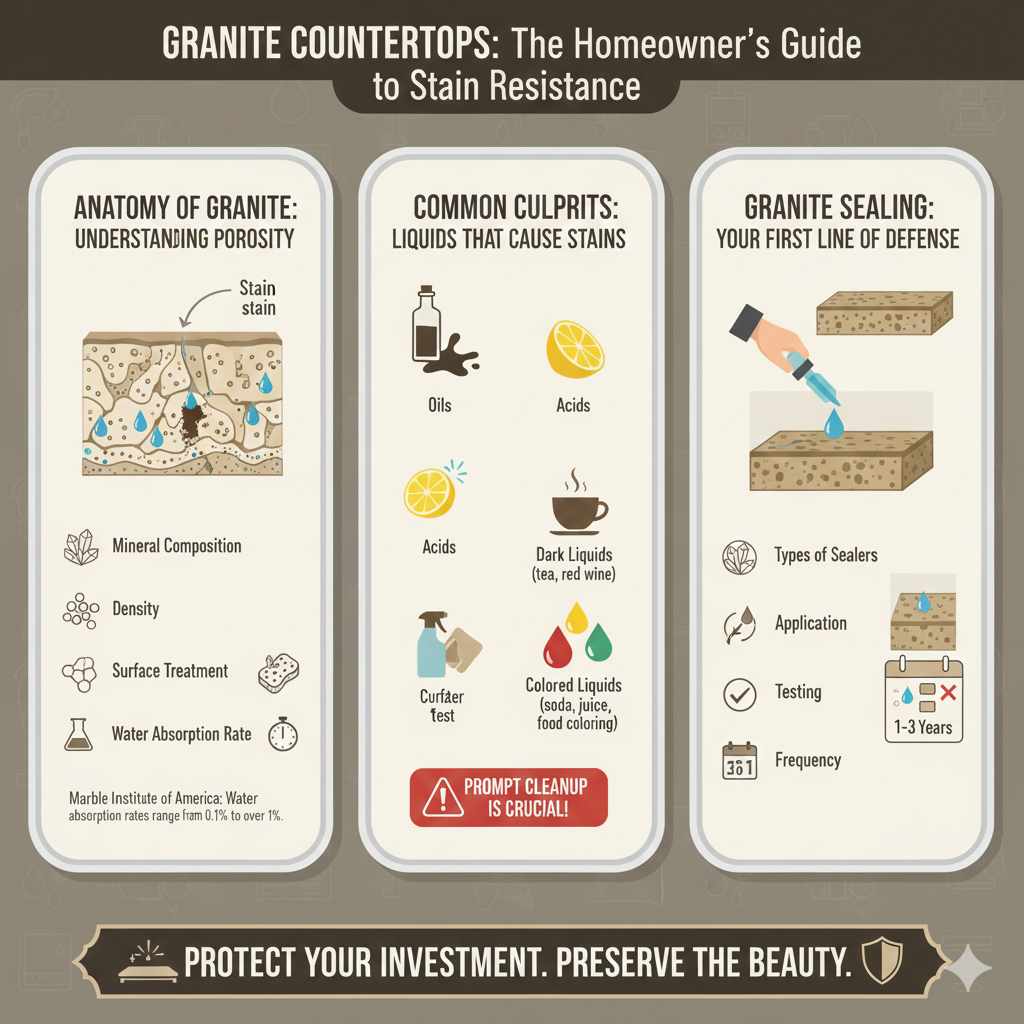
Granite’s porosity is a key factor in how it behaves. The tiny pores act like miniature sponges, absorbing liquids that come into contact with the surface. When a liquid with color or oils penetrates these pores, it becomes trapped, leading to a stain. Different types of granite have different levels of porosity. For example, denser granite may absorb less liquid compared to a more porous variety. The size and interconnectedness of these pores also play a role. Larger, more connected pores allow liquids to spread more easily, increasing the likelihood of staining. Knowing the porosity of your specific granite can help you anticipate its staining potential and adjust your care routine accordingly. Regular sealing is critical to minimize the impact of these pores.
- Mineral Composition: The types and amounts of minerals in granite affect its porosity. For instance, granite with more feldspar might be less porous than granite with more mica.
- Density: Denser granite has fewer pores, making it less absorbent. Density is measured by how closely packed the mineral grains are.
- Surface Treatment: Polishing and sealing can reduce porosity. Polishing closes some pores, while sealing provides a barrier against liquid penetration.
- Water Absorption Rate: This is a test that measures how much water the granite absorbs over a set time. Lower water absorption means the granite is less likely to stain.
According to the Marble Institute of America, a study showed that the water absorption rate in various granites can range from 0.1% to over 1%.
Common Culprits: Liquids That Cause Granite Stains
Several everyday liquids can stain granite countertops if not addressed promptly. These substances often contain color pigments, oils, or acids that can penetrate the stone’s surface. Oil-based products like cooking oils, olive oil, and certain lotions are particularly problematic because they soak into the granite and are difficult to remove. Acids, found in citrus juices, vinegar, and wine, can etch the surface, creating a dull spot that may appear as a stain. Dark-colored liquids like coffee, tea, and red wine can also leave behind unsightly marks. Promptly wiping up spills is crucial, and using a sealant helps to protect the granite by creating a barrier that prevents liquids from entering the pores. This proactive approach ensures the long-term beauty of your granite countertops.
- Oils: Cooking oils, olive oil, and other oil-based products are absorbed easily. They leave dark, persistent stains.
- Acids: Citrus juices (lemon, lime), vinegar, and wine can etch the surface, making it look stained.
- Dark Liquids: Coffee, tea, and red wine contain pigments that can stain granite. These are often the most noticeable stains.
- Colored Liquids: Sodas, juices, and food coloring also introduce pigments that can penetrate granite and cause discoloration.
Granite Sealing: Your First Line of Defense
Sealing is one of the most important things you can do to protect your granite countertops. Granite sealers work by filling in the pores of the stone, creating a protective barrier against liquids. This barrier prevents liquids from penetrating the stone and causing stains. Sealing granite is a relatively simple process that you can do yourself, or you can hire a professional. The frequency of sealing depends on the type of granite you have and how much use your countertops get. Generally, most granite countertops should be sealed annually, though some high-use areas might need sealing more often. Regular sealing is a critical step in preserving the beauty and longevity of your granite.
- Types of Sealers: There are two main types of granite sealers: impregnating sealers and surface sealers. Impregnating sealers penetrate the stone and provide protection from within, while surface sealers create a coating on top.
- Application: Sealer application usually involves cleaning the surface, applying the sealer according to the manufacturer’s instructions, and wiping away any excess.
- Testing: The “water test” can show you if your granite needs sealing. Place a few drops of water on the surface; if the water beads up, the granite is sealed. If the water is absorbed, it’s time to reseal.
- Frequency: Most granite needs sealing every one to three years, but high-use areas may require more frequent sealing.
Identifying and Addressing Granite Stains
Even with careful precautions, stains can still happen. Recognizing a stain’s type is key to effective removal. Different stains require different approaches. Oil-based stains may need poultices, while water-based stains might respond well to a simple cleaning solution. Some stains may be superficial, while others are deep-seated, requiring more aggressive methods. Knowing how to identify the stain source can also help you avoid future incidents. Regular cleaning, timely responses to spills, and knowing how to troubleshoot stains contribute to maintaining granite countertops’ appearance. Always test any cleaning solution in an inconspicuous area before applying it to the entire surface to avoid damaging the stone.
Types of Granite Stains and How to Identify Them
Identifying the type of stain you’re dealing with is the first step in addressing it effectively. Stains on granite countertops can vary widely in appearance, depending on the source of the stain. Oil stains typically appear as dark, greasy patches that may deepen over time. Water-based stains can be more varied, ranging from light rings from water spots to deeper discoloration from spilled liquids like coffee or red wine. Biological stains, like mold or mildew, often appear as dark or greenish spots, typically in areas with high humidity. Metallic stains may show as rust-colored marks caused by metal objects left on the surface. Understanding the visual characteristics of different stain types is critical for choosing the right cleaning approach.
- Oil Stains: Dark, greasy patches. They may darken over time and be resistant to water-based cleaners.
- Water-Based Stains: Can range from light water spots to deep discoloration from liquids like coffee or tea.
- Biological Stains: Often appear as dark or greenish spots, usually related to mold or mildew growth in damp areas.
- Metallic Stains: Typically rust-colored, stemming from metal objects such as cans or utensils.
- Organic Stains: These can vary in color and are often caused by food spills or plant-based substances.
Step-by-Step Guide to Removing Granite Stains
Removing stains from granite requires a systematic approach, starting with the least aggressive methods and moving to stronger solutions if necessary. Begin by identifying the stain type, which informs your cleaning approach. For light stains, start with a simple cleaning using a pH-neutral cleaner specifically designed for granite and a soft cloth or sponge. For oil-based stains, apply a poultice made from baking soda and water or a commercial poultice product, allowing it to sit on the stain for several hours before wiping it away. Water-based stains might respond well to a gentle application of hydrogen peroxide. Always test the cleaning solution in an area that is not readily visible before applying to the entire surface. If these methods fail, consider professional cleaning services.
- Identify the Stain: Determine what caused the stain (oil, water, etc.) to choose the best cleaning approach.
- Clean the Area: Use a pH-neutral cleaner and a soft cloth to remove surface dirt and debris.
- Apply a Poultice (for Oil Stains): Mix baking soda and water to a paste and apply over the stain, covering with plastic wrap. Allow it to sit for 24-48 hours.
- Use Hydrogen Peroxide (for Water-Based Stains): Apply hydrogen peroxide and cover with plastic wrap; let it sit for a few hours.
- Rinse and Dry: After removing the poultice or cleaner, rinse the area with clean water and dry with a soft cloth.
- Reseal: Once the stain is gone, reseal the granite to protect against future stains.
According to the National Kitchen & Bath Association, professional stain removal can cost anywhere from $75 to $200 per hour depending on the stain type and severity.
When to Call a Professional
While many granite stains can be managed with do-it-yourself methods, there are instances where professional help is necessary. Persistent or severe stains that do not respond to cleaning attempts are usually best handled by a professional. Professionals have the specialized equipment, cleaning agents, and expertise needed to remove stubborn stains without damaging the granite. If you’re unsure about how to proceed or worry about harming the granite, calling in an expert is a wise decision. They can assess the situation, determine the stain’s source, and recommend the best course of action. This ensures the granite countertops are cleaned properly and helps preserve their beauty and value. Professional help can prevent mistakes that might worsen the stain or damage the stone.
- Persistent Stains: If you’ve tried several DIY methods and the stain remains, it’s time to call in the experts.
- Unknown Stain Sources: If you’re not sure what caused the stain, a professional can identify the cause and recommend a solution.
- Deeply Penetrated Stains: If the stain has gone deep into the stone, professional cleaning can often provide better results.
- Risk of Damage: If you’re unsure of your cleaning abilities, or if you’re worried about damaging the stone, it’s better to hire a pro.
Preventing Stains on Your Granite Countertops
Preventing stains is always the best approach. Proactive measures can greatly reduce the likelihood of staining your granite countertops, helping to maintain their beauty and longevity. This requires a combination of proper care, regular maintenance, and mindful practices. Promptly wiping up spills, using cutting boards, and avoiding harsh chemicals are essential. Sealing your countertops regularly creates a protective barrier, reducing the ability of liquids to penetrate the stone. By following these steps and incorporating good habits, you can keep your granite countertops looking great for years.
Daily Care Habits: Tips for Stain Prevention
Incorporating daily habits can play a major role in preventing stains on granite countertops. Regularly cleaning the surfaces with a pH-neutral cleaner and a soft cloth helps remove any food spills, grease, or debris. This stops these substances from lingering on the surface and potentially seeping into the stone. Always use cutting boards to prepare food, especially when dealing with acidic or oil-based ingredients. Avoid placing hot items, such as pots and pans, directly on the granite, as extreme heat can damage the sealant and make the stone more vulnerable to stains. With a little daily effort, you can significantly reduce the risk of staining your granite countertops and enjoy their beauty for a long time.
- Wipe Up Spills Immediately: The quicker you clean a spill, the less time it has to penetrate the granite.
- Use Cutting Boards: Always use a cutting board when preparing food to avoid scratches and potential staining from acidic liquids.
- Avoid Harsh Chemicals: Use pH-neutral cleaners specifically designed for granite to avoid damage.
- Use Coasters and Trivets: Protect your countertops from water rings and heat damage by using coasters and trivets.
- Regular Cleaning: Clean your countertops with a soft cloth and a pH-neutral cleaner daily or after each use.
Research shows that regular cleaning with a mild, pH-neutral cleaner can increase the lifespan of your granite countertops by several years.
Product Choices: Selecting the Right Cleaners
Choosing the right cleaning products is vital to maintaining your granite countertops. Not all cleaners are created equal, and some can harm the stone. It’s crucial to select cleaners specifically designed for granite or natural stone. These cleaners are typically pH-neutral and do not contain harsh chemicals or abrasive ingredients that can damage the sealant or etch the surface. Avoid using abrasive cleaners, such as those with bleach, ammonia, or vinegar, which can damage the granite over time. Instead, opt for products that are formulated to gently clean and protect granite, keeping it beautiful and preventing potential staining issues.
- pH-Neutral Cleaners: Look for cleaners labeled as pH-neutral. These are gentle and won’t harm the stone’s surface.
- Avoid Harsh Chemicals: Stay away from bleach, ammonia, and vinegar, as these can erode the granite.
- Read Labels: Always read the product label and follow the manufacturer’s instructions for use.
- Test in an Inconspicuous Area: Before applying any cleaner to the entire countertop, test it in an area that is not easily seen.
Long-Term Maintenance: Sealing and Beyond
Long-term maintenance extends beyond daily cleaning and involves periodic tasks to preserve your granite countertops’ beauty and durability. Regular sealing, at least annually, is the most important step to prevent staining. Sealing fills the granite’s pores, preventing liquids from penetrating the stone. Always inspect your countertops for any changes in appearance that might indicate a need for resealing. It’s also important to be cautious about leaving potentially staining materials on the surface. These practices, when combined, create a good long-term maintenance approach, ensuring your granite remains a focal point in your home for years.
- Reseal Regularly: Most granite countertops should be resealed every one to three years, depending on use.
- Monitor for Changes: Watch for any changes in the surface that might indicate the sealant is wearing off.
- Consider Professional Cleaning: Periodic professional cleaning can help keep your granite in top condition.
Frequently Asked Questions
Question: How often should I seal my granite countertops?
Answer: Most granite countertops need to be sealed every one to three years, depending on usage. High-use areas might need more frequent sealing.
Question: Can I use vinegar to clean my granite?
Answer: No, vinegar is acidic and can etch the surface of your granite, making it dull and more susceptible to stains. Use pH-neutral cleaners instead.
Question: What’s the best way to remove an oil stain?
Answer: Apply a poultice made from baking soda and water. Let it sit for 24-48 hours, then remove and rinse the area.
Question: What should I do if my granite gets stained?
Answer: Identify the stain type, clean the area, and try a poultice or hydrogen peroxide as needed. If the stain persists, call a professional.
Question: How do I know if my granite needs to be sealed?
Answer: Perform the water test: if water beads up on the surface, your granite is sealed. If it’s absorbed, it’s time to reseal.
Final Thoughts
So, Can Granite Countertops Stain? The answer is yes, they can, but with the right care and preventive measures, you can minimize that risk. Granite’s natural porosity makes it susceptible to stains from various liquids, including oils, acids, and colored substances. However, by understanding the nature of granite, using proper cleaning products, and establishing a regular sealing routine, you can keep your countertops looking fantastic. Immediate spill cleanup, using cutting boards, and selecting gentle cleaners are key. If stains do occur, there are effective steps to remove them, from poultices to specialized cleaning solutions. Remember, maintaining your granite’s beauty is an ongoing process. With a little effort, your granite countertops will remain a stunning feature in your home for years to come.