Can Stain Go Bad: The Proven, Dangerous Signs
Yes, wood stain absolutely can go bad. Expired stain will often become thick and jelly-like, develop a rancid smell, or permanently separate, refusing to mix. Using bad stain is dangerous for your project, leading to a sticky, blotchy finish that won’t dry properly, ultimately ruining your hard work and wasting materials.
Have you ever found an old can of wood stain hiding in your garage or basement? You pop the lid, hoping to use it for a new project, but something just doesn’t seem right. It’s a frustrating moment every DIYer faces. You wonder, “Can I still use this? Is it safe for my project?”
Don’t worry, you’re not alone. Trying to figure out if your stain is still good can be confusing. The good news is that there are clear, simple signs to look for. I’m here to walk you through exactly how to tell if your stain has expired. We’ll explore the dangerous signs, understand why using bad stain is a huge mistake, and learn how to store it properly so you can save money and get a beautiful finish every time.
What Makes Wood Stain “Go Bad”? A Simple Explanation
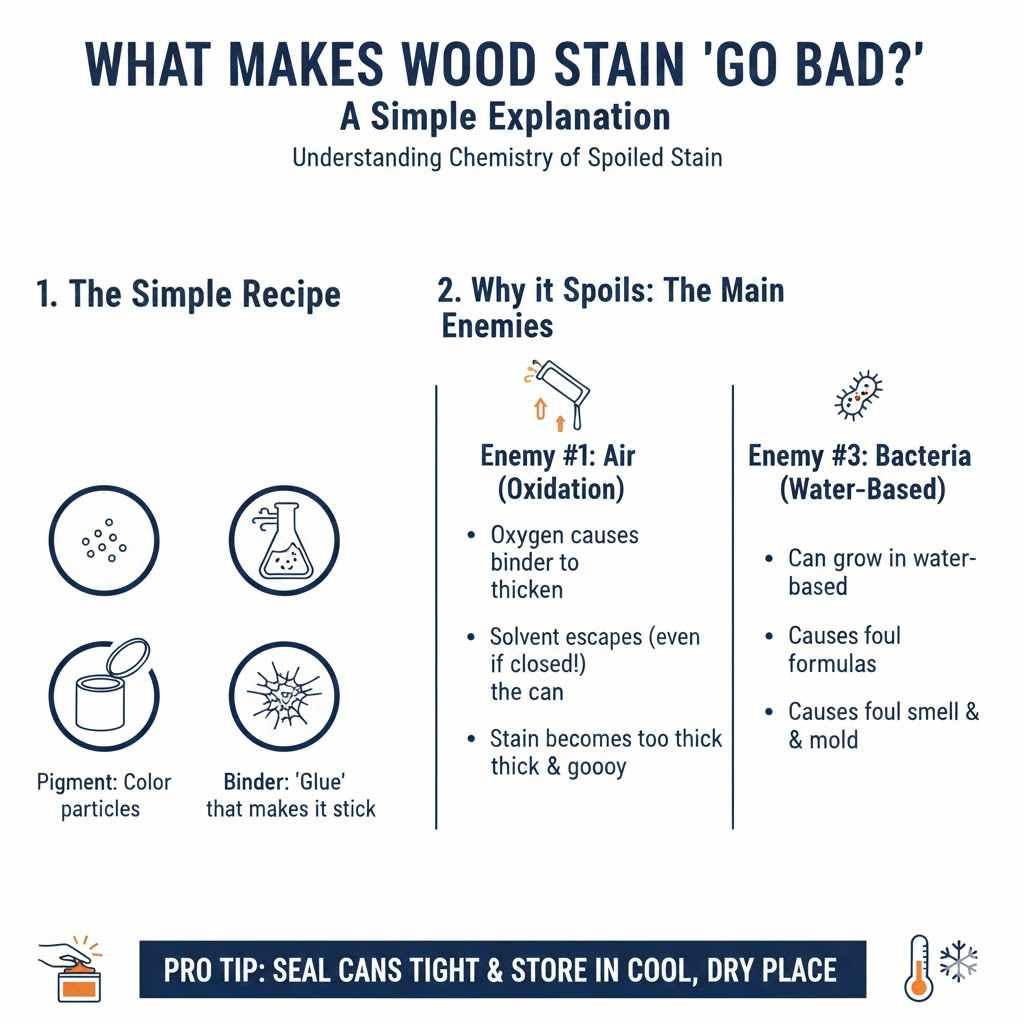
Before we dive into the warning signs, it helps to know what’s happening inside that can. Think of wood stain like a simple recipe with three main ingredients:
- Pigment: These are the tiny, solid particles that give the stain its color.
- Solvent: This is the liquid that carries the pigment and allows you to spread the stain easily. It can be oil-based or water-based.
- Binder: This is the “glue” that helps the pigment stick to the wood fibers after the solvent evaporates.
Over time, these ingredients can break down. Air is the biggest enemy. When you open a can of stain, oxygen gets inside and starts a process called oxidation. This causes the binder to start curing and thickening, long before it ever touches your wood. The solvent can also slowly evaporate, even from a closed can, leaving the mixture too thick. Finally, in water-based stains, bacteria can sometimes get in and grow, causing it to spoil just like old food.
Typical Shelf Life of Wood Stain
How long a stain lasts depends on its type and whether it’s been opened. An unopened can stored in a good spot can last for years. But once you break that factory seal, the clock starts ticking much faster. Here’s a general guide to help you out.
| Stain Type | Unopened Shelf Life | Opened Shelf Life |
|---|---|---|
| Oil-Based Stain | 3 to 5 years | 1 to 3 years |
| Water-Based Stain | 2 to 3 years | 1 year |
| Gel Stain | 2 to 3 years | 1 to 2 years |
Remember, these are just estimates. How you store the stain makes all the difference. A can left in a freezing garage or a hot shed will go bad much quicker than one kept in a climate-controlled basement.
The 5 Proven Signs Your Wood Stain Has Gone Bad
So, you’ve found that old can. How can you be sure it’s no good? Don’t rely on the date on the can alone. Instead, trust your eyes and nose. Here are the five proven signs that your stain is ready for the trash, not your project.
1. Unmixable Separation
It’s normal for the pigment and solvent in stain to separate over time. You should be able to stir it with a paint stick for a minute or two until it has a smooth, uniform color and consistency. However, if you stir and stir and a thick, sludge-like layer remains stuck to the bottom of the can, that’s a bad sign. This means the binder and pigments have permanently clumped together and will never mix properly again.
2. A Thick, Jell-O or Pudding-Like Texture
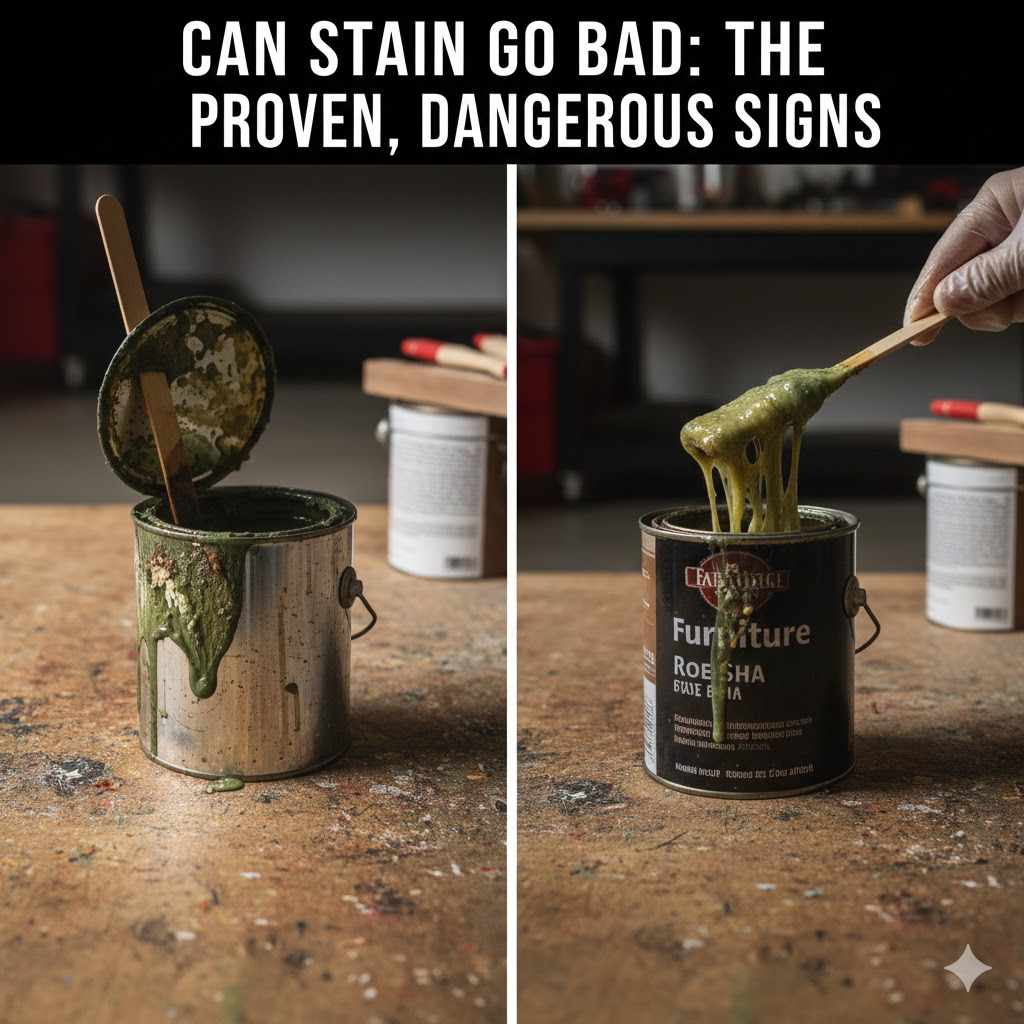
Fresh stain should be a thin liquid that drips easily from a stir stick. If you open the can and find a thick, gelatinous blob, the stain has gone bad. It might have the consistency of pudding, Jell-O, or even thick cottage cheese. This happens when the binder has started to cure inside the can due to air exposure. At this point, it’s unusable. No amount of stirring will bring it back to a liquid state.
3. A Rancid, Sour, or Chemical Smell
Give the can a gentle sniff. Fresh oil-based stains have a distinct chemical smell, while water-based ones are much milder. If the stain has gone bad, this smell will change. Spoiled water-based stains can develop a sour, moldy, or rotten smell, much like spoiled milk. Bad oil-based stains can smell sharp and rancid, which is different from their normal chemical scent. If it smells funky or just plain wrong, trust your nose.
4. Visible Mold, Mildew, or a Strange Film
This is most common in water-based stains. If you see fuzzy spots of mold or mildew floating on the surface or growing along the inside of the can, it’s contaminated. Sometimes, a wrinkly, skin-like film will form on the top of oil-based stains. While you can sometimes carefully remove a thin skin and use the stain underneath, a thick, leathery skin means the stain is too far gone.
5. Lumps, Gritty Bits, or Dried Skin
After stirring the stain thoroughly, lift the stir stick out and watch how the stain drips off. If it flows smoothly, you’re in good shape. But if you see small, hard lumps, gritty particles, or chunks of dried skin that won’t dissolve, the stain has expired. These bits are cured binder and pigment. If you try to use it, your final finish will be rough and uneven, not smooth and professional.
Quick Check: Good Stain vs. Bad Stain
Here’s a simple table to help you quickly compare the signs of a good stain versus one that has gone bad.
| Characteristic | Good to Go! | Throw It Out! |
|---|---|---|
| Consistency | Thin, liquid, and flows easily | Thick, jelly-like, pudding consistency |
| Mixing | Mixes smoothly back into a uniform color | Stays separated with thick sludge at the bottom |
| Smell | Normal chemical or mild scent | Rancid, sour, or moldy |
| Appearance | Uniform color after stirring | Lumps, grit, mold, or a thick skin on top |
| Dripping Test | Drips smoothly off a stir stick | Clumps up or drips with gritty particles |
The “Dangerous” Risks of Using Expired Stain on Your Project
When I say using bad stain is dangerous, I’m talking about the danger to your project. You’ve spent hours, maybe even days, sanding and preparing your beautiful piece of wood. Using expired stain can ruin all that hard work in an instant. It’s a gamble that simply isn’t worth taking.
- It Won’t Dry Properly: This is the most common and frustrating problem. The binders in expired stain have broken down, so they can’t cure correctly. You’ll be left with a sticky, tacky surface that attracts dust and smudges with the slightest touch. It might stay this way for weeks, or even forever.
- A Blotchy, Uneven Finish: Because the pigment won’t stay suspended in the liquid, you’ll get a terrible, streaky finish. Some areas will be too dark where clumps of pigment landed, while other areas will be too light. It’s impossible to get a professional, uniform look.
- Wrong Color Results: The color of expired stain is unreliable. The pigments may have broken down or clumped together, so the color you see on the can won’t be the color you get on your wood.
- Poor Adhesion and Peeling: Bad stain won’t bond correctly with the wood fibers. This means that when you try to apply a protective topcoat like polyurethane, it won’t stick. Your topcoat will likely bubble, peel, or flake off over time, leaving your project unprotected.
- Wasted Time, Money, and Materials: In the end, you’ll have to strip all the bad stain off your project and start over from scratch. This means more hours of sanding, more money spent on chemical strippers, and the heartache of seeing your work ruined.
How to Properly Store Wood Stain to Make It Last
The best way to avoid these problems is to store your stain correctly from the start. A little care goes a long way and can double the life of your stain. Here’s a simple method I always follow in my workshop:
- Clean the Rim Before Sealing: Before you put the lid back on, use a clean rag to wipe all the stain out of the rim of the can. If you let stain dry in the channel, the lid won’t be able to form an airtight seal.
- Seal It Tightly: Place the lid on top of the can. To get a tight seal, lay a small piece of scrap wood over the lid and gently tap it with a mallet or hammer until the lid is securely in place. Don’t hit the lid directly with the hammer, as this can dent it and break the seal.
- Store in a Stable Environment: Keep your stain in a place where the temperature is stable. Avoid your garage or shed if it gets extremely hot or cold. A basement or a climate-controlled closet is ideal. Freezing is especially bad for water-based stains, as it can ruin them completely.
- Consider Decanting into Smaller Jars: Air is the enemy. If you’ve used about half the can of stain, there’s a lot of air left inside. To make it last longer, pour the remaining stain into a smaller glass jar with a tight-fitting metal lid. This reduces the amount of air touching the stain, slowing down the aging process.
- Store Oil-Based Cans Upside Down: This is a great trick for oil-based stains. Storing the can upside down creates a natural seal as the thick pigments settle against the lid, preventing any air from leaking in. Do not do this with water-based stains, as they can sometimes rust the lid from the inside.
Can You “Revive” Bad Wood Stain?
This is a question I get all the time. Can’t you just add some paint thinner or water to bring thick stain back to life? Unfortunately, the simple and honest answer is no.
When stain becomes thick and jelly-like, it’s not just that the solvent has evaporated. The core problem is that the binder—the ingredient that makes the stain stick to the wood and cure—has chemically changed. It has started to solidify. Adding more solvent (like mineral spirits for oil-based stain) might make it look thinner for a moment, but it doesn’t fix the broken binder. It’s like adding water to spoiled milk; it’s still spoiled milk, just runnier. Trying to use “revived” stain will only lead to the disastrous results we talked about earlier: a sticky finish that never dries.
The Right Way to Dispose of Old Stain
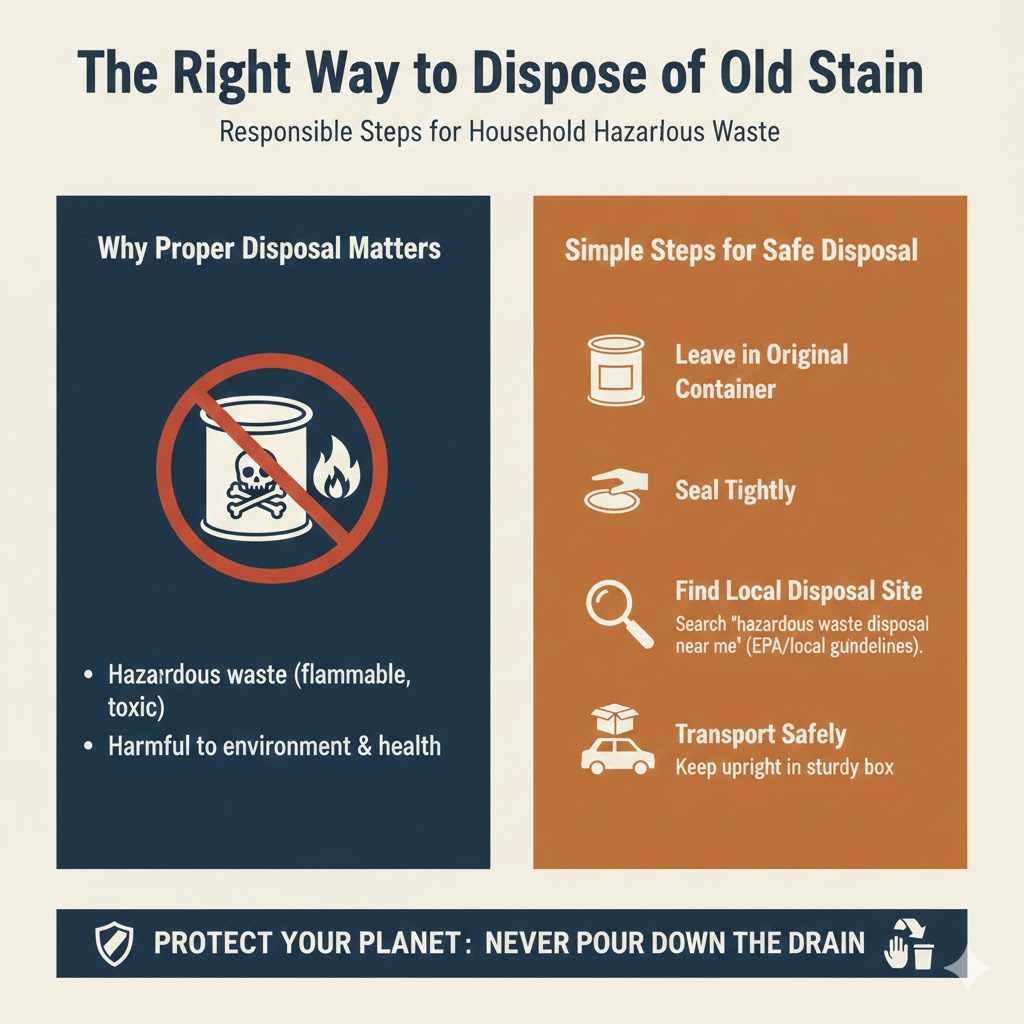
When you discover a can of stain has gone bad, you can’t just toss it in your household trash. Most wood stains, especially oil-based ones, are considered hazardous waste because they contain flammable solvents and chemicals that are harmful to the environment.
Disposing of it correctly is easy and responsible. Your first step should be to check the rules for your specific area. A quick search for “hazardous waste disposal near me” on your city or county’s website will give you all the information you need. Many communities have dedicated drop-off facilities or special collection days for materials like paint and stain.
The U.S. Environmental Protection Agency (EPA) provides excellent guidance on handling household hazardous waste. Here are some simple steps to follow:
- Leave Stain in its Original Container: Keep the bad stain in its can with the original label. This helps the disposal facility identify what it is.
- Seal the Can Tightly: Make sure the lid is secure to prevent spills during transport.
- Find Your Local Disposal Site: Use your local government’s website to find the nearest certified household hazardous waste (HHW) facility.
- Transport it Safely: When driving to the facility, place the can in a sturdy box and keep it upright to avoid tipping and spilling.
Taking a few extra minutes to dispose of stain properly protects our soil and water, and it’s the right thing to do.
Frequently Asked Questions (FAQ)
What does expired wood stain look like?
Expired wood stain often looks thick like Jell-O or pudding. It may also have hard, gritty lumps that won’t dissolve, a thick skin on the surface, or visible spots of mold (especially in water-based stains). It can also be permanently separated, with a thick sludge at the bottom that won’t mix back in.
Can you use stain that has separated?
It depends. If the stain mixes back together into a smooth, consistent liquid after a minute or two of stirring, it’s fine to use. If it remains separated with a thick, hard layer at the bottom of the can no matter how much you stir, it has gone bad and should not be used.
How long does unopened stain last?
Generally, an unopened can of oil-based stain can last for 3 to 5 years, while unopened water-based and gel stains last for 2 to 3 years. This assumes it’s been stored in a cool, dry place with a stable temperature.
Is it safe to smell old stain?
Always work in a well-ventilated area when opening any can of stain. A quick, gentle sniff from a distance is enough to check for a foul odor. If the stain has a strong, rancid, sour, or moldy smell, it’s a clear sign it has spoiled. Avoid deeply inhaling the fumes from any stain, new or old.
What if my stain is just a little thick?
If the stain is only slightly thicker than normal but still mixes well and doesn’t show any other signs of spoilage (like lumps or a bad smell), you might be able to thin it. For oil-based stains, you can add a small amount of mineral spirits. For water-based stains, add a small amount of water. Add a little at a time and mix thoroughly. However, if the stain has any of the other warning signs, it’s best not to risk it.
Does stain ever really expire?
Yes, it does. Over time, chemical reactions (like oxidation from air exposure) and physical changes (like solvent evaporation) cause the binders and pigments to break down. This means the stain can no longer perform its job of coloring and sealing wood properly. The date on the can is a guideline, but the physical signs are the most reliable indicators.
Conclusion: Trust Your Gut and Start Fresh
In woodworking, we learn that using the right tools and materials is the foundation of a great project. That old can of stain you found is no exception. While it’s tempting to try and save a few dollars by using what you have, the risk of ruining your piece just isn’t worth it. A sticky, blotchy finish can turn a project you were proud of into a frustrating mess.
So, the next time you open a can of stain, give it a quick inspection. Check for that jelly-like texture, listen for the gritty sound as you stir, and trust your nose. If something seems off, it probably is. Choosing to buy a fresh can is not a waste of money—it’s an investment in your hard work and a guarantee of a beautiful, lasting finish. Remember the golden rule of the workshop: when in doubt, throw it out. Your project will thank you for it.