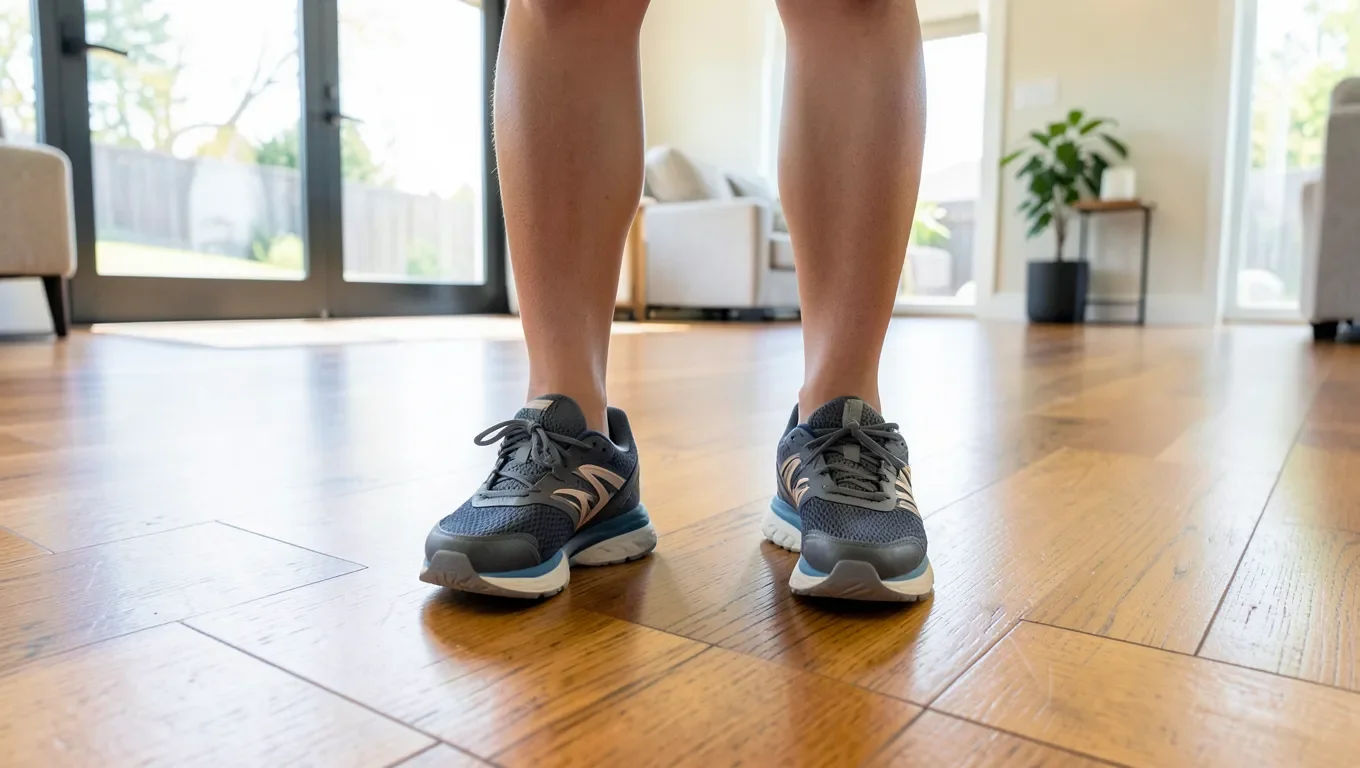
Can Walking on Hardwood Floors Cause Knee Pain? What to Do
Short answer: yes, hardwood floors can contribute to knee pain, but the floor itself is rarely the whole story. Wood, tile, and concrete all share one trait that carpet and cushioned flooring don’t: they return almost none of the force your body puts into them with each step. That extra force has to go somewhere, and your knees absorb a good share of it. Below is what’s actually happening mechanically, what genuinely helps, and when floor-related aches stop being a flooring problem and become a question for a doctor.
Why Hard Floors Put More Force Through Your Knees
This is a well-documented point in occupational health, not just a woodworking-site claim: people who stand or walk on hard surfaces for long stretches, like retail and kitchen workers, commonly report more foot, leg, and knee fatigue than people working on cushioned flooring. Carpet, cork, and rubber mats compress slightly under your foot and spring back, absorbing a portion of the impact before it reaches your joints. Hardwood, tile, and concrete don’t compress at all, so the full force of each footstrike travels straight up through your foot, ankle, and knee. Over an 8-hour shift or a long day on your feet at home, that adds up to thousands of uncushioned impacts.
That’s exactly why anti-fatigue mats are a standard recommendation in workplaces with hard floors, not a gimmick. A mat with real cushioning gives your foot a small amount of give with every step, which measurably reduces reported leg and joint fatigue in occupational studies. The same logic applies at home in front of the sink, stove, or workbench, anywhere you stand in one spot on hardwood for more than a few minutes at a time.
Best Hardwood-Safe Anti-Fatigue Mat
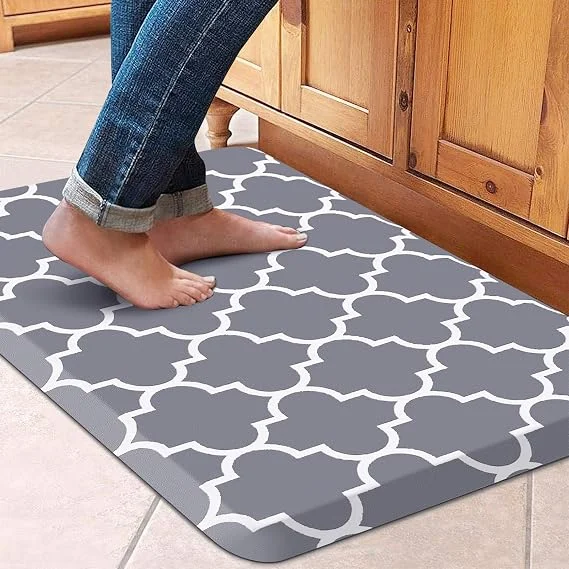 |
WISELIFE Anti-Fatigue Kitchen Mat – $13.99 A beveled-edge, non-rubber-backed mat sized for standing spots like the sink or a workbench, without the moisture-trapping backing that can damage a hardwood finish.
|
Footwear Changes the Equation More Than People Expect
Barefoot or in thin-soled slippers, you feel every bit of that hard-floor impact directly. A shoe with a cushioned midsole and real arch support absorbs some of the shock before it reaches your foot at all, which is why podiatrists routinely point to footwear as the first thing to check when someone develops floor-related knee or foot pain. Worn-out shoes are part of the problem too. Once the cushioning in a midsole compresses and stays compressed, usually somewhere between 300 and 500 miles of wear for most walking shoes, it stops absorbing impact even though the shoe still looks fine from the outside.
- Cushioned midsole: gel, foam, or air-cushion soles absorb shock before it reaches your foot.
- Arch support: keeps your weight distributed across the whole foot instead of concentrating it at the heel.
- Low, stable heel: a flat or low heel keeps the joint stacked properly; heels over about two inches shift extra load onto the front of the knee.
- Replace on schedule: swap walking or standing shoes roughly every 300-500 miles, or every 6-12 months of daily wear, whichever comes first.
Body Weight and Load Through the Joint
Every pound of body weight translates into several pounds of force through the knee during walking, because the knee acts as a lever, not a simple scale. That’s why even a modest amount of weight loss tends to produce a noticeable drop in knee pain for people whose joints are under strain, and why the effect is more pronounced on hard, uncushioned floors, where there’s no surface give to blunt the extra load in the first place.
How to Cushion Hardwood Floors Without Damaging the Finish
This is the part most knee-pain articles skip entirely, because they’re not written with an actual wood floor in mind: not every mat is safe to put on hardwood. The wrong backing material can trap moisture against the finish or react chemically with polyurethane, leaving a permanent cloudy patch or discoloration under the mat months later. If you’re adding cushioning to protect your knees, you want to protect the floor at the same time.
- Skip solid rubber-backed mats. Natural or synthetic rubber backing is the most common cause of yellowing and finish damage under mats left in place for weeks at a time. Look for mats labeled safe for hardwood or finished floors, or ones with a breathable, non-rubber backing.
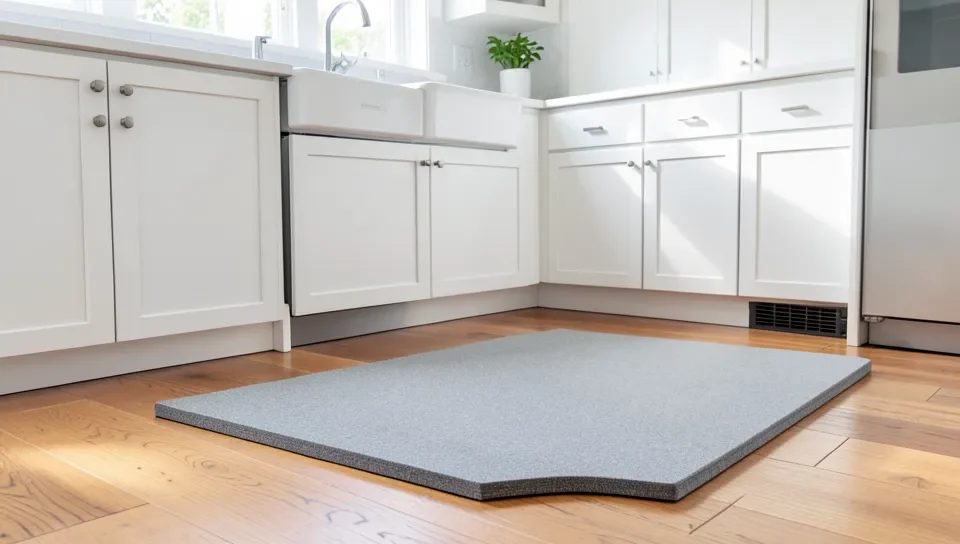
- Aim for 0.5-0.75 inches of cushioning. That range gives a real ergonomic benefit without creating a lip that’s tall enough to trip on or roll a cart over awkwardly.
- Choose a beveled edge. A tapered edge transitions smoothly from floor to mat, which matters most in a kitchen where you’re moving in and out of the same spot repeatedly.
- Lift and dry the floor underneath periodically. Even a hardwood-safe mat should come up every so often so the finish underneath can air out, especially in humid climates, the same routine care that keeps a hardwood floor finish lasting longer in general.
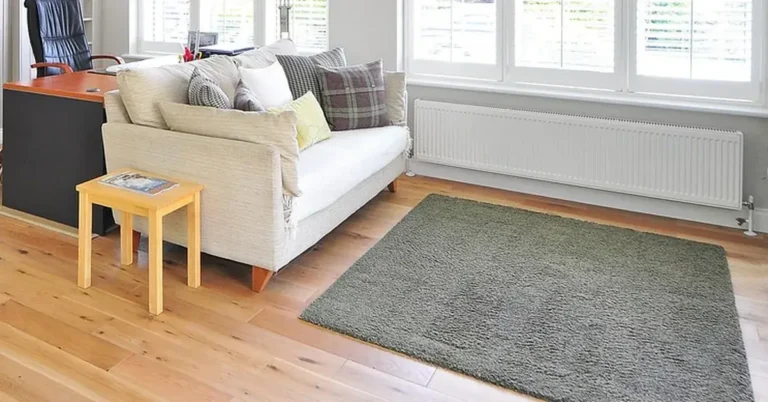
Put a mat wherever you stand in place on hardwood for more than a couple of minutes at a stretch, the sink, the stove, a workbench, a laundry folding station, rather than trying to cover the whole room. A rug in a walking path helps less than a mat in a standing spot, because walking across a hard floor is brief contact per step, while standing in one place means sustained, repeated load on the same joint with no break.
When Knee Pain Is About More Than the Floor
A hard floor can make existing joint problems more noticeable, but it doesn’t create osteoarthritis, a meniscus tear, or rheumatoid arthritis on its own. If your knee pain came on before you ever thought about your flooring, worsens steadily instead of easing off with a mat and better shoes, or comes with swelling, locking, or instability, that’s a sign the floor is aggravating something that needs an actual diagnosis, not causing it from scratch.
- Osteoarthritis: cartilage breaks down over time, so impact that a healthy joint shrugs off becomes painful.
- Rheumatoid arthritis: an autoimmune condition that inflames the joint lining independent of any surface you’re standing on.
- Meniscus or ligament injuries: a previous tear or strain can make a joint far more sensitive to repetitive hard-surface impact.
- Patellofemoral pain: discomfort around the kneecap that’s often worse going up or down stairs, and can be aggravated by prolonged standing on hard floors.
This isn’t something we can diagnose from an article, and we’re not going to pretend otherwise. If your knee pain is ongoing, getting worse, or interfering with normal activity, see a doctor or physical therapist. A mat and a better pair of shoes can take real pressure off a healthy or mildly irritated joint, but they will not fix arthritis, a torn meniscus, or an unstable ligament, and treating floor changes as a substitute for medical care on a genuine joint problem can let something correctable get worse while you wait.
Other Ways to Take Load Off Your Knees
Beyond mats and shoes, a few other adjustments genuinely help, and none of them require replacing your floor.
- Strengthen the quadriceps and glutes. Stronger muscles around the knee absorb more force before it reaches the joint itself, which is why physical therapists prescribe leg strengthening for most non-surgical knee pain.
- Break up long standing stretches. Shifting your weight, stepping onto a mat, or taking a short seated break every 20-30 minutes reduces sustained load far more than any single product can.
- Consider a supportive insole. A cushioned, contoured insole added to an otherwise flat-soled shoe can meaningfully improve shock absorption without buying new shoes.
- Use a cane or walking stick short-term if advised. Reducing load on a knee while it recovers from a flare-up is something a doctor or physical therapist can guide, rather than something to self-prescribe long-term.
Frequently Asked Questions
Can walking on hardwood floors actually cause knee pain?
Hardwood floors don’t cushion your steps the way carpet or cushioned flooring does, so more impact force reaches your knees with every step. On their own, hard floors are more likely to aggravate or reveal existing joint sensitivity than to cause a new injury outright, but the added strain is real, especially with prolonged standing or an already vulnerable joint.
What kind of mat is safe to use on a hardwood floor?
Look for a mat labeled safe for hardwood or finished floors with a non-rubber, breathable backing, 0.5 to 0.75 inches of cushioning, and a beveled edge. Solid rubber-backed mats left in place for weeks can trap moisture and discolor or damage a polyurethane finish underneath.
Will better shoes really make a difference?
Yes. A cushioned midsole and proper arch support absorb shock before it reaches your foot and knee, which is a big part of why podiatrists check footwear first when someone reports hard-floor knee pain. Worn-out cushioning stops helping even if the shoe still looks fine, so replace walking or standing shoes roughly every 300-500 miles or 6-12 months.
Should I see a doctor about knee pain from standing on hardwood floors?
If the pain is mild and eases up once you add a mat and better shoes, it’s reasonable to try those changes first. See a doctor or physical therapist if the pain is ongoing, getting worse, came with an injury, or includes swelling, locking, or instability. Those symptoms point to something a mat and shoes can’t fix on their own, and a proper diagnosis matters more than guessing.
Is it worse to walk barefoot on hardwood floors?
Generally yes, for anyone already managing knee sensitivity. Barefoot walking removes the shock absorption a shoe’s midsole would otherwise provide, so the full impact of each step reaches the joint directly. Supportive shoes or slippers with a cushioned sole, or a mat underfoot in spots where you stand still, both reduce that impact.
Final Thoughts
Hardwood floors can genuinely contribute to knee pain because they don’t absorb impact the way carpet or cushioned flooring does, and that extra force has to be absorbed somewhere, usually your joints. The fix for most people is straightforward: a hardwood-safe anti-fatigue mat in the spots where you actually stand still, supportive shoes with real cushioning, and periodic breaks during long stretches on your feet. What a mat and shoes can’t do is diagnose or treat an underlying joint condition. If pain persists, worsens, or shows up with swelling or instability, that’s a conversation for a doctor, not something to solve with flooring changes alone.
Sponsored / affiliate links. As an Amazon Associate I earn from qualifying purchases. I may earn additional commission from eligible campaigns.