Why Hardwood Floors Squeak: Diagnose It, Fix It From Below
A squeaky hardwood floor is almost always one of three things: boards rubbing together, a fastener that has worked loose, or a subfloor that has pulled away from a joist. Each needs a different fix, and a screw in the wrong place leaves a mark you cannot hide. This guide helps you diagnose the squeak first, then covers the repair from below, engineered and click-lock floors, and when to call a pro.
Which Kind of Squeak Do You Have?
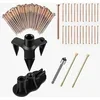 |
Best Joist-Finder Kit Pick Squeaky Floor Repair Kit with Joist Finder and 50 Screws, $14.95 Once the symptom table below tells you the squeak is a board pulled away from a joist, this kit gives you joist-finder screws, a depth-control fixture and 50 scoring screws to pull it back down from above.
|
As an Amazon Associate we earn from qualifying purchases.
Movement is the root of every squeak. Flooring maker Bruce lists three patterns: board against board (the most common), board against the room edge, and, less often, edge against edge. Below the surface, it adds, the usual culprits are fasteners that are not driven deep enough, a subfloor that is uneven or misaligned, and floor bridging that flexes under foot traffic. Use the table to match what you hear and feel to the likely source before you pick a repair.
| What you notice | Most likely source | Quick check | Where the fix lives |
|---|---|---|---|
| One board dips slightly and squeaks at the same spot every time | Subfloor has pulled away from a joist | Look from below (if you can) for a gap, or press the board with your foot and feel it drop | From below: shim, adhesive or short screws |
| A squeal that travels along several boards, louder in winter | Boards rubbing at the tongue-and-groove seams | Squeak is at the seam, not under one spot; it changes with the season | Powder in the seam; humidity control |
| A sharp crack or tick near a straight line of fastener heads | A nail or staple that has loosened or backed out | Feel for a board edge that lifts under your heel, along the nail line | Re-secure the board, see our full fix guide |
| Noise along a wall or at the baseboard | Board edge rubbing against the room edge or trim | Squeak stays within about a foot of the wall | Ease the contact at the edge |
| Whole room feels bouncy as well as noisy | Flexing floor system or bridging, possibly water-damaged subfloor | Bounce is felt away from any single board | Inspection from below; likely a pro |
| Click-lock or floating floor creaks at plank ends | Loose click joints, a blocked expansion gap or a void under the planks | Noise follows the plank joints, often near walls | Floor-specific fix, see the install-type table below |
The table is a diagnostic shortcut built from the causes the flooring makers and the Hardwood Information Center describe. It will not replace a look from below, but it tells you which repair to read first.
How to Pin Down the Exact Spot Before You Touch a Fastener
Guessing at the squeak is how floors end up with a dozen unnecessary screw holes. Spend ten minutes finding the real source first.
- Walk it slowly. Step heel to toe along the floor in socks, so you hear the board rather than your shoes. Mark each squeak with painter tape instead of chalk, which smears into the grain.
- Separate the sources. Rock your weight on one board. If the noise changes when you press right at the seam, it is boards rubbing. If it follows the downward dip of a single board, think fastener or subfloor gap.
- Ask for a spotter. If you have a basement or crawlspace, have someone walk the marked spot while you stand underneath and watch the subfloor and joist. A visible flicker of movement tells you exactly where the gap is.
- Check the season. A squeak that appears every winter and quietens in summer points at humidity, not at a failed fastener.
- Note the environment. A squeak that started after a leak, a flood or a damp season deserves a closer look at the subfloor before you fasten anything to it.
Subfloor voids are easier to create than most homeowners expect. Artisan Wood Floors points out that a void of any size beneath the floor allows movement, and it lists leftover construction debris like drywall mud and adhesive, unseated fasteners, high and low spots at subfloor seams, out-of-level joists and a settling house as common ways those voids arise.
Fixing Squeaks From Below (Basement or Crawlspace Access)
If you have access to the underside of the floor from a basement or crawlspace, you can fix most squeaks without touching the finished floor surface at all, this is usually the better option when it’s available, since it leaves no marks on the wood above.
- Have someone walk across the floor above while you watch and listen from below, so you can pinpoint the exact joist bay making noise.
- Look for a visible gap between the subfloor and the joist. A thin gap can usually be closed with a wood shim coated in wood glue, tapped in snugly (not forced, which can create a new high spot and a new squeak elsewhere).
- For a subfloor that has pulled slightly away from a joist without a visible gap, running a bead of construction adhesive along the top of the joist and screwing up through the subfloor into the joist (using screws short enough not to poke through the finished floor above) pulls the two layers back together permanently.
- If the squeak is coming from the middle of a joist bay rather than at a joist itself, a squeak-fixing bracket product (sold specifically for this) can bridge the subfloor to the joist without any risk of a screw coming up through your finished floor.
This approach is why “how to fix squeaky floors from below” is such a common search, it’s often the cleaner fix when you have access, precisely because it avoids any risk to the visible hardwood surface that face-nailing or screwing from above carries.
One safety note on screw length, because it is where most from-below repairs go wrong: add up the finished floor and the subfloor, then choose a screw clearly shorter than that total. On a 3/4 in. hardwood floor over a 3/4 in. subfloor the total is 1-1/2 in., so a 1-1/2 in. screw will break through the top. Our full guide to fixing squeaky hardwood floors has the screw-length table and the fix-by-access comparison, so this page does not repeat it.
Loose Nails and Fasteners: What the Noise Is Telling You
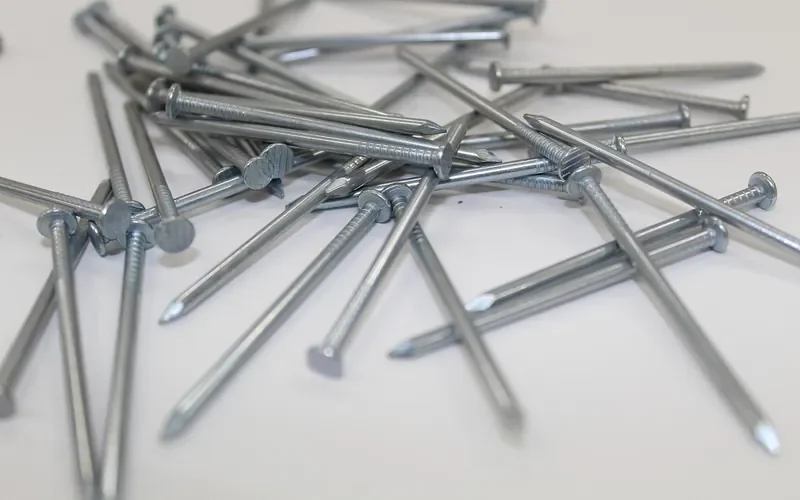
A nail or staple does not have to be missing to squeak. It only has to be loose enough that the board lifts a fraction of a millimeter under your heel and drops back down. Bruce also names fasteners that were not driven deep enough, which can shift and make noise over time. If you can feel a board edge rise slightly along a line of fastener heads, the board is under-secured, and the permanent fix is to pull it down to the joist with a short screw or an angled finishing nail, not to add more lubricant.
Powder helps only when the noise is board against board. When the board itself is loose, powder disappears into the seam within days and the squeak returns. Our guide to squeaky wood floor lubricants covers which powders work on solid hardwood and which sprays to avoid.
Solid, Engineered and Click-Lock Floors: Why the Fix Differs
A squeak is a movement problem on any floor, solid or engineered, so the diagnosis steps above still apply. What changes is how the floor is held down, and that decides what you are allowed to do about the noise.
| Floor type | How it is held | Common squeak source | What to do first |
|---|---|---|---|
| Solid or engineered, nailed or stapled to a wood subfloor | Fasteners into the subfloor and joists | Loose fasteners, boards rubbing, subfloor gap at a joist | Use the from-below or from-above repairs in this guide |
| Engineered, glued down | Adhesive bond to the subfloor | A spot where the bond has let go, which sounds and feels hollow | Ask the installer or adhesive maker before fastening; screws are not the default answer |
| Engineered or laminate-style, floating click-lock | Planks lock to each other and rest on underlayment | Loose click joints, a blocked expansion gap, a dip or void under the planks | Look at the perimeter gap and the joint first; do not chase joists |
For click-lock floors, flooring retailers point to three recurring causes: click-lock joints that have loosened and let the edges of neighboring planks rub, a gap between the plank and the subfloor under the underlayment, and an expansion gap that has been blocked by trim, a heavy cabinet or debris. Clearing a blocked perimeter gap is the cheapest first step, because the floor can settle and the joints can close on their own once it can move again. Check your floor maker’s instructions before fastening a floating floor to the subfloor, since most are designed to move as one unit.
Seasonal Squeaks and the Humidity Range to Aim For
The Hardwood Information Center puts most squeaks down to the normal seasonal cycle of wood contraction and expansion. In the dry months boards shrink, fine cracks open and boards rub their fasteners and each other. In humid months they swell and press against their neighbors.
The published humidity targets do not agree: the National Wood Flooring Association range, as quoted by PID Floors, is 35 to 55 percent relative humidity at 60 to 80 degrees F, while From the Forest recommends 40 to 60 percent. The two overlap at about 40 to 55 percent.
Because the guidance varies, a $10 hygrometer in the room is more useful than a number from memory. Check the range your own flooring maker prints in its care guide, and treat 40 to 55 percent as a sensible common ground if you have no better figure. If boards are lifting or rising rather than just squeaking, that is a different problem, covered in our guide to fixing hardwood floor buckling.
When to Call a Professional
- The squeak comes with a visibly sagging or bouncy floor rather than a single noisy board.
- The subfloor feels soft or damp, or the squeak began after a leak. Water damage reduces how well fasteners can grip, so adding screws will not hold.
- You can see a cracked or sagging joist from below.
- The squeaks are spread across most of a room and none of the symptom checks above isolates a spot.
- You have a glued-down floor with hollow-sounding areas. The right adhesive repair depends on the floor and the glue, and it is easy to make worse.
A squeak on its own is rarely a structural emergency. A squeak plus movement you can see or feel is worth a professional look before you decide to fix it yourself. See our wood flooring guide for how the different floor types are built.
Frequently Asked Questions
Why does my hardwood floor squeak in winter?
Dry winter air makes boards shrink, which opens fine gaps at the seams and lets boards rub against each other and against their fasteners. Keeping indoor humidity within your flooring maker’s range usually quiets this seasonal squeak without any repair.
How do I tell if a squeak is the subfloor or the floorboards?
Press down on a single board. If it dips and drops at the same spot, the subfloor has probably pulled away from a joist. If the noise lives in a seam and changes with the season, boards are rubbing. From a basement or crawlspace, a helper walking the spot lets you see the subfloor move.
Can you fix a squeak in an engineered or click-lock floor?
Yes, but the fix differs from a nailed floor. For a floating floor, check the perimeter expansion gap first, then the click joints. Glued-down floors need an adhesive repair, not joist screws. Check your floor maker’s instructions before fastening anything.
When is a squeaky floor a sign of a bigger problem?
When it comes with a sagging or bouncy feel, a damp or soft subfloor, or visible joist damage. Water damage in particular reduces fastener grip, so it is better to have the cause inspected than to keep adding screws.
Conclusion
Diagnose before you fix: match the sound to a source, find the exact spot, and only then choose between powder, a fastener or a repair from below. If you want the step-by-step repair list instead, our squeaky hardwood floor repair guide linked above has it.
Sponsored / affiliate links. As an Amazon Associate I earn from qualifying purchases. I may earn additional commission from eligible campaigns.