Cost to Replace Hardwood Floors: Removal + Subfloor Costs Included
Replacing hardwood floors costs $8 to $25 per square foot total, but that number hides the part most cost guides skip: tearing out and hauling away the old floor adds $2-4.50 per square foot on top of new-install pricing, and subfloor repair (common once the old floor comes up) can add $900-$3,000 more for an average room. “Replace” and “install new” aren’t the same cost question, even though most articles price them identically.
If you’re pricing a brand-new install over a bare subfloor with nothing to remove, our guides on average hardwood flooring cost and installing wood floors cost cover that specifically. This page is about the actual replacement job: removing an existing floor, dealing with whatever’s underneath it, and installing new hardwood in its place.
The Full Replacement Cost Breakdown
Extend Your Floor’s Life Before You Replace It
 |
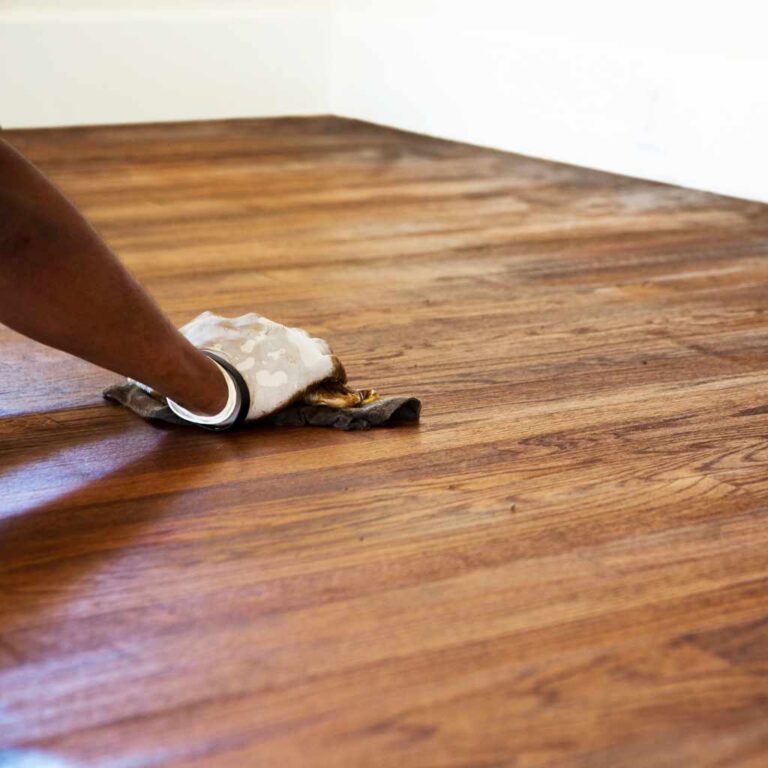
Bona Hardwood Floor Cleaner, 128 fl oz – $37 A residue-free, pH-neutral cleaner that won’t dull a finish the way an all-purpose spray can – proper cleaning is one of the cheapest ways to delay a full replacement.
|
| Cost Component | Typical Range (per sq ft) | Notes |
|---|---|---|
| Removing old nail-down hardwood | $1.00-$2.50 | Prying boards and pulling hundreds of nails/cleats |
| Removing old glued-down hardwood | $3.00-$4.50 | Adhesive must be scraped off the subfloor too |
| Debris haul-away/disposal | ~$20-$80 flat, or included in labor | Curbside pickup services or dump/recycling fees |
| New hardwood material | $3-$15+ | Species, grade, and solid vs. engineered all affect this |
| New installation labor | $6-$12 | Varies by region and installer experience |
| Subfloor repair (if needed) | $900-$3,000 total for ~300 sq ft | Common once old flooring comes up and reveals damage |
Put together, a full replacement (removal + new material + new install, subfloor in good shape) typically lands around $8-$25 per square foot. A 300-square-foot room, all in, often runs somewhere between $2,400 and $7,500 depending on wood choice, region, and whether the subfloor needs work.
Why Replacement Costs More Than a First Install
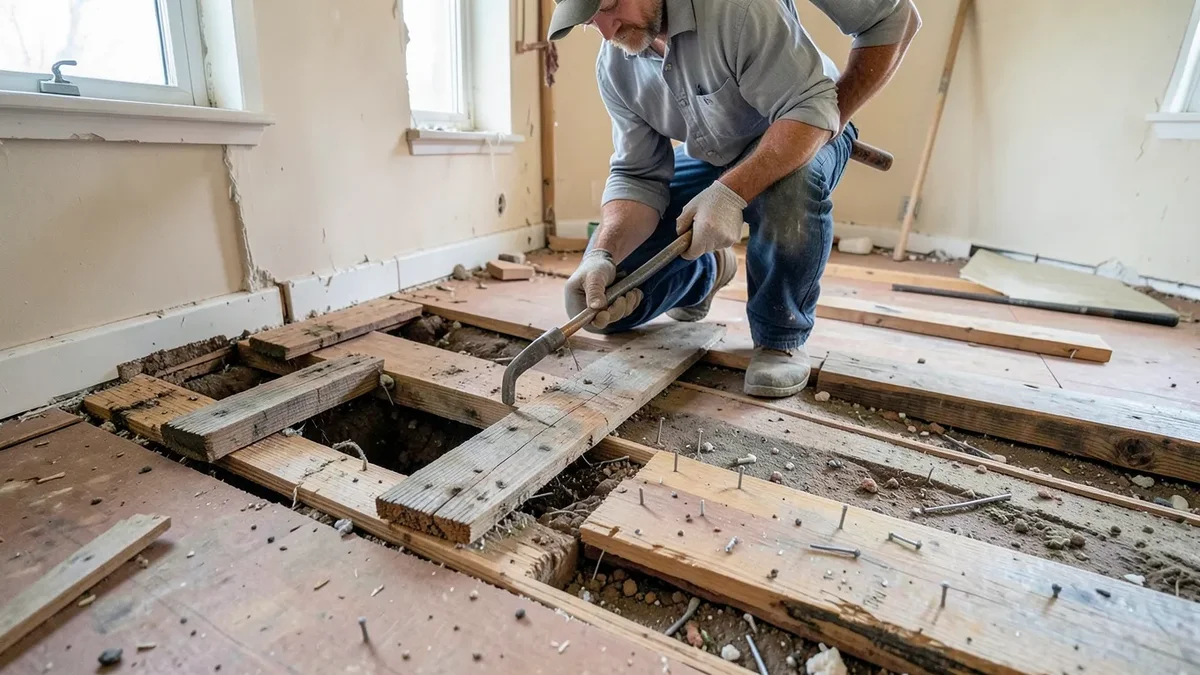
A brand-new floor over a clean subfloor skips the two most unpredictable cost items in a replacement job: tear-out labor and whatever the old floor was hiding. Nail-down removal alone can take a full day for a mid-sized room because every board has to be pried up and every nail pulled or cut flush – rushing this step risks damaging the subfloor underneath, which turns a simple removal into a repair job. Glued-down hardwood over concrete is worse: scraping cured adhesive off a slab is slow, dusty work that a lot of contractors price at the higher end of that $3-4.50 range for good reason.
The Subfloor Surprise
This is the cost line that catches homeowners off guard. Once the old hardwood comes up, it’s common to find water staining, soft or spongy spots, squeaks from loose subfloor panels, or even active rot around old plumbing lines or exterior walls – none of which was visible or reported before the floor was pulled up. Subfloor replacement for an average-sized room runs $900 to $3,000, and water-damaged or rotted sections specifically can add $1,000 to $3,000 on top of a standard repair. Get a contractor’s replacement quote with an explicit contingency line for subfloor repair rather than assuming the original estimate is final – a floor that’s original to the house is a reasonable candidate for at least some subfloor issues once it comes up.
Repair vs. Full Replacement
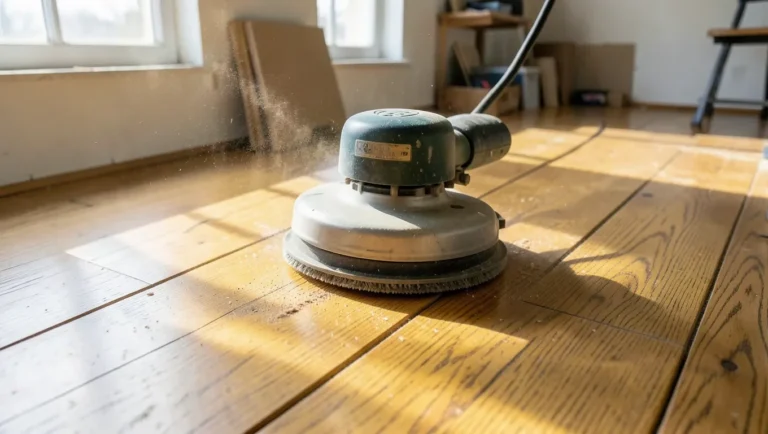
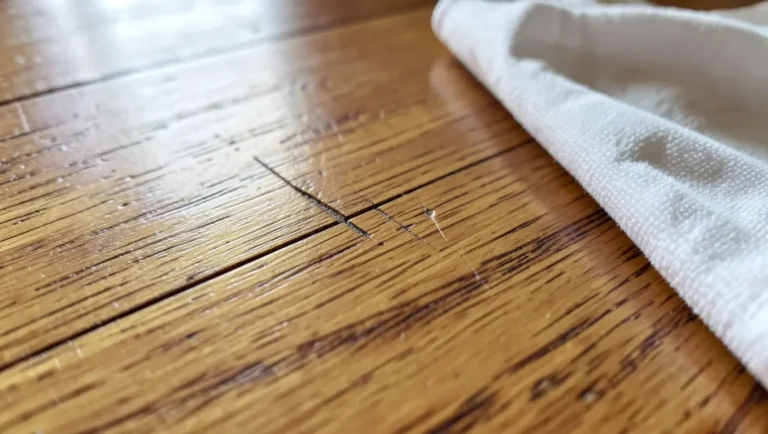
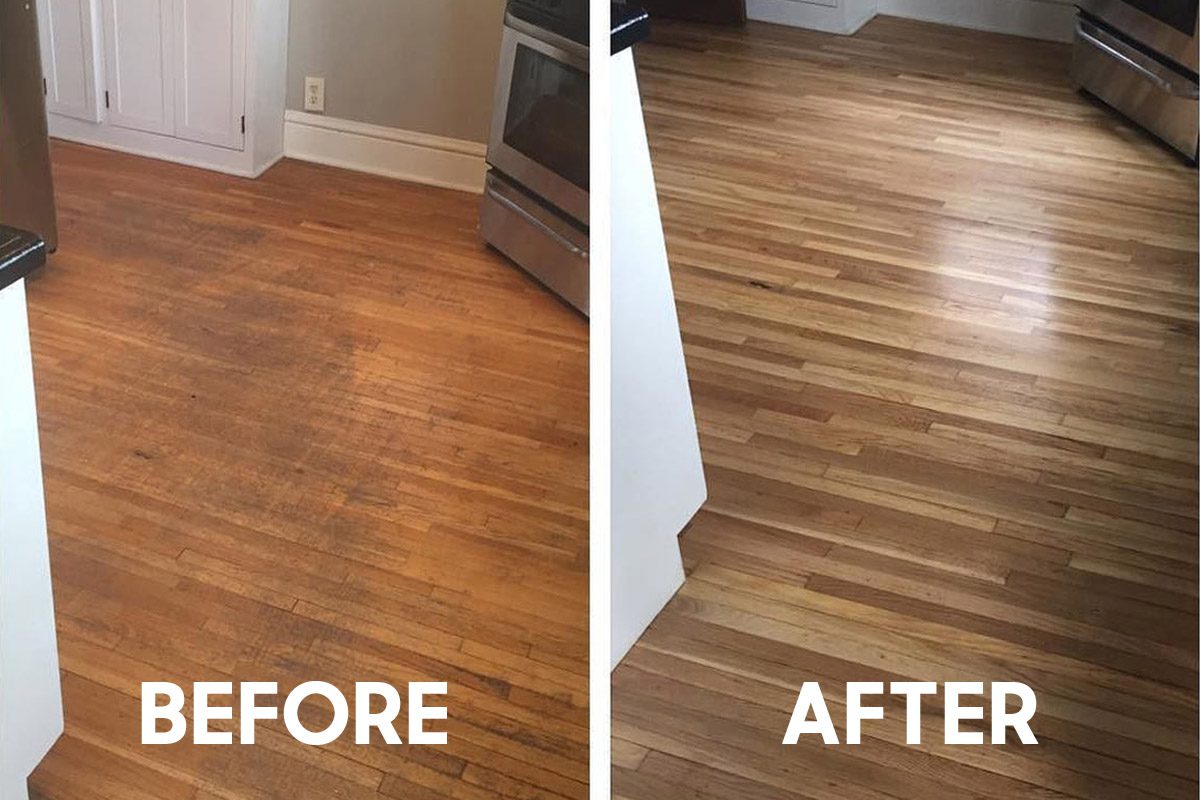
Full replacement isn’t always necessary. If damage is confined to a small area – a water stain near an appliance, a few scratched or cupped boards, one section with pet damage – sanding and spot-repairing individual boards is almost always cheaper than removing and replacing the whole floor, especially on solid hardwood that can be sanded and refinished multiple times over its life. Full replacement makes more financial sense when damage is widespread (uneven subfloor movement across the whole room, extensive water damage, or a floor that’s already been refinished down to a thin wear layer and can’t take another sanding), or when you’re changing wood species or plank width and blending isn’t realistic.
Ways to Reduce Replacement Costs
Get itemized quotes that separate removal, disposal, subfloor work, material, and installation – a single lump-sum bid makes it hard to tell where your money’s actually going or to negotiate individual line items. Handle demo yourself if you’re comfortable with it (removing nail-down hardwood is labor-intensive but not technically difficult, unlike glued-down over concrete) and hire out only the new installation. Consider engineered hardwood over solid where it fits your situation – it’s typically less expensive and more dimensionally stable over variable subfloors, which can reduce the odds of a subfloor-related change order mid-project. And time the purchase around manufacturer sales rather than buying at full retail during peak renovation season (spring and early summer, in most regions).
Frequently Asked Questions
How much does it cost to remove old hardwood floors?
Removing nail-down hardwood typically costs $1.00 to $2.50 per square foot in labor. Glued-down hardwood, especially over concrete, costs more to remove, usually $3.00 to $4.50 per square foot, because the adhesive has to be scraped off the subfloor as well as the boards pulled up.
Is it cheaper to repair or fully replace hardwood floors?
Repair is almost always cheaper when damage is limited to a small area, since sanding and spot-refinishing a section costs far less than removing and replacing an entire floor. Full replacement becomes the more sensible option when damage is widespread, the subfloor itself needs work, or the existing floor has already been sanded down too thin to refinish again.
Why did my hardwood replacement quote go up after demo started?
This is almost always a subfloor issue discovered once the old flooring came up – water staining, soft spots, or rot that wasn’t visible before removal. Subfloor repair typically adds $900 to $3,000 for an average room, more if there’s water damage. Ask contractors to build a subfloor contingency into the original quote so this isn’t a surprise.
How much does it cost to replace hardwood floors in an average room?
For a roughly 300-square-foot room, full replacement (removal, disposal, new material, and installation) typically runs $2,400 to $7,500, depending on wood species, whether the subfloor needs repair, and regional labor rates. Get itemized quotes from at least two or three contractors to see where the largest cost differences actually are. See our installation labor cost breakdown for how the install method itself changes that quote.
Conclusion
Replacing hardwood floors costs more than a first-time install because it includes two things new-construction pricing skips entirely: removing and disposing of what’s already there, and dealing with whatever the old floor was hiding underneath. Budget for both explicitly, get itemized quotes, and confirm whether repair might actually solve the problem for less before committing to a full tear-out.
Sponsored / affiliate links. As an Amazon Associate I earn from qualifying purchases. I may earn additional commission from eligible campaigns.