Can Wood Pellets Be Burned in a Corn Stove? Check This First
Only if your stove is explicitly rated as multi-fuel (or “corn/multi-fuel”) by the manufacturer. A dedicated single-fuel corn stove is built around corn’s specific density, feed rate, and ash behavior, and burning wood pellets in it can cause an uneven burn, excess smoke, or feed jams – and it will typically void the warranty even if it seems to run fine.
Check your owner’s manual first; that’s not a formality here, it’s the actual answer for your specific unit. If you don’t have the manual, the model number on the stove’s rating plate is enough to find it on the manufacturer’s site. Below is what actually differs between the two fuels, so you understand why the manual says what it says instead of just taking it on faith.
Single-Fuel vs. Multi-Fuel Stoves
Essential Safety Add-On for Any Solid-Fuel Stove
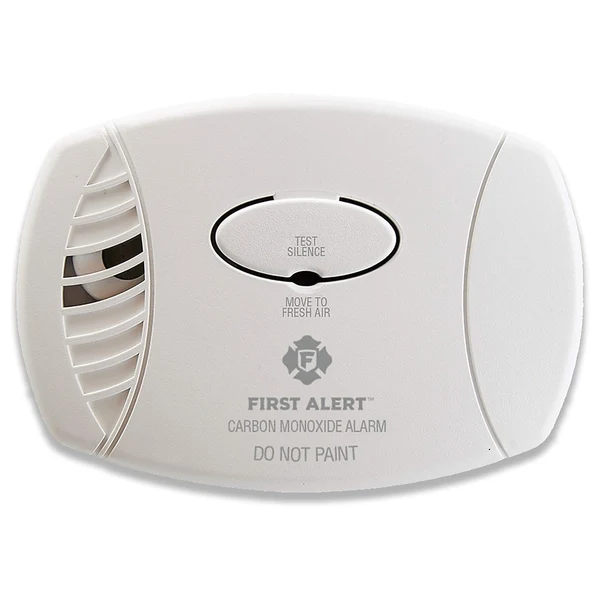 |
First Alert CO600 Plug-In Carbon Monoxide Alarm – $24.95 A fuel mismatch shows up as elevated CO output well before it’s obvious from the flame alone – a working detector is the real safeguard, whichever fuel your stove burns.
|
A dedicated corn stove and a true multi-fuel (or “bio-fuel”) stove often look nearly identical from the outside, but the burn pot and feed system are built differently on the inside:
- Dedicated corn stoves almost always include a stirring mechanism (an agitator rod in the burn pot) that continuously breaks up the ash bed as corn burns. This exists specifically because corn’s sugar content forms sticky, melted ash clinkers that would otherwise fuse together and block airflow. The auger feed rate and air settings are calibrated around corn kernels’ size, weight, and moisture behavior.
- True multi-fuel stoves are engineered with adjustable (or auto-sensing) feed rates and airflow specifically so the same unit can be tuned for corn, wood pellets, or other biomass. Some use a swappable burn pot or a factory conversion kit to reset the auger speed and combustion air for a different fuel.
The difference that actually matters for you: a multi-fuel stove is designed to be reconfigured between fuels. A dedicated corn stove is not, even though nothing about the hopper opening physically stops you from pouring in a bag of wood pellets.
Correcting a Common Mistake: Ash Content
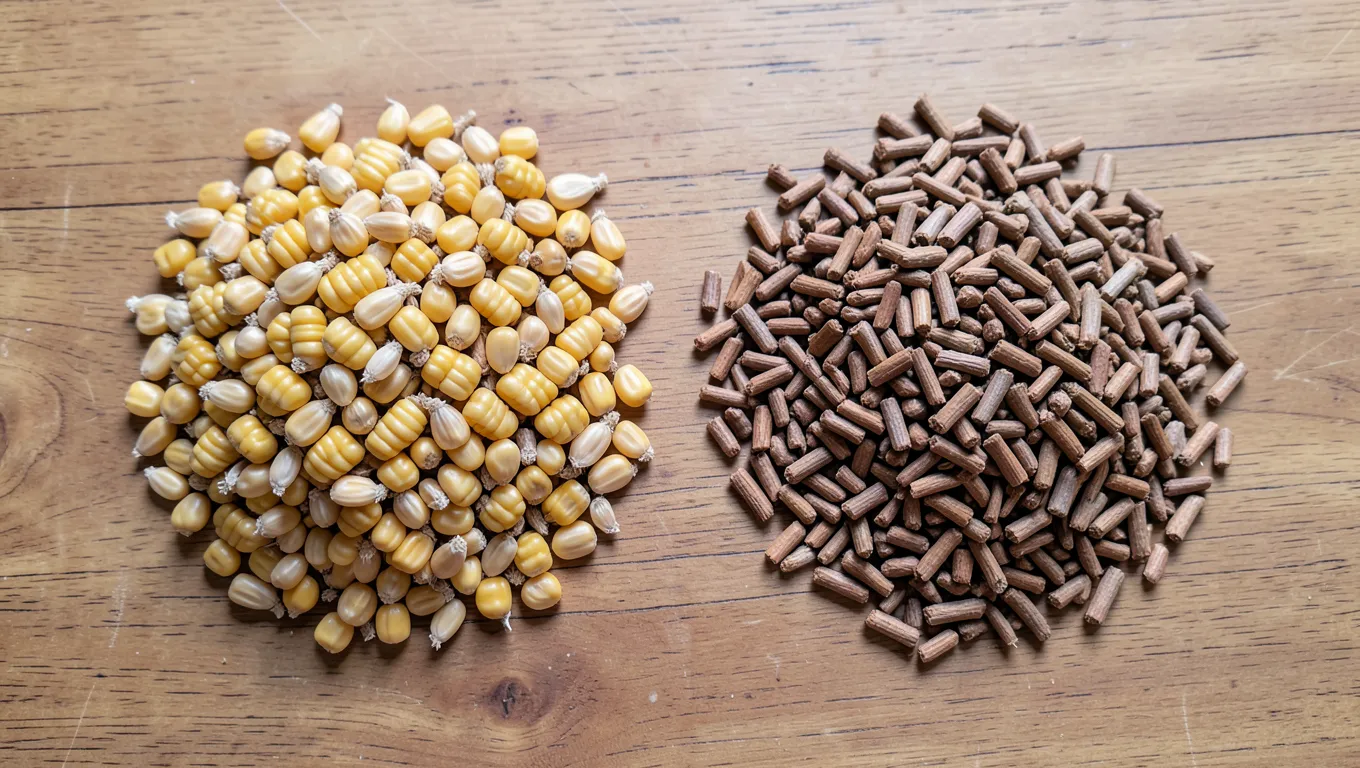
A lot of what circulates online about this topic gets the ash comparison backwards. Corn produces meaningfully more ash than wood pellets – typically in the 2-5% range by weight, compared to roughly 0.3-1% for quality wood pellets. That’s also part of why corn stoves have larger ash pans and that stirring agitator: they’re built to handle a heavier, stickier ash load than a wood-pellet-only stove ever has to deal with.
This actually works in your favor in one narrow sense: since wood pellets produce less ash than the corn a dedicated corn stove is designed to handle, ash volume itself isn’t the main risk of burning pellets in a corn stove. The real risks are on the feed and combustion side, covered next.
Why the Feed System Is the Actual Problem
Wood pellets and corn kernels differ enough in density, shape, and moisture that an auger calibrated for one doesn’t handle the other predictably:
- Density and feed volume: a corn stove’s auger delivers a set volume of fuel per rotation, calibrated to corn kernels’ size and weight. Wood pellets pack and flow differently, so the same auger setting can deliver noticeably more or less fuel by weight than the stove’s air supply is tuned for – leading to smoldering (too much fuel, not enough air) or a weak, inefficient flame (too little fuel).
- Moisture behavior: corn’s moisture content varies with storage and is factored into how a corn stove’s controls are tuned. Wood pellets are manufactured to a consistently low moisture spec, which changes how quickly the fuel ignites and burns relative to what the stove’s control board expects.
- The agitator’s role: the stirring mechanism that prevents corn clinkers from fusing can, on wood pellets, break up the ash bed pellets normally rely on for even combustion, potentially disrupting the burn instead of helping it.
None of this means a corn stove running on pellets will necessarily catch fire or explode. What it reliably does is push the stove outside the combustion conditions it was engineered and safety-tested for – which shows up as smoke, soot, incomplete combustion, and elevated carbon monoxide output long before anything more dramatic happens. That’s exactly why manufacturers exclude it from the warranty rather than just calling it inefficient.
If Your Manual Says Multi-Fuel
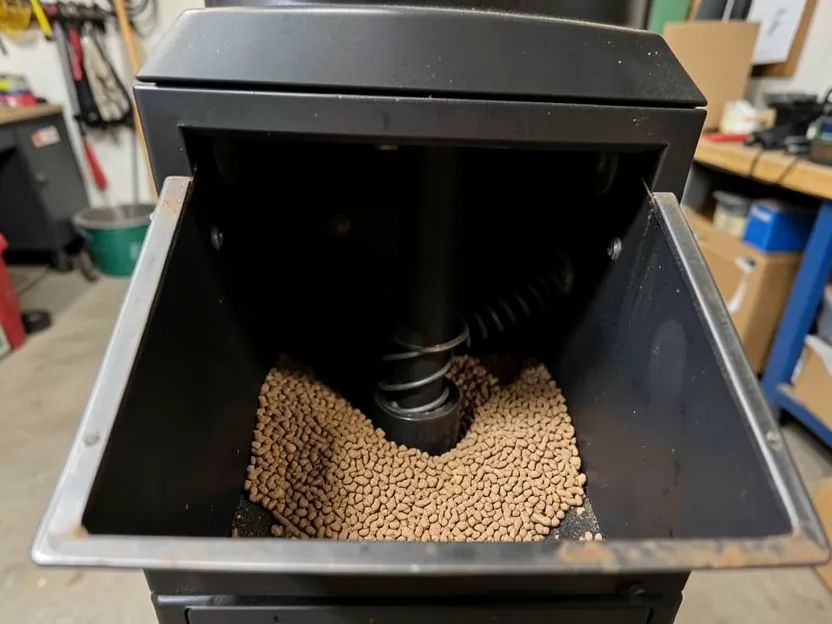
If your stove is genuinely rated for multiple fuels, switching still isn’t a simple swap:
- Fully empty the hopper and burn pot of the previous fuel and any built-up ash before switching.
- Follow the manufacturer’s specific fuel-change procedure – this usually means resetting the auger feed rate and combustion air settings for the new fuel via the control panel, or fitting a fuel-specific conversion kit if your model uses one.
- Run the first burn under supervision. Watch flame color and consistency (steady and bright, not smoldering or heavily smoking) and check the exhaust and CO detector before leaving the stove unattended.
- Adjust your cleaning schedule for the new fuel – more frequent ash removal if you’ve switched to corn, given its higher ash output.
When Not to Guess
If your manual doesn’t explicitly list wood pellets as an approved fuel, don’t treat a stove that “seems to run fine” on pellets as proof it’s safe long-term. Incomplete combustion and creosote buildup from a fuel mismatch develop gradually and aren’t always obvious from the flame alone. Contact the manufacturer or a certified hearth technician before making a switch that isn’t documented in your owner’s manual, and always keep a working carbon monoxide detector near any solid-fuel stove regardless of which fuel it burns.
Frequently Asked Questions
Can I burn wood pellets in a corn-only stove?
Not safely as a routine practice, unless your manual explicitly rates the stove for multiple fuels. A dedicated corn stove’s auger feed rate and air settings are calibrated for corn’s density and moisture behavior, and using wood pellets instead can cause uneven combustion and will typically void the warranty.
Does corn or wood pellets produce more ash?
Corn produces significantly more ash than wood pellets – typically 2-5% ash content by weight, compared to roughly 0.3-1% for quality wood pellets. This is part of why corn stoves are built with larger ash pans and a stirring mechanism that wood-pellet-only stoves don’t need.
What happens if I burn the wrong fuel in a single-fuel stove?
The most common results are an uneven or smoldering burn, excess smoke, soot buildup, and reduced heat output, since the auger feed rate and combustion air aren’t matched to the fuel’s density and moisture. It also voids most manufacturers’ warranties, regardless of whether the stove appears to run normally at first.
How do I know if my stove is multi-fuel rated?
Check the owner’s manual or the fuel specifications on the manufacturer’s website using your model number, found on the rating plate on the stove itself. Look specifically for wood pellets listed as an approved fuel, not just general references to “biomass” or “multi-fuel” marketing language.
Whichever fuel your stove is rated for, keeping combustion clean matters for your chimney too – see our guide on how a wood-burning appliance heats a home for related airflow and venting considerations.
Sponsored / affiliate links. As an Amazon Associate I earn from qualifying purchases. I may earn additional commission from eligible campaigns.