How to Use Wood Pellets in a Smoker: Tube, Maze or Hopper
Wood pellets work in a smoker if they are food-grade hardwood and your smoker can hold them: a pellet grill feeds them from its hopper, while a charcoal, gas or electric smoker needs a pellet tube or maze that smolders them separately. Heating pellets are never a substitute. This guide covers tube steps, the maker’s burn-time chart, flavor choices, tube placement, and USDA safe temperatures.
Which Pellet Method Fits Your Smoker?
Best Smoker Tube Pick | |
 |
A-MAZE-N Stainless Steel Tube Smoker: $25.01 A stainless tube that holds pellets and smolders them away from your smoker’s own heat, which is the method this guide walks through. The maker publishes the fill, lighting and burn-time figures used below for its tube line.
|
As an Amazon Associate we earn from qualifying purchases. | |
There are two ways to burn pellets for smoke, and the smoker you own decides which one applies. If you cook on a pellet grill, the pellets are the fuel and they go in the hopper. If you cook on anything else, you add a small metal holder that makes smoke only, while your charcoal, gas or electric element does the cooking. Our guide to using wood pellets on a gas grill covers that second case for burner grills in more detail.
| Method | Where it works | How the pellets burn | What cooks the food |
|---|---|---|---|
| Pellet grill hopper | Pellet grills | Fed from the hopper as the grill’s fuel (follow the owner’s manual) | The burning pellets |
| Smoker tube | Charcoal, gas and electric smokers and grills | Lit with a torch, then smolders inside a perforated metal tube | Your smoker’s own heat source |
| Smoker maze | Most outdoor grills and smokers | About 1 lb of pellets lit at the end of a maze-shaped tray | Your smoker’s own heat source, or none for cold smoking |
The maker’s own warning matters here: A-MAZE-N says its tubes and mazes are smoke generators only. They do not produce enough heat to cook food, so you still need a separate heat source. A tube does not turn a cold box into a smoker.
Food-Grade Pellets Only: Why Heating Pellets Are Not a Shortcut
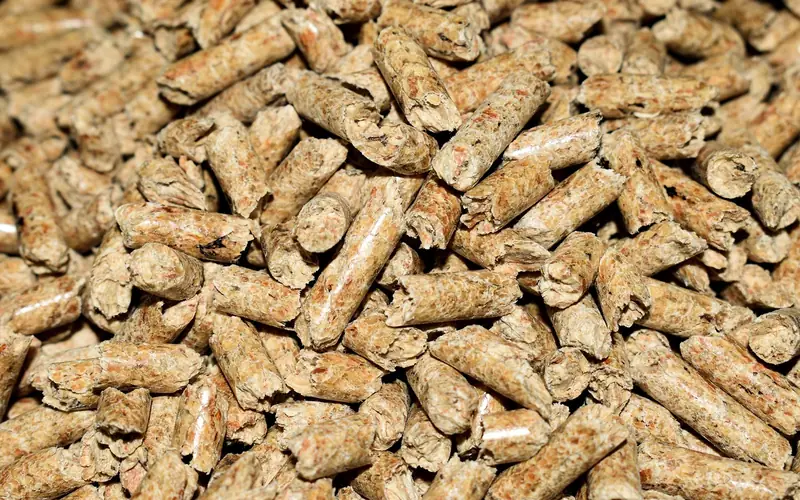
Bags of wood pellets look alike, but the fuel inside is not. Bear Mountain describes BBQ pellets as food-grade and made only from 100% hardwood, with no fillers, binders or additives beyond possibly a vegetable-based oil. Heating pellets, it says, can use a variety of woods including softwoods like pine, whose resin gives food a bitter, unappetizing taste. It adds that non-certified pellets may include bark, leaves and other impurities that can affect flavor and possibly pose a health risk.
Traeger makes the same promise from the brand side, describing its pellets as 100% natural, food-grade hardwood. A-MAZE-N sells its own pellets for its tubes, though it notes other pellets may be used with results that vary. The practical rule is simple: buy pellets labeled for cooking, smoking or grilling, check the bag says 100% hardwood, and never use stove fuel, treated scrap or lumber offcuts.
How to Use Wood Pellets in a Smoker Tube, Step by Step
These steps follow A-MAZE-N’s published instructions for its tubes. Other brands’ tubes work the same way in principle, but check their own instructions first.
- Fill the tube: hold it with the open end up and fill with pellets to 1 inch from the top.
- Light it: lay the tube flat on a level surface or grate and hold a propane torch on low to the open end for 45 seconds. A small flame should appear on top of the pellets.
- Let the flame burn: keep the flame going for 10 minutes. You can blow softly on the embers to check they are burning well, but do not rush this step.
- Blow the flame out: once the pellets are burning well, blow it out so they smolder and make smoke.
- Place the tube in the smoker: set it somewhere with good ventilation, using caution because the metal can be hot.
- Cook with your normal heat source: the tube adds smoke but does not cook, so keep your charcoal, gas or electric heat running as usual.
Need less smoke? A-MAZE-N says to pack the tube half full, but you will also get about half the burn time. Its optional alternative to a torch is a gel alcohol starter squeezed over the pellets just inside the open end.
How Many Pellets Do You Need and How Long Will They Smoke?
A-MAZE-N’s chart for its expanding tubes gives the clearest published numbers for any pellet holder. Every row works out to roughly 3 oz of pellets per hour of smoke, a ratio the chart does not state but its figures show.
| Tube length | Pellets used | Smoke time (up to) |
|---|---|---|
| 6 inch | 6 oz | 2 hours |
| 9 inch | 9 oz | 3 hours |
| 12 inch | 12 oz | 4 hours |
| 15 inch | 15 oz | 5 hours |
| 18 inch | 18 oz | 6 hours |
The same maker’s maze is rated differently. It lists up to 12 hours of smoke on 1 lb of pellets when cold smoking. Each row of the maze runs 3 to 4 hours cold, or 2 to 3 hours at 225F and above, so you can fill only one or two rows for a shorter smoke. Lighting both ends gives more smoke but halves the burn time.
A 12 inch tube holds about 12 oz of pellets and smokes for up to 4 hours, and direct heat can shorten that. Source: A-MAZE-N product manual, expanding tube chart and tips section.
Treat every figure as a maximum. A-MAZE-N says duration depends on the pellets used, heat, draft and turbulence inside your smoker. Fill the tube to the 1 inch line rather than weighing exact ounces, and note how long it actually lasts in your own smoker so you can plan the next cook.
Where to Put the Tube in Charcoal, Gas and Electric Smokers
Placement decides whether the pellets burn slowly or flare up. A-MAZE-N is firm on this: do not place the tube directly above or next to a heat source or open flame, because that can ignite the pellets and damage your smoker. If you need to run it near heat, the maker suggests a small homemade heat shield to deflect radiant heat and turbulence.
- Vents: start with intake and exhaust vents wide open, then adjust until you see thin blue smoke, per the maker.
- Water pans: A-MAZE-N says not to use water in the water pan because extra moisture affects burning. If you need water, it suggests a small disposable foil pan of water on a rack above the tube.
- Drips: arrange the meat so juices do not drip onto the tube, or put a drip pan above it.
- Trial and error: the maker notes each smoker is different, so you may need to try a few spots to get the best performance.
That water-pan advice appears to conflict with the USDA leaflet, which describes a water pan in a covered grill to prevent flare-ups and keep a moist environment. For a lit pellet tube, follow the tube maker’s foil-pan-above workaround. The USDA’s tip to soak chips is a separate matter; our guide to soaking wood before smoking explains why that rule is questionable.
Electric smokers add one more wrinkle, because many have their own chip tray and rules about how much to add. If yours does, read our guide to adding wood chips to an electric smoker first, and check your manual before putting a lit tube inside. If you prefer chips in the same cooker, see how to use wood chips in a smoker.
Pick a Pellet Flavor That Fits the Food
Pellet makers describe flavors in similar terms. This table condenses Traeger’s wood pellet guide, so it reflects one brand’s descriptions rather than a lab measurement.
| Wood | Flavor, per Traeger | Pairs with |
|---|---|---|
| Alder | Mild flavor and aroma | Chicken, fish, baked goods |
| Apple | Lightly fruity smoke | Poultry and pork |
| Cherry | Hearty smoke flavor | Beef and ribs |
| Hickory | Strong flavor | Most meats; often blended with oak or apple |
| Maple | Mild, with a hint of sweetness | Pork and turkey |
| Mesquite | Hearty smoke, popular in Texas BBQ | Dishes that need extra depth |
| Oak | Middle ground: stronger than cherry or apple, lighter than hickory | Fish and vegetables |
| Pecan | Nutty, a little spicy | Beef, pork, poultry, baked goods |
If you want to go deeper on a single wood, we have guides on pecan wood for smoking, maple wood for smoking and oak for BBQ. One wood to avoid: cedar and smoking safety is worth reading before you ever try it. One lighting quirk from A-MAZE-N: cherry pellets can be hard to burn by themselves, so put a layer of hickory, maple or oak down first.
Wondering how fast pellets disappear in a pellet grill? Our guide to how long a bag of Traeger pellets lasts breaks that down by cooking temperature, and mixing charcoal pellets with wood pellets covers a related question.
Hot Smoke, Cold Smoke and the USDA Safe Temperatures
A-MAZE-N defines cold smoking as adding smoke without heat while staying below 100F, and hot smoking as cooking at normal low-and-slow temperatures between 175F and 275F. A pellet tube or maze can do either, because it makes the smoke separately from the heat.
The food safety rules are not flexible, though. The USDA Food Safety and Inspection Service says to keep the smoker or grill at 225 to 300F throughout cooking, to use one thermometer for the smoker and another for the food, and to cook to these internal temperatures:
| Food | Minimum internal temperature (USDA) |
|---|---|
| Raw beef, pork, veal and lamb steaks, chops and roasts | 145F, then rest at least 3 minutes |
| Raw ground beef, pork, lamb and veal | 160F |
| All poultry | 165F |
The two ranges overlap at 225 to 275F, which is where a hot-smoked cook in a tube setup should sit. The USDA leaflet also says to thaw meat completely before smoking, because slow smoking leaves thawing food in the 40 to 140F danger zone, and to refrigerate leftovers within 2 hours of taking them out.
Cold smoking is a different game. The USDA material read for this article describes smoking as slow cooking and gives no guidance for cold smoking raw meat or fish, so use a tested cure-and-smoke recipe for that. A-MAZE-N’s own examples for cold smoke are foods like cheese, nuts, spices, salt and vegetables, and it says bacon and ham need a cure first.
Fire and Carbon Monoxide Safety
Smoke generators burn fuel, so treat them like any other fire. The Consumer Product Safety Commission says to never burn charcoal inside homes, vehicles, tents or campers because it gives off odorless carbon monoxide, and it recommends a CO alarm in every household. Its warning is written about charcoal, but the safe assumption is the same for any lit tube: keep it outdoors in the open.
- Location: the USDA advises setting a charcoal smoker in a well-lit, well-ventilated area away from trees, shrubbery and buildings. See our smoker on a wood deck guide for clearance questions.
- Fire starters: use approved fire starters only, never gasoline or paint thinner, per the USDA.
- Hot metal: A-MAZE-N warns the tube metal can be hot, so use tongs or gloves to move it.
- Storage: the maker advises storing pellets in a cool, dry place, since they absorb moisture from the air and that affects burning. Some of its customers use plastic containers.
Common Mistakes to Avoid
- Using heating or stove pellets because they are cheaper.
- Rushing the 10 minute lighting step, so the tube goes out inside the smoker.
- Putting the tube right above the burner, element or coals.
- Leaving water in the water pan under a lit tube.
- Letting meat drip onto the pellets.
- Expecting the tube to cook the food. It only makes smoke.
- Skipping thermometers: cook to the USDA internal temperature, not to the look of the smoke.
Frequently Asked Questions
Can I use wood pellets in any smoker?
Yes, if the pellets are food-grade hardwood and the smoker has a way to hold them. A pellet grill burns them straight from the hopper. A charcoal, gas or electric smoker needs a smoker tube or maze that smolders pellets separately from its own heat source. Check your smoker’s manual for any rules about adding fuel.
How long do wood pellets smoke for?
It depends on the holder. A-MAZE-N lists up to 2 hours for a 6 inch tube with 6 oz of pellets and up to 6 hours for an 18 inch tube with 18 oz. Its maze gives 2 to 3 hours per row at 225F or higher. The maker says pellet type, heat, draft and airflow all change the real figure.
Do I need to soak wood pellets before smoking?
No pellet maker or tube maker read for this guide tells you to soak pellets. A-MAZE-N says extra moisture affects the burning process and advises storing pellets in a cool, dry place. The USDA’s soak-the-chips advice is about chips added to charcoal, not pellets in a tube.
Can I use heating pellets in a smoker?
No. Bear Mountain describes BBQ pellets as food-grade, 100% hardwood with no fillers or binders, while heating pellets can include softwoods like pine, whose resin gives food a bitter taste. Buy pellets sold for cooking, smoking or grilling, and never fuel pellets made for a stove.
Can I mix different flavors of wood pellets?
Yes. Traeger notes that some cooks blend strong hickory with a milder pellet such as oak or apple, and makers sell pre-mixed blends. In a tube, A-MAZE-N adds that cherry pellets can be hard to light alone, so layer hickory, maple or oak underneath them.
Conclusion
Wood pellets are an easy way to add smoke to almost any cooker, as long as they are food-grade hardwood and burn in the right holder. Fill a tube to 1 inch from the top, give it a full 10 minute lit start, keep it away from direct heat and water, and cook to the USDA temperatures. If you also use chips or chunks, our broader guide to using wood for smoking compares the fuels.
Sponsored / affiliate links. As an Amazon Associate I earn from qualifying purchases. I may earn additional commission from eligible campaigns.