Can a Wood Burner Heat the Whole House? Real BTU Numbers
A correctly sized wood burner can heat an entire house — but only if the home is under 2,000 sq ft, has an open layout, and the stove’s BTU output matches your climate (20–50 BTU per sq ft). Undersize it and far bedrooms stay cold no matter how hot the living room gets. This guide covers the real BTU math for your square footage, duct and fan options for distant rooms, and when you’ll still need backup heat.
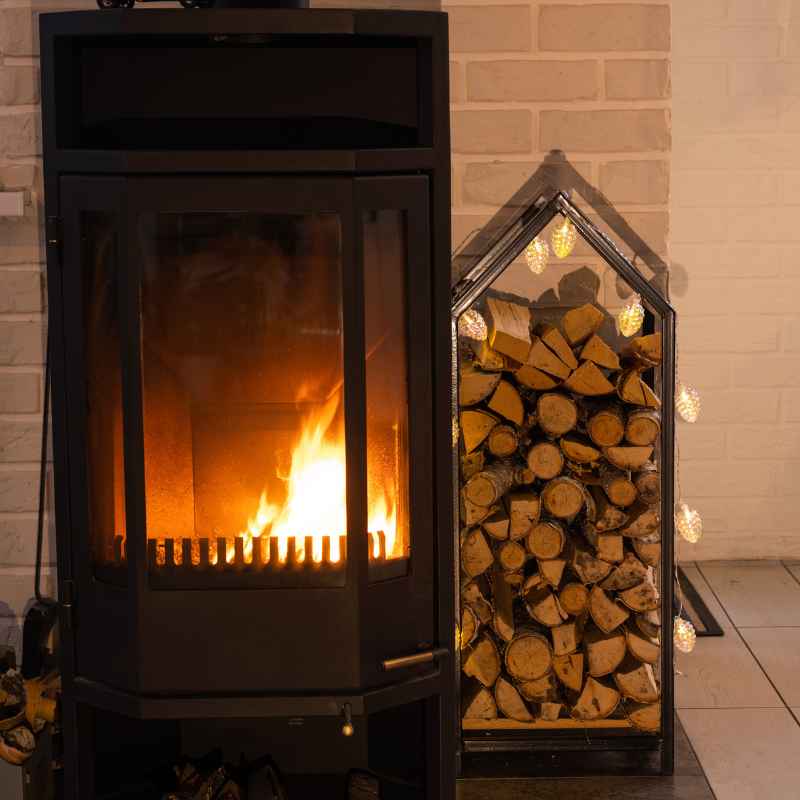
How a Wood Burner Heats a Home
Best Whole-House Wood Stove Pick
Ashley 2,000 Sq Ft 89,000 BTU Wood Burning Stove
EPA-certified stove rated for 2,000 sq ft — lines up with the moderate-climate BTU target in the table above, with headroom for a colder winter.
- Best for: Open-plan homes up to 2,000 sq ft in moderate-to-cold climates
- Why we picked it: 89,000 BTU output matches the cold-climate figure in our sizing table for a 2,000 sq ft home
- Main drawback: Oversized for small or well-insulated homes — you’ll be damping it down often
Compare more whole-house heat distribution options
 Blower Fan Hongso GFK-160 Blower Fan Kit
|
 No-Electric Option Ecofan UltrAir Heat-Powered Stove Fan
|
 Whole-House Duct Option Tesansi 4″ Inline Duct Booster Fan
|
As an Amazon Associate we earn from qualifying purchases.
Think of a wood burner like a big heart for your home. It makes warmth. Then, that warmth spreads out.
This happens in a few main ways. Air near the stove gets hot. This warm air then moves around.
Radiation is also key. The stove itself gets hot. It sends out heat waves.
These waves warm things nearby. Walls, furniture, and even you feel this warmth directly.
The type of stove matters a lot. Some are built to push heat out better. They might have fans.
These fans help move the warm air faster. Other stoves are simpler. They rely more on natural air currents. This is called convection — hot air rises, cooler air sinks, creating a slow, steady flow of warmth. But that flow can be weak on its own.
A wood burner can work well for a single room. Making it heat a whole house is more of a challenge — it’s like trying to fill a big pool with a small bucket. You need a lot of heat, and it needs to get everywhere. This is where house design and insulation become super important.
What Real Homeowners Report
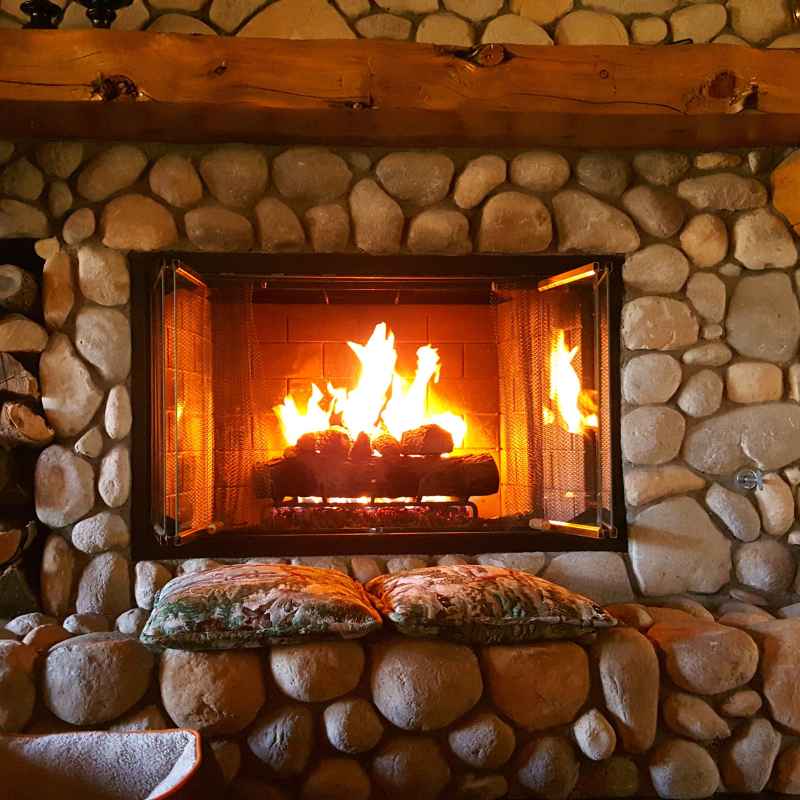
The same pattern shows up again and again in wood-stove forum threads: the room with the stove runs almost too warm, while a bedroom at the far end of the house stays noticeably cooler. A long-running Hearth.com thread titled “Can I really heat the back bedrooms with a wood stove?” captures the complaint exactly — heat that feels overwhelming in an open living area often can’t push through a hallway and two closed doors.
The homeowners who report success almost always share three traits: a central stove location, an open floor plan with doors left open between rooms, and realistic expectations that bedrooms will run a few degrees cooler than the main living area. Owners who struggle usually have one of the opposite conditions — a stove tucked in a corner or basement, a chopped-up floor plan with many small closed rooms, or an older home with drafty windows undoing the heat as fast as the stove makes it.
The single biggest misconception is expecting one heat source to behave like central heating. A wood stove heats by convection and radiation from one point — it needs help from air movement (open doors, fans, or ducting) to reach every room evenly. It doesn’t push heat through a network of vents the way a furnace does, so managing airflow matters as much as feeding the fire.
Understanding Heat Flow in Your Home
Air Movement: Warm air rises. Cool air sinks. This is convection.
It helps spread heat. But it’s slow without help.
Radiation: The stove and hot surfaces give off heat. This warms objects directly around them. It feels warm but doesn’t travel far.
Insulation: Good insulation keeps heat in. It stops it from escaping outside. This is vital for whole-house heating.
Drafts: Leaks in windows or doors let warm air out. They also let cold air in. This makes heating hard.
What Makes a Wood Burner Effective for the Whole House?
For a wood burner to heat your whole house, several things need to align. The stove itself is a big piece of the puzzle. You need a stove that’s the right size for your home’s heating needs.
A stove that’s too small won’t make enough heat. One that’s too big might be hard to control. You could end up with a room that’s way too hot.
Then comes the house itself. How well is it insulated? Old houses often have less insulation. They leak heat faster. Modern homes are built to be much tighter and hold onto heat better.
The layout of your home also matters. Open floor plans are easier to heat. If you have many small, closed-off rooms, heat struggles to get through, so doors need to stay open.
The location of the stove is also important. Putting it in a central spot helps distribute heat more evenly. If it’s in a corner or basement, its heat might not reach everywhere — think of it like placing a heater in a large warehouse. Where you put it makes a huge difference.
Stove Size Matters
Small Homes (Under 1,000 sq ft): A smaller stove, maybe 5-8kW output, might be enough.
Medium Homes (1,000-1,800 sq ft): Look for stoves around 8-12kW output.
Large Homes (Over 1,800 sq ft): You might need a larger stove (12kW+) or supplemental heat.
Note: These are general guides. Always check manufacturer specs and consult a pro.
How Many BTUs Do You Actually Need? (Real Numbers)
There’s a real formula for this, and it’s more precise than guessing by stove size. HVAC pros multiply square footage by a BTU-per-square-foot factor that scales with climate: 20 BTU/sq ft in mild regions, 30 in moderate ones, 40 in cool climates, and 50 in the coldest parts of the country. That target is your actual heat output need — not the stove’s maximum firebox rating, which manufacturers often round up. (If you’re comparing a European-spec stove listed in kilowatts, 1 kW ≈ 3,412 BTU/hr.)
| Home Size | Mild Climate (20 BTU/sq ft) | Cold Climate (50 BTU/sq ft) | Stove Output Needed (Cold Climate) |
|---|---|---|---|
| 1,000 sq ft | 20,000 BTU | 50,000 BTU | ≈ 14.7 kW |
| 1,500 sq ft | 30,000 BTU | 75,000 BTU | ≈ 22.0 kW |
| 2,000 sq ft | 40,000 BTU | 100,000 BTU | ≈ 29.3 kW |
| 2,500 sq ft | 50,000 BTU | 125,000 BTU | ≈ 36.6 kW |
| 3,000 sq ft | 60,000 BTU | 150,000 BTU | ≈ 44.0 kW |
📊 Each additional exterior wall beyond the first adds roughly 5% to a room’s BTU requirement. A stove sized for an open floor plan can fall short in a home with many separate, exterior-facing rooms. — Source: standard HVAC load-sizing convention (Inch Calculator, 2026)
For context, a central furnace sized for the same home lands in a similar 40,000–120,000 BTU range using the standard 30–60 BTU-per-square-foot rule contractors use for forced-air systems. A wood stove isn’t inherently underpowered — it just releases all of that heat from one point in the house instead of through ducted registers in every room. That’s the real distribution problem, not a lack of raw output.
If you’re shopping for a stove, our Pacific Energy wood stoves review breaks down current models and their actual BTU ratings. In a cold-climate zone needing 40–50 BTU/sq ft, see our roundup of hardy wood burning heaters built for tough winters.
Real-World Examples: Successes and Struggles
Success stories share a consistent shape: a small, well-insulated cottage with the stove positioned centrally in the main living area, doors left open, and ceiling fans running on low to push warm air back down. Homes like this can go without a backup furnace altogether in many climates.
Larger homes tell a different story. A farmhouse with a powerful stove and an older furnace typically uses the stove for the main living spaces and lets the furnace cover the bedrooms upstairs on the coldest nights — not because the stove failed, but because no single point-source heater can match a whole-house duct system in a large, multi-room floor plan. Owners in this situation usually see it as a way to cut fuel costs, not replace central heat entirely.
The struggles cluster around the same few causes: older, leaky windows that let heat escape as fast as the stove makes it, and long hallways that separate the stove from the bedrooms. In those layouts, homeowners often end up running electric heaters in the rooms furthest from the stove rather than expecting the wood burner to reach that far. If one room runs too hot before the rest of the house warms up, the issue is usually distribution, not stove size — see our guide on when a wood burner gets too hot for the warning signs worth knowing.
Common Patterns From Wood-Burning Forums
Best-case setup: Central stove, open floor plan, doors left open, ceiling fans on low — homeowners in this setup most often report even heat house-wide.
Common mixed result: Downstairs stays warm, upstairs runs cooler — many owners add electric radiators or space heaters in bedrooms rather than fight the layout.
Common challenge: Spread-out or older homes often still need a backup furnace or oil heat on the coldest days, even with a properly sized stove.
Recurring theme: Insulation upgrades — especially in the attic — are the change owners most often credit for finally getting a stove to heat the whole house.
Boosting Your Wood Burner’s Reach
If your wood stove isn’t reaching everywhere, don’t despair. There are ways to help. First, check your insulation — especially in the attic and walls. This is a big one. It keeps the heat you make inside your home.
Look for drafts. Seal up leaks around windows and doors with weather stripping and caulk — even small gaps can let a lot of warm air escape. Then consider how air moves: open doors between rooms to let heat flow more freely.
Ceiling fans can be a game-changer. Run them on a low speed, set to spin clockwise in winter. This gently pushes warm air that collects near the ceiling back down into the room, helping balance the temperature. A heat-powered fan placed on top of the stove itself is another low-tech option — it uses the stove’s own heat to spin blades and move air into the room without any wiring.
Using Your Existing Ductwork or a Whole-House Fan
If your home already has forced-air heating, you don’t need new equipment to move stove heat around. Set the furnace thermostat to “fan only” (or “circulate” on a smart thermostat) and the existing blower will pull warm air from the stove’s room through the return vents and push it out through supply registers in every other room — no extra fuel burned, since the furnace itself stays off.
No ductwork? A code-compliant register can still be cut between the stove’s room and the floor above, but it has to be lined with sheet-metal ductwork rather than left as an open hole — that lining is a fire-blocking requirement, not optional, so this is a job for a licensed contractor. An inline duct booster fan (roughly 50–200 CFM) mounted in that duct run gives the transfer an active push instead of relying on natural convection alone.
For homes without any ducts at all, small corner-mounted doorway fans that sit at the top of a doorframe can pull the hottest air out of the stove’s room and push it down a hallway — a cheap, no-cut alternative to registers.
Tips for Better Heat Distribution
- Seal Drafts: Use caulk and weather stripping around windows and doors.
- Open Doors: Keep interior doors open to allow air to circulate.
- Ceiling Fans: Run fans on low speed clockwise (winter mode) to push heat down.
- Insulation Check: Ensure your attic and walls are well-insulated.
- Duct or Register: Use “fan only” mode on existing HVAC, or a sheet-metal duct with a booster fan between floors.
When is it NOT Enough?
It’s important to be realistic. A wood burner might not be enough for your whole house if your home is very large, very old, and poorly insulated. Houses with many separate, closed-off rooms can also be a problem — the heat simply can’t get around.
If you live in a very cold climate, the stove might not keep up on the coldest days, based on the sizing table above. You might need supplemental heat — an existing furnace, electric baseboard heaters, or another type of stove.
Also consider your lifestyle. If you need every room at a consistent, specific temperature all the time, a wood stove alone might not deliver — you have to tend the fire, so you can’t always guarantee a steady output the way a thermostat-controlled furnace can.
Factors That Limit Whole-House Heating
Large Square Footage: Very big homes demand a lot of heat.
Poor Insulation: Heat escapes quickly from uninsulated homes.
Complex Layout: Many small, separated rooms make heat distribution hard.
Extreme Cold: Very low outdoor temperatures can overwhelm a single stove.
Inconsistent Use: If the fire dies down, the heat drops.
Complementing Your Wood Burner
For many, the best answer is not to rely on just the wood burner. It’s about using it wisely as part of a system — heat the main living areas with the stove, then use a more automated system for other parts of the house, whether that’s existing central heating or electric heaters in bedrooms you use less often.
Think about zoning. You can make the areas around the stove the warmest, and keep other areas at a lower, comfortable temperature. This saves fuel and effort — you only heat spaces when you need them.
Modern wood stoves are quite efficient. They burn cleaner and hotter, meaning more heat for your wood. But even the best stove needs help to heat a large or complex home. Combining sources is often the smartest approach — it gives you flexibility and comfort.
Safety First, Always
When using a wood burner, safety is non-negotiable. Make sure it’s installed correctly by a professional and have it inspected yearly. Proper venting matters just as much as sizing — see our guide on how to vent a wood burner correctly for chimney and clearance requirements.
Keep flammable items far away from the stove. Use a proper hearth. Make sure your chimney is clean and clear of creosote — this buildup can cause chimney fires. Once the fire’s out, don’t just toss the ash in the trash while it could still be hot — see what to do with ash from a wood burner for safe disposal and reuse ideas.
Install smoke alarms and carbon monoxide detectors, and test them regularly. Wood burning creates carbon monoxide — a colorless, odorless gas you can’t see or smell, but it can be deadly. Ensure you have working detectors on every level of your home.
Never use accelerants like gasoline to start a fire. Use proper kindling and dry, seasoned hardwood. Avoid burning trash or treated wood — these can release toxic fumes and damage your stove or chimney.
Wood Burner Safety Checklist
- Professional Installation: Always use a certified installer.
- Annual Inspections: Get your stove and chimney checked every year.
- Clearance: Keep at least 3 feet of space around the stove.
- Fire Extinguisher: Keep one nearby.
- Detectors: Install working smoke and CO detectors.
- Clean Chimney: Prevent creosote buildup.
- Burn Only Wood: Never burn trash or treated materials.
What This Means for You
So, can a wood burner heat your whole house? For smaller, well-insulated homes with an open layout, yes. For larger or older homes, it’s more likely to be one part of your heating plan rather than the whole solution.
Run your own numbers against the BTU table above, look honestly at your insulation and layout, and you’ll know which category your house falls into. From there, improving insulation, sealing drafts, or adding a duct or fan can make a real difference before you assume the stove itself is too small.
Quick Tips for Cozy Warmth
Always use dry, seasoned firewood — it burns hotter and cleaner. Never overload the stove; follow the manufacturer’s instructions for operation.
Open doors and vents during the day to let heat spread, and close them at night if you want to keep warmer air in specific rooms. Keep a thermometer in different rooms so you can see where the heat is actually going.
Consider a stove with a water coil, which can heat water for your home as an extra benefit from your wood burning — but always ensure it’s installed by a professional, since it adds complexity and safety needs.
Heating Your Home Efficiently
Dry Wood: Use seasoned firewood for best results.
Correct Loading: Don’t overfill the firebox.
Monitor Temps: Use thermometers to check heat in different areas.
Water Heating: Explore stoves with water heating options if suitable.
Professional Advice: Consult experts for your specific home.
Frequently Asked Questions
How many BTUs do I need to heat my whole house with a wood stove?
Multiply your square footage by 20 to 50 BTUs depending on climate — mild climates use 20, moderate 30, cool 40, and very cold regions 50 BTU per sq ft. A 2,000 sq ft home needs roughly 40,000 BTU in a mild climate and up to 100,000 BTU in a cold one. Always check the manufacturer’s actual heating-area rating, not just the firebox size.
Can a small wood stove heat a 2,000 sq ft house?
Rarely on its own. Most small stoves top out around 40,000–50,000 BTU, which only covers a 2,000 sq ft home in a mild climate with an open floor plan. In a moderate or cold climate, a 2,000 sq ft house typically needs 60,000–100,000 BTU, so a small stove will usually only heat the main living area well.
How much wood do I need to heat a whole house?
This varies greatly. A well-insulated home in a milder climate might need 3-5 cords per year. A larger, less insulated home in a colder climate could need 8-10 cords or even more. It also depends on how much you use the stove.
Is it cheaper to heat with a wood stove or a furnace?
Often, yes. The cost of firewood can be lower than natural gas, propane, or oil, especially if you can source it yourself. However, you need to factor in the cost of buying and storing wood, as well as the labor involved.
What is the best type of wood for a wood burner?
Hardwoods like oak, maple, and ash are best — they burn longer and hotter. Ash in particular burns well even before it’s fully seasoned; see our full ash wood BTU breakdown for exact numbers. Softwoods like pine and fir burn faster and can create more creosote. Always use wood that has been seasoned for at least six months.
Can I use my home’s HVAC ducts to spread wood stove heat to other rooms?
Yes — running the furnace blower on “fan only” pulls warm air from the stove’s room through the existing return and supply ducts. You can also cut a code-compliant register between floors, but it must use sheet-metal ductwork, not an open hole, to meet fire-blocking requirements — have a professional install it.
How do I prevent my house from getting too hot with a wood stove?
Use less wood, burn smaller pieces, and adjust the air vents to create a slower, more controlled burn. Open windows or doors briefly, use ceiling fans to circulate air, and make sure your home is well-insulated so heat doesn’t build up too much. See our guide on when a wood burner gets too hot for warning signs.
Final Thoughts on Whole-House Heating
Heating your entire home with a wood burner is a realistic goal for the right house — it offers charm and can be genuinely cost-effective. With the right BTU math, careful insulation, and smart duct or fan use, you can enjoy widespread warmth. For larger or older homes, treating the stove as one part of a heating system — not the whole solution — is usually the smartest path to comfort.
Sponsored / affiliate links. As an Amazon Associate I earn from qualifying purchases. I may earn additional commission from eligible campaigns.