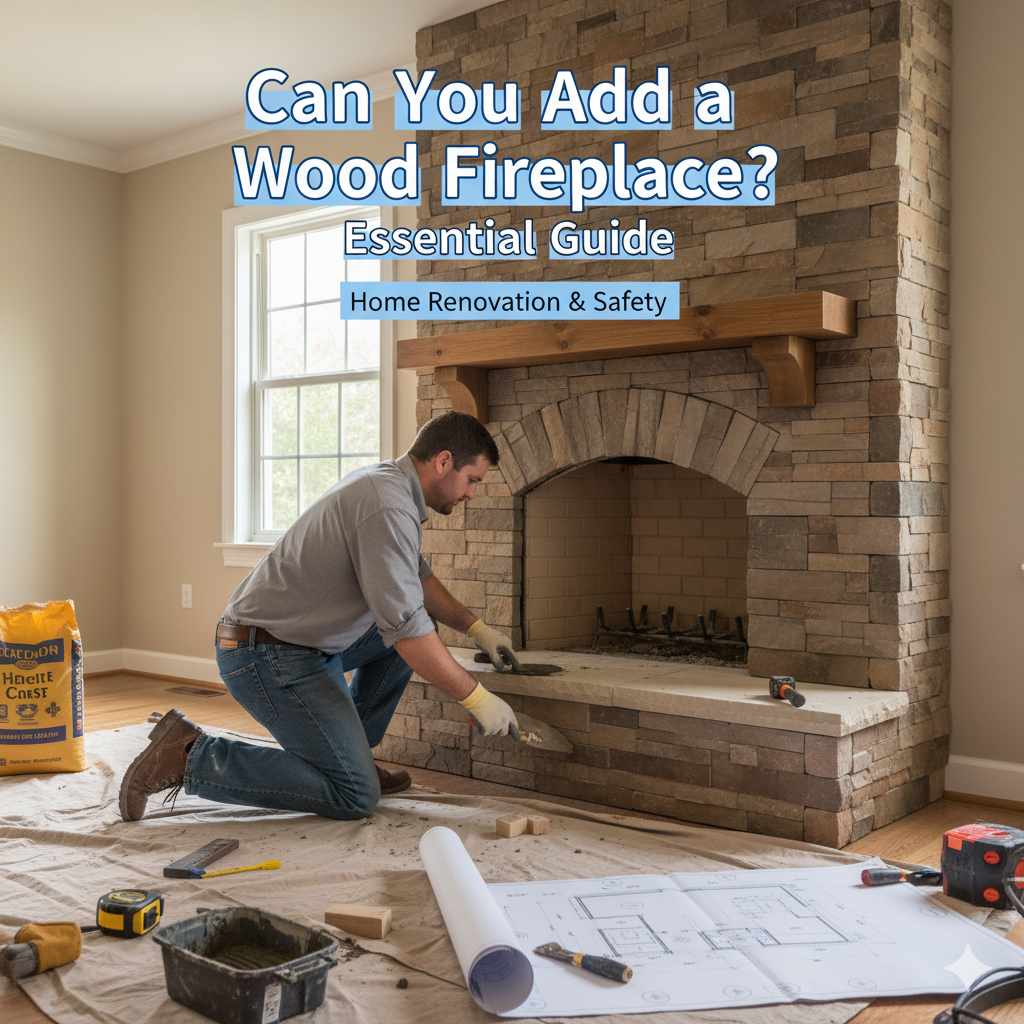
Can You Add Wood Fireplace? Essential Guide
Yes, you absolutely can add a wood-burning fireplace to a house, but it requires careful planning and often professional help for safety and building code compliance. This guide walks you through the essential considerations, from structural needs to choosing the right type, ensuring you can enjoy the warmth and ambiance of a real wood fire.
Dreaming of cozy evenings by a crackling fire? Many homeowners wonder if adding a wood-burning fireplace to their existing house is a realistic possibility. The answer is a resounding yes! While it might seem like a daunting project, with the right information and a clear plan, you can bring the timeless charm of a wood fire into your home. This guide breaks down everything you need to know, making the process easy to understand and manage, even for beginners.
We’ll cover the key decisions you’ll need to make, from understanding the structural requirements to choosing the perfect fireplace style. By the end of this article, you’ll be well-equipped to explore your options and take the first steps toward making your wood-burning fireplace dream a reality.
Can You Add a Wood-Burning Fireplace to a House? The Essential Guide
Adding a wood-burning fireplace to a house is a common renovation project, but it’s not as simple as just cutting a hole in the wall. It involves significant structural considerations, safety regulations, and a good understanding of how fireplaces and chimneys work. With proper planning and skilled execution, it’s entirely achievable and can add immense value and comfort to your home.
Understanding the Basics: What You Need for a Wood Fireplace
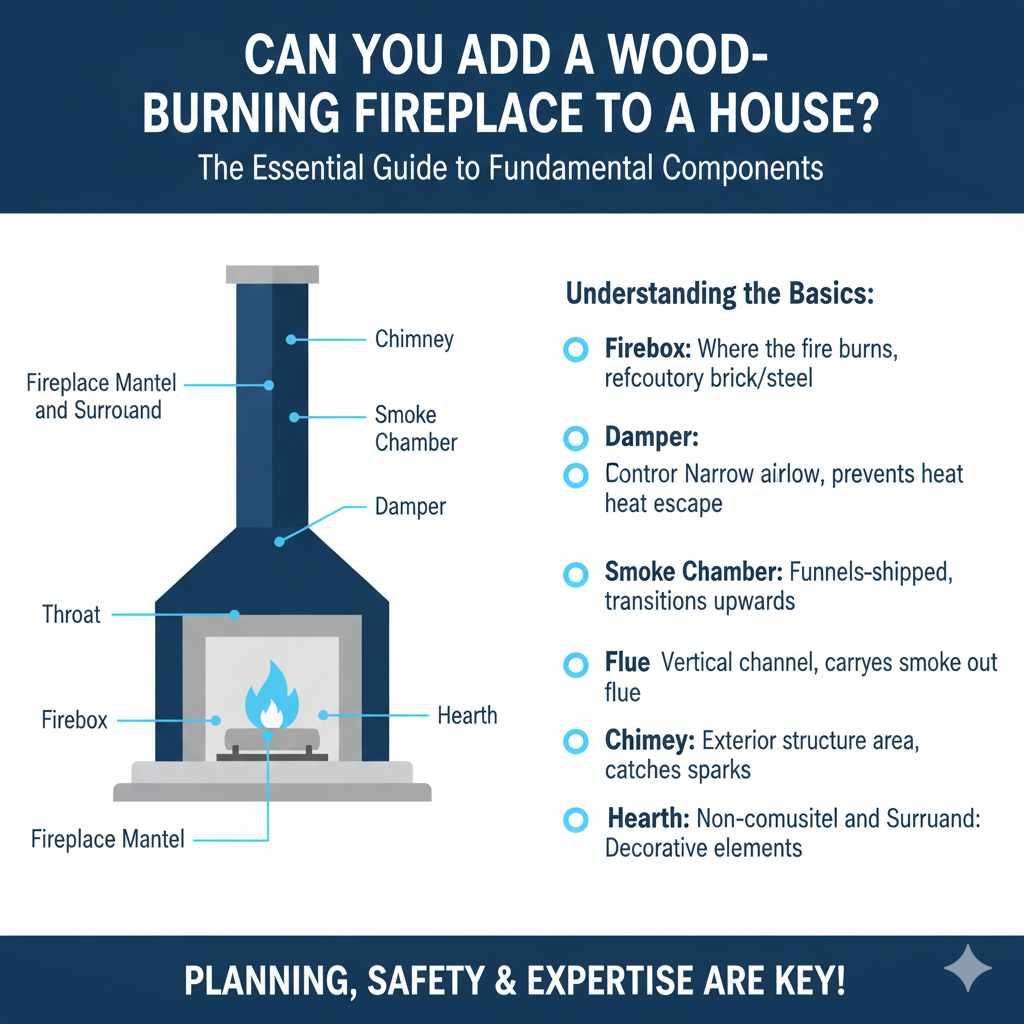
Before diving into the “how,” let’s look at the fundamental components of a wood-burning fireplace system:
- Firebox: This is where the fire burns. It needs to be made of fire-resistant materials like refractory brick or steel.
- Damper: A metal plate located above the firebox that controls airflow and prevents heat from escaping up the chimney when the fireplace isn’t in use.
- Throat: A narrow passage between the firebox and the smoke chamber, which helps direct smoke upwards.
- Smoke Chamber: A funnel-shaped area that smoothly transitions smoke from the throat to the flue.
- Flue: A vertical channel within the chimney that carries smoke and gases safely out of the house.
- Chimney: The exterior structure that houses the flue and vents combustion byproducts. It can be masonry (brick and mortar) or metal (prefabricated).
- Hearth: A non-combustible area extending in front of and around the fireplace opening, designed to catch sparks and embers.
- Fireplace Mantel and Surround: The decorative elements around the fireplace opening, often made of wood, stone, or tile.
Key Considerations Before Adding a Wood Fireplace
Adding a fireplace involves more than just aesthetics; it’s about integrating a safe and functional heating element into your home. Here are the crucial factors to consider:
1. Structural Requirements and Location
This is arguably the most critical part. A fireplace and its chimney are heavy and require a strong foundation. You also need to consider where it will be placed and how it integrates with your home’s structure.
- Foundation: The fireplace needs to be supported by a solid foundation, often a concrete slab that extends below the frost line in colder climates. This means you may need to excavate and pour a new foundation, especially if it’s an interior wall addition.
- Flooring: The fireplace unit and hearth will add significant weight. Ensure your existing floor joists can support it. In many cases, reinforcing the floor structure or building from the ground up is necessary.
- Wall Cavity: When running a chimney, you need to take careful measurements to ensure adequate clearance from combustible materials within the walls. Prefabricated systems have specific requirements for clearances.
- Interior Design: Think about how the fireplace will fit into your room’s layout. Will it obstruct doorways or furniture placement? Placement can significantly impact room flow and your ability to install venting.
- Exterior Space: The chimney needs to exit the roof at a safe height and distance from any part of the house or neighboring structures, as dictated by building codes.
2. Building Codes and Permits
Safety is paramount when dealing with fire and building structures. All fireplace installations must comply with local building codes.
- Permits: You will almost certainly need a building permit before starting any work. This ensures the project is inspected and approved by your local authorities.
- Code Compliance: Codes cover everything from chimney height and clearances to firebox construction, hearth dimensions, and ventilation requirements. Failure to comply can result in fines, mandatory removals, and most importantly, unsafe living conditions.
- Professional Inspection: A crucial step is having your plans reviewed and your completed work inspected by a qualified building inspector.
You can usually find information on your local building codes by visiting your city or county’s building department website or by contacting them directly.
3. Type of Wood-Burning Fireplace
There are several types of wood-burning fireplaces, each with its own installation process and characteristics:
- Masonry Fireplaces: These are built on-site using bricks, mortar, and stone. They are traditional, highly customizable, and can be very durable. However, they are also the most labor-intensive and expensive to install.
- Factory-Built Fireplaces (Zero-Clearance): These are pre-fabricated metal boxes designed for safety and ease of installation. They are typically insulated, allowing them to be installed closer to combustible materials (hence “zero-clearance”), saving space and simplifying construction. They require a dedicated metal chimney system.
- Wood-Burning Inserts: These are designed to fit inside an existing masonry fireplace. They significantly improve heating efficiency and reduce smoke emissions compared to an open-hearth fireplace. While not technically “adding” a fireplace from scratch, they’re a popular upgrade or alternative.
- Wood Stoves: While not a “fireplace” in the traditional sense, a freestanding wood stove is another option for burning wood. They can often be installed with less structural modification than a full fireplace but still require proper venting and clearances.
4. Cost of Installation
The cost can vary widely based on the type of fireplace, materials used, labor, and your location. Generally, expect to invest a significant amount of money.
Here’s a general breakdown of potential costs:
| Component | Estimated Cost Range (USD) | Notes |
|---|---|---|
| Permits and Inspections | $200 – $1,000 | Varies greatly by municipality. |
| Masonry Fireplace (Materials & Labor) | $7,000 – $15,000+ | Dependent on size, materials, and complexity. Includes foundation, firebox, chimney. |
| Factory-Built Fireplace (Unit & Chimney) | $3,000 – $7,000 | Cost of the unit and its specialized, double-wall metal chimney system. |
| Installation Labor (General) | $1,500 – $5,000+ | Can be higher for complex structural work or masonry specialists. |
| Hearth & Mantel (Materials & Labor) | $500 – $4,000+ | Depends on chosen materials (stone, tile, wood, granite). |
| Structural Modifications/Reinforcements | $500 – $3,000+ | If floor joists need strengthening or foundation work is required. |
Note: These are rough estimates. Always get multiple quotes from qualified professionals.
5. Ventilation and Air Quality
Proper ventilation is crucial to ensure smoke and harmful gases (like carbon monoxide) are safely expelled from your home.
- Chimney Height: Building codes often specify minimum chimney heights relative to the roofline and nearby structures to ensure proper draft.
- Ventilation Requirements: Newer, well-sealed homes may require dedicated makeup air systems to ensure the fireplace gets enough oxygen to burn efficiently and safely, preventing backdrafting. You can learn more about ventilation requirements from resources like the EPA’s Burn Wise program, which offers guidance on efficient wood burning and appliance performance.
- Draft: A good draft ensures smoke goes up the chimney. Factors like chimney height, flue size, and the presence of nearby obstructions (trees, buildings) affect it.
The Installation Process: Step-by-Step Overview
While hiring professionals is highly recommended for most aspects of this project, understanding the steps involved can help you manage the process.
1. Planning and Design
This is where you decide on the type, location, style, and budget. You’ll consult with fireplace specialists, masons, and potentially architects or structural engineers.
- Consultation: Discuss your vision, needs, and constraints with professionals.
- Site Assessment: A professional will assess your home’s structure, potential locations, and any necessary reinforcements.
- Design: Finalize the design, including dimensions, materials, and aesthetic details like the mantel and surround.
- Permit Application: Submit all necessary plans and paperwork to your local building department.
2. Site Preparation
Once permits are approved, the physical work begins.
- Demolition (if applicable): If you’re replacing an old fireplace or modifying existing walls.
- Foundation Work: Pouring a new concrete footing and base for the fireplace and chimney.
- Framing: Constructing the structural support for the fireplace and chimney chase (the framed shaft that encloses a prefabricated chimney).
3. Fireplace and Chimney Installation
This is the core of the project.
- Masonry Fireplace: Builders will meticulously lay bricks and mortar for the firebox, throat, smoke chamber, and the exterior chimney structure.
- Factory-Built Fireplace: The metal firebox unit is set in place, and the prefabricated metal chimney system is assembled and run through the chase up to and through the roof. Proper sealing and flashing at the roof penetration are critical.
- Damper and Throat Installation: Ensuring these components are correctly installed and functional.
4. Hearth and Mantel Installation
Once the main structure is in place, the exterior finishing begins.
- Hearth Construction: Laying non-combustible material like brick, stone, or tile for the hearth, ensuring it meets code requirements for size and thickness.
- Fireplace Surround: Installing decorative materials around the firebox opening.
- Mantel Installation: Attaching the decorative mantelpiece.
5. Final Inspections and Finishing Touches
Before you can light a fire, the work needs to be signed off by the authorities.
- Final Building Inspection: The building inspector will check that all work meets code requirements.
- Safety Check: Ensure all clearances are maintained and that the chimney cap is installed correctly to keep out rain and animals.
- Finishing: Plastering, painting, or other cosmetic finishes around the fireplace area.
Safety First: Essential Precautions
- Professional Installation is Key: Due to the inherent risks of fire and structural damage, hiring certified and experienced professionals (masons, fireplace installers, general contractors) is the safest bet. Look for installers certified by organizations like the Chimney Safety Institute of America (CSIA).
- Clearances: Always maintain the required clearances between the fireplace, chimney, and any combustible materials (wood framing, insulation, drywall). Factory-built fireplaces have specific instructions; do not deviate.
- Carbon Monoxide Detectors: Install carbon monoxide detectors on every level of your home, especially outside sleeping areas. Test them regularly.
- Fire Extinguisher: Keep a working fire extinguisher easily accessible near the fireplace.
- Proper Fuel Use: Only burn seasoned, dry firewood. Avoid burning trash, plastics, or chemically treated wood, as this can produce toxic fumes and damage your chimney.
- Annual Chimney Sweeping: Have your chimney inspected and cleaned by a certified chimney sweep at least once a year, or more often if you use it heavily. This removes creosote buildup, which can cause chimney fires.
Pros and Cons of Adding a Wood Fireplace
Like any home improvement project, adding a wood-burning fireplace has its upsides and downsides.
| Pros | Cons |
|---|---|
| Ambiance and Aesthetics: Creates a warm, inviting atmosphere unmatched by other heating methods. | High Installation Cost: Can be a significant financial investment, especially for masonry models. |
| Backup Heat Source: Provides heat during power outages, offering a degree of self-sufficiency. | Requires Maintenance: Regular cleaning, sweeping, and upkeep are essential for safety and efficiency. |
| Increases Home Value: A well-installed fireplace can be a desirable feature for potential buyers. | Fuel Storage: Requires space to store firewood, which needs to be seasoned and dry. |
| Potentially Lower Heating Costs: If you have access to affordable firewood, it can supplement or reduce reliance on other heating systems. | Emissions and Air Quality: Wood smoke contains particulate matter and can contribute to air pollution if not burned efficiently. Modern appliances and proper burning techniques mitigate this. |
| Sensory Experience: The sight, sound, and smell of a real wood fire are unique and comforting. | Time Commitment: Requires effort to start fires, tend to them, and clean up ashes. |
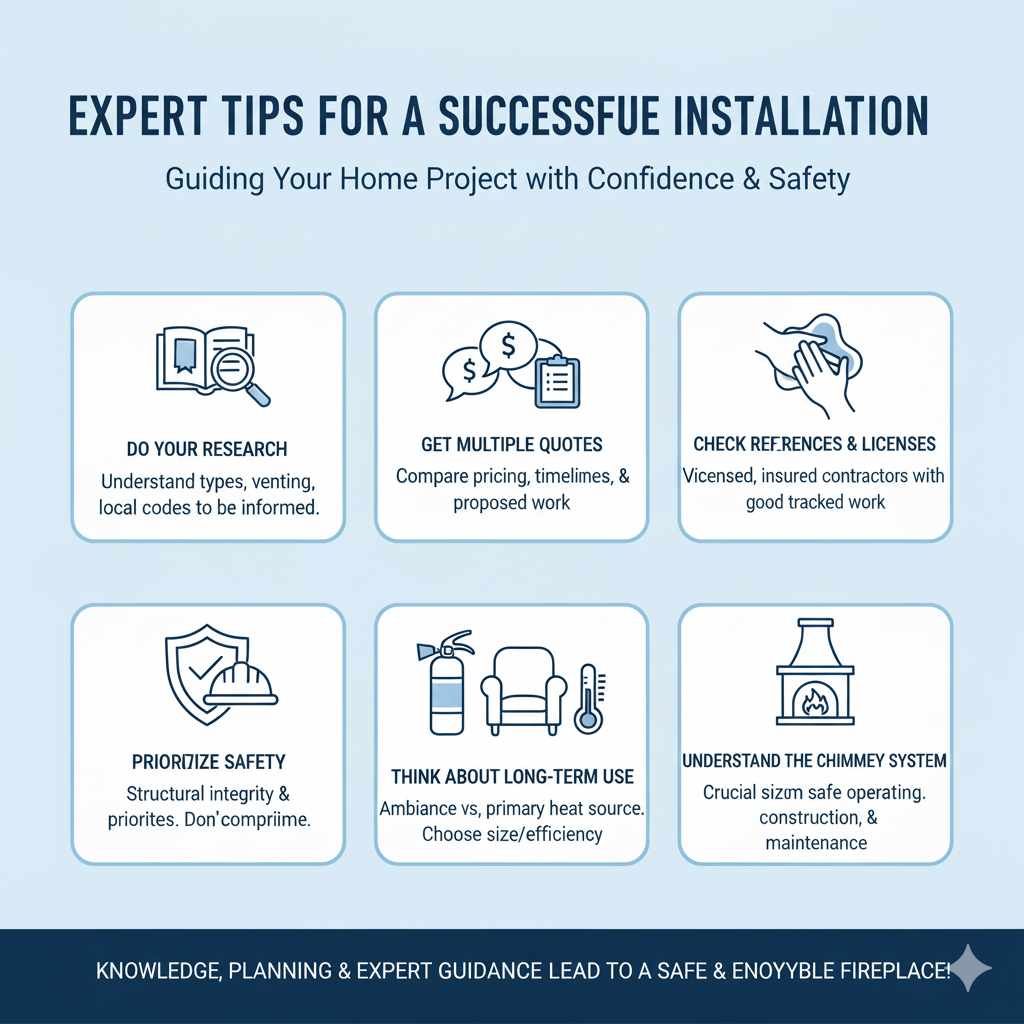
Expert Tips for a Successful Installation
As your woodworking mentor, here are a few pieces of advice to keep in mind:
- Do Your Research: Understand the different types of fireplaces, venting, and local codes before you start talking to contractors. This makes you an informed customer.
- Get Multiple Quotes: Don’t settle for the first contractor you speak with. Get at least three detailed quotes to compare pricing, timelines, and proposed work.
- Check References and Licenses: Verify that your chosen contractors are licensed, insured, and have a good track record. Ask for references from past clients.
- Prioritize Safety Over Aesthetics (Initially): While you want a beautiful fireplace, ensure the structural integrity and safety of the installation are the absolute top priorities. A stunning fireplace that isn’t safe is a dangerous liability.
- Think About Long-Term Use: Consider how you’ll use the fireplace. If it’s for ambiance, a smaller, more efficient model might suffice. If you plan to use it as a primary heat source, you’ll need a larger, more powerful unit and might consider a wood stove or high-efficiency insert.
- Understand the Chimney System: The chimney is just as important as the fireplace itself for safe operation. Ensure it’s properly sized, constructed, and maintained. Resources like those from the Healthy Building Network (though focused on health implications) can highlight the importance of proper venting materials and installation.
Frequently Asked Questions About Adding Wood Fireplaces
Q1: Can I install a wood-burning fireplace in any room?
While you can technically install one in many rooms, location choice is critical. You need adequate space for the fireplace itself, its hearth extension, and importantly, a clear path for the chimney to vent safely through the roof according to building codes. Consult with a fireplace professional to determine the best and most feasible location in your home.
Q2: Is adding a wood fireplace a DIY project?
For most homeowners, it’s not recommended as a full DIY project. While you might handle some minor finishing touches, the structural work, chimney construction, and ensuring code compliance are complex and potentially dangerous tasks that require specialized knowledge and skills. Professional installation is strongly advised for safety and to meet building regulations.
Q3: How long does it take to install a wood fireplace?
The timeline can vary significantly. A factory-built fireplace might take a few days to a week for installation by a professional crew. A traditional masonry fireplace, on the other hand, can take several weeks to months to build, depending on its size, complexity, and the builder’s schedule.