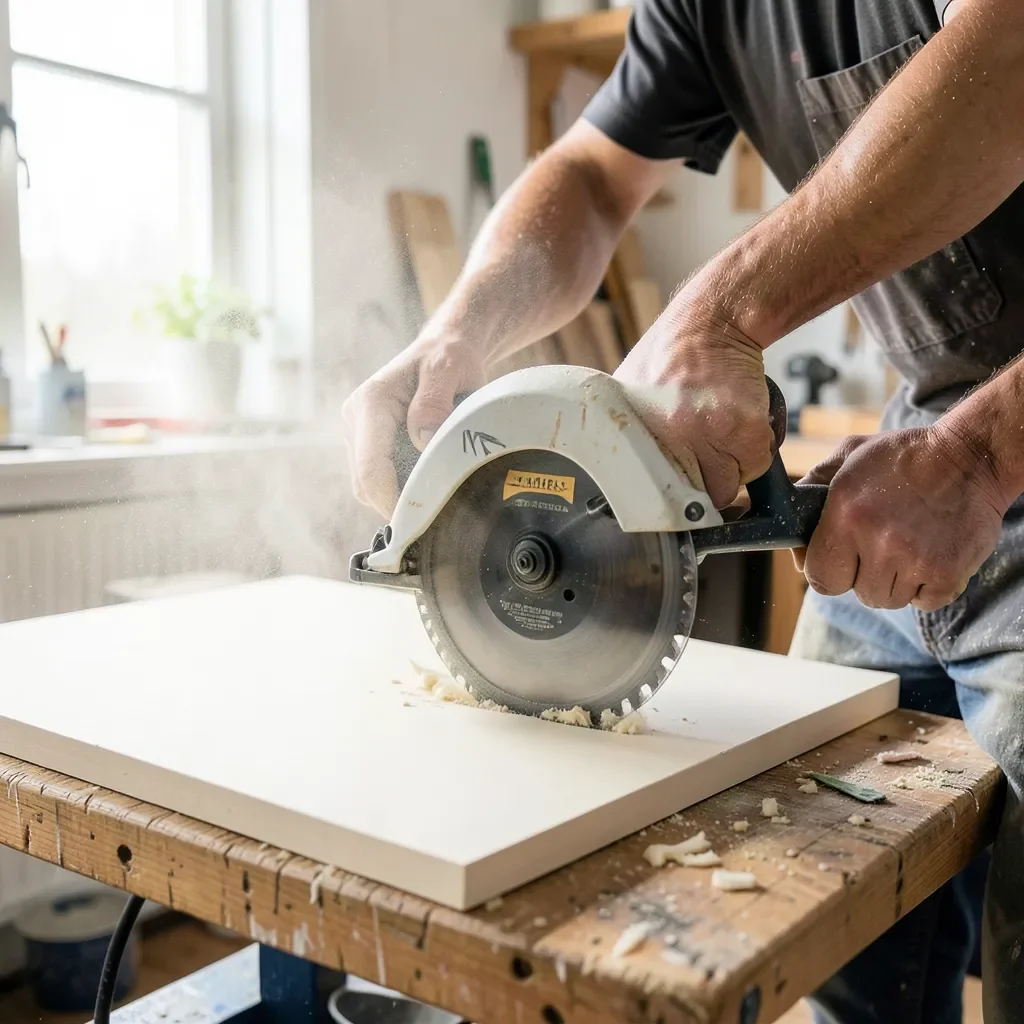
Can You Cut Sheetrock With a Circular Saw? (Blade & Dust Tips)
A circular saw cuts sheetrock in seconds, but only with a fine-tooth blade (40 to 60 teeth) and the depth set just past the panel’s 5/8-inch thickness — skip that and the gypsum core crumbles and the paper face tears. The wrong blade also clogs the saw’s guard with dust and dulls fast on the abrasive gypsum. This guide covers the right blade, the cutting technique, and when a utility knife or jab saw is the smarter tool instead.
What Happens When You Cut Sheetrock With the Wrong Blade
Best Fine-Tooth Blade Pick
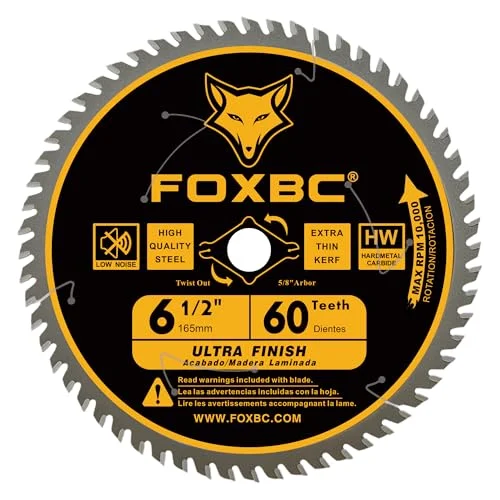 |
FOXBC 60-Tooth Fine Finish Circular Saw Blade – $17.99 A 60-tooth carbide-tipped blade like this is exactly the fine-finish swap this guide recommends in place of a 24-tooth framing blade — it slices the paper face cleanly instead of tearing it.
|
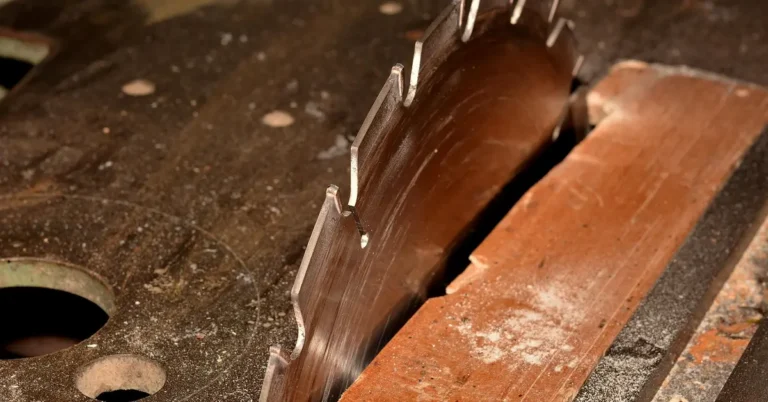
Sheetrock (drywall) is a rigid panel made of a compressed gypsum core sandwiched between two layers of heavy paper facing. A standard 24-tooth wood-framing blade is spaced and angled for ripping solid lumber, not slicing a soft mineral core — run one through drywall and it shreds the paper face on the exit side and crumbles the gypsum edge into a ragged, uneven line.
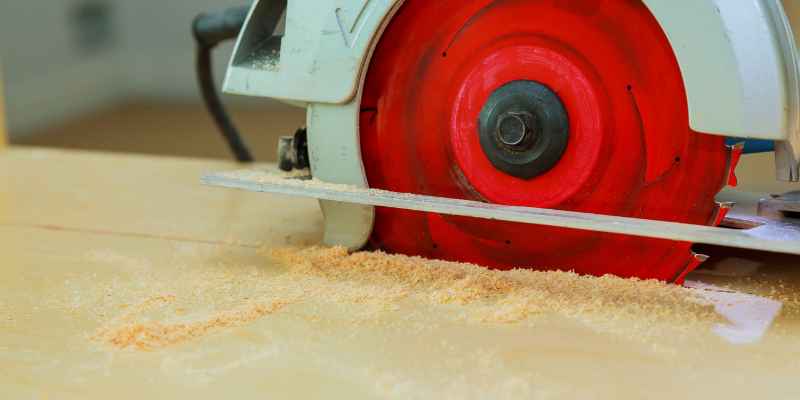
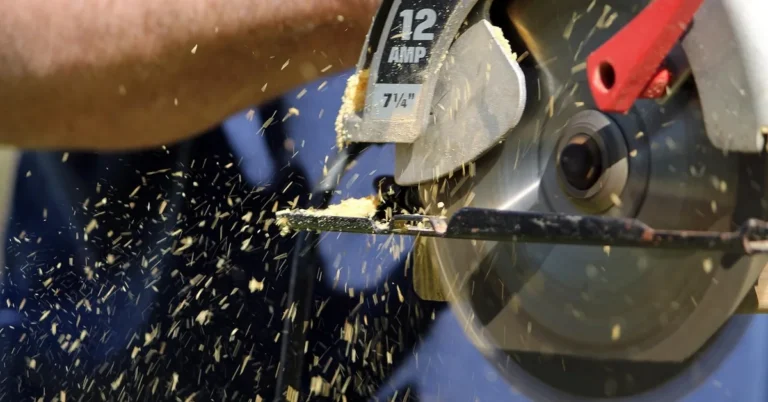
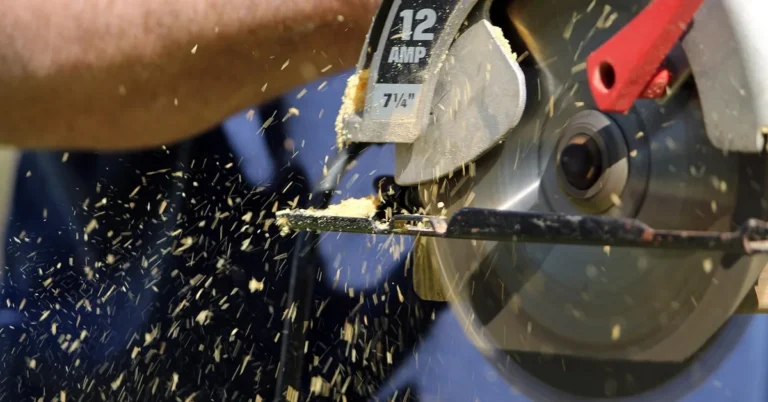
The dust is the other problem. Gypsum board sheds a fine mineral dust when cut, and a full 4×8 sheet of ⅝-inch Type X drywall weighs roughly 70 lbs of that same compressed material. Cutting several sheets dry with a saw and no dust control can put more airborne gypsum and silica dust into a room than a full day of framing work.
📊 Cutting drywall generates fine gypsum and crystalline silica dust that OSHA classifies as a respiratory hazard requiring engineering controls or a NIOSH-rated respirator on job sites. — Source: OSHA, Respirable Crystalline Silica
How to Cut Sheetrock With a Circular Saw (Step-by-Step)
Follow these steps to keep the cut straight and the tear-out to a minimum:
- Mark the cut line: snap a chalk line or draw along a straight edge across the full length of the panel.
- Set the blade depth: adjust the saw’s depth guide to the panel’s thickness (½″ or ⅝″) plus about ⅛″ — deep enough to clear the sheet without gouging whatever is underneath it.
- Swap to a fine-tooth blade: use a 40- to 60-tooth carbide-tipped finish blade instead of a coarse framing or demolition blade.
- Support both sides of the cut: clamp the sheet or have a helper support the offcut piece so its own weight doesn’t tear the paper face as it drops.
- Cut from the finished (front) face: run the saw at a slow, steady pace so any tear-out lands on the hidden back side.
- Clear the dust immediately: connect a shop vac or dust-collection attachment to the saw, or vacuum the cut line right after.
Wear an N95 or P100 respirator and safety glasses for this cut — drywall dust is a known respiratory irritant, and cutting into any wall with unknown joint-compound history can release silica dust as well.
Better Tools for Cutting Drywall When Precision Matters
A circular saw is the fastest way to make one long, straight cut through a full sheet — the same logic applies whether you swap in plywood instead of drywall for a project. It’s the wrong tool for detail work — outlet boxes, curves, and tight corners tear the paper and crack the gypsum. Compare it against the other common drywall-cutting tools:
| Tool | Best For | Dust Level |
|---|---|---|
| Utility knife | Straight score-and-snap cuts, the pro standard for full sheets | Lowest — no powered cutting |
| Jab / keyhole saw | Outlet boxes, vents, and other cutouts | Low |
| Oscillating multi-tool | Tight corners and cuts flush against an existing wall or floor | Moderate |
| Rotary spiral saw | Freehand curves and precise cutouts | Moderate |
| Circular saw | Long, straight rip cuts through a full or stacked sheet | Highest — needs a fine blade and dust control |
For a cutout around an electrical box, skip the circular saw entirely — a jab saw or rotary tool follows the curve without cracking the surrounding gypsum.
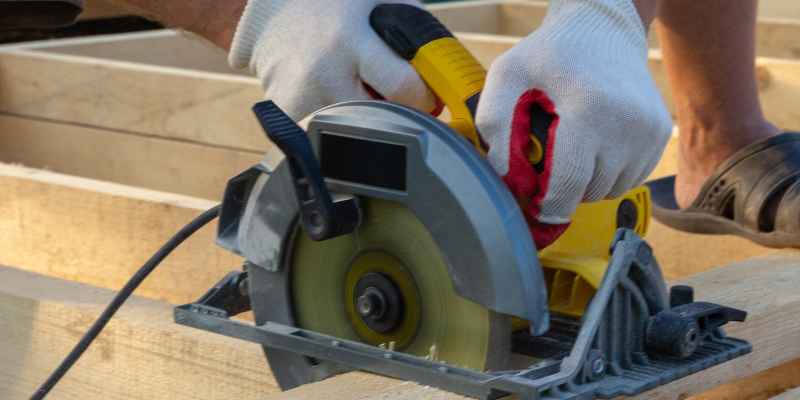
Common Mistakes When Cutting Sheetrock With a Power Saw
- Using a framing or demolition blade: the wide, coarse teeth shred the paper face instead of slicing it.
- Cutting too fast: forcing the saw through the panel increases chipping along the cut edge.
- Not supporting the offcut: an unsupported piece snaps the paper before the cut is finished.
- Skipping eye and respiratory protection: gypsum dust irritates eyes and lungs even on a quick cut.
- Cutting over finished flooring with no drop cloth: gypsum dust is fine enough to work into carpet and grout.
Frequently Asked Questions
Can a circular saw cut drywall in one pass?
Yes, on a straight line, if the blade is sharp and fine-toothed and the depth is set close to the panel’s thickness. Curves, corners, and cutouts around boxes or vents need a jab saw or rotary tool instead.
What blade should I use to cut drywall with a circular saw?
A 40- to 60-tooth carbide-tipped finish or plywood blade. Its closely spaced teeth slice the paper face cleanly instead of tearing it the way a 24-tooth framing blade does.
Is it safe to cut drywall with a circular saw indoors?
Only with a NIOSH-rated N95 or P100 respirator, eye protection, and dust control such as a shop vac or dust-collecting blade guard. Gypsum dust irritates the eyes and lungs, and older walls can release silica dust from joint compound.
Does cutting drywall dull a circular saw blade faster?
Yes. Gypsum is abrasive on carbide teeth, so a blade used mostly for drywall dulls faster than one used only on wood. Keep a dedicated fine-tooth blade for drywall and save your framing blade for lumber.
A circular saw can absolutely cut sheetrock, and it’s the fastest option for a long, straight rip through a full sheet. Swap in a 40- to 60-tooth fine finish blade, set the depth close to the panel’s thickness, support the offcut, and keep a respirator on for the dust — then reach for a jab saw or rotary tool the moment the cut isn’t a straight line.
Sponsored / affiliate links. As an Amazon Associate I earn from qualifying purchases. I may earn additional commission from eligible campaigns.