Brushless Cordless Circular Saw: What Actually Changes
A brushless cordless circular saw uses an electronic controller and sensors to switch the motor’s current direction, instead of physical carbon brushes rubbing against a spinning commutator. That’s the whole distinction — not a marketing buzzword, but a specific motor design with real consequences: no brush contact to wear down, generally more torque delivered per battery charge, and a higher price tag than a comparable brushed saw. This guide explains what actually changes with a brushless motor, when the upgrade is worth it, and which saw we’d point you to if you’re buying one.
What Makes A Circular Saw “Brushless”
Top-Rated Brushless Circular Saw Pick
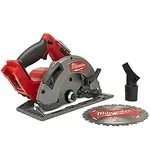 |
Milwaukee M18 FUEL 2732-20 7-1/4″ Circular Saw – $339.00 A genuine brushless-motor saw built for daily use, not just a brushed saw with a brushless sticker on it.
|
A brushed motor is the older, simpler design: two carbon brushes press against a spinning commutator to keep reversing the current and keep the rotor turning. It works, and it’s cheap to build, but that physical contact wears the brushes down over years of use, generates friction heat, and eventually needs a brush replacement or a new motor. A brushless motor does the same current-switching job electronically — a small controller board reads sensor data and fires the windings directly, with no physical contact at all. Remove the wear point, and you remove the main reason brushed motors eventually degrade.
What Actually Changes When You Go Brushless
The real-world differences are modest but genuine, and they matter more the harder you use the saw. Because there’s no brush friction robbing power as heat, a brushless motor generally delivers more torque for the same battery draw — you feel this as the saw bogging down less in thick or wet lumber. Runtime per charge tends to be somewhat better too, since less energy is wasted at the contact point. And because there’s nothing physically wearing down inside the motor, a brushless saw run daily on a jobsite will typically outlast a comparable brushed saw before it needs a motor rebuild. None of that is free: the electronic controller that makes brushless commutation possible adds real manufacturing cost, which is why brushless saws consistently carry a higher price than their brushed counterparts in the same product line.
| Factor | Brushed Motor | Brushless Motor |
|---|---|---|
| How it switches current | Physical carbon brushes on a spinning commutator | Electronic controller and sensors, no physical contact |
| Main wear point | Brushes wear down, eventually need replacing | No brush wear point — typically longer motor lifespan |
| Torque per charge | Some power lost to brush friction/heat | Generally more usable torque for the same battery |
| Runtime per charge | Slightly less efficient | Generally somewhat better |
| Upfront price | Lower | Higher, reflects the added electronics |
| Best fit | Occasional/weekend use | Daily, heavy, or professional use |
Signs A Brushed Motor Is Wearing Out
Since the brush wear point is the whole reason brushless exists, it’s worth knowing what that wear actually looks like on an older brushed saw. Visible sparking through the motor housing vents during use is normal in small amounts, but heavy, sustained sparking usually means the brushes are getting short. Intermittent starting, a noticeable drop in power under load that wasn’t there when the saw was new, or a burning smell after extended use are all common symptoms of brushes nearing the end of their life. On most brushed tools the brushes themselves are a cheap, replaceable part accessed through small caps on the motor housing — but once the commutator itself gets scored from years of brush contact, a motor replacement is usually more practical than a repair. A brushless motor never hits that specific failure mode, because there’s no brush contact to wear the commutator down in the first place.
Do You Actually Need A Brushless Saw?
Not every buyer needs to pay the brushless premium. If you’re cutting a few sheets of plywood a few times a year for shop projects, a brushed cordless saw will do the job for less money, and the brush wear point simply won’t matter much across that light a duty cycle. The upgrade earns its keep once you’re cutting most days, running the saw through dense or wet lumber, or relying on it for paid work where downtime for motor repairs actually costs you money.
- Weekend/occasional DIY: a brushed saw is a reasonable, cheaper choice — you’re unlikely to run it long enough for the brush wear point to matter.
- Daily shop or jobsite use: brushless is worth the extra cost — less downtime, more consistent power under load.
- Cutting dense hardwood or wet/pressure-treated lumber regularly: the extra torque a brushless motor delivers is genuinely noticeable, not just a spec-sheet number.
- Tight budget, light use: put the money into a better blade instead — it’ll affect cut quality more than motor type at this duty cycle.
Blade Size: 6-1/2″ Vs. 7-1/4″
Motor type and blade size are two separate decisions. A 7-1/4″ blade is the standard for full-depth cuts through 2x dimensional lumber in a single pass and is what most brushless cordless saws, including the pick above, ship with. A 6-1/2″ saw is lighter, easier to control one-handed, and fits into tighter spaces, at the cost of a slightly shallower maximum cut depth. If you’re weighing that tradeoff in more detail, our 6-1/2″ vs. 7-1/4″ circular saw comparison breaks down the cut-depth and weight differences directly.
Battery Platform And Runtime
A brushless motor only tells half the runtime story — battery capacity matters just as much. A larger amp-hour (Ah) battery simply holds more charge and will outcut a smaller one on the same saw, brushless or not. Most cordless circular saws are sold as a bare tool specifically so you can match them to a battery platform you may already own from a drill, impact driver, or other tool in the same brand’s lineup, which is worth checking before you buy a saw-only listing like the one above — you’ll need a compatible battery and charger to actually use it.
Safety Basics For Cordless Circular Saws
- Always wear eye and ear protection — a cordless saw is quieter than a gas tool but still loud enough, and kicked-up debris is a real eye hazard.
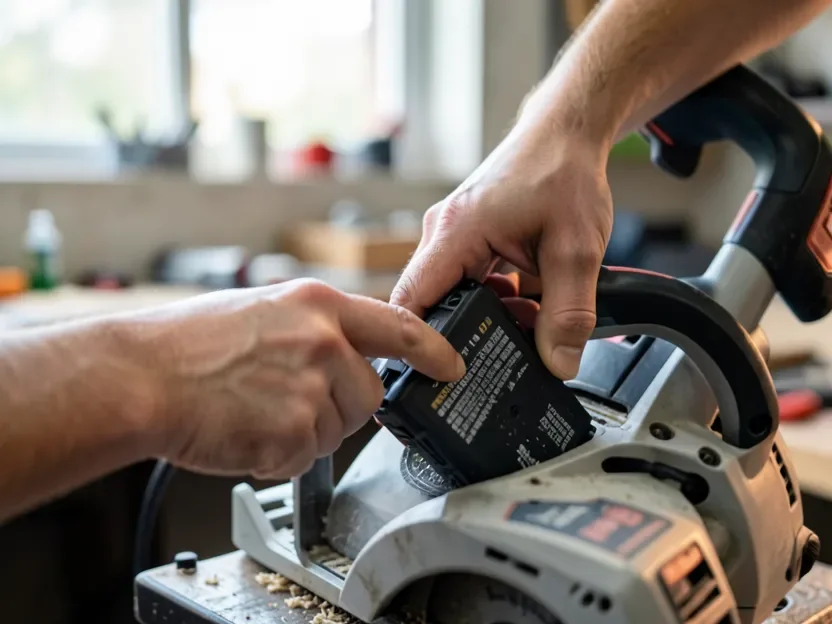
- Remove the battery before changing the blade. A cordless saw with no cord to unplug can still fire if the trigger is bumped — pulling the battery is the actual safety step.
- Let the blade guard do its job. Don’t wedge or tape back the retractable lower guard to “make cuts easier” — it’s there to cover the blade the instant you lift the saw off the material.
- Match the blade to the material. A fine-tooth blade for plywood reduces tear-out; a general-purpose blade is fine for construction lumber.
- Support the workpiece so the cutoff falls free. A pinched blade in a closing kerf is one of the more common ways a saw binds and kicks back.
Frequently Asked Questions
What does “brushless” mean on a cordless circular saw?
It describes how the motor switches electrical current. A brushed motor uses physical carbon brushes that touch a spinning commutator; a brushless motor uses an electronic controller and sensors instead, with no physical brush contact at all.
Is a brushless cordless circular saw worth the extra cost?
For daily or heavy use, yes — the lack of a brush wear point means less maintenance and generally more usable torque per battery charge. For occasional weekend cuts, a brushed saw can still get the job done for less money.
Do brushless motors need less maintenance?
Generally yes. Since there are no carbon brushes to wear down and eventually replace, a brushless motor has one less common failure point than a brushed one, though bearings, batteries, and blades still need normal upkeep regardless of motor type.
What blade size should I get for a cordless circular saw?
7-1/4″ is the standard for full-depth cuts through 2x lumber in a single pass, while 6-1/2″ saws are lighter and better for one-handed use or tighter spaces, at a slight cost in maximum cutting depth.
Can you replace the brushes in a brushless motor?
No — there aren’t any brushes to replace, which is the point of the design. That also means when a brushless motor does eventually fail, the fix is typically a full motor or tool replacement rather than a cheap brush swap, since there’s no small wear part to service.
Bottom Line
“Brushless” isn’t marketing fluff — it’s a specific motor design that trades a higher upfront price for less maintenance, more usable torque, and generally better runtime. Pay for it if you’re cutting often or professionally; skip it if your saw spends most of the year in a case between projects.
Sponsored / affiliate links. As an Amazon Associate I earn from qualifying purchases. I may earn additional commission from eligible campaigns.