Can You Put Elmer’s Glue on Your Face Safety Facts
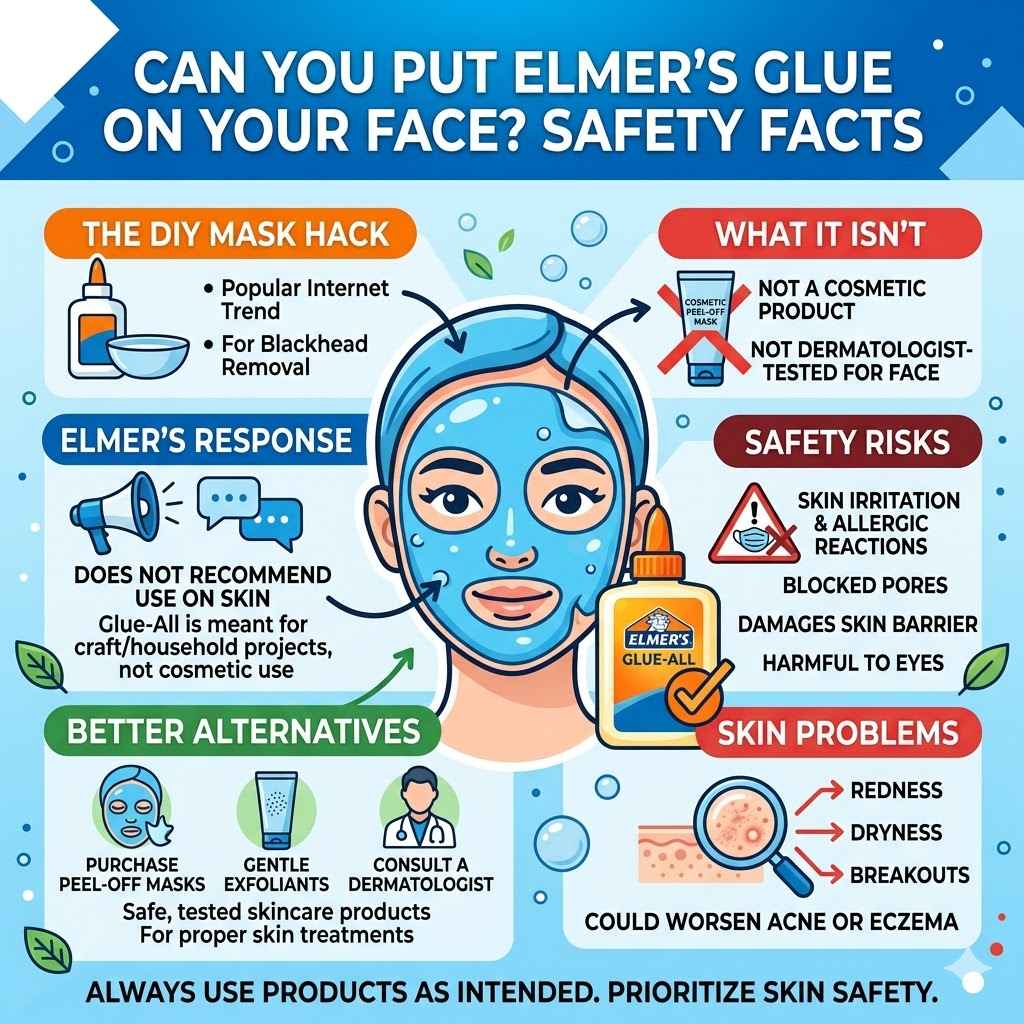
It’s a question many crafty kids and even some curious adults wonder about: Can You Put Elmer’s Glue on Your Face? Safety Facts are important to know before you try. Sometimes, when you see fun DIY projects or special effects makeup tutorials, it seems like the easiest way to get a certain look is with something you have readily available, like Elmer’s glue.
But is it safe? This guide will walk you through everything you need to know in simple terms. We’ll clear up any confusion and give you straightforward answers so you can enjoy your creative projects safely.
Understanding Elmer’s Glue and Skin Contact
Elmer’s glue, specifically their white school glue, is a very common adhesive used in arts and crafts. It’s designed for paper, wood, and other common crafting materials. While it’s generally considered non-toxic for its intended uses, its safety for application on facial skin is where things get a bit more complex.
Many people have used it for temporary applications, but understanding the “why” behind its safety or potential risks is key for making informed decisions. This section will break down the ingredients and the typical reasons people consider using it on their face.
What’s Inside Elmer’s Glue
Elmer’s white school glue is primarily made from polyvinyl acetate (PVA) emulsion. This is a water-based adhesive. It also contains water and other common additives like plasticizers, preservatives, and sometimes fillers.
These ingredients help to give the glue its sticky properties, flexibility, and shelf life. For crafting, these components are perfectly safe and effective. The PVA itself is a stable polymer that, in this form, is not meant for direct, prolonged contact with sensitive skin like that on your face.
The manufacturing process for Elmer’s glue focuses on creating a reliable adhesive for inanimate objects. While it passes safety tests for ingestion in small amounts (which is why it’s considered non-toxic for children), this testing isn’t directly equivalent to topical application on the face. The skin on the face is often more sensitive and prone to reactions than the surfaces glue is typically applied to.
Some additives, while safe in the context of a glue stick, could potentially cause irritation or allergic reactions when left on the skin for extended periods or when absorbed. This is especially true for individuals with sensitive skin, allergies, or pre-existing skin conditions. The concentration and type of these additives can vary slightly between different Elmer’s products, though the core PVA emulsion remains consistent.
Potential Skin Reactions
When Elmer’s glue is applied to the face, especially if left on for a long time or applied to broken skin, several reactions can occur. The most common is skin irritation. This can manifest as redness, itching, or a burning sensation.
Some individuals might experience dryness or peeling as the glue dries and is removed.
Allergic contact dermatitis is also a possibility. This is an immune system response to one of the ingredients in the glue. Even if you’ve never had an allergic reaction before, repeated exposure or a change in your skin’s sensitivity can trigger one.
Symptoms can range from mild redness to more severe rashes, bumps, or blisters.
Furthermore, the drying nature of the glue can strip the skin of its natural oils. This can lead to a feeling of tightness and dryness, which can exacerbate any existing skin issues or make the skin more vulnerable to other irritants. It’s important to remember that the face has thinner and more permeable skin than other parts of the body, making it more susceptible to these effects.
Why People Ask: Can You Put Elmer’s Glue on Your Face? Safety Facts
The question, “Can You Put Elmer’s Glue on Your Face? Safety Facts” arises for several reasons. Many people have fond childhood memories of using white glue for crafts, including making “finger gloves” or face masks for play.
This creates a common misconception that it’s perfectly safe for all skin applications. Social media trends and DIY costume tutorials also often feature using craft glue for temporary effects, further fueling curiosity.
For beginners or those new to special effects makeup or crafting on skin, Elmer’s glue can seem like an accessible and affordable option. It’s readily available at most stores, unlike specialized cosmetic products. The desire to achieve a quick, inexpensive effect for a costume, Halloween, or a school project can lead people to consider using it without fully understanding the implications.
The ambiguity surrounding “non-toxic” labels also plays a role. “Non-toxic” generally means it won’t cause harm if accidentally ingested in small amounts, not that it’s safe for all types of direct skin contact, especially on the face. This distinction is often overlooked.
The lack of clear warnings about facial application on the product label can also be misleading.
This common query highlights a gap in public knowledge about the difference between craft safety and cosmetic safety. People often assume if something is safe for kids’ crafts, it’s safe for their skin. This guide aims to bridge that gap and provide clear information.
We want to empower you to make safe and informed choices when it comes to your skin.
Temporary Uses and Special Effects
Historically, Elmer’s glue has been used for very temporary applications for fun. Think of making a fake scar by applying glue, letting it dry, and then peeling it off, or creating a quick, peel-off facial mask for a playful, not serious, beauty treatment. For these very brief moments of application, the risks are generally lower, but not nonexistent.
In the realm of special effects for costumes or plays, some people might consider using it for prosthetics or texture. However, professional makeup artists and special effects technicians almost always use specialized, cosmetic-grade adhesives designed for skin. These products are rigorously tested for safety and efficacy on the face and body.
They offer better adhesion, durability, and are formulated to minimize skin reactions.
The appeal of Elmer’s glue in these contexts is its low cost and availability. However, the trade-off can be a higher risk of irritation or allergic reaction. The “peel-off” nature also sounds appealing, but the process of peeling can sometimes be harsh on the skin, especially if it’s stuck to fine facial hairs or is removed too quickly.
It’s important to distinguish between a quick, playful experiment and professional or more extensive application. Even for temporary uses, caution and awareness of potential downsides are crucial. Understanding these nuances helps in deciding when and if it’s appropriate to consider such methods.
Accessibility and Cost-Effectiveness
One of the biggest draws of using Elmer’s glue for any project is its incredible accessibility and affordability. You can find a bottle of Elmer’s white school glue at almost any grocery store, pharmacy, or dollar store. This means that if a creative idea strikes, you likely already have it on hand or can get it very quickly without a special trip to a specialty store.
Compared to professional cosmetic adhesives, which can cost anywhere from $10 to $50 or more for a small container, a bottle of Elmer’s glue is just a few dollars. This makes it an extremely budget-friendly option for parents, students, or anyone on a tight budget who wants to experiment with DIY projects or costumes. The cost-effectiveness can be a major factor in its consideration for use.
This accessibility also extends to its ease of use for simple applications. There’s no complex mixing required, and it dries relatively quickly. For a quick, one-time project where extreme durability or professional finish isn’t needed, it can seem like the perfect solution.
However, this convenience must be weighed against the potential risks to skin health.
The low barrier to entry—both in terms of cost and availability—is a primary driver for why people question its safety for facial application. It’s a readily available material that offers potential for creative use, leading many to wonder if it crosses over into safe cosmetic applications. The answer, however, lies in understanding its intended purpose.
Safety Facts and Considerations for Elmer’s Glue on Skin
When we talk about Can You Put Elmer’s Glue on Your Face? Safety Facts, the primary concern is always skin health. While Elmer’s glue is non-toxic, this classification primarily applies to accidental ingestion, not prolonged or direct application to the skin, especially the sensitive skin of the face.
There are several key factors to consider regarding its safety for this purpose.
Understanding “Non-Toxic” vs. “Cosmetic Grade”
The term “non-toxic” on products like Elmer’s glue is a critical point of confusion. It means that if a child were to ingest a small amount of the glue, it is not expected to cause poisoning or severe harm. This is a standard safety rating for many household and craft products intended for children.
However, this classification does not mean the product is safe for direct application on skin, particularly for extended periods or on sensitive areas like the face.
Cosmetic-grade products, on the other hand, are formulated and tested specifically for use on human skin and by extension, the face. These products undergo rigorous dermatological testing to ensure they are hypoallergenic, non-irritating, and safe for various skin types. They are designed to be applied directly to the skin and often contain beneficial ingredients or are formulated to minimize adverse reactions.
Elmer’s glue is not manufactured to cosmetic standards. Its ingredients, while safe for crafting, may not be purified to the same degree as cosmetic ingredients. Additives that are acceptable in a craft glue might cause irritation or allergic reactions when in contact with the face.
The distinction between “non-toxic” for ingestion and “safe for cosmetic use” is paramount when considering topical application.
Therefore, while Elmer’s glue might not poison you if it touches your face, it doesn’t guarantee it won’t cause skin issues like redness, itching, or rashes. It’s always best to opt for products specifically designed for facial application if you intend to use something on your skin.
Ingredient Analysis and Potential Irritants
The primary ingredient in Elmer’s white school glue is polyvinyl acetate (PVA) emulsion. While PVA is generally considered safe and inert, the other components in the formula are where potential issues for facial application might arise. These can include:
- Water: While safe, excessive drying can occur when water-based products evaporate, potentially stripping natural oils from the skin.
- Plasticizers: These chemicals are added to make the glue more flexible. Some plasticizers can cause skin irritation or dermatitis in sensitive individuals.
- Preservatives: To prevent mold and bacterial growth, preservatives are added. Some people are sensitive to common preservatives used in glues, leading to allergic reactions.
- Fillers: Inert substances might be added to alter the glue’s texture or properties. While usually safe, their specific nature in craft glues might not be fully disclosed or tested for dermatological compatibility.
The concentration and specific types of these additives are not always clearly detailed for consumer understanding regarding skin contact. The manufacturing standards for craft glues prioritize adhesive properties over dermatological compatibility. This means that ingredients present in small amounts, which are unlikely to cause harm when glue is on paper, could become problematic when in direct, prolonged contact with facial skin.
For instance, a person might not have issues with PVA on paper, but a preservative or plasticizer in the glue could be a trigger for their skin. This is why even if one person has no reaction, another might. The subtlety of these potential irritants makes it a gamble to use on the face.
Allergic Reactions and Sensitivity
One of the significant concerns with applying any substance not specifically designed for skin is the risk of allergic reactions. Even if you have never experienced skin allergies before, repeated exposure or contact with a new substance can trigger one. Elmer’s glue, not being a cosmetic product, has not been tested for its allergenic potential on facial skin.
Allergic contact dermatitis is a delayed reaction that occurs when your immune system overreacts to an ingredient it perceives as foreign. Symptoms can include redness, itching, swelling, and blisters. This can happen hours or even days after the initial exposure, making it sometimes difficult to trace back to the cause.
Sensitivity is another factor. The skin on the face is generally thinner and more delicate than on other parts of the body. It’s also constantly exposed to the elements.
This makes it more prone to irritation and adverse reactions from products not formulated for it. If you have a pre-existing condition like eczema or rosacea, applying Elmer’s glue to your face is even riskier, as it could trigger a flare-up or worsen the condition.
It’s crucial to remember that a product being “non-toxic” does not equate to “hypoallergenic” or “non-irritating” for skin. For these reasons, it is strongly advised to avoid applying Elmer’s glue directly to your face.
When Is It “Safe Enough” to Consider
In very specific, limited circumstances, some people have used Elmer’s glue for extremely short-duration, non-sensitive applications. This is often for playful, temporary effects where the risk is deemed low by the individual. However, it’s essential to approach this with extreme caution and understand the limitations.
One common scenario is using it for a quick “peel-off” effect, like creating fake skin for a Halloween costume. The idea is to apply a thin layer, let it dry completely, and then carefully peel it off. This is typically done on an area of skin that is not particularly sensitive and for a very brief period.
The glue is not intended to be left on overnight or for extended periods.
Another instance might be for a child’s temporary craft project that involves making a “mask” or “glove” on their hand, which is then removed shortly after drying. Even in these cases, supervising children closely is vital, and it’s still advisable to test a small patch of skin first.
Crucially, these “safe enough” scenarios come with caveats:
- Extremely Short Duration: The glue should not be left on the skin for more than an hour or two, and certainly not overnight.
- Intact Skin Only: Never apply to broken, irritated, or chapped skin.
- Patch Test First: Always test a small, inconspicuous area of skin before applying to the face. Wait 24 hours to check for any reaction.
- Avoid Sensitive Areas: Stay away from the eyes, eyebrows, lips, and hairline.
- Gentle Removal: Peel off slowly and carefully, using warm water if needed, to avoid damaging the skin.
Even with these precautions, the risk of irritation or allergic reaction is still present. There are always safer, dedicated cosmetic products available that achieve similar effects without compromising skin health.
The “Peel-Off” Method
The “peel-off” method is often what people think of when considering Elmer’s glue for temporary skin effects. The idea is that you apply a layer of glue, let it dry completely, and then peel it off like a mask. This can create a temporary tightening effect or be used as a base for certain costume applications.
When Elmer’s glue dries, it forms a somewhat flexible film. This film can be carefully lifted from the skin. For very minor, playful applications, this might seem harmless.
However, the process of drying and peeling itself can cause issues. As the glue dries, it pulls moisture from the skin, leading to dryness and a tight sensation.
Peeling the dried glue off can be harsh. It can pull on fine facial hairs, which can be uncomfortable or even painful. If the glue has adhered strongly to the skin’s surface, the peeling process could potentially remove the top layer of skin cells, leading to redness and irritation.
This is why it’s often not recommended, even for this specific application.
Furthermore, the film left behind might not be completely smooth or even, which could be undesirable for certain cosmetic effects. The residue from the glue can also be difficult to remove entirely, requiring further cleansing that might irritate the skin.
While the peel-off method might appear simple and effective, the underlying process can still be problematic for skin health. It’s a good example of where a common household item’s properties don’t perfectly translate to safe skin use.
Patch Testing Recommendations
If you are determined to try Elmer’s glue on your face for a very brief, experimental purpose, a patch test is absolutely essential. This step is crucial because it allows you to gauge your skin’s reaction to the product before applying it to a larger, more visible area like your entire face. Skipping this step significantly increases the risk of an adverse reaction.
To perform a patch test, follow these steps:
- Choose a small, discreet area of skin. The inside of your wrist or behind your ear are good options, as they are less visible and generally less sensitive than the face.
- Apply a small amount of the Elmer’s glue to the chosen area.
- Leave the glue on for the intended duration of your planned application (e.g., if you plan to leave it on for 30 minutes, leave it on for 30 minutes).
- Gently rinse the area with water and pat it dry.
- Wait for at least 24 to 48 hours. During this time, observe the test area for any signs of redness, itching, burning, swelling, or rash.
If any irritation or reaction occurs, do not use Elmer’s glue on your face. Your skin is telling you it doesn’t agree with the product. Even if the initial patch test shows no reaction, be mindful that the skin on your face might react differently due to its increased sensitivity.
This simple test is a vital safety measure that can save you from discomfort and potential skin damage. It’s a small effort for a significant safeguard.
Safer Alternatives for Facial Applications
Given the potential risks associated with using Elmer’s glue on the face, it’s always wise to explore safer, specifically designed alternatives. The market offers a wide range of products that can achieve similar creative effects without compromising your skin’s health. These alternatives are formulated with cosmetic-grade ingredients and have undergone safety testing for topical application.
Specialized Adhesives for Skin
For any project that requires adhering materials to the face, such as prosthetics, glitter, gems, or even creating fake wounds, using adhesives specifically designed for skin is paramount. These products are available at costume shops, special effects makeup suppliers, and online beauty retailers. They are formulated to be safe, comfortable, and long-lasting on the skin.
Common types include:
- Spirit Gum: A classic adhesive used for spirit gum is a strong, often alcohol-based adhesive for attaching theatrical pieces like beards, mustaches, or prosthetic appliances. It requires a special remover and can be drying, so patch testing is advised.
- Pros-Aide: This is a water-based adhesive that is very popular in the film and theater industry. It’s known for being gentle on the skin, long-lasting, and can even be mixed with makeup pigments to create custom colors or textures. It’s considered a professional standard.
- Body-Safe Glues: Some brands offer glues specifically marketed as “body-safe” or “skin-safe.” These are often latex-based or silicone-based and are designed for applying lightweight items like rhinestones or glitter to the skin.
- Lashes Glues: For lighter applications like attaching small decorative elements, high-quality eyelash adhesives can also work well and are formulated for use near the eyes.
These adhesives are formulated to be non-toxic, hypoallergenic (for most users), and formulated to work with skin, not against it. They offer superior adhesion and a much lower risk of irritation or allergic reactions compared to craft glues. Always follow the product instructions for application and removal.
Cosmetic-Grade Glitters and Adhesives
If your creative vision involves glitter, it’s crucial to use cosmetic-grade glitter and accompanying adhesives. Craft glitter is often made from plastic or metal particles that can be sharp and abrasive, potentially causing micro-tears in the skin or serious eye injury if used near the eyes. Cosmetic glitter is made from finer, smoother materials and is designed for safe use on the face and body.
When applying cosmetic glitter, you’ll need a suitable adhesive. Eyelash glue is a popular choice for small areas or for attaching individual glitter pieces. For larger applications or more intricate designs, specialized cosmetic glues or glitter gels are available.
These are formulated to be gentle on the skin, ensuring the glitter stays in place without causing irritation.
Many theatrical makeup brands offer lines of cosmetic glitter and adhesives. They are tested to be safe for use on the face and are often used by performers, makeup artists, and for special events like festivals or costume parties. The assurance of using products specifically made for skin is invaluable.
Using craft glitter and craft glue for facial applications is a common mistake that can lead to discomfort, injury, and skin reactions. Always opt for the cosmetic-grade versions to ensure both safety and a beautiful, lasting result.
DIY Skin-Safe Recipes and Products
For those who enjoy a DIY approach, there are several skin-safe alternatives that can be made at home or purchased as pre-made cosmetic products. These offer a way to achieve specific textures or effects without resorting to craft supplies not intended for skin.
One popular DIY option for a temporary “peel-off” mask, similar to what people might try with Elmer’s glue, involves using egg whites. Simply whisk an egg white until slightly frothy, apply a thin layer to the skin, let it dry completely, and then gently peel it off. This can leave the skin feeling tighter and smoother.
However, it’s essential to be aware of potential allergies to eggs.
Another approach is using sugar or honey masks, which can exfoliate and moisturize the skin while providing a temporary “mask” effect. These are generally safe and beneficial for the skin.
For creating textures like fake wounds or scars, many special effects makeup kits use materials like liquid latex or scar wax. These are specifically formulated for skin and provide realistic results. You can purchase these kits at costume stores or online.
They come with instructions for safe application and removal.
When looking for pre-made products, seek out terms like “hypoallergenic,” “dermatologist-tested,” and “cosmetic-grade.” These indicate that the product has been designed with skin safety in mind. Always check the ingredient list if you have known sensitivities or allergies.
Using these skin-safe DIY recipes or purchasing specialized cosmetic products ensures you can achieve your desired creative look without putting your skin at risk.
Safe Alternatives for Creating Textures
When the goal is to create texture on the skin, such as for special effects makeup, using Elmer’s glue is not the ideal or safest approach. Fortunately, the special effects industry offers several excellent alternatives that are designed specifically for this purpose and are safe for application on the face.
One widely used material is scar wax. This is a pliable, putty-like substance that can be molded directly onto the skin to create a variety of effects, from burns and cuts to disfigurements. It adheres well to the skin and can be blended seamlessly with makeup to achieve a realistic look.
Scar wax is typically made from waxes, oils, and sometimes resins, all formulated for cosmetic safety.
Another effective option is liquid latex. This is a rubber-based liquid that can be applied in layers to build up texture. It’s often used for creating aged skin, gruesome wounds, or even temporary tattoos.
When it dries, it forms a flexible, skin-like material. It’s important to note that some individuals may be allergic to latex, so a patch test is always recommended. Specific hypoallergenic latex formulations are also available.
For creating a raised effect or a slightly different texture, 3D gel or modeling wax can be used. These products offer different consistencies and levels of flexibility, allowing artists to achieve a wide range of textural outcomes. They are designed to be applied and blended with other makeup products for a realistic finish.
When using these materials, always ensure you have the proper removers and follow the manufacturer’s instructions. These specialized products provide a much safer and more effective way to achieve textured effects on the skin than relying on craft supplies.
Best Practices for Using Anything on Your Face
Regardless of whether you are using a cosmetic product or, in very rare and cautious circumstances, a craft item like Elmer’s glue, best practices for anything applied to the face are crucial for maintaining healthy skin. The face is a sensitive area, and proper care is always warranted.
Here are some key best practices:
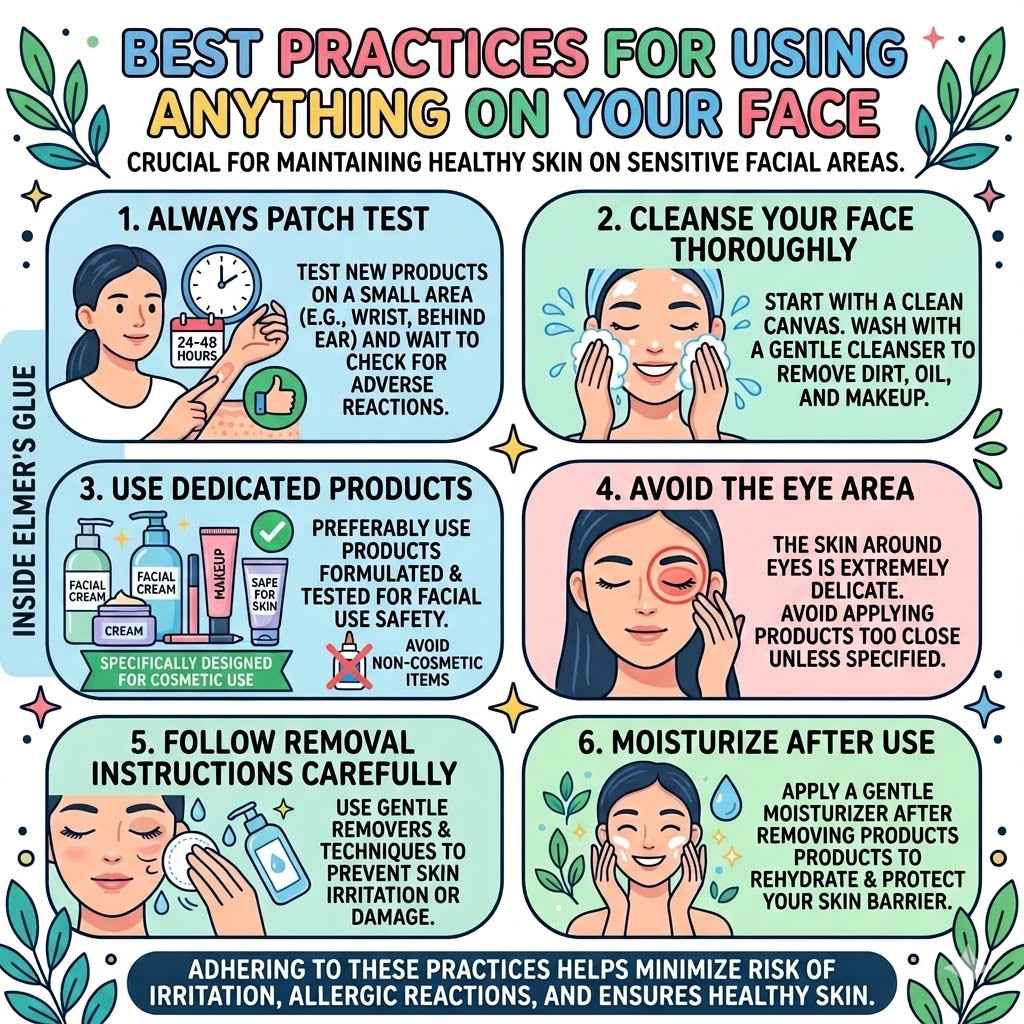
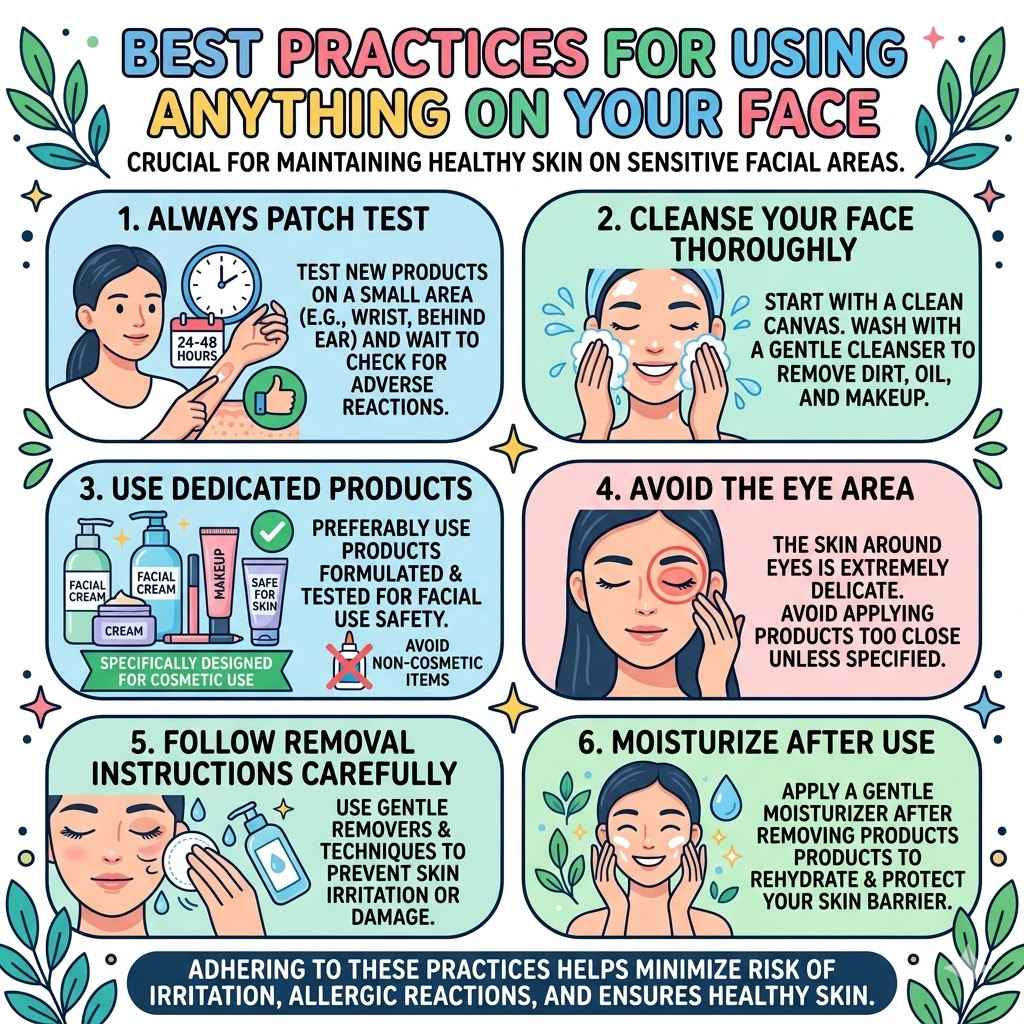
- Always Patch Test: Before applying any new product to your face, test it on a small, inconspicuous area of skin (like your inner wrist or behind your ear) and wait 24-48 hours to check for any adverse reactions.
- Cleanse Your Face Thoroughly: Always start with a clean face. Wash your face with a gentle cleanser to remove dirt, oil, and makeup. This provides a clean canvas and reduces the risk of trapping impurities under the product.
- Use Dedicated Products: Whenever possible, use products specifically designed and labeled for cosmetic or facial use. These have been formulated and tested for safety on the skin.
- Avoid the Eye Area: The skin around the eyes is extremely delicate. Be extra cautious and avoid applying products too close to the eyes unless they are specifically formulated for this area.
- Follow Removal Instructions Carefully: Proper removal is just as important as application. Use gentle removers and techniques to avoid irritating or damaging the skin.
- Moisturize After Use: After removing any product, especially if it was drying, apply a gentle moisturizer to rehydrate and protect your skin barrier.
Adhering to these practices will help minimize the risk of skin irritation, allergic reactions, and other potential issues, ensuring your creative endeavors don’t come at the expense of your skin’s health.
Conclusion
So, can you put Elmer’s glue on your face? The short answer is it’s generally not recommended. While Elmer’s glue is non-toxic, it’s made for crafts, not for sensitive facial skin.
Risks of irritation and allergic reactions are real. Always opt for cosmetic-grade products designed for skin. Your skin will thank you for choosing safer alternatives.