What’s the Strongest Wood Glue? Real PSI Strength Compared
Titebond III tests strongest on paper — 4,000 psi shear strength per ASTM D905 — but a joint held at 150°F drops to just 800 psi, weaker than plain Titebond Original. For most furniture and cabinetry, a properly clamped PVA or polyurethane glue outperforms the wood itself; epoxy only pulls ahead on gap-filling and outdoor exposure. This guide compares real PSI numbers by test method, shows what actually fails first in a glued joint, and covers lightweight structural adhesives for high-stress bonds.
Quick Answer
By raw ASTM D905 shear PSI, Titebond III (4,000 psi) and Gorilla Wood Glue (about 3,900–4,000 psi) test strongest among PVA adhesives. Epoxy resists gap-filling and moisture better but often shows lower wood-specific shear (around 1,900 psi on maple for Gorilla Epoxy) than a well-clamped PVA joint. For structural, non-traditional bonding, a polyurethane construction adhesive like Loctite PL Premium is the lightweight option.
What Actually Makes a Wood Glue “Strong”?
Best Strong Wood Glue Pick
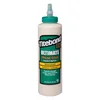
Titebond III Ultimate Wood Glue, 16 oz – $9.58
The 4,000 psi ASTM D905 shear number in our comparison table above comes from this exact formula — it’s waterproof, food-safe once cured, and the standard pick when a joint needs to survive moisture without switching to epoxy.
- Best for: outdoor furniture, cutting boards, and joints exposed to moisture
- Why we picked it: highest published PVA shear strength and full waterproof rating
- Main drawback: shorter open/working time than Titebond Original, so dry-fit first
Compare more strong wood glue options
 Option 1 Gorilla Ultimate Waterproof Wood Glue, 8 oz – $5.50
|
 Option 2 Loctite PL Premium Construction Adhesive – $7.38
|
 Option 3 PC-Woody Wood Repair Epoxy Paste, 12 oz – $18.89
|
As an Amazon Associate we earn from qualifying purchases.
Wood glue strength is a bonding adhesive’s resistance to shear stress at the joint, measured under ASTM D905 block-shear testing rather than tensile pulling. Manufacturers report this as pounds per square inch (psi), usually alongside a wood failure percentage — the share of the test sample that broke in the wood fibers instead of the glue line.
That second number matters more than raw PSI. A glue with a lower psi rating but a higher wood-failure percentage is functionally stronger for real furniture joints, because it means the wood gives out before the adhesive does — the standard professional woodworkers use to judge whether a glue is “strong enough,” rather than chasing the highest number on a spec sheet.
| Glue Type | Shear Strength | Test / Substrate | Wood Failure |
|---|---|---|---|
| Titebond Original (PVA) | 3,600 psi | ASTM D905, hard maple | 77% |
| Titebond III (PVA) | 4,000 psi | ASTM D905, hard maple | 57% |
| Gorilla Polyurethane Glue | ~3,500 psi | Manufacturer spec, wood | Not published |
| Gorilla Epoxy | 1,900 psi (wood) / 3,300 psi (steel) | Lap shear, maple vs. steel | Lower on wood than PVA |
| CA (super) glue | ~1,700 psi | Compression shear, lauan wood | Wood-tissue failure |
| Hide glue (liquid) | 4,173 psi (dry) / 1,143 psi (84% RH) | Conservation shear test | Collapses in humidity |
Figures pulled from manufacturer ASTM D905 data sheets and published conservation research; test methods and substrates differ between rows, so treat this as a strength pattern, not a single apples-to-apples ranking.
Which Strong Wood Glue Should You Buy?
For most furniture, cabinetry, and general shop joints, a PVA glue with a high wood-failure rating — not the highest raw psi — gives the most reliable strong bond. Reach for epoxy or a polyurethane construction adhesive only when you need gap-filling, dissimilar materials, or full waterproofing.
Why the Highest PSI Number Doesn’t Tell the Whole Story
Bond strength on a spec sheet is measured at room temperature, right after curing. Real joints sit through heat, humidity, and years of stress — and the glues with the highest room-temperature numbers don’t always hold up best under those conditions.
📊 Titebond III’s shear strength drops from 4,000 psi at room temperature to just 800 psi after an overnight 150°F heat soak — a steeper decline than Titebond Original (3,600 psi to 1,600 psi) or Titebond II (3,750 psi to 1,750 psi). Source: Titebond Original technical data sheet, Franklin International
Hide glue shows the same pattern with humidity instead of heat: dry-condition shear strength of roughly 4,173 psi collapses to about 1,143 psi at 84% relative humidity. Practically, that means a glue chosen purely for its room-temperature PSI number can underperform in a hot garage, an uninsulated shed, or a humid climate — check a glue’s heat and moisture rating, not just its headline strength figure, for anything that won’t live in a climate-controlled house.
Lightweight Adhesives for High-Stress Bonding That Aren’t Traditional Wood Glue
If you need a lightweight adhesive for securely bonding wood under high stress but don’t want a traditional PVA wood glue, three categories cover that gap:
- Polyurethane construction adhesives (Loctite PL Premium, PL400) — bond wood to concrete, metal, or masonry without clamping the whole joint, and manufacturer testing shows several times the strength of ordinary construction adhesive.
- MMA (methyl methacrylate) structural acrylics — cure in minutes with minimal surface prep and bond dissimilar materials like wood-to-metal or wood-to-composite; common in boatbuilding and structural composite work, rarely mentioned in general woodworking guides.
- Two-part structural epoxy or epoxy putty — doesn’t need full-surface clamping the way PVA does, so it works in tight or vertical spaces where a lightweight, no-clamp bond matters more than raw PSI.
None of these fully replace PVA glue for fine furniture joinery — they trade some of PVA’s wood-failure reliability for speed, gap-filling, or the ability to bond wood to a completely different material.
How to Get Maximum Strength From Any Wood Glue
Glue choice matters less than technique — a properly clamped Titebond Original joint routinely outperforms a poorly clamped “stronger” glue. Follow these steps for any PVA, polyurethane, or epoxy joint:
- Prep fresh surfaces: sand or plane joint faces immediately before gluing — oxidized or oily surfaces reduce wood failure percentage even with a strong adhesive.
- Dry-fit first: clamp the joint without glue to confirm alignment; open time is too short on most strong glues to fix a bad fit after applying adhesive.
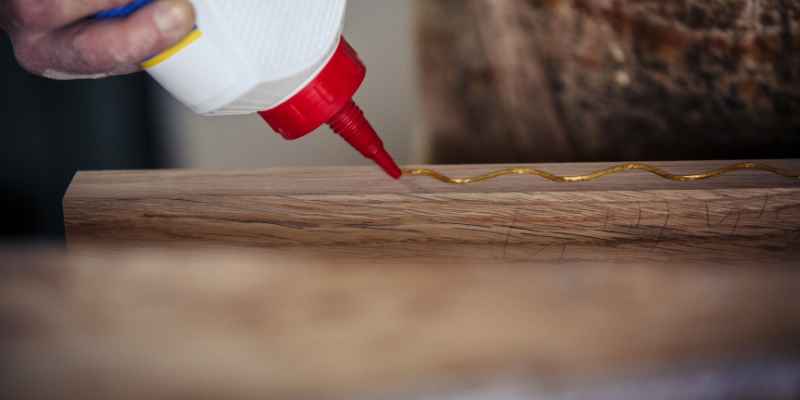
- Apply an even, thin coat: cover the full joint surface — starved glue lines are the most common cause of a joint failing below its rated PSI.
- Clamp at 100–250 psi: use enough clamps to apply even pressure across the whole joint, not just the ends.
- Wipe excess glue while wet: dried squeeze-out blocks stain and finish absorption later.
- Leave undisturbed for the full cure time: most glues set in 30–60 minutes but need 24 hours to reach the PSI numbers on the spec sheet — stressing the joint early is the single biggest cause of underperforming “strong” glue.
“In our shop, the joints that failed almost never failed because of a weak glue — they failed because the joint was clamped for 20 minutes instead of 24 hours, or the glue line was starved on one edge. Pick any name-brand PVA rated for your project and get the clamping technique right first.”
Frequently Asked Questions
What is the strongest glue for wood joints?
By ASTM D905 shear testing, Titebond III rates highest among common PVA wood glues at about 4,000 psi. But wood-failure percentage matters more than raw psi for furniture joints — Titebond Original’s 77% wood failure means the wood itself typically gives out first, which is the real-world definition of “strong enough.”
Is epoxy stronger than wood glue?
Not always on wood. Epoxy resin specs (7,000+ psi tensile) are measured on the resin alone, not a wood joint. On an actual wood substrate, Gorilla Epoxy tests around 1,900 psi lap shear on maple — lower than a well-clamped PVA joint. Epoxy wins for gap-filling and bonding dissimilar materials, not raw wood-to-wood shear strength.
Is Gorilla Glue stronger than Titebond?
Gorilla’s original polyurethane glue rates around 3,500 psi, close to but slightly below Titebond III’s 4,000 psi ASTM D905 figure. Gorilla Wood Glue, their PVA formula, tests closer to Titebond at roughly 3,900–4,000 psi. Both perform well when clamped correctly; the difference in real furniture use is smaller than the spec sheets suggest.
Does wood glue really get stronger than the wood itself?
Yes, when applied correctly. Modern PVA, polyurethane, and epoxy adhesives routinely exceed the shear strength of the surrounding wood fibers, which is why properly glued joints are rated by wood failure percentage — the share of a test break that happened in the wood, not the glue line.
What’s the strongest glue for load-bearing or structural wood joints?
For structural bonding beyond furniture-scale joints — wood-to-concrete, wood-to-metal, or full-waterproof exterior work — a polyurethane construction adhesive like Loctite PL Premium or a two-part structural epoxy outperforms standard wood glue, since both bond dissimilar materials and don’t rely on full-surface clamping.
Conclusion
For most projects, a name-brand PVA like Titebond or Gorilla Wood Glue clamped correctly will outlast the wood around it. Browse our full wood glue hub for dry times, removal tips, and more adhesive comparisons. Save epoxy and polyurethane construction adhesives for gap-filling, dissimilar materials, or full waterproofing. If you’re still deciding which category of glue fits your specific project — PVA, epoxy, polyurethane, or CA — see our full wood glue buying guide for a type-by-type breakdown.
Sponsored / affiliate links. As an Amazon Associate I earn from qualifying purchases. I may earn additional commission from eligible campaigns.