Can You Smoke With Oak Wood? The Genius Best Method
Absolutely! Oak wood is one of the best choices for smoking. It provides a classic, medium-strength smoky flavor that’s not overpowering, making it incredibly versatile for almost any meat, especially beef brisket and pork. The key is to use seasoned oak and manage your smoke for a clean, delicious result.
Have you ever wondered if that stack of oak in your workshop could be used for something more… delicious? You’re not alone! Many people get confused about which woods are safe and tasty for smoking food. It can feel like a complicated science project. But don’t worry, I’m here to show you that it’s actually simple and very rewarding.
Smoking with oak wood is a fantastic way to level up your barbecue game. In this guide, I’ll walk you through everything, step-by-step. We’ll cover why oak is so great, how to choose the right kind, and the best method to get that perfect smoky flavor every single time. Let’s get started!
Why Oak Wood is a Champion for Smoking
When you think of classic barbecue, the flavor you’re probably imagining comes from oak wood. It’s the gold standard for a reason. It’s not as strong as hickory or mesquite, but it has more character than fruit woods like apple or cherry. This makes it the perfect middle-of-the-road choice.
Here’s what makes oak a backyard hero:
- Balanced Flavor: Oak provides a smooth, classic smoke flavor that enhances meat without overpowering it. It gives you that quintessential BBQ taste.
- Versatility: From beef brisket to pork shoulder and even chicken, oak works well with almost everything. You can’t go wrong with it.
- Clean and Consistent Burn: Good-quality, seasoned oak burns very evenly and produces a steady, clean stream of smoke. This helps you control your temperature and avoid any bitter “dirty smoke” taste on your food.
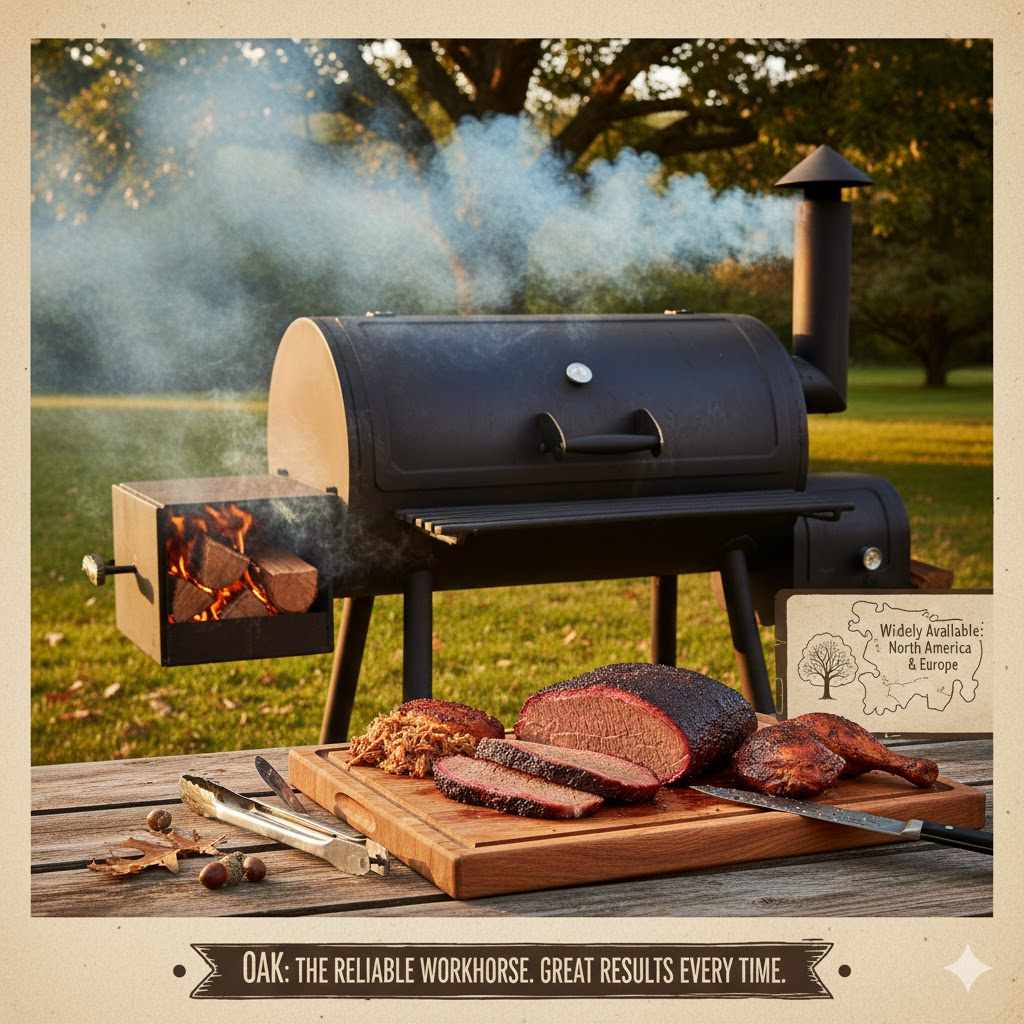
- Widely Available: Oak is a common hardwood found across North America and Europe, making it accessible and affordable for most people.
Think of oak as the reliable workhorse in your smoking toolkit. It delivers great results every time and is very forgiving for beginners.
Choosing the Right Oak for Your BBQ
Not all oak is created equal! Just like there are different types of apples, there are different types of oak trees. Each one can give your food a slightly different flavor. Don’t stress about this too much—any seasoned oak will work well—but it’s fun to know the differences.
Here are the most popular types of oak used for smoking:
Red Oak
Red oak is probably the most common type you’ll find. It has a good, solid smoky flavor that’s slightly stronger than other oaks. It’s excellent for beef and other red meats because it can stand up to their strong flavors. If you’re smoking a brisket, red oak is a fantastic choice.
White Oak
White oak is a bit milder than red oak. It has a subtle, almost nutty sweetness to its smoke. This makes it a great all-purpose wood. It’s gentle enough for poultry and fish but still has enough punch for pork and beef. If you’re new to smoking and want a wood you can use for anything, white oak is a perfect place to start.
Post Oak
Post oak is the legendary wood behind Texas-style barbecue. It has a very mild, balanced smoke with a hint of sweetness. It’s the go-to wood for many famous pitmasters because it lets the flavor of the meat shine through while adding just the right amount of smokiness. It’s amazing on brisket.
To make it even clearer, here’s a simple table to help you decide:
| Oak Type | Flavor Profile | Best For |
|---|---|---|
| Red Oak | Medium-to-Strong, classic smoke flavor | Beef (Brisket, Ribs), Lamb, Game Meats |
| White Oak | Mellow, slightly sweet, nutty | Pork, Poultry, Fish, Vegetables (All-Purpose) |
| Post Oak | Mild, clean, slightly sweet | Beef (especially Brisket), Pork |
The Golden Rule: Seasoning Your Oak Wood
This is the most important step! You cannot, and should not, smoke with fresh-cut “green” wood. Green wood has too much moisture and sap. When it burns, it creates a thick, white, acrid smoke that will make your food taste bitter and terrible. It’s a mistake you’ll only make once!
The solution is to use “seasoned” wood. Seasoning is just a fancy word for drying the wood out. As wood dries, the moisture content drops, and the sap hardens. This allows it to burn cleanly and produce that wonderful, thin blue smoke we’re looking for.
How to Season Oak Wood
If you have fresh-cut oak logs, you’ll need to season them yourself. It’s easy, but it takes time.
- Split the Wood: Split larger logs into smaller, more manageable pieces. This exposes more surface area to the air, helping it dry faster. Aim for pieces about the size of your forearm.
- Stack It Properly: Find a dry, sunny spot with good airflow. Stack the wood off the ground on a pallet or some 2x4s. Leave gaps between the pieces so air can circulate all around them.
- Cover the Top: Cover only the top of the pile with a tarp to keep rain and snow off, but leave the sides open for airflow. You want moisture to escape, not get trapped inside.
- Wait: This is the hardest part! Oak is a dense hardwood, so it takes a while to season. You should let it dry for at least 6 to 9 months. You’ll know it’s ready when the wood feels lighter, the bark is loose or falling off, and you see small cracks (called “checks”) on the ends.
If you don’t want to wait, you can buy bags of pre-seasoned oak chunks or chips from any hardware or barbecue store. This is a great option for beginners.
Preparing Your Oak: Chips, Chunks, or Logs?
Oak for smoking comes in a few different shapes and sizes. The right one for you depends on the type of smoker or grill you’re using.
- Chips: These are small, thin pieces of wood that burn quickly. They are best for short cooks on a gas or charcoal grill. You’ll need to add more chips every 30-45 minutes to keep the smoke going. Some people like to soak chips in water, but this only creates steam, not better smoke. It’s better to use them dry.
- Chunks: These are fist-sized blocks of wood. They are perfect for most backyard smokers because they burn slower and more steadily than chips. A few chunks can provide smoke for several hours. This is the best choice for “low and slow” cooking like pork shoulder or brisket.
- Logs/Splits: These are small logs used to fuel large offset smokers. If you have an offset smoker, you’ll use these splits as both your heat source and your smoke source. This is a more advanced technique that requires careful fire management.
The Genius Best Method: Smoking with Oak Step-by-Step
Alright, you’ve chosen your oak, and it’s properly seasoned. Now for the fun part! This method focuses on getting clean smoke and perfect results, no matter what kind of smoker you have.
Step 1: Get Your Smoker Ready
Before any food or wood goes in, you need to preheat your smoker. Start your charcoal or turn on your gas/pellet smoker and let it come up to your target temperature. For most low-and-slow barbecue, this is usually between 225°F and 275°F (107°C to 135°C). Let it sit at that temperature for at least 20-30 minutes to make sure everything is stable.
Step 2: Add the Wood for Clean Smoke
This is where the magic happens. Your goal is to get “thin blue smoke.” This is a faint, almost invisible smoke that has a light blue tint. It has the best flavor. Thick, white, billowing smoke is bad—it’s full of creosote and will make your food bitter.
To get thin blue smoke:
- Don’t Smother the Fire: Place your oak chunks on top of or next to your hot coals, not directly underneath a pile of unlit charcoal. You want the wood to smolder and burn cleanly.
- Ensure Good Airflow: Make sure your smoker’s vents are open enough to provide oxygen to the fire. A fire that can’t breathe will produce dirty smoke. Adjust your vents to control temperature, not to choke the fire.
- Wait for the Smoke to Clean Up: When you first add the wood, it might produce some white smoke. That’s normal. Wait 5-10 minutes for the smoke to thin out and turn into that beautiful thin blue stream before you put your food on.
Step 3: Place Your Food in the Smoker
Once your temperature is stable and your smoke looks good, it’s time to add the meat. Place it in the smoker away from the direct heat source if possible. Insert a leave-in meat thermometer to monitor the internal temperature without having to open the lid.
Step 4: Manage Your Temperature and Smoke
Your main job now is to maintain a steady temperature. Make small adjustments to your vents as needed. Every time you open the lid, you lose heat, so try to keep it closed as much as possible. A good rule is “if you’re lookin’, you ain’t cookin’.”
You only need to add more wood when you stop seeing or smelling smoke. With chunks, this might be every few hours. Don’t add too much wood at once! Two or three fist-sized chunks are usually enough to start with.
Step 5: Don’t Over-Smoke Your Food
Believe it or not, meat stops taking on smoke flavor after the first few hours of cooking, once the surface has dried out and formed a “bark.” The primary smoke absorption happens early in the cook when the meat is cold and wet. You don’t need to have smoke billowing for the entire 12-hour cook. As long as you have a clean-burning fire providing heat, you’re in good shape.
Step 6: Let It Rest!
This might be the second most important rule after seasoning your wood. Once your meat reaches its target internal temperature, take it out of the smoker and let it rest. For large cuts like brisket or pork butt, this means wrapping it in foil or butcher paper, placing it in a dry cooler, and letting it rest for at least an hour, or even up to four hours. This lets the juices redistribute throughout the meat, making it tender and flavorful. If you cut into it right away, all that amazing juice will pour out onto your cutting board.
Perfect Pairings: What Foods Go Best with Oak Smoke?
Oak is the ultimate team player. It gets along with almost everything. But some pairings are truly legendary. Here’s a handy guide to help you match your food with oak smoke.
| Food Category | How Well It Pairs with Oak | Notes and Tips |
|---|---|---|
| Beef | Excellent | This is oak’s best friend. Brisket, beef ribs, and tri-tip are a perfect match. The robust flavor of beef stands up beautifully to the classic smokiness of oak. |
| Pork | Excellent | Pork shoulder for pulled pork and pork ribs are fantastic with oak. The smoke complements the rich, fatty flavor of the pork without being overwhelming. |
| Lamb | Very Good | Leg of lamb or lamb shoulder tastes wonderful with a hint of oak smoke. It’s a classic pairing in many cuisines. |
| Poultry | Good | Chicken and turkey can be smoked with oak, but use it sparingly. A little goes a long way. Too much smoke can overpower the delicate flavor of poultry. Try using just one or two small chunks. |
| Fish & Seafood | Use with Caution | For heartier fish like salmon or tuna, a very light touch of oak can work. For delicate white fish, it’s probably too strong. A milder wood like alder or a fruit wood is usually a better choice. |
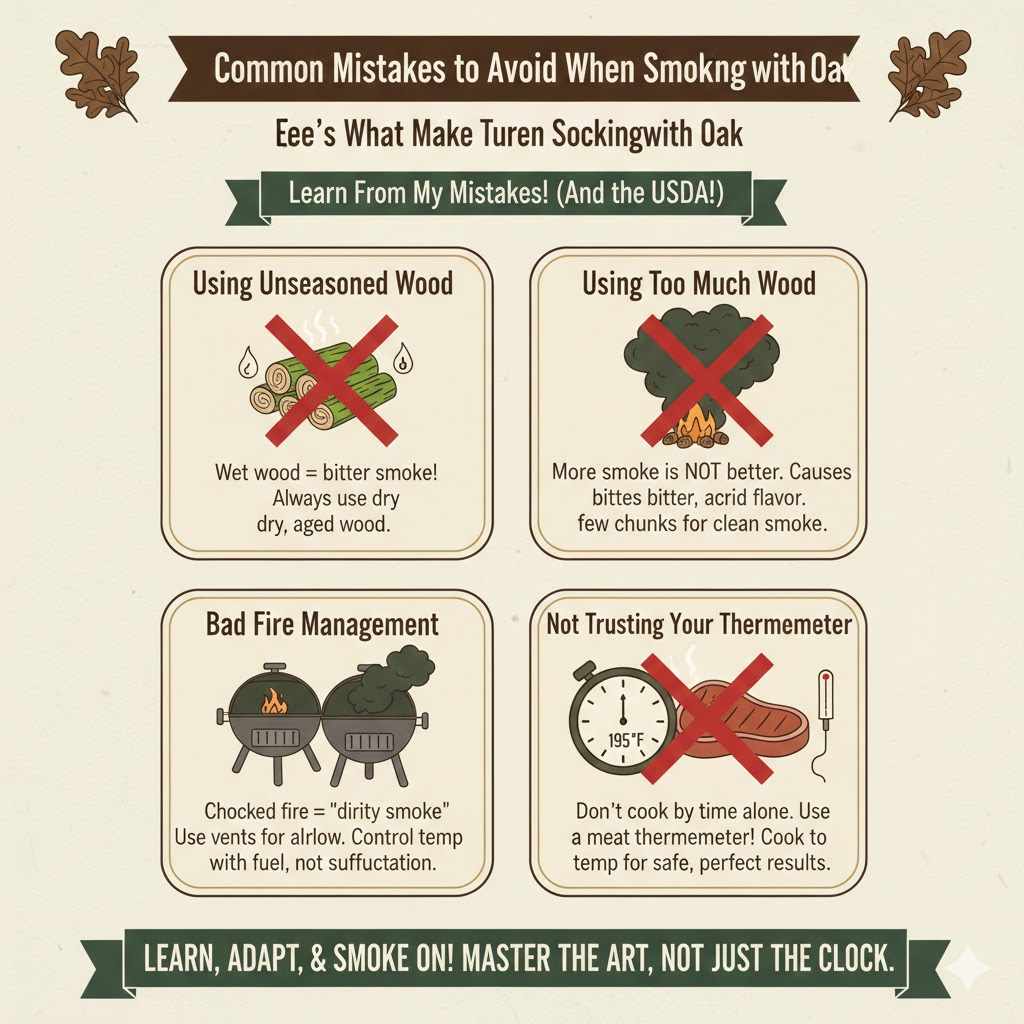
Common Mistakes to Avoid When Smoking with Oak
We all make mistakes, but you can learn from mine! Here are a few common pitfalls to watch out for:
- Using Unseasoned Wood: We’ve covered this, but it’s worth repeating. It’s the number one cause of bad-tasting barbecue. Your wood must be dry.
- Using Too Much Wood: More smoke is not better. Piling on too much wood will create a bitter, acrid flavor. A small, clean-burning fire with a few chunks is all you need.
- Bad Fire Management: Choking your fire for heat control is a common mistake. This creates dirty smoke. Use your vents to give the fire the air it needs to burn clean, and control your temperature by the amount of fuel you use. According to the USDA Food Safety and Inspection Service, keeping food at safe temperatures is crucial.
- Not Trusting Your Thermometer: Don’t cook by time alone. Every piece of meat is different. Cook to internal temperature, not the clock.
Frequently Asked Questions About Smoking with Oak
Is it safe to use oak wood from my yard?
Yes, as long as the tree was healthy and the wood is properly seasoned (dried) for at least 6-9 months. Never use wood that is moldy, rotten, or has been treated with any chemicals (like pressure-treated wood, pallets, or painted wood).
Can I use oak wood from a lumber store?
No, you should not use lumber from a hardware or lumber store. Construction lumber like 2x4s is often kiln-dried too quickly and can be treated with chemicals that are unsafe for cooking. Stick to natural, untreated wood intended for firewood or smoking.
Should I soak my oak wood chunks in water?
This is a common myth. Soaking wood chunks doesn’t create more or better smoke. It just creates steam. The wood has to boil off all the water before it can start smoldering. This can delay smoke production and cause temperature fluctuations in your smoker. It’s best to use dry wood chunks.
How much oak wood should I use?
Start with less than you think you need. For a typical backyard smoker, two or three fist-sized chunks are plenty to start a long cook. You can always add one more later if the smoke dies down completely. For grilling, a handful of chips or one chunk is enough.
Can you mix oak with other woods?
Yes, absolutely! Oak is a great base wood to mix with others. A popular combination is mixing oak with a sweeter fruit wood like apple or cherry. For example, a 50/50 mix of oak and cherry is fantastic on pork ribs.
What is the difference between oak smoke and hickory smoke?
Hickory has a stronger, more pungent, and bacon-like flavor than oak. Oak is more of a medium, classic smoke flavor. While both are great, hickory can easily overpower food if you use too much, making oak a more forgiving choice for beginners.
Can I use oak for grilling burgers and steaks?
Yes! Adding an oak wood chunk or a handful of oak chips to your charcoal or gas grill when cooking steaks or burgers adds a wonderful, subtle smoky flavor. Because the cook is fast, the smoke flavor won’t be as intense as in low-and-slow cooking, but it will definitely elevate your grilling.
Your Next Step to Smoking Success
See? Smoking with oak isn’t scary at all. It’s one of the most reliable and rewarding ways to make truly delicious barbecue. By remembering to use properly seasoned wood and focusing on a clean, steady fire, you’re already 90% of the way to becoming a backyard hero.
The journey of a woodworker and a DIY enthusiast is all about learning and trying new things. Don’t be afraid to experiment. Try different types of oak, mix them with other woods, and see what flavors you like best. The most important thing is to have fun with it.
So grab some oak, fire up that smoker, and get cooking. You’ve got this! Your friends and family will be thanking you for it at the next cookout.