Red Oak vs White Oak: The Real Difference (And Why It Matters)
Red oak and white oak are nearly equal in strength, but not in rot resistance. White oak’s large pores are plugged with tyloses, so it is rated very durable, while red oak is rated non-durable to perishable once it gets wet. Janka hardness differs by only about 11 percent (1,220 vs 1,350 lbf). This guide covers how to tell the two apart on a board, a side-by-side data table, how much each one shrinks, and which to buy for your project.
How to Tell Red Oak From White Oak on a Board
Best End Grain ID Pick
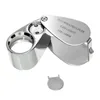 |
SE Professional 10X Illuminated Loupe (18mm Glass Lens) – $9.99 Makes the end-grain pore check below easy: at 10X you can see whether the large earlywood pores are open (red oak) or plugged with tyloses (white oak).
|
As an Amazon Associate we earn from qualifying purchases.
Color is the least reliable test. According to The Wood Database, red oak heartwood is light to medium brown “commonly with a reddish cast,” while white oak is light to medium brown with an olive cast. Both have paler sapwood, and a coat of stain or a few years of sun can hide the difference completely. Use these tests in this order instead.
1. Look at the end grain
Red oak never forms tyloses, so the big earlywood pores stay open from end to end. White oak heartwood forms them in abundance, which seals the pores shut. Under a 10X loupe, red oak pores look like clean, empty holes; white oak pores look filled or glassy. White oak also has two distinct ray sizes, narrow and very wide, and the wide rays are conspicuous on end grain.
2. Try the blow test on a short offcut
A classic shop test: take a piece cut across the grain, hold one end to your mouth, and blow while the other end is in a glass of water or soapy water. Air passes through red oak and bubbles appear. Air will not pass through white oak. It only works on heartwood, so avoid sapwood, and it works best on a short piece (a few inches), since a long board can stop the air even in red oak.
3. Check the rays on a quartersawn face
Both species show prominent ray fleck on quartersawn faces, but white oak’s wider rays make the flecks larger and more pronounced. On flatsawn boards, rays are harder to see, so fall back on the end grain. If you are not sure what that cut looks like, our quarter sawn oak guide shows it.
4. If you can see the tree, look at the leaves and acorns
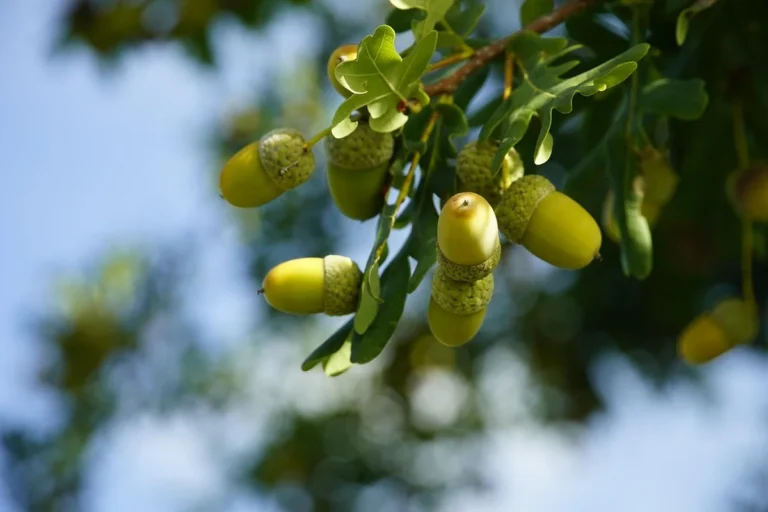
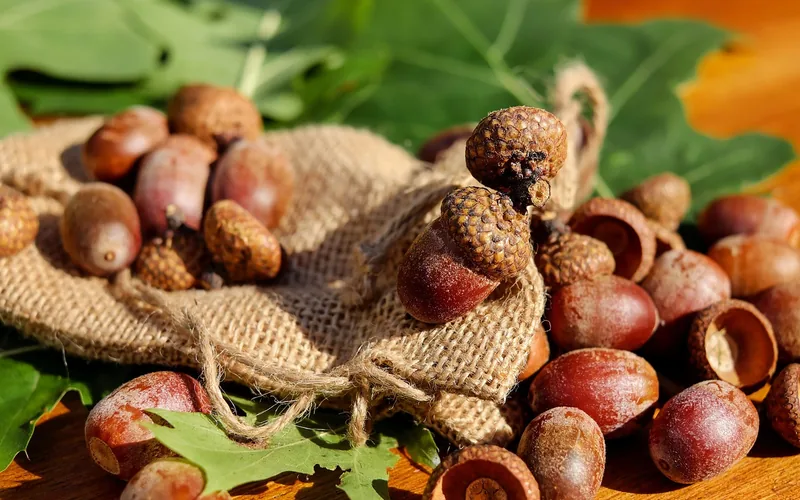
Red oak leaves have pointed, bristle-tipped lobes, and white oak leaves have rounded lobes. Red oak acorns take two growing seasons to mature, white oak acorns take one. Neither detail helps with milled lumber, but both matter if you are buying a standing tree or a log.
Red Oak vs White Oak: Side-by-Side Data
The numbers below come from The Wood Database pages for northern red oak (Quercus rubra) and white oak (Quercus alba), checked in October 2026. Each is one species standing in for a whole group, so a board sold as “red oak” can come from several related species with slightly different numbers.
| Property | Red oak | White oak | White oak vs red |
|---|---|---|---|
| Janka hardness | 1,220 lbf | 1,350 lbf | about 11% harder |
| Average dried weight | 43.8 lb/ft3 | 47.0 lb/ft3 | about 7% heavier |
| Modulus of rupture (bending strength) | 14,380 psi | 14,830 psi | about 3% higher |
| Modulus of elasticity (stiffness) | 1,761,000 psi | 1,762,000 psi | effectively equal |
| Crushing strength | 6,780 psi | 7,370 psi | about 9% higher |
| Pores (heartwood) | Open, no tyloses | Plugged with tyloses | Key difference |
| Decay resistance | Non-durable to perishable | Very durable | Key difference |
The surprise in this table is how little it shows. Bending strength differs by 3 percent and stiffness is identical to three significant figures. A red oak shelf, table apron or stair tread carries essentially the same load as a white oak one. The two real differences are the pores and what the pores do to moisture and rot.
Red oak modulus of elasticity 1,761,000 psi vs white oak 1,762,000 psi: a 0.06% gap. Source: The Wood Database, white oak
Why Tyloses Matter More Than Hardness
The Wood Database rates red oak “non-durable to perishable, with poor insect resistance” and white oak “very durable; frequently used in boatbuilding and tight cooperage.” Tyloses are the reason for the second half of that sentence: the plugged pores keep liquid from moving through the wood, which is why white oak has been used for barrels. For specific jobs, see our guides on whether oak works outdoors, which wood to use for outdoor furniture and the best wood for butcher block countertops.
In practical terms, “red oak for indoors, white oak for anywhere it might get wet” is a sound rule. Indoors, the difference is mostly invisible. A red oak table leg standing on a damp basement floor, or a red oak threshold under a leaking door, is where you will see the difference years later.
Shrinkage and Movement: The Comparison Most Guides Skip
Hardness gets all the attention, but movement is what cracks panels and opens joints. Using The Wood Database shrinkage figures, here is what each species would lose across a 12 inch wide board between green and oven-dry:
| Measure | Red oak | White oak |
|---|---|---|
| Radial shrinkage (quartersawn face) | 4.0% | 5.6% |
| Tangential shrinkage (flatsawn face) | 8.6% | 10.5% |
| Volumetric shrinkage | 13.7% | 16.3% |
| T/R ratio | 2.2 | 1.9 |
| 12 inch flatsawn board, total change | about 1.03 in | about 1.26 in |
| 12 inch quartersawn board, total change | about 0.48 in | about 0.67 in |
White oak shrinks about 2 points more tangentially than red oak, so it is the more dimensionally active wood in total. Its lower T/R ratio (1.9 vs 2.2) means the gap between its flatsawn and quartersawn movement is smaller, which is generally associated with less distortion as the board dries. Treat these numbers as a way to compare species, not as a gap to build into a joint: green-to-oven-dry is more drying than any piece of furniture ever sees, so real seasonal movement is a fraction of it. For a project-specific number, use our wood movement calculator.
One practical consequence: do not glue wide panels from a mix of red and white oak. Their tangential shrinkage differs by about 1.9 percentage points, and that mismatch loads the glue lines.
Which Oak Should You Buy? A Decision Table
| Project | Pick | Why |
|---|---|---|
| Boat parts, barrels, garden furniture, outdoor trim | White oak | Rated very durable; tyloses block moisture |
| Cabinets, interior trim, shelving, indoor furniture | Either, red oak if budget matters | Near-identical strength; The Wood Database lists red oak as usually slightly cheaper |
| Flooring | Either | Both are standard flooring woods, see our red vs white oak flooring guide |
| Steam bending | Either | Both respond well to steam bending |
| Cutting boards and food-contact surfaces | White oak | Why white oak works for cutting boards and red oak does not |
| Matching existing oak | Check the pores first | Color after finishing is not a reliable guide |
Staining and Finishing Differences
The Wood Database says both woods glue, stain and finish well, so neither needs special treatment. The visible difference after finishing is undertone: red oak keeps its reddish cast under clear coats and light stains, while white oak reads more neutral to olive. If you want to cancel the pink, our guide to weathered oak stain on red oak looks at whether it cancels the pink. Not sure whether you need a conditioner first? Read is pre-stain conditioner necessary. For a clear finish on white oak, see how to finish white oak.
If you are weighing oak against another hardwood, our beech vs oak comparison covers a close match in hardness, and red oak vs poplar covers the budget alternative.
Safety: Oak Dust
The Wood Database notes that oak has been reported as a sensitizer, most commonly causing eye and skin irritation and asthma-like symptoms, and that severe reactions are quite uncommon. That applies to both species. Wear a dust mask or respirator when sanding oak, and use dust collection on machines.
Frequently Asked Questions
Is red oak or white oak better for furniture?
For indoor furniture, neither is clearly better. Their bending strength and stiffness are within a few percent of each other, so choose on color and budget. White oak is the better pick for pieces that will see moisture, such as outdoor tables or kitchen and bathroom pieces.
How can you tell red oak from white oak after it is stained?
Look at the end grain with a magnifier. Open pores mean red oak, and plugged pores mean white oak. You can also try the blow test on a short heartwood offcut, or check the underside of the piece for an unfinished area where the natural color shows.
Is white oak really harder than red oak?
Slightly. The Wood Database lists white oak at 1,350 lbf Janka and red oak at 1,220 lbf, a gap of about 11 percent. In furniture or flooring you will not feel that difference, and both rate medium-low on the Janka scale.
Can you mix red oak and white oak in one project?
You can, but expect a color mismatch after finishing and slightly different movement, since white oak shrinks more tangentially (10.5 percent vs 8.6 percent). Keep them on separate components rather than gluing them into one wide panel.
Is oak dust dangerous?
Oak is reported as a sensitizer, and the usual reactions are eye and skin irritation and asthma-like symptoms. Severe reactions are uncommon, but wear a mask and use dust collection when sanding or machining either species.
Bottom Line
Choose by environment, not by hardness. White oak is the right answer for anything that will meet water, and for everything else the two are close enough that price and color should decide. When you cannot tell which one you have, the end grain will tell you.
Sponsored / affiliate links. As an Amazon Associate I earn from qualifying purchases. I may earn additional commission from eligible campaigns.